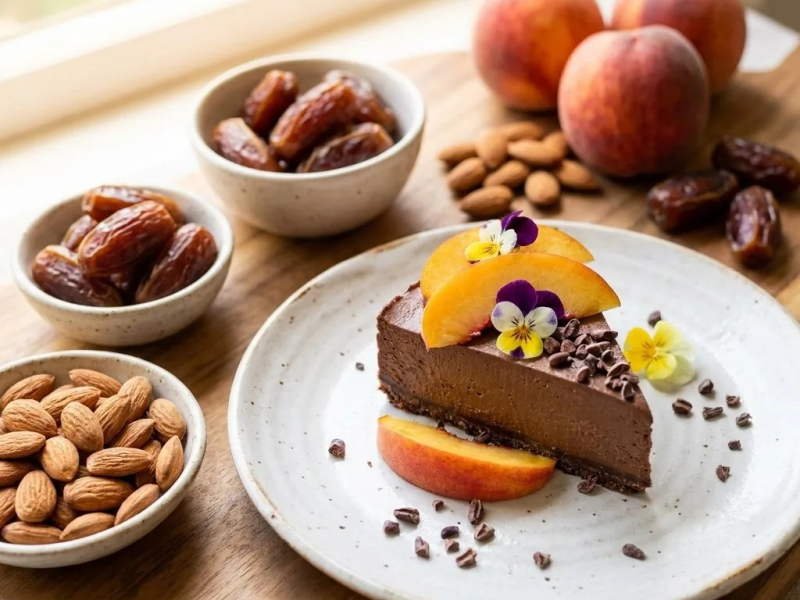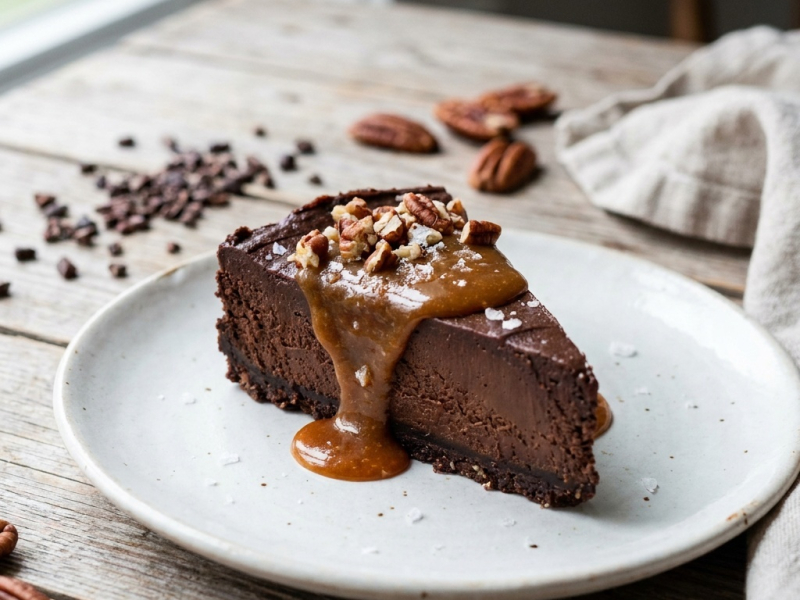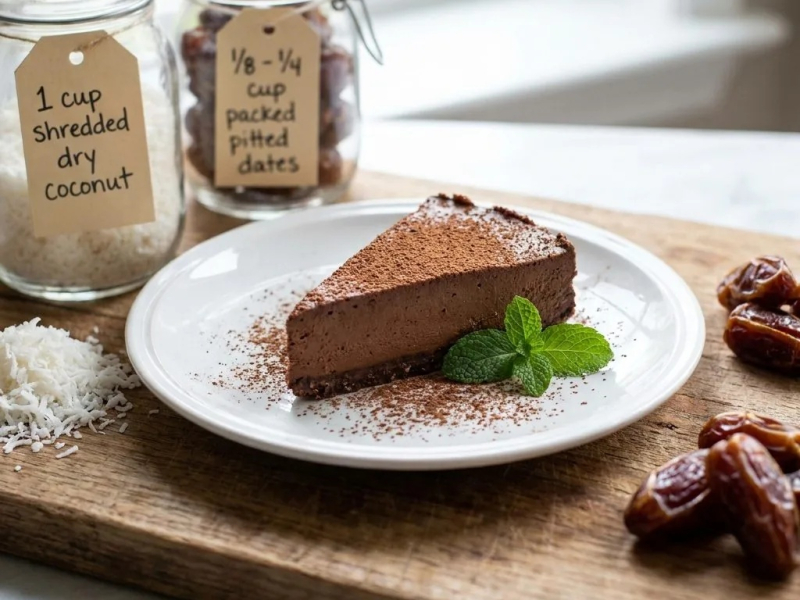



Here is an exceptional dessert for special occasions: a crunchy coconut and date base, topped with a silky dark chocolate mousse and crowned with vanilla-scented whipped coconut cream. Lavender flowers and fresh figs provide the finishing touch, as beautiful as it is delicious. Entirely raw and plant-based, this cake needs a little planning but no baking at all.
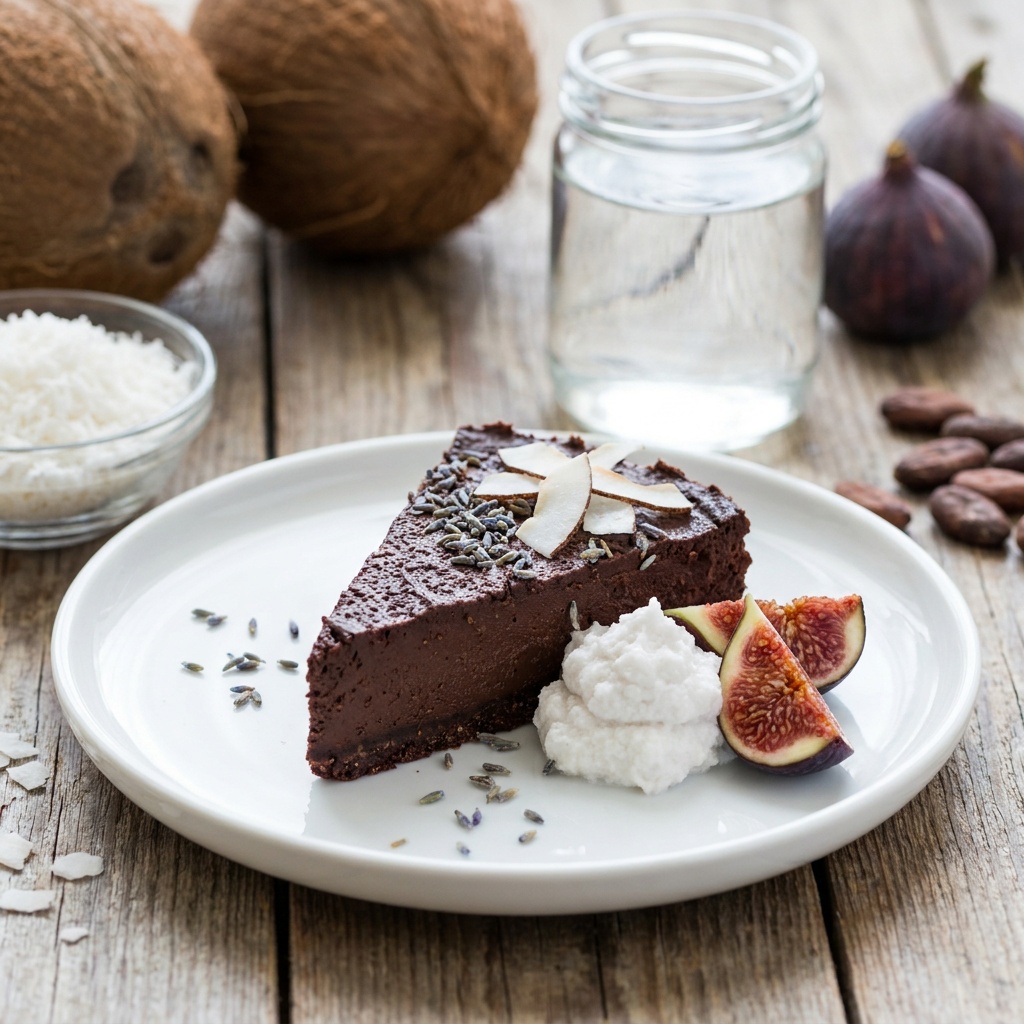
Raw chocolate and lavender cake with whipped coconut cream and figs
Share this article
Ingredients
Raw coconut cream
- 3 whole hard-shell coconuts
- 5 cups filtered and hydrogenated water (or more if needed)
- A nut milk bag
- 1/2 tsp pure vanilla powder
- 3 tbsp raw honey (or another raw sweetener of your choice)
Crust
- 2 cups coconut pulp (the residue from the coconut cream above, or almond flour instead)
- 2 cups pitted dates
- 1/2 vanilla pod
Chocolate mousse
- 4 to 5 large avocados
- 1 very ripe banana
- 1 1/2 cups pitted dates
- 1/3 cup raw cacao powder (or raw carob powder)
- 1/2 vanilla pod
Decoration
- 3 tbsp dried lavender flowers
- 3 fresh figs, sliced
Preparation
- Crack the coconuts open, scoop out the flesh, cut it into small pieces and blend it with the water in a powerful blender until fluid (add water if it is too thick).
- Strain the mixture through the nut milk bag to separate the coconut milk from the pulp, pressing firmly so the pulp is well dried out (it will be used for the crust).
- Put the coconut milk in the fridge until the cream rises to the surface - ideally do this step the day before.
- Lift off the set cream, whisk it with the vanilla powder and the honey, then return it to the fridge.
- For the crust, blend the reserved coconut pulp, the dates and the vanilla in the food processor until you have a smooth paste.
- Line a springform tin with a non-stick sheet and press the paste in to form the base.
- For the mousse, blend the avocados, the banana, the dates, the cacao and the vanilla in the powerful blender until perfectly smooth.
- Pour the chocolate mousse over the crust, then spread the whipped coconut cream on top.
- Freeze for around 3 hours, until the cake is properly firm.
- Turn out of the tin, then decorate with lavender flowers and slices of fresh fig just before serving.
Tip
No fresh figs to hand? Replace them with blueberries or thin slices of pear, as the author of this recipe suggests.
The full range Fresh coconut
Enjoy a gourmet and nutritious coconut flesh thanks to these Thai organic green coconuts, proposed with its machete for easy opening, 5 products
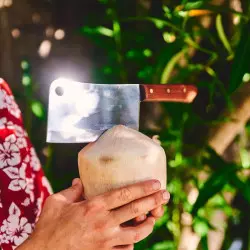
Coconut machete CoCoBio
€20.95
-10%

Organic fresh coconut pallet (18 cartons of 9 coconuts)
€24.90 €27.66
FAQ: your questions about the raw chocolate and lavender cake
What desserts can you make without baking?
Raw pastry rests on four families of texture, and almost everything follows from them. First, pressed bases: nuts and dates blended and packed into a tin, standing in for shortcrust. Then creams, built from avocado, banana, coconut cream or soaked nuts, which give mousses, cheesecakes and ganaches. Next, setting by cold: freezer or fridge, with coconut oil as the setting agent. And finally dried textures from the dehydrator - biscuits, tuiles, crisp shards. From there, tarts, cheesecakes, truffles, frozen bars and chocolate mousses are all within reach without ever turning on the oven.
How do you make coconut whipped cream?
Everything hinges on separating the cream from the water. Put a tin of full-fat coconut milk - or, as here, your homemade coconut milk - in the fridge for at least twelve hours, without shaking it. The fatty part rises and sets on the surface: spoon it off, leaving the water at the bottom. Whip that very cold cream, in a bowl that has also been chilled, with a little vanilla and a spoonful of sweetener. Allow three to five minutes for it to double in volume. Then return it to the fridge until you assemble the cake: it firms up further.
Why won't my coconut cream whip?
Three causes come up almost every time. First, a product that is too lean: light coconut milk, or a drinking coconut beverage, does not contain enough fat to aerate - aim for at least 20% fat. Second, insufficient cold: the cream must be ice cold, and the bowl and whisk too, otherwise the fat stays soft. Third, water in the mix: if you scoop up the cream without leaving the water at the bottom of the tin, the whole thing turns liquid. Some added emulsifiers also prevent the two phases from separating; in that case, change brand rather than persevere.
Share this article