


Crunchy, lightly sweet, chocolatey and with that irresistible note of peanut: these sprouted buckwheat bars are a little energy bomb that is easy to take anywhere. Sprouted buckwheat, gluten free, is an excellent replacement for oats or puffed rice. A perfect snack for an afternoon dip or a breakfast on the run, which young and old alike will love.
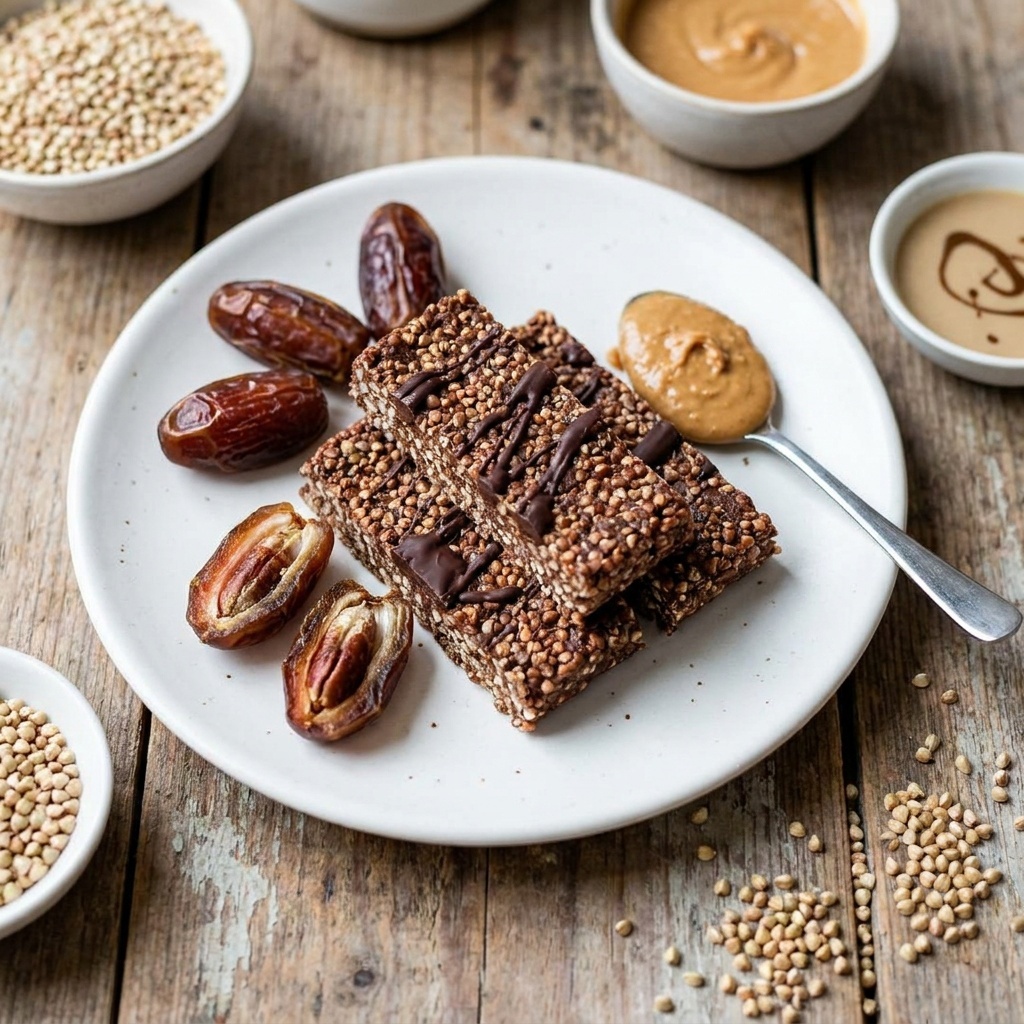
Raw buckwheat and chocolate bars

Share this article
Ingredients
- 10 to 12 dates
- 3 to 4 tbsp raw peanut butter (or almond butter)
- 3 to 4 tbsp tahini
- 1/2 cup water (less if your dates are already very soft)
- 50 g cocoa butter or coconut oil, melted
- 1/2 cup walnuts, roughly chopped
- 2 cups raw sprouted buckwheat
- 2 tbsp chia seeds
- 80 g raw dark chocolate, melted
- 2 to 3 tbsp hemp seeds
Preparation
- In the blender, blend the dates, the water, the peanut butter, the tahini and the melted cocoa butter until you have a smooth cream.
- Pour this cream into a large bowl and fold in the walnuts, the sprouted buckwheat and the chia seeds. Mix well.
- Transfer the mixture into a tin lined with baking paper and press it down firmly with a spatula or with damp fingertips.
- Pour the melted chocolate over the top and scatter over the hemp seeds.
- Chill for at least 2 hours before cutting into bars.
Tip
The peanut butter can be replaced with almond butter for a slightly lighter version that is just as indulgent.
The full range Sprouted seeds
46 products
Discover the full range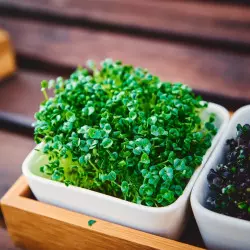

FAQ: your questions about raw buckwheat bars
How do you make protein bars without baking?
The principle is the same as for these bars: a sticky base that binds, a dry ingredient that gives structure, and cold to set the whole thing. To raise the protein content without powder, work on the ingredients themselves: nut butters and tahini (around 20% protein), hulled hemp seeds (30%), pumpkin seeds, or a plant powder if you use one. Watch the balance: the more dry ingredients you add, the more binder you need, otherwise the bar crumbles when you cut it.
Which cocoa is the healthiest?
The most interesting nutritionally is a pure cocoa, unsweetened and not alkalised. Roasting and above all alkalisation - the well-known 'Dutch process' - markedly reduce the flavanol content, the compounds to which cocoa owes a good part of its interest. A raw cocoa, dried below 45 °C, keeps more of them. That said, the real factor remains what is added to it: a pure powder in a homemade preparation has nothing in common with a shop-bought drinking chocolate, often more than 70% sugar.
What are the recipes for healthy cereal bars?
The best ones share three features. First, no glucose syrup and no added sugar: the sweetness comes from dried fruit, dates above all. Next, a genuine base of whole grains or pseudo-cereals - oats, sprouted buckwheat as here, puffed quinoa - rather than refined flakes. Finally, a source of fat and protein: nuts, nut butters, seeds. The rest is variation: cocoa, spices, citrus zest, dried berries. And bear in mind that a bar remains energy dense, however healthy it is.
Share this article