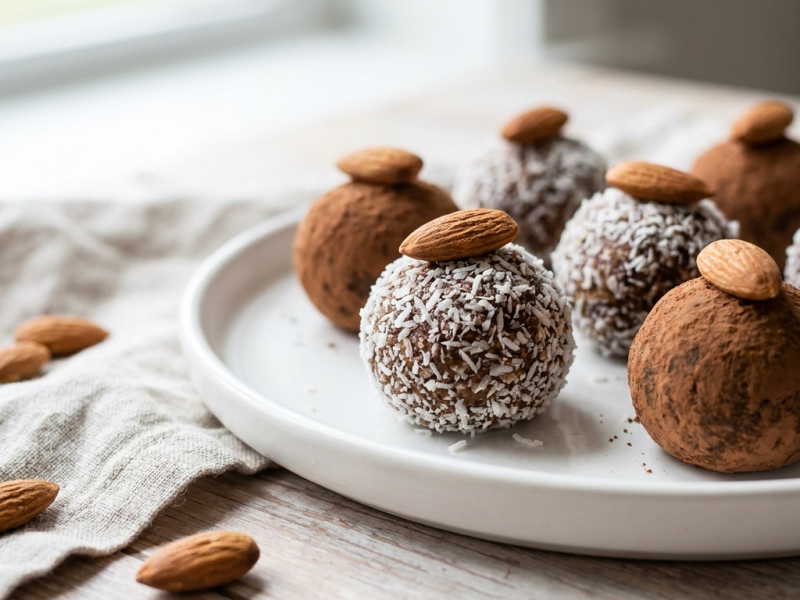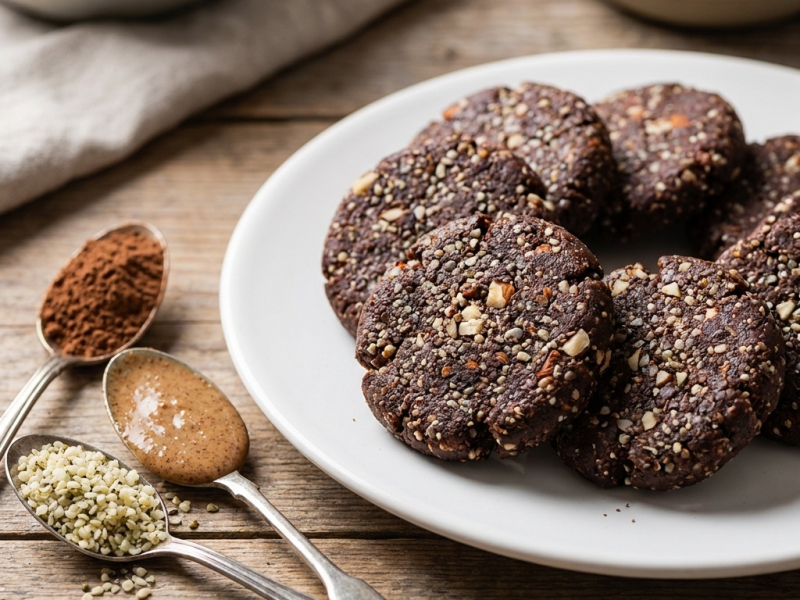



These soft, dense cookies cleverly recycle the almond pulp left over after making your homemade plant milk. Somewhere between a melting cookie and a generous cereal bar, they work just as well at breakfast as for an afternoon snack, with exactly the right amount of crunch thanks to the cacao nibs.
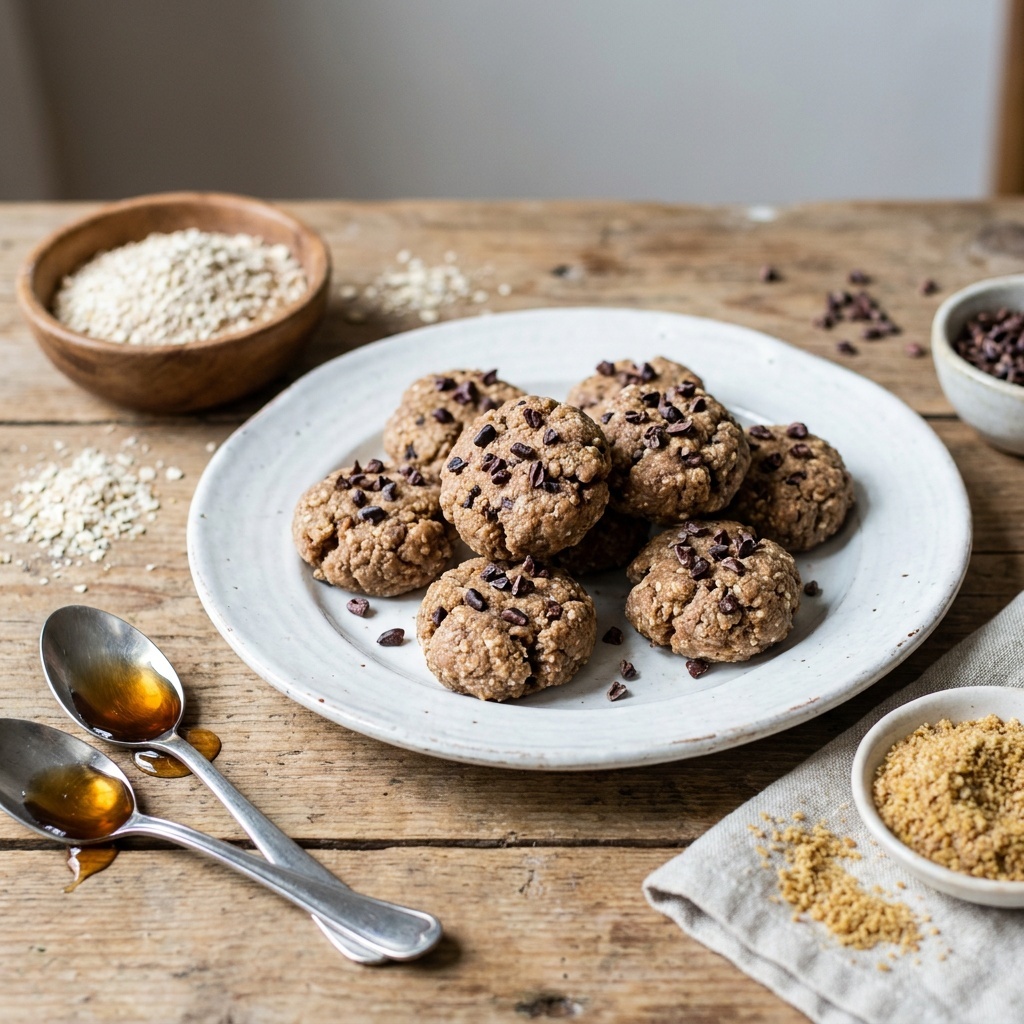
Raw almond pulp cookies with cacao nibs
Share this article
Ingredients
- 2 cups lightly packed almond pulp (left over from homemade almond milk)
- ½ cup ground tiger nut flakes
- ½ cup + 2 tablespoons honey
- ⅓ cup ground golden flaxseed
- 4 tablespoons filtered and hydrogenated water
- 1 tablespoon powdered vanilla
- ¼ teaspoon Himalayan salt
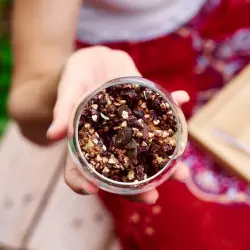
- Raw cacao nibs, to taste
Method
- Put all the ingredients except the cacao nibs in a food processor and blend until you have an even dough.
- Add the cacao nibs and pulse briefly, just enough to distribute them without grinding them down.
- Shape small mounds of dough on a dehydrator sheet, flattening them slightly with a spoon.
- Dehydrate at 63 °C for 2 hours, then lower to 46 °C and continue for 6 to 10 hours, depending on how soft you want the centre.
Tip
The longer you dehydrate them, the closer the cookies get to a crunchy granola bar texture; shorten the time for a softer centre. Without a dehydrator, a fan oven set to its lowest temperature with the door held ajar on a wooden spoon gives a close result, even if it is then no longer strictly raw.
The full range Cacao
Biovie raw cacao comes from Ecuador, Nacional variety, bought directly from a cooperative under the SPP label (Symbol of Peasant Producers), with partner Rrraw Cacao Factory. Unlike conventional cacao, it is never roasted: the beans ferment, then dry in the sun at under 42 °C, which preserves its nutrients better than high-temperature roasting. It comes as whole beans, cacao nibs, powder or melting paste. To get started, try the nibs, which are easy to add to a yogurt or smoothie without any preparation., 11 products
Online only
FAQ: your questions about raw almond pulp cookies
How do you use okara in cooking?
Okara is the pulp left in the nut milk bag. Fresh, it replaces part of the flour in cakes, cookies and pastry, or adds binding to vegetable patties and balls. Dried and then ground, it becomes a powder that keeps for several weeks and can be used like a nut flour. Treat it as a wet ingredient: you need to reduce the liquid in the recipe slightly.
What can I do with the leftovers from almond milk?
Nothing goes to waste. The pulp becomes cookies, dehydrated crackers, a base for energy balls or a sweet gomasio. The milk itself, if you have any left, freezes in an ice cube tray for smoothies, or serves as a base for a raw porridge and for dessert creams. The pulp keeps two to three days in the fridge and several months in the freezer.
What does okara taste like?
It is mild and discreet, very close to the nut it comes from. Almond okara has a slightly milky, sweet flavour, while soy okara is more vegetal, almost grassy. In both cases it imposes nothing: that is what allows it to be used in sweet and savoury dishes alike without distorting the rest of the recipe.
What is okara made of?
It is essentially the insoluble part of the nut: mostly fibre, a share of protein that did not pass into the liquid, a little residual fat and a great deal of water, often more than 75 %. That water content explains why it keeps poorly at room temperature and why it needs to be dried or frozen if you are not using it straight away.
Share this article
Related articles