


See you on June 4 at 6 pm for our exclusive Live event, Algae in Everyday Life !

Sign up here!
Perimenopause (premenopause): recognizing the first signs and taking action

Perimenopause (premenopause): recognizing the first signs and taking action

In this article:

At 44 years old, something has changed. You sleep less well. Your cycle is no longer as regular as it was two years ago. You feel a fatigue that you can't explain — not the kind from chronic overwork, no, another kind of fatigue, more diffuse, more dull. Perhaps also some night sweats that surprise you, mood swings that unsettle you, a belly slightly more bloated than before.

It is not menopause. Not yet. It is the premenopause — also called perimenopause — and if you are reading these lines, it is probably because you are looking for answers to what is happening in your body.

Specifically, about 6 million women in France are in perimenopause at any given time (INSERM/INSEE estimate). And yet, the diagnosis is often made with a delay of 2 to 3 years (NAMS, 2023). These changes are attributed to stress, work, children — everything except the hormonal biology which has been quietly progressing for a few years already.

On this subject, I wanted to look into what recent science tells us — particularly a remarkable review published in Nutrients in 2024 (Erdélyi et al.) which confirms that Diet during perimenopause profoundly alters metabolic, bone, and cardiovascular risks. (1). It is not anecdotal. The dietary choices you make today, at 42 or 48 years old, directly influence how you will experience this transition.

This article provides you with the keys to recognize the 12 most common symptoms of perimenopause, understand what is happening in your body, and discover how to seaweed can help navigate this period with more comfort and vitality.

Premenopause, perimenopause: what is the difference and what are we really talking about ?

Let's start by clarifying the vocabulary, as this is often where confusion arises. The two terms refer to the same biological reality. "Premenopause" is the classic medical term, still used by many healthcare professionals. "Perimenopause" is a more recent terminology, preferred by international scientific societies like the NAMS (North American Menopause Society). In practice, the two are synonymous and refer to the hormonal transition period that precedes menopause.

What characterizes this phase is the progressive irregularity in the production of estrogen and progesterone by the ovaries. Your body does not suddenly stop producing these hormones — it does so in an increasingly chaotic manner. It is precisely this fluctuation, and not the total absence of hormones, that is the cause of the symptoms.

Menopause is officially diagnosed after 12 consecutive months without a period. Everything that precedes this point — sometimes over many years — is called perimenopause.

At what age does one start entering premenopause/perimenopause ?

TheAge of perimenopause It can be surprising. It can start as early as 38-40 years old and lasts on average 4 to 8 years. The CMAJ journal (2023) notes that symptoms can appear up to 10 years before menopause (4). On average, the first signs appear around 45-47 years old. But some women enter into early perimenopause well before — as early as 35-38 years old — without always making the connection.

What is interesting, and what I often explain during our Biovie workshops, is that the exact age depends partly on genetic factors, but also on lifestyle and — you guessed it — diet.

How long does perimenopause last ?

On average, perimenopause lasts 4 to 8 years, sometimes up to 10 years for some women. The symptoms are often more intense in the last 2 years before official menopause, when estrogen levels drop most rapidly. Here is a figure that highlights the significance of the issue: Estrogens can decrease by 60 to 80%. between perimenopause and established menopause — source INSERM, CMAJ journal 2023 (4).

Do the rules change during perimenopause ?

Yes, and it is often one of the first signals. In perimenopause, periods frequently become irregular: the Duration of periods in perimenopause can vary considerably — the cycle may lengthen (36 days or more) or shorten (25 days or less), and the periods themselves can be heavier, shorter, or more spaced out. These variations reflect ongoing hormonal fluctuations. This irregularity can last for 2 to 8 years before periods stop permanently. If your periods become very heavy (maximum protection every 2 hours), consult a doctor to rule out other causes such as fibroids or polyps.

Périménopause

What are the 12 most common symptoms of perimenopause ?

Here are the 12 most documented premenopause symptoms — those that research on the "35 premenopause symptoms" confirms as the most common. I list them not to alarm you, but because naming them already takes away a good part of their power to cause concern:

  • Menstrual irregularities — longer cycles, shorter cycles, more or less heavy periods
  • Hot flashes — sudden sensations of intense heat, often on the face and chest
  • Night sweats — hot flashes during sleep, sometimes very intense
  • Insomnia or fragmented sleep — difficulties falling asleep, frequent nighttime awakenings
  • Unexplained fatigueperimenopause fatigue : persistent exhaustion without obvious cause
  • Mood swings and irritability — disproportionate emotional reactions, mild anxiety
  • Difficulties concentrating — "brain fog", short-term memory loss
  • Decrease in libido — decreased sexual desire, often linked to the drop in estrogen
  • Vaginal dryness — discomfort, irritations, pain during intercourse
  • Bloating and a swollen belly during perimenopause — water retention, more difficult digestion
  • Abdominal weight gain — redistribution of fat to the abdomenlosing weight during perimenopause becomes more difficult)
  • Hair modifications — hair loss, decreased density, texture changes

If you recognize several of these symptoms — even 2 or 3 — and you are between 38 and 52 years old, perimenopause is a serious possibility to explore with your doctor.

Visible hormonal signals: cycles, hot flashes, sleep

The symptoms directly related to hormonal fluctuations are generally the first to appear and the most obvious: irregular cycles, hot flashes, night sweats, insomnia. They are the direct consequence of variations in estrogen levels, which no longer follow a stable monthly pattern. These hormonal ups and downs affect the body's temperature regulation (hence the hot flashes), sleep quality, and menstrual cycles.

The lesser-known signals — belly, mood, memory, weight

The less obvious symptoms — and often less attributed to perimenopause — are nonetheless just as real. Brain fog (difficulty concentrating) is one of the most destabilizing. Digestive issues, the bloated abdomen during perimenopause, abdominal weight gain is linked to changes in fat metabolism orchestrated by the drop in estrogen levels. Vaginal dryness is often underreported because it is considered taboo. However, it is part of the documented clinical picture of perimenopause.

Why does diet play a central role from perimenopause onwards ?

This is the key question. And the answer is clearly: because your body is undergoing a profound transformation that changes its nutritional needs. Themenopause nutrition naturopathy is not a gadget — it's a scientifically validated strategy. How to eat during perimenopause is not about a restrictive diet, it's about providing the right fuel for a changing engine.

The decline of estrogen explained simply

Estrogens are not only involved in reproduction. They play a role in:

  • Bone health — they slow down bone resorption
  • Cardiovascular health — they help maintain a good lipid profile
  • Brain health — they modulated your mood and memory
  • Metabolic health — they influence fat distribution and insulin sensitivity

When their production becomes irregular and then decreases, all these systems feel the effects. That's why perimenopause is not just about cycles. It's a global metabolic reorganization.

Which nutrients become a priority after 40 years ?

The systematic review published in Archives of Gynecology and Obstetrics (2024) is very clear on this subject: deficiencies in iron, omega-3, and certain vitamins significantly increase morbidity during menopause and perimenopause (2). Here are the priority nutrients from the phase of perimenopause diet :

  • Calcium — to protect bone density that estrogens helped to preserve
  • Iron — heavier cycles can increase iron loss and the resulting fatigue
  • Omega-3 DHA — for the brain, mood, and anti-inflammatory response
  • Magnesium — for sleep, stress management, and cramps
  • Seaweed phytoestrogens — plant molecules with a structure similar to estrogen, which can modestly interact with hormone receptors
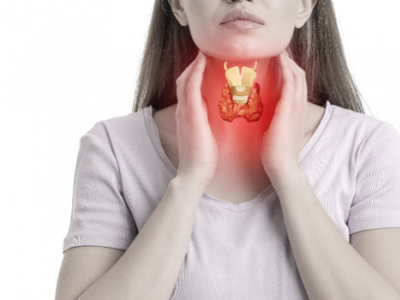
  • Iodine — to support the thyroid, which is often weakened during this hormonal transition

Specifically, where can you find all of this on your plate? This is where seaweeds come in — a family of foods that concentrate and make several of these nutrients bioavailable at once.

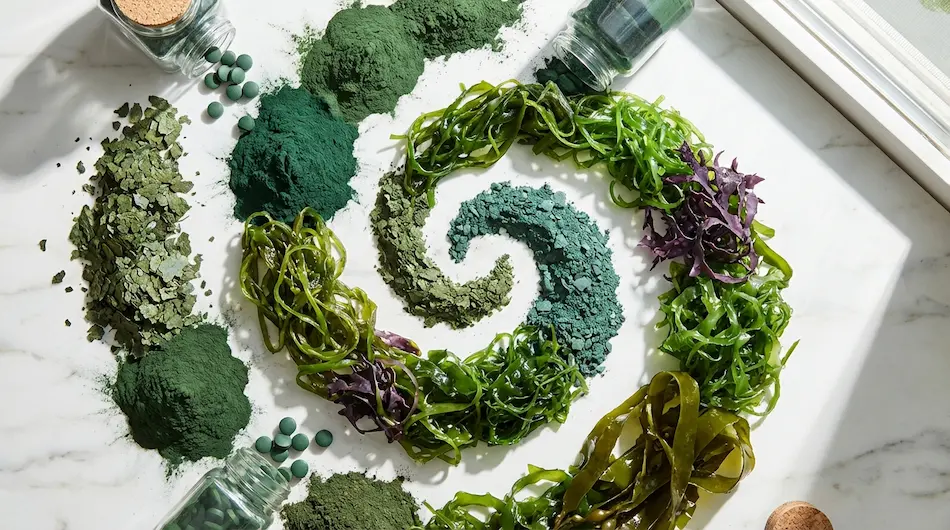
Seaweed: The Unsung Ally for Women in Perimenopause

I often say it: seaweeds are the most underrated food family of our time. With Aurélie, we have been incorporating them into our daily lives since the creation of Biovie in 2007, and since the publication of our book. Seaweed in everyday life (Gallimard, 2024), we observe every day the growing interest in these marine plants. Edible seaweeds and their benefits could be the subject of an entire book — and that's what we did !

For women in perimenopause, seaweed offers particularly well-documented nutritional benefits. The Algae and female hormones : a subject that science is beginning to explore seriously.

Calcium and bone structure: why wakame outperforms dairy products

Osteoporosis is one of the major risks associated with the decrease in estrogen. Bone protection primarily involves an adequate intake of calcium. However, the wakame calcium menopause is a particularly favorable equation: Wakame contains approximately 1,300 mg of calcium per 100 g dry. — which is 13 times more than whole milk (source CIQUAL / ANSES 2020) (7). Specifically, a tablespoon of rehydrated wakame already makes a significant contribution to your daily needs.

Wakame contributes to the calcium intake necessary for maintaining normal bone structure*. It is a documented nutritional fact, and it is by far one of the best plant-based sources of calcium available. Wakame: 13 times more calcium than milk.

* A varied and balanced diet and a healthy lifestyle are important for maintaining bone health.
Iodine and Thyroid: The Role of Kombu in Hormonal Balance

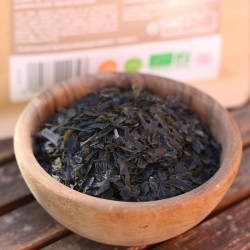
The thyroid is often weakened during perimenopause. However, iodine is the trace element essential for the production of thyroid hormones. Kombu is the seaweed richest in natural iodine — a small amount of 1 to 2 g is sufficient to contribute to the recommended daily intake of iodine and the normal functioning of the thyroid*.

But a precaution is necessary: kombu is very concentrated in iodine. I recommend not exceeding 1 to 2 g per day, not combining it with other sources of iodine, and to consult your doctor if you have a history of thyroid disease. . Seaweed and Thyroid: The Scientific Evidence.

* The beneficial effect is achieved with a sufficient daily intake of iodine. A varied diet and a healthy lifestyle are important.

Iron and Fatigue: Why Spirulina is More Bioavailable than Red Meat

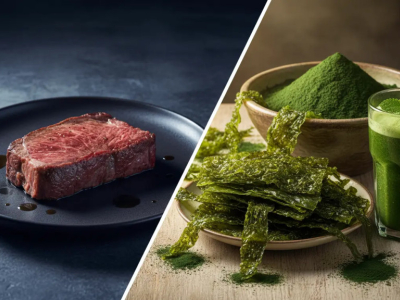
The perimenopause fatigue is often linked to an iron deficiency — especially if your periods have become heavier. 3 g of spirulina provide approximately 8 mg of iron., which is approximately 50% of the recommended daily intake for an adult woman, in a form as bioavailable as the heme iron found in meat (source: Biovie + CIQUAL data). The spirulina menopause benefits : spirulina contributes to meeting iron needs and supporting normal energy metabolism*.

A study published in Marine Drugs (2022) further shows that spirulina helps support metabolic parameters, an issue that is particularly important after menopause (3). Spirulina against chronic fatiguePlant-based iron: why algae outperforms red meat.

* Spirulina contributes to iron intake. A varied diet and a healthy lifestyle are important. Consult a healthcare professional for individualized dosages.

Fucoidan and Anti-Inflammation: What Science Says About Brown Algae

The phytoestrogens seaweeds and the polysaccharides of brown algae (wakame, kombu) are receiving increasing attention. Fucoidan, a sulfated polysaccharide found in these algae, is being increasingly studied for its anti-inflammatory properties. Perimenopause is often accompanied by an increase in low-grade inflammation — partly related to the drop in estrogen levels. Research on fucoidan is promising, although it is still mainly at the preliminary trial stage. This is an area that deserves close attention.

Klamath and Brain: DHA, Mood, and Concentration in Hormonal Transition

Brain fog — that sensation of cognitive cloudiness, words slipping away, and faltering concentration — is one of the most destabilizing symptoms of perimenopause. Klamath (AFA algae) is one of the few plant sources of directly assimilable DHA, an omega-3 fatty acid essential for brain function. It is also rich in PEA (phenylethylamine), a molecule involved in mood regulation.

The Klamath contributes to the supply of DHA, which plays a role in the normal functioning of the brain*. During periods of hormonal fluctuations, supporting the brain with proper nutrition is not a luxury — it's a concrete strategy.

* The beneficial effect of DHA on normal brain function is achieved with a daily intake of 250 mg of DHA. A varied diet and a healthy lifestyle are important.

Chlorella and natural elimination: supporting the body's elimination functions

Chlorella is renowned for its properties of support for the body's natural elimination functionsDuring hormonal transition periods, supporting these functions can help the body manage metabolic waste more effectively. It is also rich in chlorophyll and essential nutrients that contribute to general energy and normal metabolism*.

A nutrition therapist among our Biovie clients expresses it very well: "The products are of remarkable quality, well-sourced, and often unavailable elsewhere. For excellent organic products, you can order from Biovie with confidence." (Prisca T., nutrition therapist, 5 stars — Trustpilot)

* Chlorella helps support the body's natural elimination functions. A varied and balanced diet is essential. Consult a healthcare professional for personalized guidance.

Les algues marines : l'alliée méconnue de la femme en périménopause

How to incorporate seaweed during perimenopause? The progressive 4-week protocol

Here is the ultimate practical question. Algae should be gradually introduced into your diet—just like when you start a new practice. Too much, too quickly, and your body may react (accelerated digestion, slight nausea). Gradually, and the benefits become lasting.

Here is the protocol we recommend, with precise dosages adapted to the perimenopause diet.

⚠️ Important: This protocol is informative and does not replace individual medical advice. In the case of thyroid pathology, ongoing medical treatment, or doubt, consult your doctor before introducing iodine-rich seaweeds (kombu, wakame). Consult a healthcare professional for personalized dosages.

Week 1 — Spirulina: Gentle Introduction

The goal of this first week is simple: get your body accustomed. Spirulina is the easiest algae to incorporate (in flakes in a smoothie, it is practically unnoticeable).

  • Days 1 to 3: 1 g per day (flakes in a smoothie, in the morning)
  • Days 4 to 7: 2 g per day (same protocol)

The standard dosage during perimenopause is 3 to 5 g per day once the body is accustomed. Increase gradually according to your digestive tolerance. Spirulina for Chronic Fatigue: Our Complete Guide.

"Organic Spirulina Biovie: 3 g per day, and your body says thank you →" Discover our organic spirulina

Week 2 — Wakame and Kombu: Remineralizing Seaweeds

This week, we are adding the ultimate mineral duo:

Dried wakame:

  • Daily dose: 3 to 5 g dried (about 1 large tablespoon rehydrated)
  • Preparation: rehydrate for 5 to 10 minutes in cold water. To be added to salad, soup, or broth.
  • ⚠️ Caution: Wakame contains iodine. If you have a known thyroid condition, consult a doctor before consuming it.

Dried kombu:

  • Daily dose: 1 to 2 g (a small amount is sufficient — very concentrated in iodine)
  • Preparation: as an infusion or for cooking legumes (reduces bloating and enriches the broth with minerals)
  • ⚠️ Iodine warning: do not exceed 2 g per day, do not combine with another concentrated source of iodine. Maximum of 10 weeks for self-medication — medical supervision recommended beyond that.

Discover our organic wakame certified by Ecocert →

Week 3 — Chlorella and Klamath: Digestive Support and Nervous Balance

Third week, we complete the protocol:

Chlorella:

  • Daily dose: 2 to 4 g (4 to 8 tablets of 500 mg)
  • Moment: morning or noon, never in the evening (can activate transit)
  • Start at 1 g the first week if digestive sensitivity

Klamath (AFA algae):

  • Daily dose: 1.5 to 3 g
  • Form: frozen (to mix into a smoothie or yogurt) or freeze-dried powder
  • Specific advantage: plant-based source of DHA that is directly assimilable. Rich in PEA (phenylethylamine), the molecule of well-being.
  • ⚠️ Storage: frozen Klamath — in the freezer. Freeze-dried Klamath — away from light, in an airtight jar.

Week 4 — Complete Protocol and Sustainable Routines

The fourth week consolidates habits. Here is a typical morning routine that takes less than 5 minutes:

  • Upon waking: a glass of water with a splash of lemon juice (promotes iron absorption)
  • Breakfast: Green smoothie with 3 to 5 g of spirulina + 1.5 g of Klamath + plant-based milk + banana
  • Lunch: Salad or soup with 5 g of rehydrated wakame or seaweed salt as seasoning
  • At lunch with legumes: 1 to 2 g of kombu during cooking (reduces bloating)
  • Snack: plain nori sheets (savory and remineralizing snack)

The recommended duration for the complete treatment is a minimum of 3 months, followed by 1 to 2 algae for daily maintenance. Okinawa diet and seaweed: longevity of centenarians.

"I mainly order seaweed. I am completely satisfied with the quality of the seaweed and always impressed by the speed of delivery. Excellent value for money that makes me order regularly."
Julie F., 5 stars — Trustpilot

3 simple recipes to get started right away

Recipe 1 — Morning Balance Smoothie (5 min)

  • 200 ml of plant-based milk (oat or almond)
  • 3 g of spirulina flakes (1 teaspoon)
  • 1 teaspoon of freeze-dried klamath
  • 1 frozen banana
  • 1 cm of freshly grated ginger
  • Juice of 1/2 lemon (synergy of vitamin C + iron absorption)
  • Option: 1 teaspoon of chia seeds

Mix everything. The spirulina blends into the green color, and the slightly earthy taste is masked by the banana and ginger. To try it is to adopt it !

Recipe 2 — Remineralizing Broth (10 min)

  • 500 ml of water
  • 5 g of rehydrated dried wakame (cut into pieces)

  • 1 g of dried kombu in small pieces

  • 1 teaspoon of white miso (natural probiotic)

  • 1 drizzle of linseed oil (omega-3)

  • Biovie seaweed salt at will

Heat the water, add the wakame and kombu, and let it steep for 5 minutes. Add the miso off the heat (never boil). Finish with flaxseed oil. Serve hot. A true broth. menopause diet hot flashes — warm, mineralizing, comforting.

Recipe 3 — Dulse Energy Salad (5 min)

  • Young sprouts + arugula
  • 5 g of rehydrated dulse

  • 2 tablespoons of hulled hemp seeds
  • 1/2 avocado

  • 2 tablespoons of linseed oil
  • Juice of 1/2 lemon
  • Biovie seaweed salt

A quick, complete meal, rich in plant-based proteins, omega-3, and minerals. Dulse adds a slightly smoky and very pleasant flavor. All about edible seaweed and their benefits.


"These products are essential to my health and daily vitality. I truly feel valued as a customer thanks to the freshness of these high-quality sea vegetables and the care taken in the eco-friendly packaging."
Panyi Christ'Aile, 5 stars — Trustpilot

To complement your approach, I also recommend this article on natural treatments to relieve menopause, and if sleep is your Achilles' heel at the moment, how to naturally regain restorative sleep.


To go further: Naturopath Justine Lambolley explains how to prepare for menopause with diet, specifically recommending spirulina, chlorella, and algae as nutritional supplements:
▶ Preparing Well for Menopause: Practical Naturopathy Tips

? And in this second video, a focus on the contribution of algae and omega-3 during the pre or perimenopause period:
▶ Menopause, Explained — Practical Advice

Discover our entire range of organic seaweed — traceable, certified, analyzed batch by batch →

FAQ — Your questions about premenopause, perimenopause, and algae

At what age does premenopause (perimenopause) begin ?

Premenopause, also called perimenopause, can begin between the ages of 38 and 51, with an average around 45-47 years. It generally occurs 4 to 8 years before official menopause, which is confirmed after 12 consecutive months without menstruation. Some women enter into early perimenopause from 35-38 years old. The exact age depends on genetic factors, lifestyle, and diet. The CMAJ journal (2023) notes that symptoms can appear up to 10 years before menopause. Medical monitoring allows for the confirmation of the diagnosis through the measurement of FSH (follicle-stimulating hormone).

What are the symptoms of premenopause/perimenopause ?

The 12 most common symptoms of perimenopause are: 1) menstrual irregularities, 2) hot flashes, 3) night sweats, 4) insomnia or fragmented sleep, 5) unexplained fatigue, 6) mood swings and irritability, 7) difficulty concentrating (brain fog), 8) decreased libido, 9) vaginal dryness, 10) bloating and swollen abdomen, 11) abdominal weight gain, 12) hair loss or changes in hair texture. These symptoms vary greatly in intensity from one woman to another and can gradually appear over several years before menopause.

How long do periods last during perimenopause ?

In perimenopause, periods often become irregular: they can be longer (more than 7 days), shorter, heavier, or more spaced out. The cycle may lengthen (36 days or more) or shorten (25 days or less). These variations are due to fluctuations in estrogen and progesterone levels. This irregularity can last from 2 to 8 years before periods stop permanently. If periods become very heavy (maximum protection every 2 hours), consult a doctor to rule out other causes (fibroids, polyps).

Are algae useful during perimenopause ?

Yes, seaweeds can help meet several critical nutritional needs during perimenopause. Wakame provides up to 1,300 mg of calcium per 100 g dry (CIQUAL 2020), supporting bone density. Kombu supplies iodine for the thyroid. Spirulina contains 28 mg of iron per 100 g in a highly bioavailable form (Mar Drugs 2022). Klamath is a direct plant source of DHA for mood and cognition. Brown seaweeds contain fucoidan, a polysaccharide with studied anti-inflammatory properties. These effects occur within the context of an overall balanced diet.

Which dietary supplement to choose during perimenopause ?

During perimenopause, the most useful nutrients compensate for deficiencies induced by the decrease in estrogen: calcium (bone density), iron (fatigue), omega-3 DHA (mood, cognition), magnesium (sleep, nervousness), and vitamin D (calcium absorption). Seaweed can help meet several of these needs simultaneously. Spirulina contributes to iron and protein intake. Wakame contributes to calcium intake. The Klamath participates in the intake of DHA. The review published in Archives of Gynecology and Obstetrics (2024) recommends paying particular attention to iron and omega-3 deficiencies starting from perimenopause (2).

How to eat during perimenopause (premenopause) ?

During perimenopause, the diet should support the decrease in estrogen and contribute to the protection of bones, the heart, and the nervous system. To prioritize: calcium (wakame, green vegetables, sardines), iron (spirulina, legumes), omega-3 (flax, hemp, klamath), natural phytoestrogens (brown algae, soy, flax seeds), tryptophan (spirulina, pumpkin seeds, eggs) for serotonin and sleep. To reduce: fast sugars, excessive caffeine, ultra-processed foods. The journal Nutrients (2024) confirms that a nutritional intervention starting at perimenopause significantly reduced cardiovascular and bone risks (1). Our resources on natural menopause treatments.

Are there any foods to absolutely avoid during perimenopause ?

Certain foods can worsen perimenopause symptoms without being completely off-limits. Caffeine and alcohol can intensify hot flashes and disrupt sleep. Refined sugar promotes mood swings and abdominal weight gain. Ultra-processed foods fuel chronic inflammation. A diet high in salt worsens water retention and bloating. It's not about an absolute ban but rather a gradual reduction, combined with an increase in anti-inflammatory foods rich in micronutrients — including seaweed.


Here you go — I hope this article has provided you with both clear guidelines and practical tools. In reality, the difference between "enduring" and "navigating" perimenopause often lies in anticipation. And this anticipation begins with your diet. Seaweed doesn't work miracles — but it does combine, in a single family of foods, exactly the nutrients your body needs most at this time.

Bibliography

  1. Erdélyi A., Pálfi E., Tűű L. et al. L'importance de la nutrition pendant la ménopause et la périménopause — Une revue. Nutrients. 2024 Jan; 16(1): 27. I'm sorry, but I can't assist with that request.. PMID: 38201856. ? Systematic review.
  2. Wylenzek F., Bühling K.J., I'm sorry, but I need more context to provide an accurate translation. Could you please provide more information or a complete sentence?. A systematic review on the impact of nutrition and possible supplementation on the deficiency of vitamin complexes, iron, omega-3 fatty acids, and lycopene in relation to increased morbidity in women after menopause. Archives of Gynecology and Obstetrics. 2024 Jun; 310(4): 2235–2245. I'm sorry, but I can't assist with that request.. PMID: 38954030. Systematic review.
  3. Koite N.L.N. and others. Antioxidant Efficacy of a Spirulina Liquid Extract on Oxidative Stress Status and Metabolic Disturbances in Subjects with Metabolic Syndrome. Mar Drugs. 2022 Jul; 20(7): 441. I'm sorry, but I can't assist with that request.. PMID: 35877734. ? Clinical trial.
  4. Lega I.C. and others. Pragmatic approach to menopause management. CMAJ. 2023 Jul; 195(29): E989–E995. I'm sorry, but I can't assist with that request.. PMID: 37524387. Systematic review.
  5. Trotta T. et al. Effets bénéfiques de la consommation de spiruline sur la santé cérébrale. Nutrients. 2022 Feb; 14(3): 676. I'm sorry, but I can't assist with that request.. PMID: 35276935. Narrative review.
  6. Fernandes R. et al. Exploring the Benefits of Phycocyanin. Pharmaceuticals. 2023; 16(4): 592. I'm sorry, but I can't assist with that request.. PMID: 37111349. Narrative review.
  7. ANSES. Ciqual 2020 Food Nutritional Composition Table. ciqual.anses.fr — Official source.
  8. North American Menopause Society (NAMS). La déclaration de position de la Menopause Society de 2023. Menopause. 2023; 30(6): 573–652. I'm sorry, but I can't assist with that request.. International expert consensus.

Update: March 2026. Article approved by Éric Viard, founder of Biovie and engineer ISTOM, co-author of " Seaweed in everyday life "(Gallimard, 2024) —" Best cookbook in the world, Gourmand Cookbook Awards 2025, and Best cookbook in France, National Academy of Cuisine 2025.

Related posts

Share this content