







Summary
- Why is iodine so important for your health ?
- Iodine deficiency in France: an underestimated problem
- Excess iodine: a real risk but often overestimated
- Dr. Reliquet's insight: "We do not consume enough iodine"
- Seaweed: The Natural Solution for a Balanced Iodine Intake
- Practical protocol: optimizing iodine intake without risk
- FAQ — Iodine Deficiency and Excess - Bibliographic references
We have been working in the world of algae for over 12 years, and I have personally been consuming them for 25 years. If there is one topic that constantly comes up in our customers' questions, it is iodine. And honestly, I understand: between those who tell you that you are severely lacking it and those who warn you about the dangers of excess, it's easy to get confused.
So I wanted to lay things out clearly in this article. No alarmist rhetoric, no excessive simplification. Just the facts, the scientific data, and our feedback after almost two decades of helping people in their discovery of the Seaweed, superfoods of the sea.
And I tell you right away: what I discovered while compiling the data for this article has reinforced a strong conviction in me. In France, the real problem, the one that silently affects millions of people, is not an excess of iodine. It's the deficiency.
Why is iodine so important for your health ?
Iodine is an essential trace element that your thyroid gland critically needs to produce the hormones T3 and T4, which regulate the metabolism of nearly every cell in your body. An insufficient intake leads to fatigue, weight gain, and cognitive disorders.
The fundamental role of iodine in the thyroid
Imagine a tiny conductor, located at the base of your neck, constantly coordinating your metabolism, energy, body temperature, mood, and heart rate. This conductor is your thyroid. And its essential fuel, without which it simply cannot function, is iodine.
Specifically, your thyroid captures the iodine circulating in your blood to produce two fundamental hormones: T3 (triiodothyronine) and T4 (thyroxine). These hormones regulate the functioning of practically every cell in your body. Without iodine, there is no T3 or T4. Without T3 or T4, your entire metabolism slows down.
The principle is simple: your thyroid is like an engine. Iodine is the fuel. You can have the best engine in the world, but if it doesn't have fuel, it won't start. To better understand the role of these trace elements, essential catalysts for your health, I invite you to consult our dedicated file.
Beyond the thyroid: the lesser-known functions of iodine
What many people don't know is that iodine is not only used for the thyroid. In fact, this trace element is involved in much broader functions than what we are generally taught.
Iodine plays a role in brain development, and it is particularly critical during pregnancy and early childhood. A study published in The Lancet In 2013 (ALSPAC cohort), it was shown that even a mild iodine deficiency in pregnant women could have a measurable impact on the cognitive development of the child (1). We are not talking about severe deficiencies in developing countries, but about European women with simply insufficient intake.
Iodine also contributes to the normal functioning of the nervous system, the maintenance of healthy skin, and supports normal cognitive functions. It is a trace element with modest quantity requirements (150 µg per day for an adult), but its absence causes considerable damage.

Iodine deficiency in France: an underestimated problem
According to data from the INCA survey conducted by ANSES, 43% of women of childbearing age in France have insufficient iodine intake. This figure positions iodine deficiency as a major public health issue, far ahead of the risk of dietary excess.
43% of French women are deficient: ANSES data
Here is a figure that should give pause for thought: according to data from the INCA survey conducted by ANSES, 43% of women of childbearing age in France have insufficient iodine intake. Forty-three percent. Almost one in two women.
And this is not an isolated phenomenon. The World Health Organization (WHO) published a report in 2024 warning about the return of iodine deficiency in Europe, including in countries that were thought to be spared thanks to iodized salt programs.
Frankly, when I discovered these figures a few years ago, it caught my attention. We are in a developed country, with access to a diverse diet, and yet we are facing a massive deficit in an essential trace element. How did we get here ?
Several factors explain this situation. First, the gradual reduction in salt consumption (recommended for cardiovascular health, of course) has mechanically reduced iodine intake through iodized salt. Additionally, French soils are naturally low in iodine, which limits intake through vegetables and cereals. Furthermore, dairy products, which were historically a source of iodine due to iodine solutions used to disinfect milking equipment, have seen their iodine content decrease with changes in hygiene practices.
In summary: iodine sources are drying up, and we are not compensating. To delve deeper into the topic, find our analysis in the article. scientific studies on algae and the thyroid.
Iodine deficiency and normal TSH: the overlooked paradox
Here is something that very few people know, including some healthcare professionals. You can be iodine deficient while having a perfectly normal TSH.
TSH (thyroid-stimulating hormone) is the hormone that your doctor measures first to assess thyroid function. If it is within the normal range, you are generally told that "everything is fine." However, TSH can remain normal for a while even as your iodine reserves gradually deplete. Your thyroid compensates, it adapts, it makes do with what it has. Until the day it can no longer.
It's a bit like a bank account: you can continue to live normally as long as there is money left, even if your balance decreases each month. The day the account hits zero, it's a crisis. It's the same with iodine.
To truly assess your iodine status, it would be necessary to measure ioduria (iodine concentration in urine over 24 hours). However, this test is rarely prescribed routinely. As a result, thousands of people live with a subclinical deficiency that silently erodes their energy, concentration, and overall well-being. To better understand how diet plays a key role here, consult our report on Hypothyroidism and the role of iodine in seaweed.
Symptoms of iodine deficiency not to ignore
Do you feel tired for no apparent reason? Do you feel like your brain is running slow, especially at the end of the day? Are you gaining weight even though your diet hasn't changed? Is your skin dry, your hair brittle? Do you feel cold when everyone around you is comfortable ?
You might attribute these symptoms to stress, lack of sleep, or age. However, they could be signs of an iodine deficiency affecting your thyroid function.
Here are the main symptoms to know:
- Persistent and unexplained fatigue : it is often the first sign, the one that is most trivialized
- Weight gain despite a balanced diet : the metabolism slows down when the thyroid lacks iodine
- Excessive chilliness : the thyroid also regulates thermogenesis
- Concentration and memory disorders : the famous "brain fog"
- Dry skin, fine and brittle hair : cell renewal is slowed down
- Constipation : intestinal transit also depends on thyroid hormones
- Depressive mood, irritability : thyroid hormones directly influence brain chemistry
- Swelling in the neck (goiter) : in advanced cases, the thyroid enlarges in an attempt to absorb more iodine
- Irregular menstrual cycles : in women, the thyroid influences the hormonal cycle
- Decrease in libido : consequence of general fatigue and hormonal imbalance
Obviously, these symptoms can have other causes. But if you experience several of them, it would be wise to discuss it with your doctor and request a complete thyroid assessment, ideally including an ioduria test.
Excess iodine: a real risk but often overestimated
According to French nutrivigilance data, only 4 cases of adverse effects related to excess iodine from food sources have been documented in France. The vast majority of excess cases are linked to overdosed dietary supplements or medications, not to food.
The Wolff-Chaikoff effect: when too much iodine blocks the thyroid
Let's now talk about the other side of the balance, because I want to be completely transparent. Yes, an excess of iodine can be problematic. It's a scientific fact that should not be minimized.
The main mechanism is called the Wolff-Chaikoff effect. When the thyroid suddenly receives a very large amount of iodine, it temporarily goes into "block" mode. It stops producing hormones, somewhat like a fuse blowing to protect an electrical installation. In most healthy individuals, this blockage is temporary: the thyroid adapts and resumes its normal function within a few days.
On the other hand, in individuals with a pre-existing thyroid condition (such as Hashimoto's disease or Graves' disease), this effect can trigger or worsen an imbalance. This is why caution is advised for these populations.
Dietary excess vs. iatrogenic excess: an essential distinction
And that's where things get interesting. When we look at documented cases of iodine excess in France, almost all are linked to a specific cause: improperly dosed supplementation. Dietary supplements taken in excessive amounts, or medications containing iodine (such as amiodarone, a cardiac antiarrhythmic that contains a large amount of it).
According to a review published in ScienceDirect In 2021, French nutrivigilance data reported only 4 cases of adverse effects related to excess dietary iodine in France (4). Four cases. Out of millions of consumers.
And a meta-analysis published in PubMed In 2019, it was confirmed that in healthy individuals without thyroid pathology, the tolerance to high iodine intake is much better than what precautionary recommendations suggest (5).
Specifically, here is the essential distinction that no one clearly makes:
- Iatrogenic excess (Medications, overdosed supplements): real and documented risk
- Overeating (seaweed consumed in reasonable quantities as part of a varied diet): extremely low risk for healthy individuals
To explore the relationship between algae and the thyroid, consult our Complete guide to edible seaweeds: dulse, wakame, sea lettuce.
What the numbers really say
Let's put things into perspective. Here are the data side by side:
Iodine deficiency in France: - Affects 43% of women of childbearing age (ANSES) (2) - Potentially concerns millions of people - Consequences: fatigue, cognitive disorders, pregnancy complications, goiter - Trend: increasing according to WHO (2024 report) (3)
Dietary iodine excess in France: - 4 documented cases of nutrivigilance (ScienceDirect, 2021) (4) - Concerns almost exclusively individuals with pre-existing conditions or excessive supplementation - Most cases are transient and reversible - Safety limit set at 600 µg/day by EFSA (2014) and ANSES (6)
Objectively speaking, the balance overwhelmingly leans towards deficiency as a major public health issue. While overconsumption should not be ignored, it remains a marginal phenomenon.

Dr. Reliquet's insight: "We do not consume enough iodine"
Dr. Vincent Reliquet is a French doctor whose clinical work supports the thesis of chronic under-consumption of iodine in France, with consequences far more extensive than generally acknowledged.
Clinical observations on thyroid patients
Dr. Vincent Reliquet is a French doctor whose work on iodine deserves to be known. Through his clinical observations and publications, he has developed a thesis that we at Biovie share: the French population is generally under-dosed in iodine, and this chronic under-consumption has far wider consequences than is generally acknowledged.
What is interesting about Dr. Reliquet's approach is that he does not merely note the deficiency. He observes in his thyroid patients that an iodine intake through natural sources, particularly seaweed, can help support thyroid function when it is integrated gradually and in a controlled manner.
Obviously, it is not about replacing medical treatment. But about providing the body with an essential raw material that it lacks.
Why Dr. Reliquet defends seaweeds
Dr. Reliquet makes a fundamental distinction between iodine from synthetic supplements and iodine from whole foods like seaweed. In a whole food, iodine is not isolated: it is accompanied by a whole array of minerals, trace elements, and bioactive compounds that modulate its absorption and use by the body.
This is what we have also observed empirically at Biovie for 18 years. The feedback from our customers who incorporate algae into their daily diet is remarkably positive, and cases of iodine-related issues are almost nonexistent when dosages are respected.
The Japanese populations of Okinawa, who have been consuming seaweed daily for generations, are among the longest-living in the world. Their iodine intake is much higher than European recommendations, yet thyroid disorders are rare there. This doesn't prove everything, but it does invite us to question our European hesitancy towards this ancestral food. To delve deeper into this fascinating topic, check out our article on The Iodine Secret of Okinawa's Centenarians.
Seaweed: The Natural Solution for a Balanced Iodine Intake
Seaweeds provide a naturally bioavailable source of iodine, accompanied by mineral cofactors that facilitate its absorption. They represent the most complete solution to address iodine deficiency without the risk of excess, provided that the dosages per species are respected.
Iodine content by type of seaweed: practical measurements
Frankly, this is one of the subjects where our field expertise truly makes a difference. After 18 years of working with seaweed, visiting production farms, and analyzing batches, we have a precise understanding of what each species contributes in terms of iodine.
Here are the practical data that you won't find anywhere else presented so clearly:
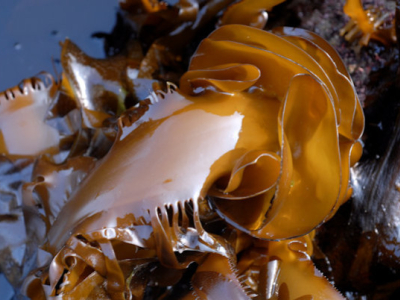
- Kombu (Laminaria) : it is the champion of iodine, with levels ranging from 1,500 to 8,000 µg per 1 g of dry weight. A small amount is enough, and that's precisely why it is measured carefully. A pinch in a broth or soup, and your daily intake is more than covered.
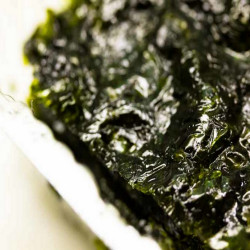
- Wakame (Undaria pinnatifida) : much milder in iodine, around 35 to 250 µg per dry gram. It is the ideal seaweed for beginners, with a delicate taste and a moderate and predictable iodine content.
€17.30
Organic Fresh Wakame Seaweed
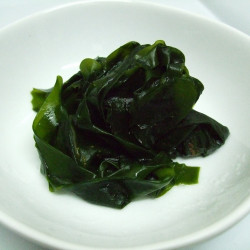
- Dulse (Palmaria palmata) : in the range of 30 to 200 µg per dry gram. Versatile, rich in iron and proteins, it provides an iodine supplement without excess.
€9.50
Back in stock on September 15
Organic Fresh Dulse Seaweed
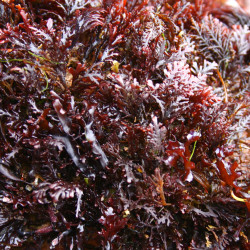
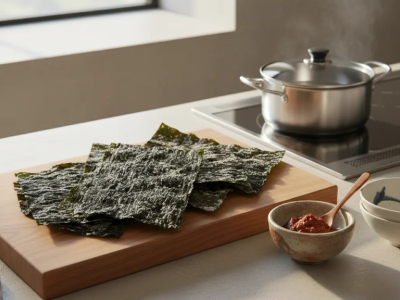
- Nori (Porphyra) : the most well-known thanks to sushi, with approximately 15 to 60 µg per dry gram. It is the most accessible and mildest seaweed in terms of iodine. Perfect for daily consumption.
€10.50
Organic Fresh Nori Seaweed
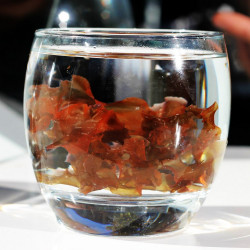
- Sea lettuce (Ulva lactuca) : moderate content, around 10 to 80 µg per dry gram. Easy to incorporate into salads or as a condiment.
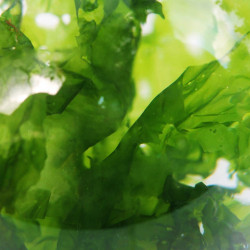
And a point of honesty that I want to make: Spirulina, although we offer it in our store, does not provide a significant amount of iodine.. It is a freshwater microalgae, fantastic for iron, proteins, and vitamin B12, but if your goal is iodine, this is not the one to turn to. We prefer to be transparent about this rather than leave our customers under any illusion. To learn more, check out our article on chlorella, a microalgae with multiple benefits, which provides zinc, an important cofactor for thyroid function.
"Thank you so much for this wonderful basket of iodized and protein-rich seaweed, very diverse and well received. These products are essential to my health and daily vitality." — Panyi C., Trustpilot review ⭐⭐⭐⭐⭐
Why seaweed is superior to iodized salt and supplements
You might wonder: why not simply use iodized salt or take an iodine tablet ?
Iodized salt is useful, certainly, but it has its limitations. First, we are asked to reduce our salt intake to protect our heart, which mechanically reduces the intake. Then, the iodine in salt is unstable: it evaporates during cooking and storage. In the end, what ends up on your plate is often well below what is indicated on the packaging.
Dietary supplements provide isolated iodine, often in the form of potassium iodide. This is effective, but the iodine is concentrated and the margin between an effective dose and an excessive dose is narrow. It is also a one-dimensional intake, lacking the natural cofactors that accompany iodine in a whole food.
Algae, on the other hand, provide iodine in a comprehensive nutritional context. They contain fibers (alginates and fucoidans), minerals (magnesium, iron, calcium), vitamins, and antioxidants. The body assimilates them differently, in a more gradual and better-regulated manner. To learn more about the active compounds in brown algae, consult our article on brown algae and Japanese longevity.
"I mainly order seaweed, but also spices, marine plasma, and small accessories. I am completely satisfied with the quality of the seaweed and always impressed by the speed of delivery. Excellent value for money." — Julie F., Trustpilot review ⭐⭐⭐⭐⭐
To see : Report in Roscoff and at Bretalg, exploring the fresh seaweed industry — our visit to the heart of the Breton seaweed industry.
ANSES precautions to know
ANSES has issued clear recommendations regarding the consumption of seaweed, and it is important to know and follow them. The upper safety limit for iodine is set at 600 µg per day for adults (which is consistent with the EFSA's position in 2014) (6).
To stay within this limit with algae, here's what you need to know:
- Kombu, due to its very high content, should be used as a condiment, not as a vegetable. A few centimeters are enough to flavor a dish and meet your needs.
- Data from CEVA (Center for the Study and Promotion of Algae) shows that cooking and soaking reduce the iodine content of algae by 20 to 60% (7). This is reassuring information for those who cook their algae.
- The diversification of species is the best strategy: alternating wakame, nori, dulse, and kombu allows for varied intake without the risk of overdosing.
Practical protocol: optimizing iodine intake without risk
Here is the protocol we recommend at Biovie for gradually and safely incorporating algae into your daily routine. This is a protocol we have developed over the years thanks to feedback from our customers and our own experience.
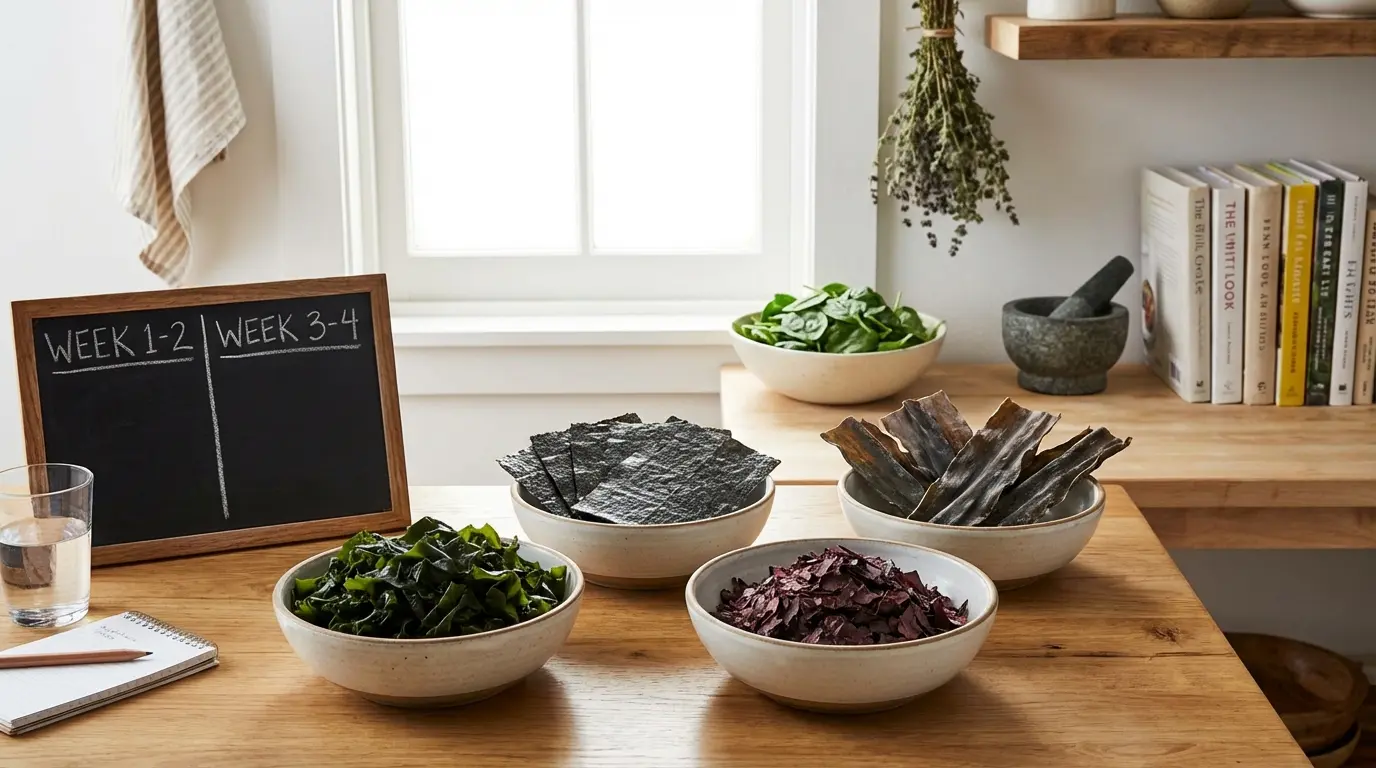
Week 1-2: Introduction with wakame and nori
Start gently. Wakame and nori are the most accessible seaweeds, both in terms of their taste and their moderate iodine content.
- Incorporate a small portion of rehydrated wakame into your salads or soups (about 5 g dry per day, which is equivalent to a tablespoon rehydrated).
- Add crumbled nori sheets to your dishes, your morning eggs, your toasts.
- Observe how your body reacts: a boost of energy is often reported from the first days.
→ Start gently with organic wakame
Week 3-4: gradual integration of kombu and dulse
Once your body has gotten used to seaweed, you can expand your palette.
- Add a small piece of kombu (2-3 cm) to the cooking water of your grains, legumes, or soups. Remove it after cooking if you wish; the iodine will have infused into the broth.
- Incorporate dried dulse as a condiment: it has a slight smoky flavor that pairs well with fish dishes, salads, and even pasta.
- Vary the species from one day to the next to avoid concentrating on a single type of iodine.
To see : Jacques Antonin on seaweed, sprouted sunflower, and fenugreek — a fascinating insight into the role of algae for the thyroid.
Long-term maintenance: vary the algae according to the season
In the long term, the idea is to integrate algae as a regular part of your diet, not as a temporary supplement.
With Aurélie, we have been consuming it almost every day for years. Honestly, it has become as natural as putting parsley in a salad. One day it's wakame in the miso soup, another day nori as a snack, kombu in the Sunday broth, dulse flakes on the vegetables.
The key is consistency and diversity. And our clients confirm it:
"I have been a regular customer for several years: fresh vacuum-packed seaweed and high-quality Quinton marine plasma at very affordable prices. Congratulations and long life to you." — Jacquot C., Trustpilot review ⭐⭐⭐⭐⭐
"Excellent organic grocery store! The seaweed tartare that I often hesitated to buy is a pure marvel, so important for the thyroid. An exceptional nutritional contribution." — Marinella C.K., Trustpilot review ⭐⭐⭐⭐⭐
"We bought fresh seaweed, which we appreciate for its quality. The after-sales service and delivery are very well managed. People to highly recommend for their human values." — Catherine S., Google review ⭐⭐⭐⭐⭐
"I have been ordering from Biovie for years, my fresh seaweed for making my seaweed tartare, nori sheets for my sushi, marine plasma, my yogurt and plant-based cheese starters. I have always been delighted with the quality of the products and the service." — Florence D., Google review ⭐⭐⭐⭐⭐
To see : Episode 3: 5 Essential Living Foods to Start — our tips for incorporating seaweed and other superfoods into your daily routine.
Specific populations: pregnancy, breastfeeding, thyroid pathology
For certain populations, additional precautions are necessary, and I prefer to be very clear about this:
- Pregnant and breastfeeding women : your iodine needs increase significantly (200-250 µg/day). Mild seaweeds like wakame and nori can help meet these needs, but be sure to discuss it with your midwife or gynecologist. Iodine is crucial for your baby's brain development, as shown by the ALSPAC/Lancet study of 2013 (1), but medical supervision is essential. Also, check out our advice for prepare for pregnancy with the right nutrients and our report on Iodine and Pregnancy in a Raw Food Diet.
- People with a diagnosed thyroid condition (Hashimoto, Basedow, nodules): consult your endocrinologist before making any changes to your iodine intake. Your thyroid reacts differently, and iodine-rich seaweeds like kombu could interfere with your treatment.
- People undergoing iodine-based treatment (Levothyrox, amiodarone): the same recommendation, medical advice is necessary before incorporating seaweed into your diet.
Aurélie and I greatly value this transparency. Algae are an extraordinary food, but they do not replace medical supervision when it is necessary. Our role is to inform and support you, not to substitute for your doctor.
FAQ — Iodine Deficiency and Excess
What are the symptoms of iodine deficiency ?
The most common signs are persistent fatigue, unexplained weight gain, excessive sensitivity to cold, dry skin, brittle hair, concentration problems, and a gloomy mood. In advanced cases, a goiter (visible swelling in the neck area) may appear. If you have several of these symptoms, a thyroid assessment including an ioduria test may be relevant.
How to naturally increase your iodine levels ?
The most effective and natural solution is to incorporate seaweed into your daily diet. Wakame and nori are perfect for beginners, with moderate and predictable intakes. Seafood (fish, shellfish), eggs, and dairy products also contribute to the intake, but to a lesser extent. The gradual protocol we describe in this article guides you step by step. → Discover our organic seaweed rich in natural iodine.
Is it possible to have an iodine deficiency with a normal TSH level ?
Yes, and this is one of the blind spots of current screening. TSH levels can remain within the normal range while your iodine reserves gradually deplete. Your thyroid compensates for as long as it can. To accurately assess your iodine status, a 24-hour urinary iodine test is the gold standard, but it is rarely prescribed routinely.
What is the actual risk of excessive dietary iodine ?
According to French nutrivigilance data, the risk of excess through dietary intake is extremely low: only 4 documented cases in France. The vast majority of excess cases are linked to overdosed dietary supplements or medications. For healthy individuals without thyroid pathology, consuming seaweed in reasonable quantities does not pose a risk, within the limit of 600 µg of iodine per day set by EFSA and ANSES.
Which seaweeds should be chosen for an optimal iodine intake ?
For a balanced daily intake, the wakame and the nori are your best allies: moderate content, pleasant taste, easy to integrate. The Dulse is an excellent versatile option. The Kombu is the seaweed richest in iodine and is typically used as a condiment in small quantities. And don't forget: spirulina, although excellent for iron, does not provide significant iodine.
Why do the French lack iodine despite iodized salt ?
Because iodized salt is no longer sufficient. The recommended reduction in salt consumption mechanically decreases intake. The iodine in salt evaporates during cooking and storage. French soils are poor in iodine, limiting intake through plants. Additionally, changes in practices in the dairy industry have reduced the iodine content in dairy products. As a result, the majority of French people do not reach the recommended daily intake of 150 µg (2).
Is the iodine from seaweed dangerous for the thyroid ?
No, provided that you adhere to reasonable dosages and are aware of your health situation. For healthy individuals without thyroid conditions, the regular consumption of seaweed as part of a varied diet is perfectly safe and beneficial. Japanese populations have been consuming it daily for centuries without any public health issues. However, if you have a diagnosed thyroid disease, prior medical advice is essential. For more information, consult scientific studies on algae and the thyroid.
Here you go, I hope this article has helped you gain a clearer understanding of the iodine issue. At Biovie, we deeply believe that transparent and honest information is the first step towards making better decisions for your health. Seaweeds are part of our daily life, and we are convinced that they deserve a place in yours.
Feel free to explore our additional files on seaweed, much more than iodine to delve deeper into the subject. And as always, a varied and balanced diet, combined with a healthy lifestyle, remains the foundation of your well-being.
→ See all our seaweed products → Organic seaweed Biovie
Bibliographic references
- Bath SC, Steer CD, Golding J, Emmett P, Rayman MP. Effect of inadequate iodine status in UK pregnant women on cognitive outcomes in their children: results from the Avon Longitudinal Study of Parents and Children (ALSPAC). The Lancet. 2013;382(9889):331-337. doi:10.1016/S0140-6736(13)60436-5
- ANSES. Individual National Study on Food Consumption 3 (INCA 3) — Collective Expertise Report. Paris: National Agency for Food, Environmental and Occupational Health Safety; 2017. Consult the INCA 3 report
- World Health Organization (WHO). Global Nutrition Report — Iodine Status in Europe. Geneva: WHO; 2024. Consult WHO data on iodine
- Andrianou XD, et al. Seaweed consumption and excess iodine intake: French nutrivigilance data. Food and Chemical Toxicology. 2021. doi:10.1016/j.fct.2021.112138
- Farebrother J, Zimmermann MB, Andersson M. Excessive iodine intake: sources, assessment, and effects on thyroid function. Annals of the New York Academy of Sciences. 2019;1446(1):44-65. doi:10.1111/nyas.14041
- EFSA Panel on Dietetic Products, Nutrition and Allergies (NDA). Scientific Opinion on Dietary Reference Values for iodine. EFSA Journal. 2014;12(5):3660. doi:10.2903/j.efsa.2014.3660
- CEVA (Center for the Study and Promotion of Algae). Should we be afraid of the iodine in algae? Pleubian: CEVA; 2020. Consult the CEVA sheet
Update, March 2026. Article approved by Eric Viard, founder of Biovie, engineer ISTOM, co-author of " Seaweed in everyday life "(Gallimard, 2024) — elected" Best cookbook in the world, Gourmand Cookbook Awards 2025 - elected Best cookbook in France, National Academy of Cuisine 2025.