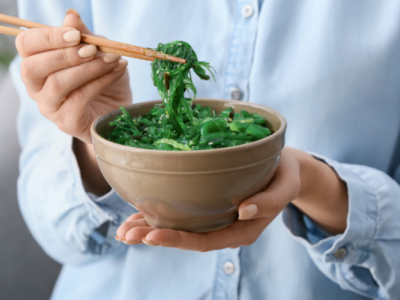
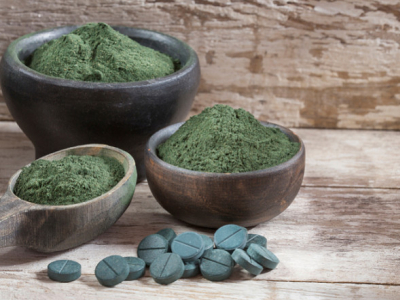
Fast delivery
.png)
 Fair prices


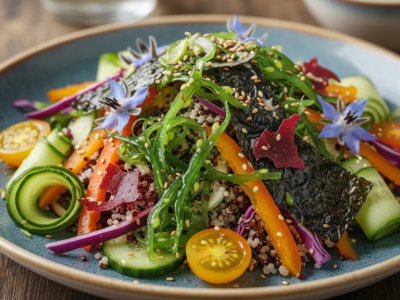

Algae like spirulina contain up to 70% protein, which is 3 times more than beef, with all essential amino acids. This exceptional nutritional density makes it a credible and sustainable alternative to animal proteins.
I remember very well the moment when I truly became aware of what the algae could provide. I was in the middle of a dietary transition in 2014, and like many of you perhaps, I was asking myself that famous question: "but where will I find my proteins "if I reduce meat?"
I've heard this concern hundreds of times. From my friends, in my family, from the mothers I support. And I understand. We've been told so many times that we need meat to be healthy, for our muscles, for our energy. However, through observation and experiences, I discovered something that completely changed my perspective.
Today, 24% of French people are flexitarians, which represents more than 10 million people reducing their meat consumption. And 57% say they want to reduce it even further. But here's the problem: many are unaware that the Algae contain up to 3 times more protein than beef.. This is information that changes everything, and that's exactly what I want to share with you today.
Why algae are an exceptional source of protein
Protein content: the surprising figures
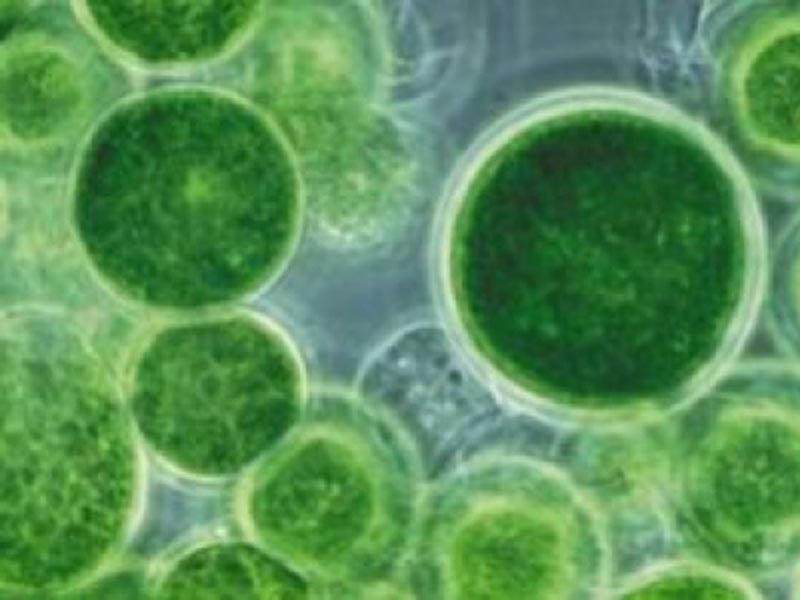
When I discovered the first figures, I had to check several times. The spirulina contains between 55 to 70% protein in dry weight. Some studies from CEVA (Center for the Study and Valorization of Algae in Brittany) even report up to 79.7%. To give you a concrete idea, beef contains between 20 and 26%. So we are indeed talking about 3 times more.
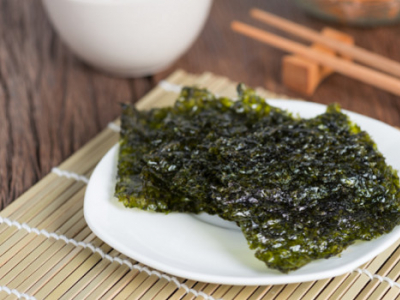
The chlorella follows closely with 55 to 60% protein. The nori, this seaweed used for makis, ranges between 30 and 50%. And even the Dulse, less known, contains between 17 and 47% protein.
What particularly touched me about these discoveries is realizing that these foods are not new. The Aztecs were already consuming spirulina centuries ago. The populations around Lake Chad, the Kanembu, still make it a staple food. And in Brittany, Japan, Ireland, the Seaweed have nourished entire generations.
We are not reinventing anything. We are simply rediscovering an ancient wisdom that our modern diet had set aside.
The essential amino acids of algae
Here is the point that often sparks debate when discussing plant proteins "Yes, but are they complete proteins?"
The answer is yes. Spirulina and chlorella contain the 8 essential amino acids, those that our body cannot produce on its own and must absolutely obtain from food. And not in random proportions: in proportions validated by the FAO (the Food and Agriculture Organization of the United Nations).
Their profile is comparable to that of the egg, which is considered the reference in terms of complete proteins. This is valuable information for anyone wondering if they can really rely on algae for their daily intake.
For those who wish to delve deeper into this topic, I invite you to discover our article on the myths about plant proteins which deconstructs many preconceived ideas.
https://www.biovie.fr/en/46-algae
Nutritional Comparison: Seaweed vs Meat
The numbers side by side
I have prepared a comparison that speaks for itself. For 100g of product:
- Proteins: 57-70g
- Iron: 28-35mg
- Digestibility: 83-90%
- All essential amino acids present
Beef:
- Proteins: 20-26g
- Iron: 2.5-3mg
- Digestibility: approximately 80%
- All essential amino acids present
Chicken:
- Proteins: 27-31g
- Iron: 1mg
- Digestibility: approximately 85%
- All essential amino acids present
The difference in iron is particularly striking: spirulina contains it 10 times more than beef. For all the tired women, exhausted moms, those with heavy cycles... this information is worth its weight in gold.
Digestibility and bioavailability of proteins
An essential point I like to emphasize: we are not only what we eat, we are especially what we assimilate. And this is where algae particularly shine.
Spirulina has a digestibility of 83 to 90%. It is superior to meat. Why? Because unlike traditional plant cells, the microalgae like spirulina do not have a rigid cellulosic wall. Therefore, their nutrients are much more accessible to our digestive system.
It's an important nuance. Eating proteins is good. Truly assimilating them is better. And with algae, this assimilation is optimized.
The bonus nutrients of seaweed
Beyond proteins, algae provide a whole array of nutrients that meat cannot offer:
- Bioavailable iron : 10 times more than in beef
- Vitamin B12 : present in chlorella in particular, valuable for vegetarians, even though the debate on the forms of B12 is not yet settled
- Antioxidants : the phycocyanin in spirulina is a powerful antioxidant
- Chlorophyll : for tissue oxygenation and body alkalinization
- Trace elements : zinc, selenium, manganese...
It is this global richness that makes algae much more than just an "alternative" to meat. It is a complete food that nourishes deeply.
The table of practical equivalences
Here is what no one tells you clearly: how much algae is needed to replace meat ? ?
- To replace 100g of beef (25g of protein): 35-40g of spirulina, which is 7-8 teaspoons.
- To replace 100g of chicken (30g of protein): 45-50g of spirulina, or 9-10 teaspoons.
- To replace 1 egg (6g of protein): 10g of spirulina, or 2 teaspoons
- To replace 100g of tofu (8g of protein): 12-15g of spirulina, or 3 teaspoons.
An important clarification : In practice, spirulina is consumed as a supplement (3 to 5 g per day) rather than as a total replacement. Ideally, microalgae (spirulina, chlorella) and macroalgae (nori, dulse) should be combined in a varied diet. This is what we do at home with Eric, and what we recommend.
For discover all the benefits of seaweed, we have written a comprehensive guide on the subject.
Which algae to choose according to your needs ?
Spirulina: the champion of proteins (55-70%)
The spirulinaIs truly the star of the microalgae, and it is no coincidence that NASA selected it to feed astronauts as part of the CELLS program. It is the most protein-dense food that exists.
It is particularly suitable if you:
- Seek to increase your protein intake
- Suffer from chronic fatigue
- Have significant iron needs
- Practice a sport activity
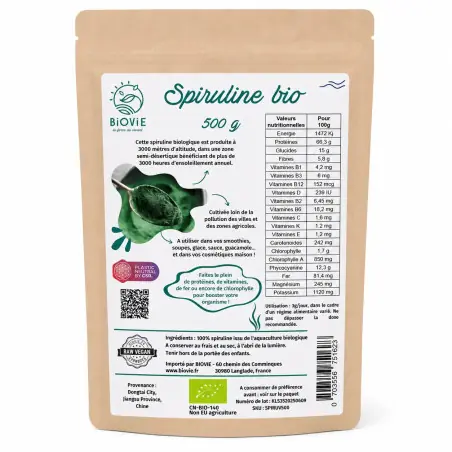
Its wealth in Phycocyanin, this unique blue antioxidant pigment also makes it a valuable ally in combating oxidative stress. Our organic spirulina powder easily integrates into a morning smoothie or sprinkled on a salad.
Chlorella: detox and complete proteins (55-60%)
The chlorella, it is the other protein-rich microalgae, but with a slightly different profile. It contains 18 amino acids and a remarkable concentration of chlorophyll, which gives it properties that support elimination.
What distinguishes it is its ability to bind certain heavy metals due to its particular cell membrane. It is therefore often recommended in protocols supporting elimination.
If you would like to know more, our article on the Benefits of chlorella Detail all its properties.
The ideal? Alternate between spirulina and chlorella, or combine them to benefit from their complementarities.
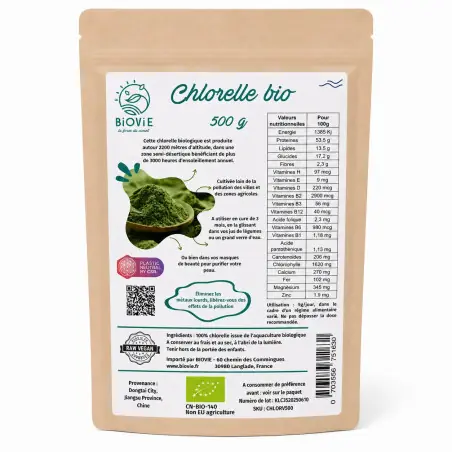
Nori: the seaweed for athletes (30-35%)
The nori, you probably know it without realizing: it's the black seaweed that wraps around sushi and maki. But did you know that it contains more protein than meat and cheese ?
With 30 to 50% protein, the nori is also an excellent source of iodine and B vitamins. Its mild and slightly toasted flavor makes it the easiest seaweed for beginners to get accustomed to.
Athletes particularly appreciate it for its richness in minerals that support recovery. Discover all the lesser-known benefits of nori seaweed in our dedicated article.
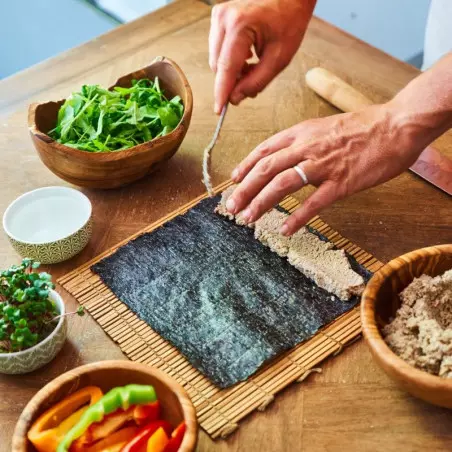
Dulse: the protein-rich "bacon of the sea" (17-47%)
The Dulse, It's somewhat my favorite for everyday cooking. This red algae with a slightly smoky taste has earned the nickname "bacon of the sea" when grilled for a few seconds. And in terms of protein, it rivals soy !
Dulse is as rich in protein as soy., with the advantage of bringing all the benefits of Seaweed : minerals, trace elements, antioxidants.
For a complete guide to edible seaweeds including the Dulse, wakame, sea lettuce, and sea beans, I invite you to consult our detailed article.
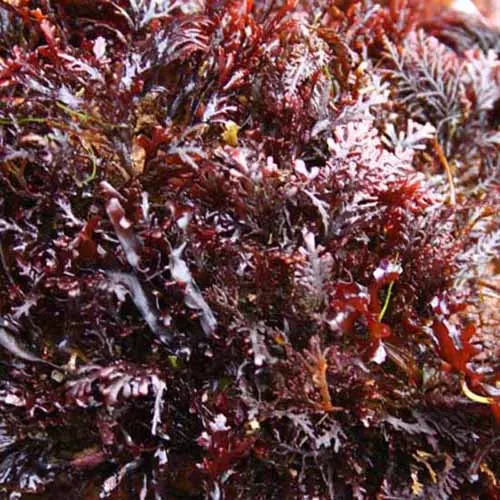
How to incorporate seaweed into your diet
Beginner's Guide: Start with 1g per day
I know that the world of seaweed can seem intimidating when you're just starting out. The taste, the intense green color, the feeling of "eating something very different"... I've experienced all of that too.
My recommendation: start slowly, very slowly. Your body and palate need time to adjust.
Here is my recommended progression over 7 weeks:
Weeks 1-2 : 1g per day, in tablet form. It's the simplest way because there is no taste. Take them in the morning with your breakfast.
Weeks 3-4 : 3g per day, in tablets or powder. If you switch to the powder, mix it into a fruity smoothie. Banana and mango particularly well mask the taste.
Weeks 5-6 and more: 5g per day, ideally in powder form in a smoothie in the morning.
Recommended quantities according to your goals
Needs vary according to your situation:
- General maintenance : 3-5g per day of spirulina or chlorella
- Sports support : 5-7g per day, before or after training
- Periods of fatigue : 5-8g per day
- Pregnant or breastfeeding women : ask your healthcare professional for advice
For macroalgae (nori, dulse, wakame), consume an average of 5 to 10 g per day, integrated into your dishes.
3 simple recipes to start
Express Protein Smoothie (5 minutes)
This is my favorite morning recipe, the one I make almost every day:
- 1 ripe banana
- 200ml of almond milk
- 5g of organic spirulina powder
- 1 teaspoon of honey
- A few ice cubes
Mix everything and enjoy immediately. You get 6g of complete plant-based proteins, plus all the nutrients of banana and spirulina.
Energy salad (10 minutes)
- 150g of quinoa soaked, sprouted, and then cooked
- Seasonal vegetables (cucumber, tomatoes)
- 1 tablespoon of organic dulse flakes
- Lemon-olive oil vinaigrette
- Sesame seeds
This salad provides you with 12g of plant-based protein and an explosion of flavors. The dulse adds that little iodized touch that makes all the difference.
For even more ideas on how to incorporate spirulina into daily life, consult our guide on the 6 uses.
Tips for masking the iodine taste
The taste of seaweed can be off-putting at first, I completely understand. Here are my tips:
- Opt for the tablets : zero taste, identical effectiveness
- Mix into fruity smoothies : banana-mango works wonderfully
- Use grilled dulse : its "bacon" flavor is much more familiar
- Start with the nori : its taste is the sweetest of all the seaweeds
- Sprinkle in small quantities : rather than a large dose, sprinkle your dishes
And above all, give yourself time. The palate can be trained. What seems strange to you today may become your favorite health ally tomorrow.
Algae and sports: the winning combo for muscles
Muscle recovery and BCAA amino acids
Vegetarian or flexitarian athletes often ask themselves the question of muscle recovery. And that is where algae reveal their full potential.
Spirulina is naturally rich in BCAA (branched-chain amino acids): leucine, isoleucine, and valine. These three amino acids are essential for muscle protein synthesis and recovery after exercise.
Combined with its richness in iron (which improves oxygen transport to the muscles) and antioxidants (which combat oxidative stress generated by exertion), spirulina becomes a true performance ally.
Spirulina and athletic performance: the studies
It's not just a personal impression. A study published in 2023 in The Journal of Nutrition demonstrated that the spirulina and chlorella proteins effectively support the maintenance and strengthening of muscles, in a manner comparable to animal proteins.
The study, conducted at the University of Exeter on 36 adults, compared muscle protein synthesis after the consumption of algae proteins versus animal proteins. The results were equivalent.
This is valuable information for all athletes who wish to reduce their meat consumption without compromising their performance.
The case of vegetarian athletes
19% of Generation Z identify as vegetarian, compared to only 4% of baby boomers. This trend also affects the world of sports, and many high-level athletes have made the transition.
For them, algae represent an ideal source of protein:
- Complete proteins with all essential amino acids
- Bioavailable iron for muscle oxygenation
- BCAA for recovery
- Antioxidants to combat post-exercise inflammation
- Chlorophyll for alkalizing the body
The recommended dose for athletes: 5 to 6g of spirulina per day, to take before or after training.
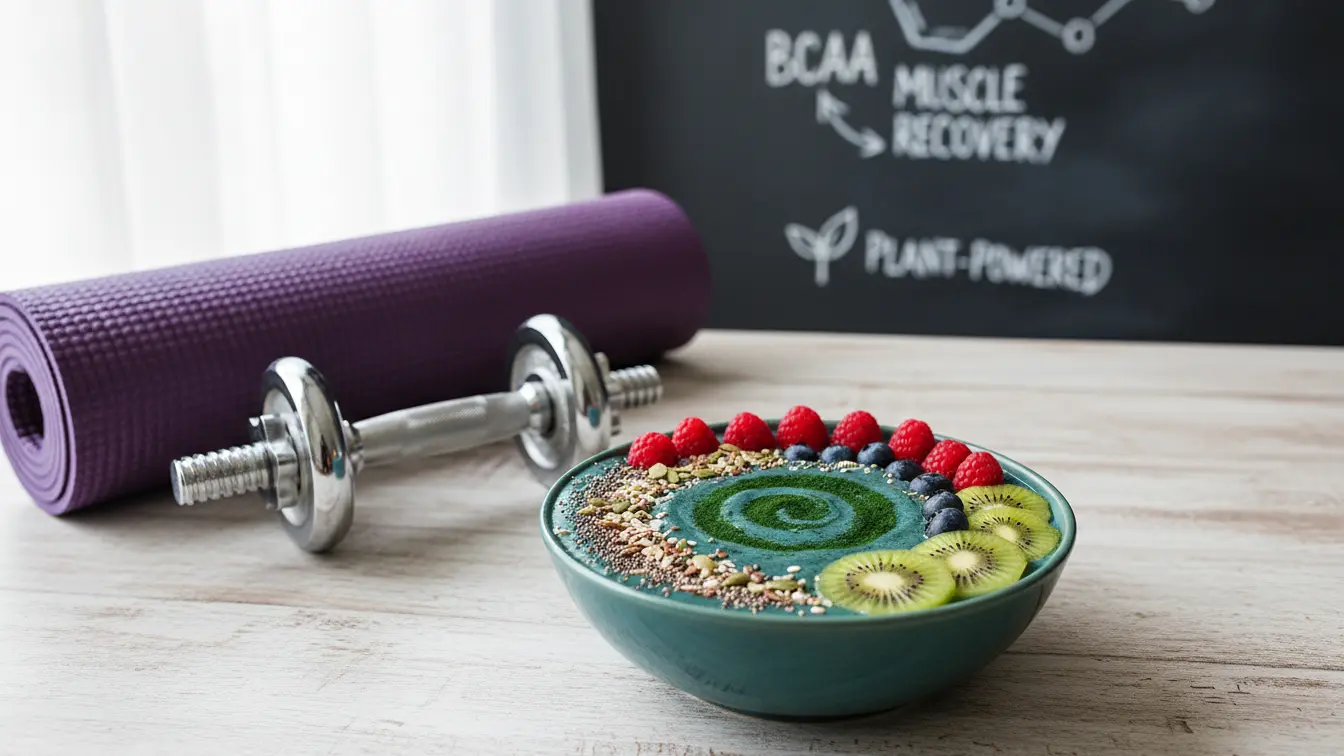
The Environmental Impact: Why Algae Are Winning
Carbon footprint: algae vs livestock
This is an aspect that is particularly close to my heart. When we talk about food, we can no longer ignore its impact on our planet.
The numbers are telling:
- Production of 1kg of beef: 35 kg of CO2 equivalent
- Production of 1kg of spirulina: almost zero
Food represents 22% of the carbon footprint of an average French person, which is 2.1 tons of CO2 equivalent per year per capita. And within this food footprint, animal products account for 61%.
By incorporating more seaweed and less meat into our diet, we are taking concrete action to reduce our impact.
Water and resource consumption
Water is a precious resource, and its consumption to produce our food varies greatly:
- To produce 1kg of beef protein: 15,000 to 20,000 liters of water
- To produce 1kg of chicken protein: 4,300 liters of water
- To produce 1kg of spirulina protein: 98% less than beef
The protein yield of spirulina is also impressive: 125 times higher than corn and 100 times superior to beef per hectare.
Brittany currently produces 75,000 tons of seaweed per year, with only 200 tonnes in aquaculture. It is a rapidly developing sector that offers a sustainable and local alternative.
As the Michelin-starred chef Olivier Roellinger says: "In 2050, feeding from the sea will primarily mean eating seaweed."
To delve deeper into this topic, our article explains how reduce your environmental impact thanks to plant-based nutrition.
FAQ - Your questions about algae proteins
Can algae really replace meat ?
Yes, algae like spirulina contain all the essential amino acids and up to 3 times more protein than beef. A 2023 study published in The Journal of Nutrition confirms that spirulina and chlorella proteins effectively support muscle maintenance and strengthening, in a manner comparable to animal proteins. In practice, it is ideal to incorporate them into a varied diet rather than as a total replacement.
Which algae contains the most protein ?
Spirulina holds the record with 55 to 70% protein by dry weight, reaching up to 79.7% according to CEVA. It is followed by chlorella (55-60%), nori (30-50%), and dulse (17-47%). For comparison, beef contains 20-26% protein.
How much spirulina is needed to replace a steak ?
Approximately 35-40g of spirulina provide as much protein as a 100g steak (25g of protein). In practice, spirulina is consumed as a supplement (3-6g per day) rather than a total replacement, combined with other plant-based sources for a balanced diet.
Are algae proteins complete ?
Yes, spirulina and chlorella contain the 8 essential amino acids in proportions validated by the FAO. Their profile is comparable to that of an egg, which is considered the reference for complete proteins. The digestibility of spirulina proteins reaches 83-90%.
Spirulina or chlorella: which one to choose for proteins ?
Both are excellent with similar contents (55-70%). Spirulina is richer in phycocyanin (antioxidant) and iron, making it ideal for athletes and fatigued individuals. Chlorella excels in its support for elimination due to its chlorophyll and its ability to bind heavy metals. The ideal approach is to alternate or combine them.
Is spirulina suitable for vegetarian athletes ?
Absolutely. Its richness in complete proteins (60-70%), BCAAs (branched-chain amino acids), bioavailable iron, and antioxidants (phycocyanin) supports muscle recovery and performance. A dose of 5-10g per day is recommended for athletes, to be taken before or after training.
How to consume seaweed when you don't like the taste ?
Several solutions: opt for spirulina in tablets (tasteless), mix the powder into fruity smoothies (banana-mango masks the taste well), or use grilled dulse which has a bacon flavor. Start with 1g per day for 2 weeks to gradually acclimate your palate.
In conclusion
If you've made it this far, it means the subject resonates with you. And I understand why. More and more of us are questioning our diet, looking for alternatives that truly nourish our bodies while respecting our values.
The algae are not a passing trend. They are ancestral foods, validated by centuries of use and confirmed by modern science. Their richness in complete proteins, in iron, in antioxidants, combined with their low environmental impact, makes it a concrete response to the challenges of our time.
No miracle promises here. Just an invitation to discover, to test, to listen to your body. Start gently, with 1g per day. Observe how you feel. And let yourself be surprised.
This is my way of guiding you towards a more vibrant, more respectful, more nourishing diet. A diet that benefits your body and our planet.
Do you want to start your protein transition? Discover our selection ofbio algae : spirulina, chlorella, nori, dulse... All sourced from controlled and certified supply chains. For discover other sources of plant-based proteins, our comprehensive guide will give you even more options.
And if you have any questions, don't hesitate. At Biovie, we have been here for 18 years to support you in this beautiful adventure of living.
See you soon,
Aurélie