

Summary
- What the large INSERM study on 63,835 French people reveals
- The 3 identified dietary profiles and their impacts on the heart
- Why "plant-based" alone is not enough — the role of the degree of processing
- Ultra-processed foods: how to recognize them in your kitchen
- The NOVA classification into 4 groups — practical guide
- List of the most common ultra-processed plants
- The trap of "vegetal washing": organic and plant-based does not mean unprocessed
- The Third Way: Transformations That Improve Your Food
- Germination — multiply nutrients in just a few days in your kitchen
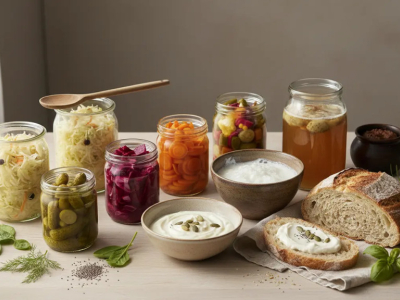
- Lactofermentation — probiotics that contribute to cardiovascular well-being
- Mild dehydration and freeze-drying — concentrating without destroying
- Soaking, activation, and cold pressing
- What differentiates virtuous transformations from industrial processes
- How to replace ultra-processed plant-based foods in daily life
- 5 simple substitutions — from the industrial aisle to your kitchen
- Transforming your home — simpler (and cheaper) than you think
- FAQ — Ultra-processed foods and cardiovascular health
Ultra-processed plant-based foods offer no cardiovascular protection, even when their nutritional profile seems good on paper. This is revealed by a large French study from INSERM involving 63,835 adults followed for 9 years, published in The Lancet Regional Health – Europe In October 2025. Only minimally processed plants with good nutritional quality are associated with a reduction in the risk of cardiovascular diseases by about 40%. The good news is that between industrial ultra-processing (which includes high-temperature or high-pressure cooking, frying...) refining, and raw, there are virtuous transformations — germination, lacto-fermentation, freeze-drying, dehydration, soaking — that can improve the food without degrading it. These are virtuous and non-destructive processing methods for nutrients sensitive to ultra-processing. This is what we at Biovie call the philosophy of the concept of living food.
What the large INSERM study on 63,835 French people reveals
The 3 identified dietary profiles and their impacts on the heart
Honestly, when I discovered the results of this study published in The Lancet Regional Health – Europe In October 2025, I had a real shock. The team of researchers from INSERM/INRAE, led by Prioux and his colleagues, analyzed data from the NutriNet-Santé cohort — 63,835 French adults followed for an average of 9.1 years, and up to 15 years for the first participants included in the study.
Here is what they found, and it is quite enlightening:
-
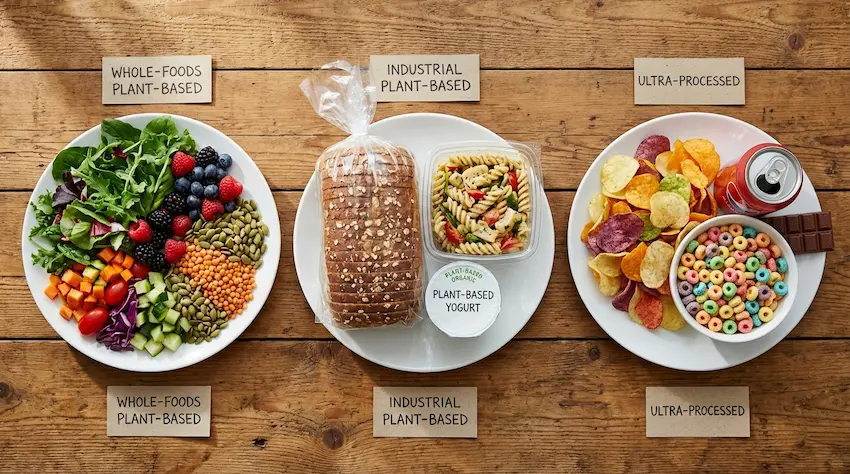
Plants of good nutritional quality and minimally processed (fresh fruits and vegetables, raw seeds, legumes, dried seaweed): approximately -40% cardiovascular risk. It is considerable.
-
Plants with good nutritional quality BUT ultra-processed (industrial whole grain breads, store-bought soups, prepared pasta dishes, industrially seasoned salads): no discount of risk. Zero. Nothing.
-
Low-quality and ultra-processed plants (chips, fruit-flavored sugary drinks, plant extract sodas, sugary cereals, cookies, confectionery): approximately +40% cardiovascular risk. The exact opposite of the first group.
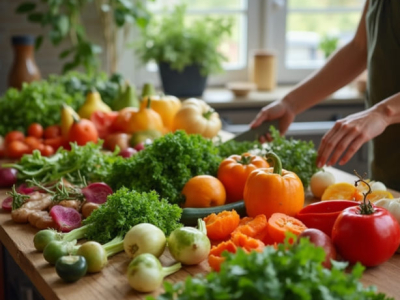
The profile that caught my attention the most is the second one. These individuals eat foods that, on paper, tick all the boxes: it's plant-based, it's "whole," the nutritional profile is good. And yet, their heart gains no benefit. Why? Because these ultra-processed foods have lost their original food matrix. It's the degree of food processing and health that makes the difference, not what's written on the packaging.
To go further on natural approaches to protect your arteries, we have published a dedicated article on our blog.
Why "plant-based" alone is not enough — the role of the degree of processing
In reality, ultra-processing destroys what scientists call the food matrix. Simply put, the food matrix is the physical structure of the food — the way its fibers, nutrients, and enzymes are naturally organized. This structure directly influences how your body will digest and absorb these nutrients. It is the key to understanding the definition of ultra-processed foods.
Take a concrete example: an industrial whole grain bread and an artisanal sourdough whole grain bread. On the label, their nutritional profiles look similar. But in your body, it's a completely different story. The industrial bread has undergone processes that have fragmented its matrix, added additives, emulsifiers, preservatives. The sourdough bread has been naturally fermented, its matrix is intact, its nutrients are bioavailable.
And this is not an isolated study. In November 2025, a series of articles published in The Lancet, involving 43 international experts and analyzing 104 long-term studies, confirmed these results: 92 out of 104 studies show a higher incidence of chronic diseases associated with ultra-processed foods. Twelve significant health issues are linked to their consumption: obesity, type 2 diabetes, cardiovascular diseases, depression, premature mortality, certain cancers...
And in August 2025, a CNRS study had already shown that ultra-processed foods pose risks even without caloric excess. It's not a question of quantity, it's a question of the quality of what we put on our plate.
Today in France, these foods account for about 35% of our caloric intake. In the United States, it's up to 60%. In practical terms, this means that a significant portion of what we eat each day has been so heavily modified by the industry that our bodies no longer really know what to do with it.
To watch on our YouTube channel: In our episode "The Environmental Impact of a Raw Food Diet", we explain why avoiding ultra-processed foods is also an action for the planet: sprouted seeds and algae are at the zero level of the food chain and extremely virtuous in terms of CO2.
Ultra-processed foods: how to recognize them in your kitchen
The NOVA classification into 4 groups — practical guide
To make sense of it, there is a very useful tool developed by Brazilian researchers: the NOVA food classification. It categorizes foods into 4 groups based on their level of processing, not according to their nutrients. Here's how it works:
-
NOVA 1 — unprocessed or minimally processed foods : these are raw foods or those that have undergone simple processes such as low-temperature drying, grinding or blending, or freezing. Think of fruits, vegetables, seeds, nuts, dried algae, powdered spirulina, seawater, frozen klamath, freeze-dried fruits. This is the group where almost all of the products we offer at Biovie are found.
-
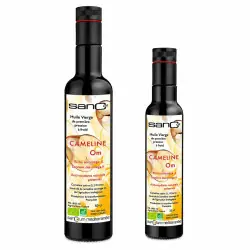
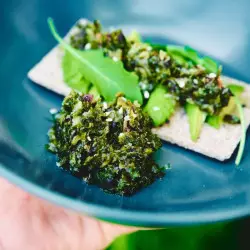
NOVA 2 — culinary ingredients : substances extracted from NOVA 1 foods by simple assembly of ingredients (such as our seaweed tartare), by simple pressing. Cold-pressed oils ("lin", , Hemp, , Camelina). Again, several of our products fall into this category.
-
NOVA 3 — processed foods : NOVA 1 foods modified by simple processes such as canning and salting. Canned vegetables, artisanal cheeses, sourdough bread, lacto-fermented vegetables. Processes that you can replicate at home.
-
NOVA 4 — ultra-processed : and that's where it gets complicated. These are industrially processed products with 5 or more ingredients, including additives, flavors, and emulsifiers that you would never find in your kitchen. Sodas, sweetened cereals, reconstituted plant-based steaks, boxed soups, cookies, ready meals.
To better understand the differences between these groups, our Ranking of food processing methods Detail each process in depth.
Discover our selection of raw and unprocessed foods. — all classified as NOVA 1 and NOVA 2 — in our living food category.
List of the most common ultra-processed plants
What are the ultra-processed foods identified by the INSERM study? Here is the list of ultra-processed plant-based products to avoid or limit:
- industrial whole grain breads
- store-bought soups
- dishes prepared with pasta
- store-bought seasoned salads
- chips
- fruit-based sugary drinks
- plant extract sodas
- chocolate sweet products and confectionery
- sweet breakfast cereals
- savory biscuits
How to recognize an ultra-processed food on the label ? Three fairly simple warning signals. First, count the ingredients: more than 5 is a first signal. Then, look for names of additives that you never use in cooking: E471, carrageenan, maltodextrin, soy lecithin... Finally, be wary of mentions like "hydrolyzed proteins," "natural flavors," or "glucose-fructose syrup." These are the signatures of ultra-processing.
And attention, an important point: a product can be organic AND ultra-processed. The organic label guarantees the absence of synthetic pesticides, but it does not say anything about the degree of industrial processing the food has undergone. It's a trap that many well-intentioned people fall into.
The trap of "vegetal washing": organic and plant-based does not mean unprocessed
This is a subject that is particularly close to my heart because I have seen it every day for the 18 years that Aurélie and I have been working in the field of living food.
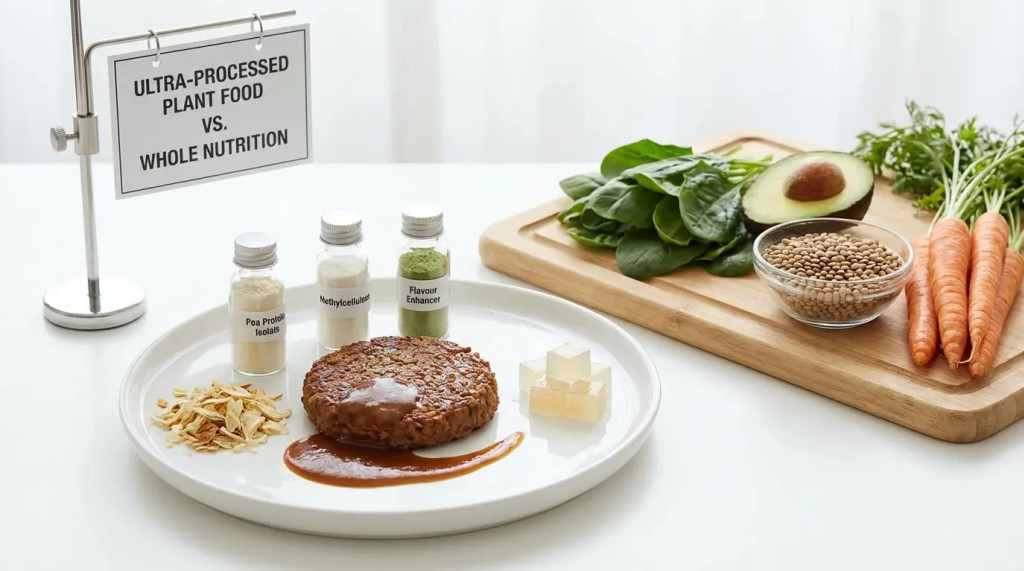
The food industry is riding the plant-based trend with products that proudly bear the "plant-based" label but are actually ultra-processed plant products whose dangers are now scientifically documented. Reconstituted plant-based steaks made from textured pea proteins, plant-based nuggets, plant-based yogurts filled with emulsifiers, plant-based "milks" with thickeners and flavors... All of this is NOVA 4 disguised as "healthy" products. These products are part of the processed foods to avoid if you truly want to eat plant-based and protect your heart health.
And the INSERM study demonstrates it clearly: this strategy does not provide any benefit for your cardiovascular health, despite the "plant-based" label. To understand industry strategies to make AVs irresistible, we dedicated an entire article to this topic on our blog.
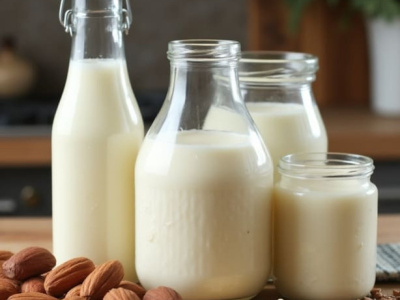
At Biovie, we offer an alternative: plant-based foods that remain in NOVA 1 and 2. Plant-based milks: homemade vs industrial rather than industrial, simply dried algae instead of reconstituted powders, whole seeds instead of extracted and recomposed proteins.
The Third Way: Transformations That Improve Your Food
Between raw unprocessed and ultra-processed industrial foods, there is a third way: ancestral or gentle transformations that do not degrade the food but, on the contrary, can enhance its nutritional value. These processes remain classified as NOVA 1 or 2 — they are the alternatives to ultra-processed foods that science validates today. This includes germination, fermentation, and other alternatives to ultra-processed foods that we detail in this section.
To watch on our YouTube channel: Our episode "What is raw food?" Explain how the principles of soaking, germination, and fermentation enrich foods instead of depleting them—unlike industrial processing.
Germination — multiply nutrients in just a few days in your kitchen
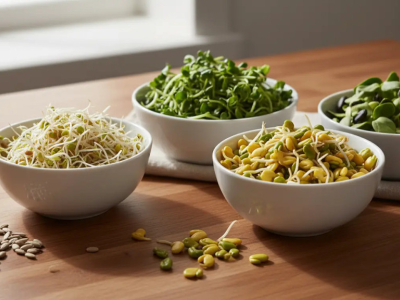
Germination is truly the virtuous transformation par excellence, and it has been one of the pillars of our activity since the very beginning of Biovie.
Specifically, germination can increase the content of vitamins C, B, and K by 3 to 10 times depending on the seeds. Broccoli sprouts contain up to 100 times more sulforaphane—a powerful antioxidant that helps protect cells against oxidative stress—than mature broccoli. Moreover, germination reduces anti-nutrients such as phytates, lectins, and enzyme inhibitors. The result: better absorption of magnesium and potassium, two minerals that play a role in the normal functioning of the cardiovascular system.
And the time required? Two minutes a day. Two rinses, that's all. You let nature do the rest.
At Biovie, we offer a wide range of organic sprouting seeds — broccoli, , Alfalfa, , Fenugreek, , sunflower, , radish— as well as sprouters that make the process even simpler. The documented benefits of sprouting are today largely confirmed by scientific literature. Living food and its health benefits largely go through this fundamental step.
Customer testimonial: " I have placed several orders on the Biovie website: sprouting seeds and the Easygreen sprouter, which I consume daily. I appreciate their blog and their advice. " — Segond (Trustpilot, ★★★★★)"
Customer testimonial: " For many years, my faithful EasyGreen has been providing me with my daily ration of seeds that I sprout in a mix. I couldn't do without it anymore ! " — Sophie C. (Google, ★★★★★)"
Lactofermentation — probiotics that contribute to cardiovascular well-being
Fermentation is an ancient process that humanity has been using for millennia. What is fascinating is that modern science now confirms what our ancestors intuitively knew.
Fermentation produces short-chain fatty acids, including butyrate, which help support a normal inflammatory response in the body — with systemic inflammation being identified as a major cardiovascular risk factor. Probiotics from lacto-fermentation also help maintain normal lipid metabolism, particularly LDL cholesterol. Additionally, fermentation increases B and K vitamins and pre-digests fibers, making them more easily assimilable.
In practice, it's surprisingly simple: 15 minutes of preparation, then nature works on its own for 3 to 7 days. A jar, some salt, fresh vegetables, and you get homemade probiotics that are much richer and more diverse than any industrial supplement.
For those who want to go further, we offer fermentation kits, kefir, and kombucha. I invite you to discover lacto-fermentation and its benefits and to explore the best fermented foods for your health.
To watch on our YouTube channel: Julien Brantener, microbiologist, explains in this interview "Why 'fermentation and germination are modes of transformation of the living that will make the food richer than at the beginning, while industrial transformation methods impoverish the food'."
Mild dehydration and freeze-drying — concentrating without destroying
Freeze-drying is a process that has fascinated me for years. The principle: water is removed from the food through sublimation (direct transition from solid to gas), which preserves 95 to 98% of the nutrients. Compare that with conventional cooking, which only preserves 60 to 75%. The difference is considerable.
This allows for the consumption of unprocessed foods all year round with almost intact nutritional density. This is the case with our freeze-dried açaí, freeze-dried durian, fresh freeze-dried pollen, and our freeze-dried fruits. The Freeze-drying preserves up to 98% of nutrients., making it one of the most environmentally friendly methods available.
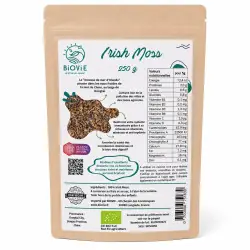
Low-temperature dehydration operates on a similar principle: by keeping the temperature below 42°C, enzymes are preserved and micronutrients are concentrated. This is exactly what we do with our dried seaweeds — dulse, wakame, nori, kombu, sea lettuce — which are rich in antioxidants, soluble fibers, and minerals that contribute to the normal functioning of the cardiovascular system. Our spirulina flakes and chlorella follow this same respectful drying principle. These are algae, a complete and unprocessed protein source by excellence.
Customer testimonial: " Products of exceptional quality and ethics! I am a fan of tiger nuts, freeze-dried fruits, raw cocoa, and marine plasma. Thanks to you, eating well doesn't cost more. " — Jaegle (Trustpilot, ★★★★★)"
Soaking, activation, and cold pressing
Soaking and activating nuts and seeds is a topic we regularly address on the Biovie blog because it is truly one of the simplest and most effective steps to replace ultra-processed foods with a diet of unprocessed foods.
Soaking removes phytic acid — this anti-nutrient that blocks mineral absorption — and improves digestibility. It releases minerals that play a role in normal cardiovascular function, including magnesium and potassium. With our activated Tuono almonds from Sicily and Brazil nuts, it's a step you can incorporate as soon as tonight: just soak them the night before.
Cold pressing, on the other hand, preserves essential fatty acids and vitamin E. Omega-3s are fatty acids that contribute to the normal functioning of the heart*. Our cold-pressed virgin oils — flaxseed, hemp, camelina — are obtained without excessive heat, which preserves their nutritional richness.
*The beneficial effect is obtained with a daily intake of 250 mg of DHA and EPA.
What differentiates virtuous transformations from industrial processes
To make it clear, here is the comparison:
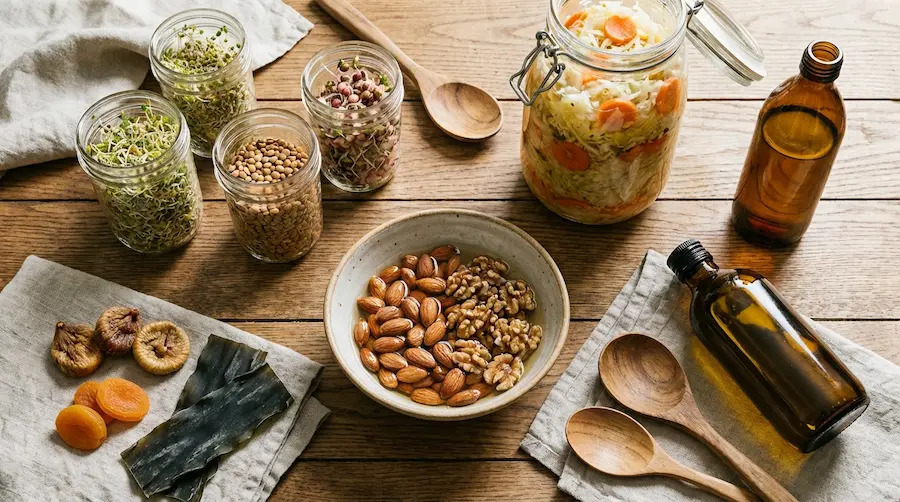
- Germination multiplies the vitamins by 3 to 10 and reduces the anti-nutrients → high-temperature extrusion Industrial processing denatures proteins, destroys vitamins, and creates neo-formed compounds.
- Lacto-fermentation creates probiotics and increases vitamins B and K → hydrogenation creates trans fatty acids, which represent a direct cardiovascular risk factor
- Freeze-drying preserves 95 to 98% of the nutrients → Hydrolysis and recomposition fragment the food and destroy its original matrix
- Low-temperature dehydration concentrates micronutrients → the addition of cosmetic additives Colors, textures, and stabilizes without any nutritional benefit.
- Soaking and activation eliminate phytic acid and release minerals → pre-treatment for frying adds saturated fats and creates acrylamide
- Cold pressing retains essential fatty acids and vitamin E → refining destroys vitamins, antioxidants, and essential fatty acids
Start germination at home with our organic seeds and sprouters — the simplest and most effective virtuous transformation for your daily diet.
How to replace ultra-processed plant-based foods in daily life
5 simple substitutions — from the industrial aisle to your kitchen
Don't panic if you eat boxed soups or commercial cereals — the idea is not to be perfect but to make progress. Here are 5 concrete swaps you can make starting this week:
-
Instead of sugary breakfast cereals → try a porridge of tiger nut flakes (and not oats) with some freeze-dried fruits and chia seeds and/or a superfood like spirulina or acai. It's NOVA 1, the fibers are intact, zero added sugars, and frankly, it's delicious.
-
Instead of an organic boxed soup → Make your homemade soup and add dried seaweed (wakame, dulse). You benefit from minerals that contribute to the normal functioning of the cardiovascular system, without any additives. And it's cheaper.
-
Instead of an industrial plant-based yogurt → switch to homemade kefir or lacto-fermented soy yogurt. Live probiotics, no emulsifiers. Your digestive system will thank you.
-
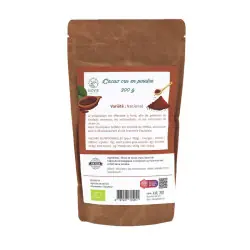
Instead of a plant-based protein bar → Prepare a mixture of activated nuts, raw cacao, and pollen that you can shape into small bars using molds and store in the refrigerator. The enzymes are preserved, the nutrients are intact, and the taste is incomparable. Raw cacao has an intensity that industrial roasted cacao simply cannot match.
-
Instead of a reconstituted plant-based steak → Make a homemade patty using vegetables and sprouted buckwheat, which you will dehydrate and can store in the fridge. The plant proteins remain intact, and the enzymes are alive. It's simpler than you might think.
Discover our germination kits to get started in 5 minutes — everything you need for your first sprout harvest.
Transforming your home — simpler (and much cheaper) than you think
This is one of the objections we hear most often: "transforming oneself is complicated and time-consuming." In reality, it's quite the opposite.
Germination: a sprouter and seeds cost just a few cents per serving and take 2 minutes a day. You rinse your seeds morning and evening, and in 3 to 5 days, you harvest fresh, living, nutrient-rich sprouted seeds.
Lacto-fermentation: a jar, some salt, and fresh vegetables. 15 minutes of preparation, then nature works on its own for 3 to 7 days. You get homemade probiotics that are incomparably richer than any supplement sold in pharmacies.
Soaking: soak your nuts and almonds the night before. Zero additional cost. Zero effort. Just a habit to adopt.
And homegrown sprouts cost just a few cents per serving. Spirulina concentrates the equivalent of several industrial supplements in one spoonful. Making homemade soup with dried seaweed is cheaper than buying an organic carton from the store. The cost argument doesn't hold up.
Customer testimonial: " Since I discovered Biovie and living foods, my health has transformed. I feel lighter, more energetic, with a true sense of serenity every day. The products are of exceptional quality with a real positive impact on well-being. " — Siegfried R. (Trustpilot, ★★★★★)"
Customer testimonial: " I discovered Biovie over 15 years ago when purchasing an automatic sprouter. It is, without a doubt, the best online store for raw food products in France. The sprouting seeds, seawater, spirulina, and Nori leaves are of exceptional quality. " — Gael V. (Google, ★★★★★)"
After years of guiding clients towards a raw food diet since 2007, Aurélie and I have noticed that those who replace industrial products — even "organic" ones — with raw or positively processed foods consistently report having more energy, better digestion, and a sense of regained vitality. The INSERM study scientifically confirms what we have been observing in the field for two decades.
To start, we offer complete germination kits with organic seeds and a sprouter. Everything you need for your first harvest of sprouted seeds in 3 to 5 days.
Want to support your cardiovascular health with foods that truly contribute to your well-being? Start with sprouting — 2 minutes a day is enough. Discover our organic sprouting seeds.
Receive our vibrant recipes and nutrition tips every week — for free. Sign up for our newsletter.
FAQ — Ultra-processed foods and cardiovascular health
What are the most common ultra-processed foods ?
The most common ultra-processed foods in our daily lives are sodas, sweet breakfast cereals, cookies, chips, ready meals, industrial soups, industrial breads, reconstituted vegetable steaks, pea protein nuggets, and plant-based yogurts with additives. You can recognize them by their long list of ingredients — five or more — including substances that are never used in home cooking: emulsifiers, thickeners, flavors, colorings, hydrolyzed proteins, glucose-fructose syrup. Ranking of food processing methods
How to recognize an ultra-processed food on the label ?
Three warning signs are enough: firstly, more than 5 ingredients. Secondly, names of additives that you won't find in your kitchen — E471, carrageenans, maltodextrin. Thirdly, mentions like "hydrolyzed proteins" or "natural flavors." The Open Food Facts app uses the NOVA classification to help you identify ultra-processed foods. And don't forget: a product can be organic AND ultra-processed. The organic label guarantees the absence of synthetic pesticides, not the absence of industrial processing.
Are ultra-processed plant-based foods bad for the heart ?
The 2025 INSERM study, involving 63,835 adults followed over 9 years, shows that ultra-processed plant-based foods offer no cardiovascular protection, even when their nutritional profile seems good. Ultra-processed plant-based foods of poor nutritional quality are even associated with an increased cardiovascular risk of about 40%. Only minimally or unprocessed plant-based foods of good nutritional quality are associated with a reduction in this risk of about 40%. Important: this study is observational and shows correlations, not direct causal links.
What is the difference between a processed food and an ultra-processed food ?
A processed food (NOVA 3) is a natural food modified by simple processes: canned vegetables, cheese, artisanal sourdough bread. An ultra-processed food (NOVA 4) is an industrial product reconstituted from substances extracted from foods, with the addition of cosmetic additives — emulsifiers, colorants, flavors. The simple test: you can reproduce a processed food in your kitchen, but not an ultra-processed one.
What food processing methods preserve nutrients ?
The virtuous transformations that preserve or enhance nutrients include sprouting (which can multiply vitamins by 3 to 10 times), lacto-fermentation (which produces probiotics and increases vitamins B and K), freeze-drying (which preserves 95 to 98% of nutrients), low-temperature dehydration (which concentrates micronutrients), soaking and activation (which help reduce anti-nutrients), and cold pressing (which preserves essential fatty acids). All these transformations remain classified as NOVA 1 or 2. → Discover our sprouting seeds
Does germination really improve nutritional value ?
Yes, significantly. Germination can increase the content of vitamins C, B, and K by 3 to 10 times depending on the seeds. It simultaneously reduces anti-nutrients like phytates and lectins, which helps improve the absorption of minerals, particularly magnesium and potassium. Broccoli sprouts contain up to 100 times more sulforaphane—a powerful antioxidant—than mature broccoli. And all this in just 3 to 5 days on your countertop, with 2 minutes of attention per day. → 12 Proven Benefits of Sprouted Seeds
How to easily replace ultra-processed foods in daily life ?
Start with 3 simple substitutions: replace breakfast cereals with porridge with freeze-dried fruits, brick soups with homemade soups enriched with dried seaweed, and protein bars with a mix of activated nuts, raw cacao, and pollen. Sprouting (2 minutes a day) and lacto-fermentation (15 minutes of preparation) are two accessible methods to positively transform your food at home. → Biovie germination kits
A varied and balanced diet and a healthy lifestyle are important. Dietary supplements do not replace a varied and balanced diet.
Sources:
- Prioux C. et al. (2025) — The Lancet Regional Health – Europe, DOI: 10.1016/j.lanepe.2025.101470
- INSERM — Press Room, October 2025 Press Release
- INRAE — Institutional Relay, October 2025
- The Lancet Series (November 2025) — Meta-analysis of 104 studies, 43 international experts
- CNRS Biology (August 2025) — AUT and risks even without caloric excess
- NOVA Classification — Monteiro et al. / Open Food Facts
- NutriNet-Santé — nutrinet-sante-study.fr