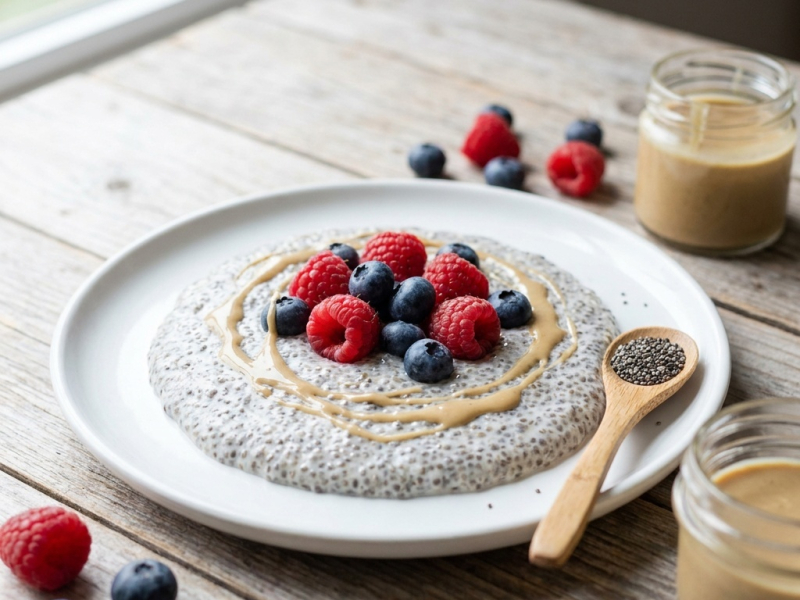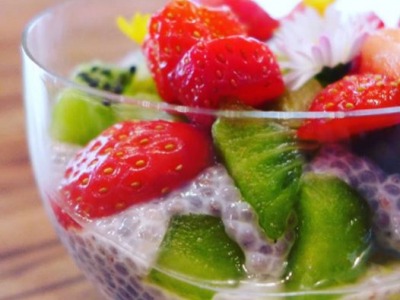


This pudding takes five minutes to make and needs only three basic ingredients to deliver. When they meet the water, the chia seeds swell and take on a texture close to tapioca, while the tahini brings a rounded sesame flavour that makes a pleasant change from plant milks. All that is left is to top it with banana, seasonal fruit or a drizzle of honey, depending on how you feel in the morning.
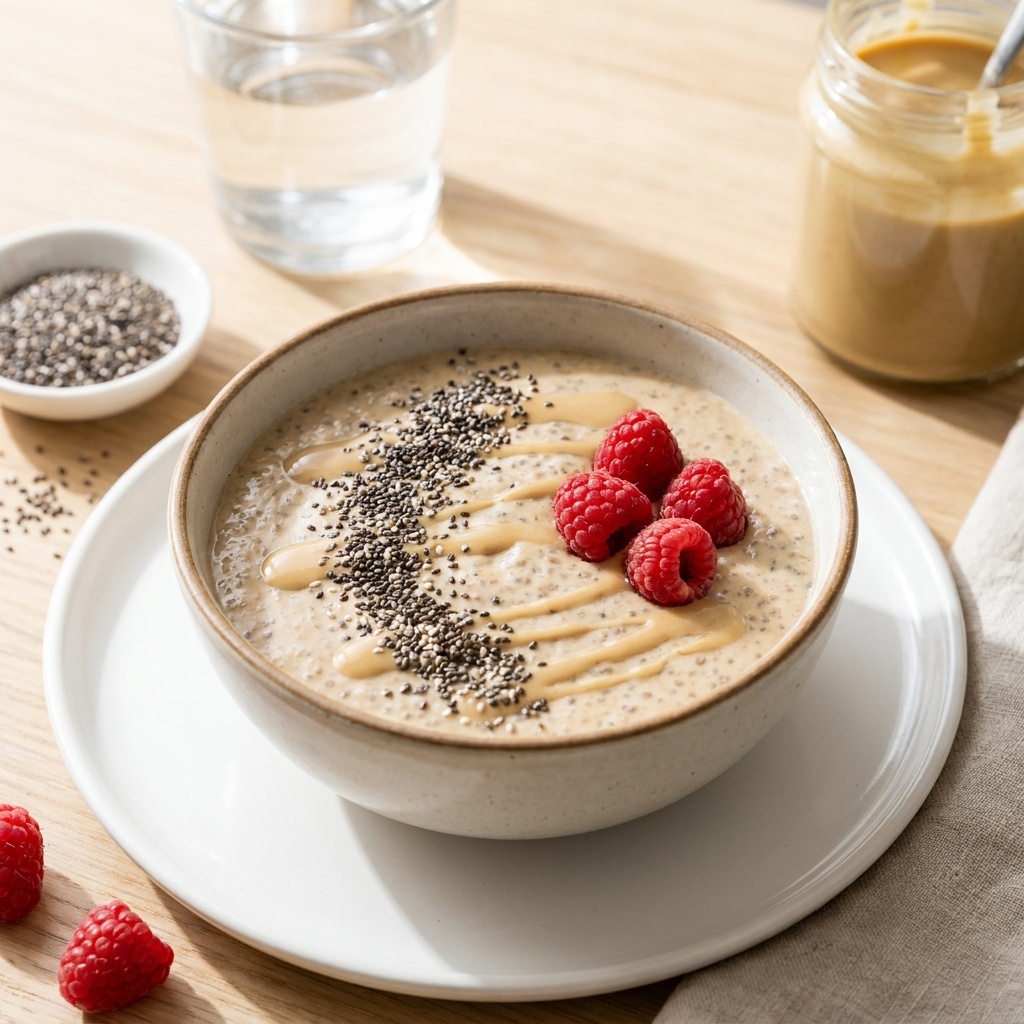
Quick chia and tahini pudding, no plant milk needed

Share this article
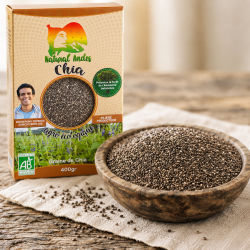
Organic and fair trade Chia Seeds
€6.50 BACK IN STOCK IN EARLY OCTOBER
Ingredients
- 90 g chia seeds
- 300 ml filtered and hydrogenated water
- 3 tablespoons tahini (white sesame paste, ideally unroasted)
Topping (optional)
- 1 banana, sliced
- a drizzle of honey
- a few coconut flakes
- seasonal fruit
Method
- Pour the water into a large bowl, add the tahini and whisk until it is fully dissolved.
- Stir in the chia seeds and mix until smooth, with no lumps.
- Leave to rest for about 10 minutes, stirring once halfway through, while the seeds swell and thicken the mixture.
- Adjust the texture: add a little water for a looser pudding, or leave it as it is for a nice thick consistency.
- Divide between two bowls and add the toppings of your choice.
Tip
This pudding is very easy to make the night before: cover the bowl and put it in the fridge, and it will be even thicker by morning. If your jar of tahini has separated, with the oil on top, stir it thoroughly before measuring: a smooth, even paste dissolves much more easily in water.
The full range Sprouted seeds
46 products
Discover the full range
FAQ: your questions about chia and tahini pudding
How much liquid do you need for chia seeds?
For a classic pudding, the usual ratio is about 3 tablespoons of chia seeds, or around thirty grams, to 240 to 250 ml of liquid. This recipe is deliberately denser, with 90 g of seeds to 300 ml of water, which gives a thick texture close to tapioca. If you prefer it looser, add 100 to 200 ml of water, a little at a time, until you reach the consistency you like.
How do you use tahini sesame paste?
Tahini works in both savoury and sweet dishes: in hummus, in a lemon and garlic dressing for raw vegetables, or spread with a drizzle of honey. It also goes into smoothies, porridges and puddings, as here, where 3 tablespoons of it replace plant milk. Remember to stir the jar well before using it, as the oil naturally rises to the surface.
Is sesame paste good for you?
Sesame paste mainly provides fat, mostly unsaturated, as well as plant protein, fibre and minerals such as calcium, particularly in its wholegrain version. On the other hand, it is very high in energy, at around 600 kcal per 100 g, so it is best to use it in moderation, like the 3 tablespoons in this recipe, which serves two. Finally, sesame is one of the major allergens and should be avoided if you are allergic.
What is the glycaemic index of tahini?
Tahini contains relatively few carbohydrates, a good share of which are fibre, as it is made up mostly of fat and protein. It is therefore generally classed as a low glycaemic index food. In this pudding with no added sugar, it is mainly the toppings, such as banana or honey, that will change the glycaemic load of the bowl.
Share this article
Related articles