


Organic Spelt Seeds for Wheatgrass Juice
Spelt seeds for sprouting in doypack of 70g or 400g
No queries yet, leave the first!
Price:
€1.90
Product availability:
In stock
Tax included


Organic Spelt Seeds for Wheatgrass Juice images


ORGANIC Spelt sprouting seeds
(From the variety Farro)
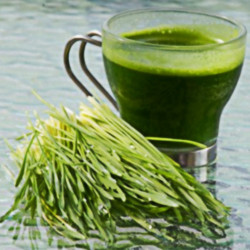
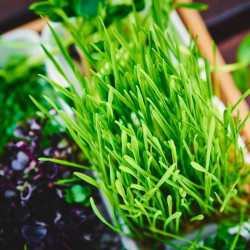
Spelt grass, produced from our organic farro sprouting seeds, is a young, tender grass reminiscent of wheatgrass, with fast, vigorous growth. When cut and pressed in a juicer, it gives an intense green juice, whose colour comes from chlorophyll, the natural pigment of the young shoot.
⚠️ What to know about gluten: spelt (farro variety) is a cereal related to wheat, and the grain therefore contains gluten. The juice is traditionally considered very low in gluten, as it is extracted from the young shoot before the ear forms - but in the absence of specific analysis of our batches, we cannot guarantee a zero content. In case of coeliac disease or gluten intolerance, seek advice from a health professional before consuming.
🌾 What makes spelt grass juice special?
Spelt grass juice naturally contains chlorophyll, the pigment that gives it its intense green colour - it is what makes this juice so visually and gustatorily distinctive, a world away from a classic vegetable juice.
Spelt grass juice offers a mild, slightly sweet flavour, less pronounced than that of classic wheatgrass, which makes it a nice gateway into grass juices for anyone wishing to vary their habits.
🌾 How to use the wheat seeds?
To make the most of spelt's qualities, we advise you to sprout the seeds, then cut the shoots just above the seed and put them through the juicer. If the flavour of the juice is too strong for your taste, you can soften it by mixing it with a vegetable juice or a homemade or shop-bought plant drink (almond, rice…).
Sprouting advice : Soaking: 8 to 12h Germination: about 48h.
After germination, plant your spelt seeds in a light potting soil and harvest your shoots when they reach a good green height (about 10 cm) - usually within the first week after planting.
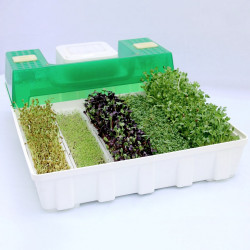
For regular, optimised production of spelt grass, the Easygreen Light automatic sprouter is ideal. For more moderate growing, our Easygreen Sol stand-alone sprouters or your traditional sprouters work perfectly and remain easy to use.
If you don't have ajuicer, we advise you to use our dehydrated barley grass powder or our dehydrated barley grass juice powder.
🌾 The choice of wheat variety
Our organic farro seeds are selected for their quality and their ability to sprout well, in order to produce spelt grass that is easy to grow at home.
🌾 Also discover our wheat seeds and our barley seeds to make barley grass juice or wheatgrass juice.
Below is a video showing you behind the scenes at our supplier Bavicchi:
A special sprouted seeds FAQ video:
As well as a video of an interview we had the pleasure of filming with Dario Bavicchi:
🌾 Its composition (raw seed, per 100 g, see the table in the "Practical info" tab):
• Spelt is one of the ancient grains, with a fine diversity of minerals and trace elements. The raw seed contains in particular iron (4.44 mg per 100 g, i.e. 32% of the NRV), magnesium (136 mg, 36% of the NRV), phosphorus (401 mg, 57% of the NRV), manganese (2.98 mg, 149% of the NRV), copper (0.51 mg, 51% of the NRV) and zinc (3.28 mg, 33% of the NRV). Iron contributes to the reduction of tiredness and fatigue and to the normal function of the immune system; magnesium contributes to normal functioning of the nervous system and to the reduction of tiredness and fatigue; zinc contributes to the normal function of the immune system - as part of a varied and balanced diet and a healthy lifestyle.
• The raw seed also contains vitamin B1 (thiamine: 0.36 mg per 100 g, i.e. 33% of the NRV) and vitamin B3 (niacin: 6.84 mg, 43% of the NRV), which contribute to normal energy-yielding metabolism and to normal functioning of the nervous system.
• Its high chlorophyll concentration gives spelt grass juice its characteristic intense green colour - it is the natural pigment of the young shoot.
• The raw spelt seed contains 10.7 g of dietary fibre per 100 g, which corresponds to the claim "high fibre" (regulatory threshold: 6 g per 100 g).
• Organic production of spelt guarantees a crop grown without synthetic pesticides, in accordance with the organic farming specifications.
🌾 To learn more about the advantages of sprouting, see our various blog articles on the subject:
As well as this interview with Eric where he tells you all about sprouted seeds!
Best before: 30/11/2026
- Packaging: Available in 70g or 400g doypack bags
- Storage: in a cool, dry place, away from light.
- Best before : 3 years after the production date.
🌾 Nutritional values per 100 g of raw spelt seed, before sprouting
These values relate to the raw seed as sold. Once sprouted and pressed into juice, the composition of the fresh grass differs from that of the seed and has not been quantified here - so we do not state it, so as not to put forward anything that is not verified.
| Nutrient | Amount per 100 g | % of NRV* |
|---|---|---|
| Energy | 318 kcal / 1,330 kJ | - |
| Carbohydrates | 59.5 g | - |
| of which sugars | 6.7 g | - |
| Protein | 14.6 g | - |
| Fat | 2.4 g | - |
| of which saturated fatty acids | 0.4 g | - |
| Dietary fibre | 10.7 g | high fibre |
| Iron | 4.44 mg | 32 % |
| Magnesium | 136 mg | 36 % |
| Phosphorus | 401 mg | 57 % |
| Zinc | 3.28 mg | 33 % |
| Manganese | 2.98 mg | 149 % |
| Copper | 0.51 mg | 51 % |
| Potassium | 388 mg | 19 % |
| Vitamin B1 (thiamine) | 0.36 mg | 33 % |
| Vitamin B3 (niacin) | 6.84 mg | 43 % |
| Vitamin B6 | 0.23 mg | 16 % |
| Vitamin B9 (folate) | 45 µg | 23 % |
| Calcium | 27 mg | 3 % |
*NRV: Nutrient Reference Values for an adult (EU Regulation No 1169/2011, Annex XIII). Source: Ciqual table (ANSES). The "high in" claims follow the regulatory thresholds of Regulation (EC) No 1924/2006.
Frequently asked questions about organic spelt sprouting seeds
How to use organic spelt sprouting seeds?
Soak the seeds for 8 to 12h, then let them sprout for about 48h. Then plant them in a light potting soil and harvest the young shoots when they reach about 10 cm in height, usually within the first week after planting. Cut the shoots just above the seed, then put them through the juicer.
Do you need a juicer to consume spelt grass?
Yes, a juicer is the recommended tool for pressing the young shoots and obtaining the green juice. If you don't have one, Biovie offers as an alternative a dehydrated barley grass powder or a dehydrated barley grass juice powder, to be diluted directly.
What is the difference between spelt grass and wheatgrass?
Both juices are prepared the same way, from young shoots pressed in a juicer. Spelt grass juice stands out with a milder, slightly sweeter flavour than the more pronounced one of classic wheatgrass - a nice gateway into grass juices.
Do organic spelt seeds contain gluten?
Yes, spelt seed is related to wheat and contains gluten. The juice extracted from the young shoot is traditionally considered very low in gluten, but in the absence of specific analysis of our batches, we recommend that people with coeliac disease or gluten intolerance seek advice from a health professional before consuming.
How to store organic spelt sprouting seeds?
Keep the bag in a cool, dry place, away from light. The best-before date (BBD) is 3 years after the production date.
In what format are organic spelt seeds sold?
Organic farro sprouting seeds are available in 70 g or 400 g doypack bags.
What equipment should you use to sprout spelt seeds at home?
For regular production, the Easygreen Light automatic sprouter is recommended. For more occasional use, the Easygreen Sol stand-alone sprouter or a traditional sprouter are perfectly suitable.
Updated: August 2026. Article written and validated by Éric Viard, founder of Biovie since 2007 and ISTOM, co-author of Algues au quotidien (Gallimard, 2024) - Best cookbook in the world, Gourmand Cookbook Awards 2025, and Best cookbook in France, Académie Nationale de Cuisine 2025.
The information on this product sheet is provided for information purposes only, as part of a varied and balanced diet and a healthy lifestyle. It does not replace medical advice.
The documents that back up what we write about this product. Every document is dated; we remove those that are no longer valid.
Biovie organic certificate
Valid until 31/03/2027Bavicchi organic certificate
Valid until 02/12/2028Wondering… ?
Everything you need to know before ordering.
Be the first to ask a question about this product!
Question about the product
Ask a question