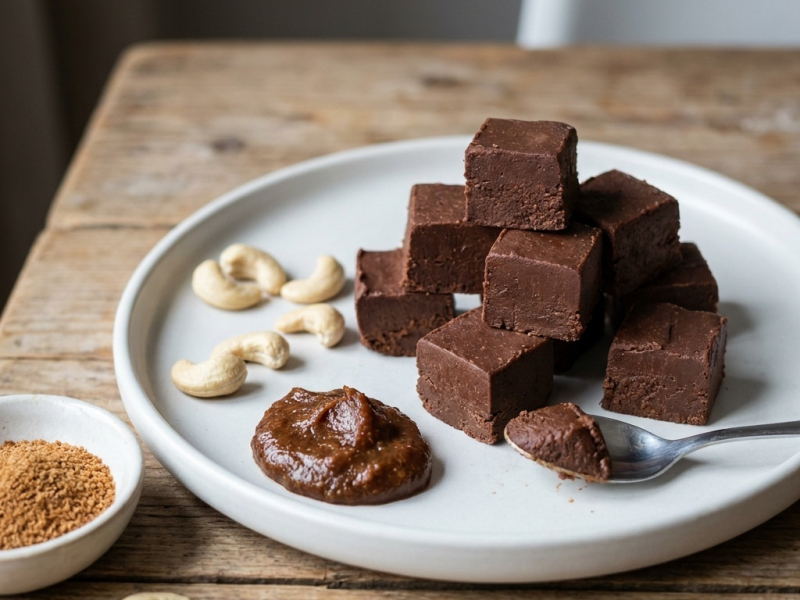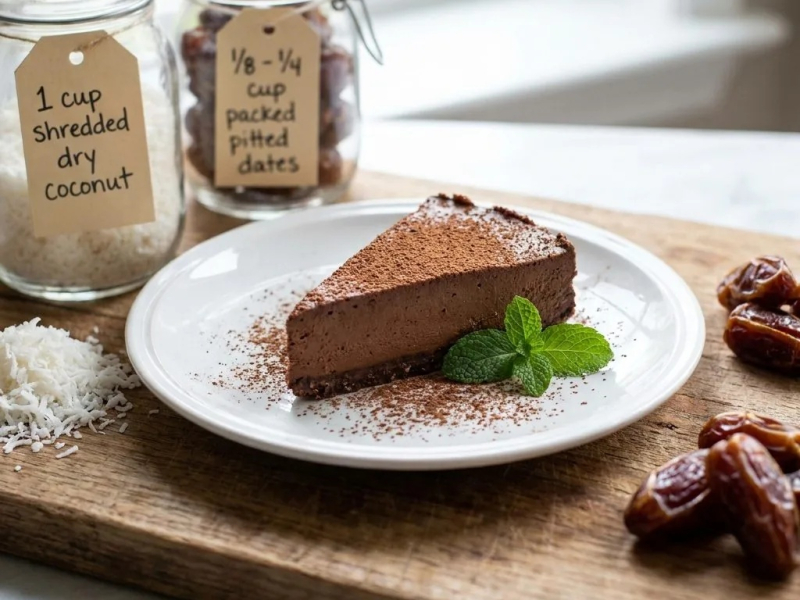

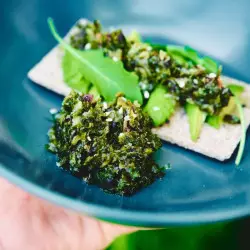

Three textures are layered in these raw tartlets: a crunchy chocolate tart base, a silky chocolate and avocado mousse, and a lemony cashew cream that balances the whole with its tangy freshness. Each layer is already delicious on its own, but it is the way they come together that gives this individual dessert all its charm. No baking at all: a few turns in the food processor, then a night in the fridge.
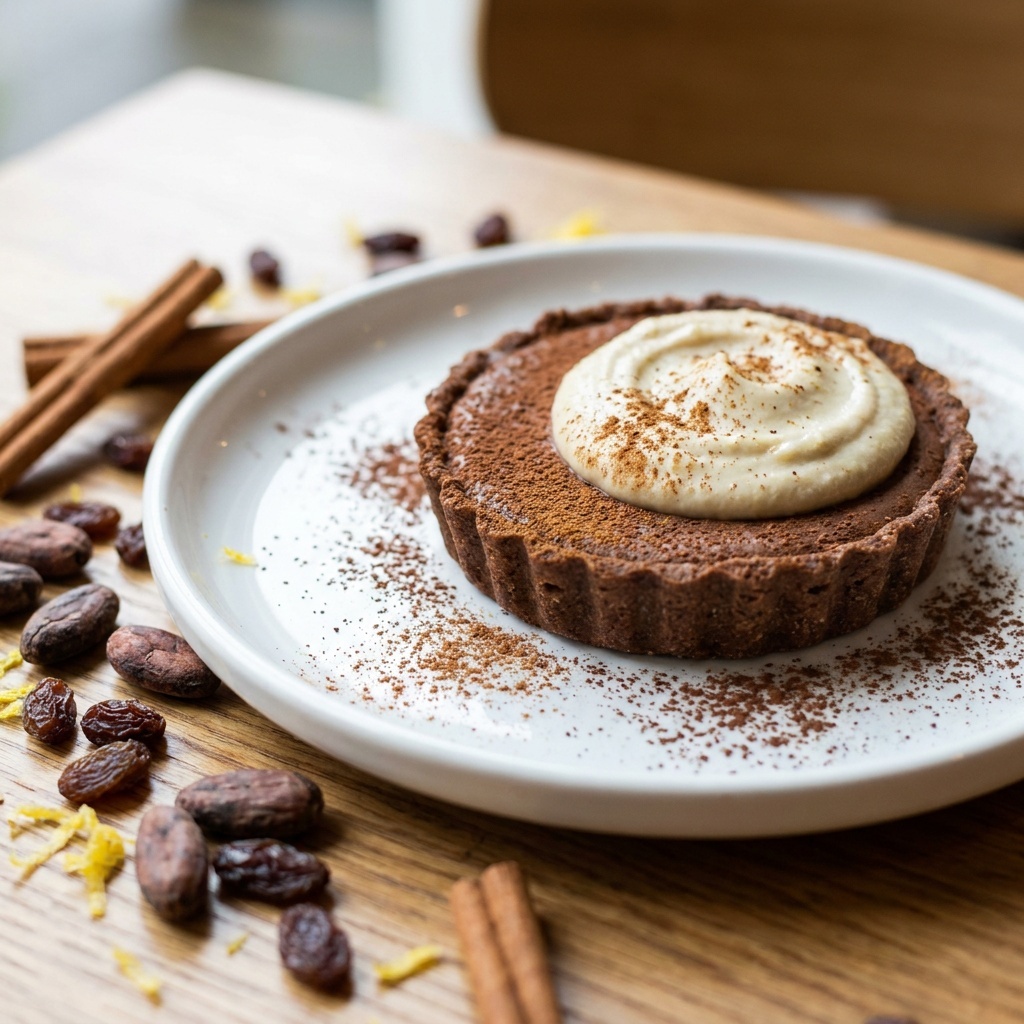
Raw chocolate-avocado mousse tartlets with lemon cashew cream

Share this article
Ingredients
Tart base
- 70 g tiger nut flakes (or about 100 g activated buckwheat or nuts)
- 115 g raisins
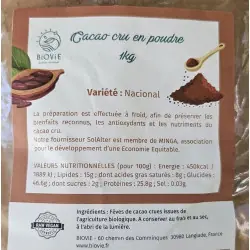
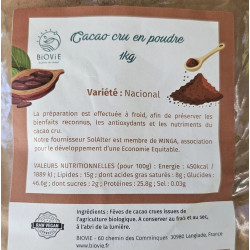
- 1 heaped tablespoon raw cacao powder
- 1 teaspoon cinnamon (optional)
Lemon cashew cream
- 130 g cashews, soaked then drained
- the juice of 1 lemon
- 1 to 2 tablespoons honey
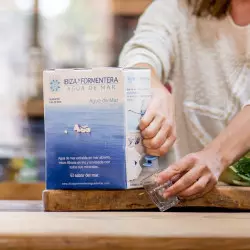
- 1 pinch of pink Himalayan salt (or the equivalent of 1 tablespoon - 15 ml - of seawater)
Chocolate mousse
- 1 very ripe avocado
- 150 g pitted dates
- 1 teaspoon vanilla
- 1 to 2 tablespoons raw cacao powder
- 240 ml filtered and hydrogenated water, adjusted to the texture
- 1 tablespoon melted coconut oil
Method
Tart base
- Blend the tiger nut flakes (or the buckwheat, or the nuts) in the food processor until you get crumbs.
- Add the raisins, raw cacao and cinnamon, then blend until the mixture holds together when you press it between your fingers.
- Press it into two individual tartlet tins lined with baking paper, bringing it a little way up the sides, then set aside in the fridge.
Lemon cashew cream
- Blend the cashews with the lemon juice, honey and salt until you get a very smooth cream. Keep in the fridge.
Chocolate mousse
- Blend the avocado flesh with the dates, vanilla, raw cacao and coconut oil, pouring in the water gradually until you get a smooth, thick mousse.
Assembly
- Spread the mousse over the tart bases, then cover with the lemon cashew cream.
- Place in the fridge overnight, or for at least a few hours.
- Dust with a light veil of raw cacao just before serving.
Tip
A few slices of banana tucked between the mousse and the cashew cream add an extra texture that is always a hit. If your dates are a little dry, soak them for 10 minutes before blending: the mousse will be smoother and will need less water.
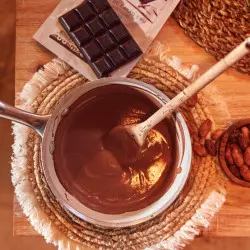
The full range Cacao
6 products
Online only
FAQ: your questions about the raw chocolate-avocado mousse tartlets
What is the best cake to make with avocado?
Avocado really shines in no-bake chocolate desserts: blended with dates and cacao, it makes a dense, silky mousse whose taste you would never guess. That is the whole idea behind these tartlets, where one avocado, 150 g of dates and one to two tablespoons of raw cacao make up the filling. Choose a very ripe avocado that yields slightly under your finger for a perfectly smooth texture.
What dessert can you make with cacao?
Cacao lends itself to a whole range of desserts: mousses, truffles, brownies, creams or tarts. In a raw version, raw cacao powder is simply blended with dates, nuts or avocado, with no oven or bain-marie. In this recipe, it flavours both the tart base and the mousse, then is dusted over just before serving. Taste the mousse before filling the tartlets to adjust the cacao to the intensity you like.
How do you make cashew cream?
Soak raw cashews for a few hours, drain and rinse them, then blend them with a liquid until the texture is perfectly smooth. Here, the juice of one lemon, 1 to 2 tablespoons of honey and a pinch of salt are enough for 130 g of cashews. Only add a splash of water if the blender struggles: the cream should stay thick enough to cover the mousse. It keeps for 3 to 4 days in the fridge in a closed jar.
What is the recipe for lemon cream?
Classic lemon cream is made in a saucepan with lemon juice and zest, eggs, sugar and butter. This raw version keeps its tangy character without any cooking: the soaked cashews bring creaminess and the honey softens the lemon juice. For a stronger flavour, add a little grated zest from an unwaxed lemon. It firms up in the cold, which is why it is worth letting the tartlets rest overnight.
Share this article