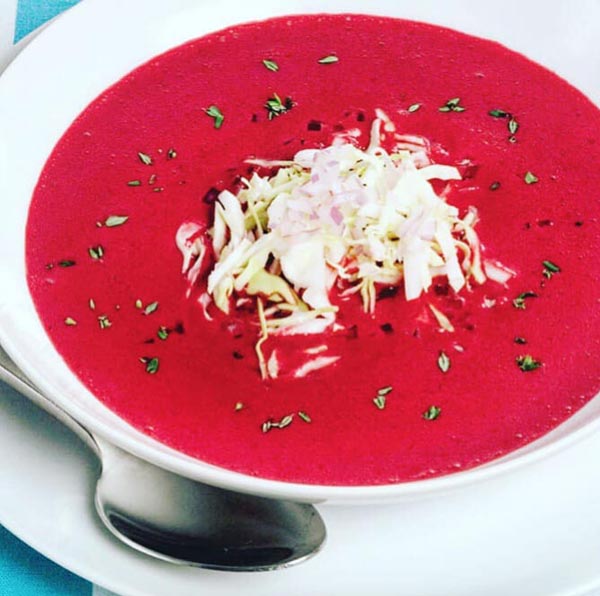
Imagine a ruby red raw borscht, ready in ten minutes, 100% vegan, packed with live enzymes and natural nitrates. At Biovie, we have been reinventing this great Slavic classic for over fifteen years — traditionally simmered for two hours with meat and cream — into a raw food version that preserves all the heat-sensitive nutrients of the raw beetroot. A living, vitamin-rich, detoxifying soup, enhanced by marine plasma that gives it its unique iodized aroma.
What is raw borscht and how does it differ from traditional borscht?
The borscht (or borscht) is a red beetroot soup emblematic of Ukraine, Poland, and Russia, classified as an intangible cultural heritage by UNESCO in 2022. The traditional recipe combines beets, cabbage, potatoes, meat (beef or pork), and smetana (sour cream), all simmered for 1.5 to 2 hours.
The vegan raw borscht, on the other hand, is prepared in a blender in less than ten minutes. No cooking, no meat, no dairy: a cold or warm soup (maximum 40°C) that retains all the vitality of its ingredients. It is a staple of living food and a fun way to incorporate raw beetroot into daily life.
The benefits of raw beetroot in this living soup
Raw beetroot concentrates compounds that prolonged cooking largely degrades: betalains (red pigments with antioxidant activity), folates (vitamin B9), vitamin C, betaine, and dietary nitrates. According to the nutritional composition table ANSES Ciqual, 100 g of raw red beetroot provides about 43 kcal, 2.8 g of fiber, 109 µg of folates (55% of the RDA), 325 mg of potassium, and 0.329 mg of manganese.
A meta-analysis published in the Journal of Nutrition (Siervo et al., 2013) showed that nitrate supplementation from beetroot contributes to the reduction of systolic blood pressure in adults. The review article by Clifford et al., 2015 (Nutrients) also concludes that betalains contribute to the body's antioxidant response. These data confirm the benefits of consuming raw beetroot rather than cooking it for a long time.
Why consume it raw rather than cooked?
Beyond 42°C, vitamin C, folates, and some plant enzymes degrade. The prolonged cooking of traditional borscht results in the loss of up to 70% of folates and nearly 50% of vitamin C. In its raw version, these micronutrients are fully preserved. This is the core belief of living food.
Ingredients — recipe for 5 bowls
Favor organic, local, and seasonal products. For 5 small bowls or 3 large servings:
3 cups of organic raw beetroot, peeled and cut into pieces (≈ 450 g)
1 cup of finely chopped kale
1 red onion, finely chopped (reserve half for garnish)
1 stalk of finely chopped celery
1/2 ripe avocado (for creaminess)
2 cups of pure water (or coconut water for a more exotic version)
Several recent scientific publications document the effects of beetroot juice and pulp on cardiovascular health, physical performance, and oxidative stress:
Blood Pressure: The meta-analysis by Siervo et al., 2013 showed an average decrease of 4.4 mmHg in systolic pressure after beet nitrate supplementation.
Sports Endurance: According to Domínguez et al., 2017 (Nutrients), beet juice helps improve mitochondrial efficiency and athletes' endurance.
Antioxidants: The review by Clifford et al., 2015 highlights the role of betalains in modulating oxidative stress.
Marine Plasma: Isotonic, it provides nearly 90 minerals and trace elements in proportions close to those of the human internal environment, according to the historical work of René Quinton.
These data, to be interpreted within the context of a balanced diet, confirm that raw beetroot contributes to good cardiovascular health and the body's antioxidant defense (according to the studies cited above).
Betacyanin: where this colour comes from, and why it matters
This deep red-purple has no equivalent on the plate, and it owes nothing to the anthocyanins in red fruit. Beetroot owes its colour to betalains, a family of nitrogen-containing pigments found in only a handful of species — beetroot, prickly pear, amaranth; betacyanin is the red fraction, betaxanthin the yellow one.
Two properties follow from this, and they matter directly for a raw recipe. Betalains are water-soluble and heat-sensitive: they leach into cooking water and degrade markedly beyond an hour of cooking. That's the simplest reason to make this borscht raw rather than cooked — the colour you get in the bowl is the vegetable's own, not a leftover.
Nutritionally, these pigments are among beetroot's antioxidant compounds, alongside the nitrates mentioned above; they've been studied for about twenty years, with work still mostly in vitro or on small samples. Better to say so plainly than to oversell it.
Is raw beetroot dangerous? The question deserves a straight answer
It comes up systematically, often after reading that "beetroot has to be cooked." Let's set the record straight.
No, raw beetroot isn't toxic — it's been eaten grated or as juice forever, and nothing in its composition requires cooking. Three nuances are still worth knowing.
Oxalates. Beetroot contains them, like spinach or rhubarb. People with a history of calcium oxalate kidney stones should limit their intake and discuss it with their doctor; for everyone else, ordinary consumption raises no concern.
Nitrates. These are precisely what makes beetroot interesting, but caution applies for infants under one year old — this is a general recommendation for nitrate-rich vegetables, not something specific to raw beetroot.
Beeturia. In part of the population, the pigments pass into the urine and turn it pink for twenty-four to forty-eight hours. It's dramatic-looking, perfectly harmless, and it always surprises people the first time. Stools can also change colour.
The one genuine point of caution, which has nothing to do with beetroot itself: wash and scrub the roots thoroughly, since they come straight out of the ground — that's the rule for any root vegetable eaten raw, as part of a varied and balanced diet and a healthy lifestyle.
Precautions and Contraindications
Like any food concentrated in active micronutrients, raw beetroot requires some precautions:
Oxalates: Beetroot contains about 1 mg/100 g. People with a history of oxalic kidney stones should limit their consumption and seek advice from their doctor.
Betauria: The red coloration of urine and stools for 24 to 48 hours after consumption is harmless; it simply indicates the assimilation of betalain pigments.
Anticoagulants (VKAs): Green cabbage is rich in vitamin K. If you are undergoing treatment, talk to your doctor.
Antihypertensive Treatment: Natural nitrates can potentiate the hypotensive effect. Medical advice is recommended.
Pregnant Women: Moderate consumption, especially raw; wash vegetables thoroughly.
FAQ — Your Questions About Raw Borscht
Can raw borscht be stored?
Yes, for a maximum of 24 hours in the refrigerator, in an airtight jar. Beyond that, oxidation alters betalains and vitamin C. It's best to prepare it fresh to enjoy all its vitality.
What is the difference between raw borscht and traditional borscht?
Traditional borscht is a hot soup simmered for 1.5 to 2 hours with meat, cabbage, beetroot, potatoes, and sour cream. Vegan raw borscht is prepared in a blender in 10 minutes, without cooking, meat, or dairy. It thus preserves vitamin C, folates, and plant enzymes that cooking degrades.
Is raw borscht suitable for everyone?
Yes, provided some precautions are taken: people on anticoagulants, antihypertensives, or with a history of kidney stones should seek medical advice. For children and pregnant women, moderate consumption is advised.
Can this recipe be made without marine plasma?
Yes. Replace marine plasma with a pinch of unrefined fleur de sel or a few drops of raw organic soy sauce (such as tamari). However, you will lose the characteristic marine minerals and trace elements of this recipe.
What are the main benefits of raw beetroot?
Raw beetroot provides folates (B9), vitamin C, potassium, manganese, fiber, and natural nitrates. According to scientific literature (Siervo 2013, Clifford 2015), it contributes to cardiovascular health, antioxidant defense, and physical endurance as part of a balanced diet.
What is marine plasma ?
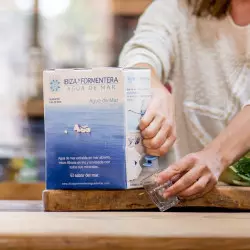
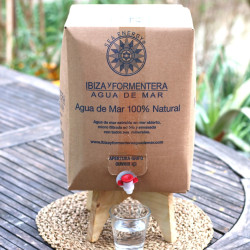
So-called hypertonic marine plasma is simply seawater harvested and filtered under very specific conditions.
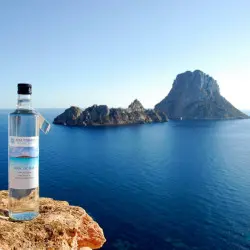
Our supplier Ibiza Agua de Mar collects sea water from a depth of 25 meters off the coast of Ibiza in a UNESCO listed area.
Concerning the harvest, here are the different physico-chemical parameters measured during the search for an optimal place for the harvest of hypertonic marine plasma, first on the radar with reading of the currents and according to the marine weather (wind, swell, rain. ..) and then by local measurement of these different parameters: taste of seawater, dissolved O2 level, PH level, redox level (ORP), salinity level (TDS), conductivity level ( PSU), alkalimetric title (TA), Pressure. It is the empirical practice of the harvesters and the reading of the various measuring instruments that makes it possible to decide on the best complex combination of these measures together to decide whether the harvest is triggered on the site or whether another location is sought.
Where does marine plasma come from ?
The marine plasma is collected in the high seas, off the coast of Ibiza, in a specific area classified as UNESCO with high planktonic activity and with a presence of tens of square kilometers of Posidonia. It is indeed in this specific area that lives the largest living organism listed on Earth, a posidonia herbarium of 80,000 to 200,000 years extending over 15 kilometers in length.
Source: Sophie Arnaud-Haond, Carlos M. Duarte, Elena Diaz-Almela, Núria Marbà, Tomas Sintes, Ester A. Serrão: Implications of Extreme Life Span in Clonal Organisms: Millenary Clones in Meadows of the Threatened Seagrass Posidonia oceanica
When is it best to take marine plasma ?
The ideal is to consume marine plasma, which contains, let's remember, all the elements that make up Mendeleev's periodic table, in the morning when you get up, on an empty stomach. take 1/4 of hypertonic marine plasma to mix 3/4 of spring water or filtered water.
What are the benefits of marine plasma ?
Minerals are the "fuel" used primarily by our body, which is necessary for our cells to perform their functions optimally. They are also essential for the absorption of vitamins and are responsible for enzymatic processes in cells. Cells perform all their functions with maximum vitality and the precise capacity for organic, bioavailable, alkaline cellular nutrition. Thus, sea water becomes the best mineral drink since it contains all the elements of Mendeleev's periodic table.
Another of the great benefits of seawater is its pH. As Otto Warbürg, father of cellular respiration and two-time Nobel laureate, said, “all diseases are acidic and where there is oxygen and alkalinity there can be no disease”. Due to the quality of our raw material, the hyper-oxygenated waters of Posidonia meadows (recognized by UNESCO as a World Heritage Site in 1999) and sea currents providing purity and clarity: Ibiza and Formentera Agua de Mar have an alkaline pH , between 8.1 and 8.4, which will help the body maintain a neutral pH through homeostasis. The ingestion of sea water is advised to control and maintain our PH, as well as an exceptional supplement for alkaline diets.
The antioxidant and anti-acidity power produced by seawater is due to the alkalinity provided by the minerals.
Drinking filtered seawater in a direct and controlled way is very beneficial for your health, because seawater is an excellent nutrient, containing most of the minerals of the periodic table and all of them dissolved in the best universal solvent available: l 'water.
Seawater contains all the minerals of the periodic table of elements in a bioavailable way. It is thanks to this that foods cooked in seawater are rehydrated and remineralized to make foods with high nutritional power. The problem today is that our intake of minerals through food has dropped dramatically and what is causing this? The answer is very simple: pollution, soil depletion due to intensive agricultural production and our stressful pace of life have considerably reduced the quality of food and its mineral intake, drastically reducing the minimum contribution necessary for the proper functioning of the body.
Seawater also helps us stay young, for a simple reason: the body regularly and cyclically regenerates all its cells, because their lifespan is limited in time. As we age, one of the first faculties the cell loses is the ability to hydrate. We know that the older we get, the less we drink, so drinking and ingesting seawater can help us "wake up" this ability to hydrate ourselves., 4
products
"When I discovered raw cuisine over thirty years ago, borscht was one of the first recipes that truly reconciled me with the idea that a great gastronomic classic could be revisited in a living version, without losing anything — quite the opposite. This recipe has become a ritual in our home: ten minutes, a blender, and all the nutritional power of freshly picked beetroot in a colorful bowl. That's the spirit of Biovie: making health accessible, delicious, and immediate." — Eric Viard, founder of Biovie.
Disclaimer: The information presented in this article is provided for informational purposes only and does not constitute medical advice. Consult a qualified healthcare professional before making any significant changes to your diet or supplementation. As part of a varied and balanced diet and a healthy lifestyle.