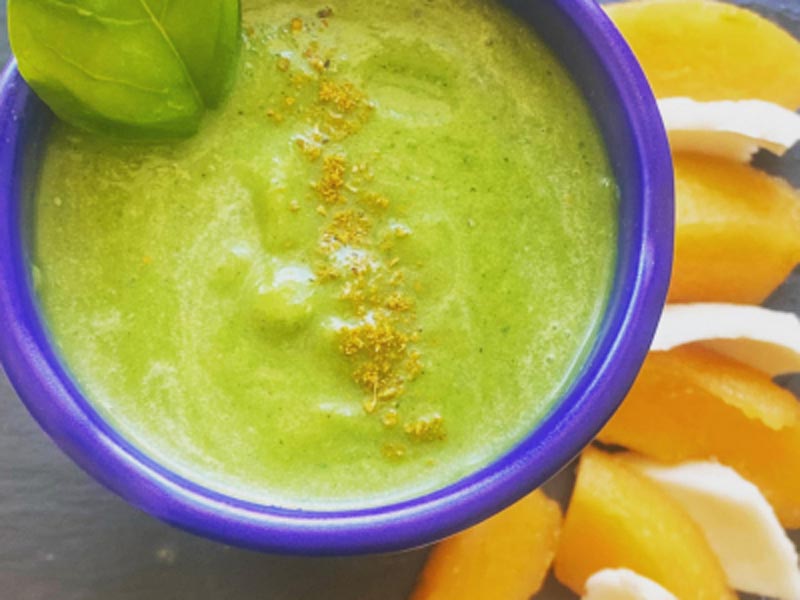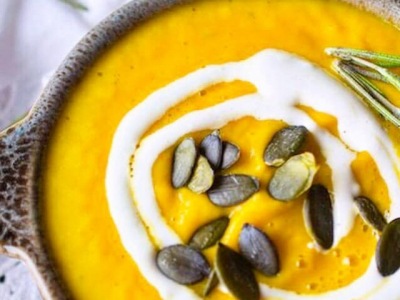




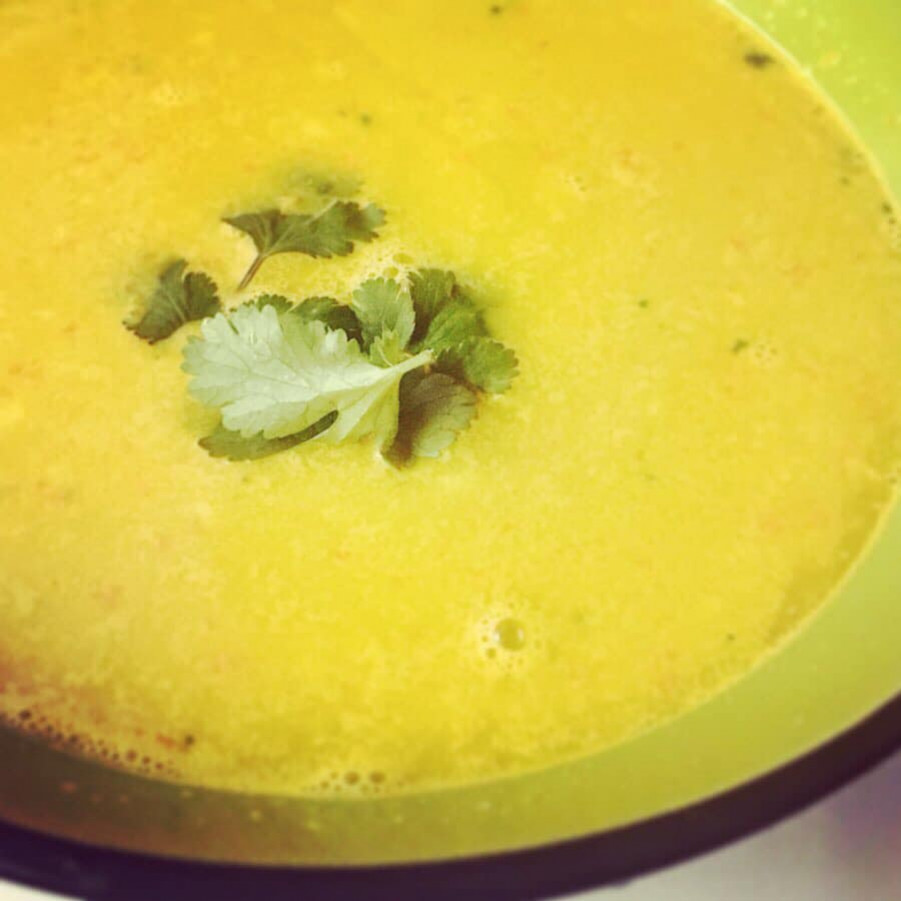
Imagine a creamy and fragrant raw coconut curry soup, ready in ten minutes with a blender, without cooking - or rather, blended with warm water at 60°C to preserve enzymes, vitamin C, and heat-sensitive micronutrients. No canned coconut milk, no industrial broth: just fresh coconut flesh, organic carrots, ginger, turmeric, garlic, and coriander. The Biovie signature in a bowl: vibrant, anti-inflammatory, inspired by Thai tradition but reimagined in a raw food version.
In this 2026 guide, you will discover why the raw angle changes everything, how to choose the right coconut, the precise list of ingredients, preparation steps, documented benefits, and all the variations to adapt this soup to your mood of the day.
Why a raw soup rather than a classic Thai soup?
Traditional Thai soups - tom kha kai, red curry with coconut milk - simmer for 15 to 30 minutes. The problem: beyond 42°C, plant enzymes lose their activity; beyond 60°C, vitamin C begins to degrade; around 90°C, some B vitamins deteriorate as well. In the cooked version, a significant portion of the nutritional value of fresh foods is lost.
The raw coconut curry soup circumvents this pitfall: it is blended with warm water, never exceeding 60°C. Curcumin, gingerol, lauric acid from the coconut, and vitamin C are preserved. This is the very principle of living food: extracting the maximum from what nature has put into the food, by heating as little as possible.
The credo of living food
Popularized by Ann Wigmore in the United States and by Irène Grosjean in France, living food is based on a simple principle: the closer a food is to its original state (raw, fresh, organic, seasonal, sometimes sprouted or lacto-fermented), the more enzymes, micronutrients, and vital energy it provides. This soup is an ideal gateway to this approach, as it is prepared like a familiar recipe but retains all the freshness of the living.
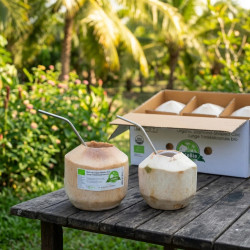
Fresh coconut, the star of this recipe
Forget UHT canned coconut milk, pasteurized at 135°C: it has lost its enzymes, aromatic freshness, and some of its heat-sensitive compounds. Organic fresh coconut flesh is another galaxy: it provides 9.5 g of fiber per 100 g, an incomparable velvety texture, and a subtle milky aroma that perfectly binds the spices.
According to the Aprifel nutritional sheet and the ANSES Ciqual table, 100 g of fresh coconut flesh provides about 358 kcal, 33 to 35 g of lipids (including nearly 50% lauric acid), 9.5 g of fiber, and significant amounts of manganese and copper. Lauric acid, converted by the body into monolaurin, is documented in the literature to have antimicrobial properties. A 50 g serving already covers 15% of the recommended manganese intake.
To explore further: benefits of organic fresh coconut.
Biovie discussion with Rym Zoughlami, naturopath and nutrition therapist, about fresh coconut flesh: sweet and savory variations, choosing the nut, preservation.
Ingredients for the raw curry-coconut soup (for 2 to 3 bowls)
Favor organic, fresh, and seasonal products. All ingredients should be gathered before starting the blender:
- 300 ml of pure warm water (maximum 60 °C)
- 150 g of organic fresh coconut flesh
- 2 medium-sized organic carrots (≈ 180 g)
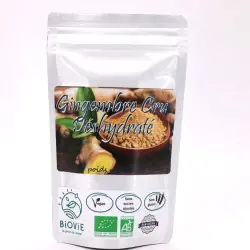
- 1 cm of fresh organic ginger, peeled (see our guide on raw organic ginger)
- 1 small clove of organic pink garlic
- 1 small bunch of fresh organic coriander
- 2 pinches of organic ground cumin
- 2 pinches of Indian curry powder (without added salt)
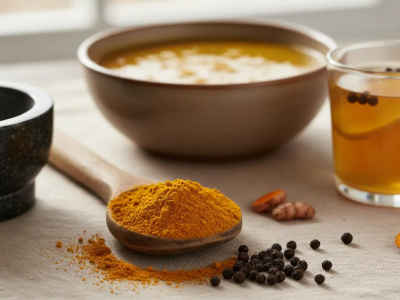
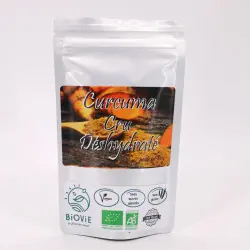
- 2 pinches of organic turmeric powder (see how to consume turmeric)
- 1 pinch of dried lemongrass (or 2 cm of chopped fresh lemongrass)
- ½ organic lemon juice (about 15 ml)
- 1 tablespoon of tamari (gluten-free soy sauce)
- 3 pinches of freshly ground black pepper
Why pepper with turmeric? The piperine in black pepper significantly increases the bioavailability of curcumin, as extensively documented by research (Shoba et al., 1998, Planta Medica). Without pepper, a large portion of curcumin goes unnoticed by the body.
Preparation of Raw Curry-Coconut Soup (10 minutes)
- Break the fresh coconut and collect 150 g of flesh; peel it slightly if the brown skin is present.
- Peel the carrots, cut them into coarse slices to facilitate blending.
- Peel the ginger, crush the garlic clove (crushing activates the formation of allicin, a beneficial sulfur compound).
- Heat the water to precisely 60 °C - never more: using a kitchen thermometer, or by touch (hot water but bearable on the finger for several seconds).
- Place all the solid ingredients in the blender bowl, then add the warm water last.
- Blend for 90 seconds at high speed until you achieve a smooth and homogeneous texture.
- Taste and adjust the seasoning: more tamari for saltiness, more lemon for acidity, more ginger for spiciness.
- Serve immediately in preheated bowls (rinsed with hot water), garnished with a few fresh coriander leaves and a drizzle of cold-pressed olive oil.
Raw Chef Tips for a Perfect Raw Coconut Curry Soup
- The blender makes all the difference: a high-performance blender (like Vitamix, Omniblend, or Blendtec) reduces the hard fibers of the carrot to a silky texture. An entry-level blender will leave particles. Discover our high-performance blenders.
- Water at 60 °C, no more: beyond 42 °C plant enzymes lose their activity, beyond 60 °C vitamin C begins to degrade. 60 °C remains the "warm-raw" optimum.
- Express heated blender variant: by letting the blender run for 2 to 3 minutes at full speed, friction can bring the soup up to 55-60 °C without ever exceeding the critical threshold.
- "Creamy+" variant: add ¼ of a ripe avocado for extra roundness and a boost of omega-9.
- "Spicy" variant: ¼ of a fresh deseeded red chili, for fire lovers.
- "Green" variant: incorporate a handful of organic spinach just before the end of blending.
- Storage: 24 hours maximum in the refrigerator in an airtight jar. Beyond that, enzymes oxidize and vitamin C degrades.
- Want more living soups? Discover our vegan raw borscht, our frosted zucchini-coconut-turmeric gazpacho or our crunchy coconut curry.