15L Microfiltered seawater
Microfiltered seawater harvested in the open sea
15L Format
1
question about the product
Price:
€47.90
Tax included


15L Microfiltered seawater images


SEA WATER - MICRO-FILTERED HYPERTONIC MARINE PLASMA FROM IBIZA
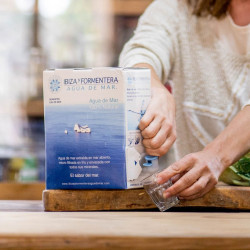
Cold micro-filtered Ibiza sea water, in a 15 L Bag-in-Box
Hypertonic marine plasma in a 15 L Bag-in-Box is Ibiza sea water collected by boat and cold micro-filtered. Honestly, this is the format I recommend to families and heavy users: the most economical per litre, ideal for everyday cooking and for replacing salt. With its pouring tap, you use it every day without thinking about it - and at a price that bears no comparison with classic ampoules.
Marine plasma is high-quality sea water, micro-filtered and cold sterilised, so that you can make it part of your everyday cooking.
So can you drink sea water? If you are wondering, watch this short presentation video which explains in 2 minutes why this is not just any sea water:
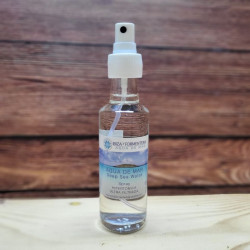
The sea water in the bag-in-box is cold micro-filtered. For ultra-filtered sea water, head over to the plasma in a 75 cL bottle or the small 100 ml bottle with spray.
Looking for a smaller format to try it out? Find all the pack sizes (3 L, 11 L, 20 L) on our sea water / marine plasma page.
🌊 How is this sea water collected?
The company Ibiza & Formentera Agua de Mar was founded by Alfonso and David. They pay very particular attention to the quality of this sea water and respect the biological and subtle phenomena of the water as much as possible, so as to keep all of its trace elements and minerals intact.
Collection in the open sea far from beaches and densely populated areas, intake at a depth of 5 m in areas where plankton is concentrated, no collection in summer when it is too hot... these are some of the very precise parameters they follow for every harvest.
The water is then micro-filtered at between 4 and 5°C (when its density is at its best) and left to rest before being bottled.
Very thorough checks are carried out on every batch to guarantee water that is free from pollutants, hydrocarbons, micro-plastics, heavy metals and pathogens.
> Meet the 2 founders of Ibiza & Formentera Agua de Mar and see for yourself how the harvest takes place in the video below:
🌊 Where is this sea water collected?
The islands of Ibiza and Formentera were not chosen at random for collecting marine plasma. It is important that the water comes from the Mediterranean Sea, because it is the only ecosystem that combines these advantages:
- Posidonia seagrass meadows (oxygen production and CO2 capture)
- Natura 2000 and UNESCO protected zones, and "marine protected areas"
- very restrictive regulations (products used and traffic)
- no nuclear pollution
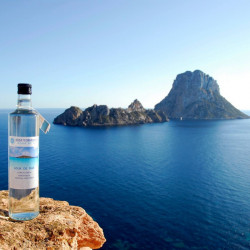
Collection takes place mainly off the west coast of the island of Ibiza, the area with the most Posidonia meadows and plankton, and therefore the most marine life, and where the sea currents keep the sea water perfectly clean.
> Eric Viard explains in detail why each of these parameters matters in this video:
> We also invite you to read our blog article: Marine plasma: Mediterranean or Atlantic?
🌊 How do you use it?
- In everyday cooking - The 15 L format is ideal for replacing traditional table salt at home. Very handy with its pouring tap: season your soups, vegetable juices, vegetable pâtés and sauces with plasma rather than classic salt. Add it at the end of cooking, below 60°C. It is also the ingredient of choice for your lacto-fermentations. In the kitchen, sea water lifts and improves the flavour of many foods without masking their authentic taste.
Find more details on using it in the kitchen in our blog articles:
- Which salt should you use for lacto-fermentation?
- Lacto-fermentation with marine plasma - As an isotonic solution - You can dilute it to use as an isotonic drink (= marine plasma at the same concentration as blood plasma). See the dilution formula below.
🌊 How do you make it part of your daily routine?
In concrete terms - and this is the question I am asked most often - how do you use hypertonic marine plasma day to day? What I can tell you is how we use it, at home and among the people around us:
- In everyday cooking: Simply replace your usual salt. No maximum dose has been set. Below 60°C to best preserve the trace elements. This is the most accessible and most regular use - and the one where the 15 L format really comes into its own.
- As an isotonic drink: 1/4 hypertonic plasma + 3/4 spring water. Drink within 24 hours.
🌊 How do you make isotonic marine plasma?
The formula for making isotonic marine plasma from Ibiza & Formentera hypertonic marine plasma is as follows:
mix 1/4 hypertonic marine plasma + 3/4 spring water.
> For example, for 1 L of isotonic plasma = 250 ml hypertonic + 750 ml spring water
We are like isotonic sea water: our blood plasma contains around 9 g/L of mineral salts, compared with sea water which contains around 36 g/L - the proportions of the various trace elements are similar to those in blood.
We advise keeping your isotonic water in a bottle in the fridge for 24 hours only.
> To find out more, read our blog article: Hypertonic or isotonic marine plasma - what are the differences?
🌊 What are the differences between the bottle, the BIBs and Quinton® water?
This is one of the questions that comes up most often. Here is a quick comparison:
15 L Bag-in-Box
- 0.22 micron micro-filtration
- Cold filtration
- Collected at a depth of 5 m
- Use: cooking, lacto-fermentation, everyday
- Micro-filtration then 0.01 micron ultra-filtration
- Cold filtration
- Collected at a depth of 25 m with prior testing
- More than 100 parameters checked (Quinton® process)
The René Quinton process is a registered patent. It uses double filtration under very controlled conditions - more than 100 parameters are assessed after collection. The Ibiza & Formentera bottled marine plasma, with its ultra-filtration, follows this same process. Its final quality is almost identical to the BIB and it can be used in the same way.
🌊 Precautions for use - hypertonic sea water
Hypertonic marine plasma is not recommended in cases of high blood pressure, a strict salt-free diet, or severe kidney or heart failure (high sodium content). If you have a fragile liver, choose the isotonic version and consult your doctor. For pregnant or breastfeeding women, medical advice is recommended. To find out more about contraindications: Quinton® water - dangers and side effects.
As part of a varied, balanced diet and a healthy lifestyle.
Composition of hypertonic marine plasma
🌊 COMPOSITION
Mediterranean sea water (Ibiza and Formentera), collected by boat and cold micro-filtered at 0.22 micron. Dissolved salt content: 35 to 38 g per litre. pH between 8.1 and 8.4.
Mediterranean sea water (Ibiza and Formentera), collected by boat and cold micro-filtered at 0.22 micron. Dissolved salt content: 35 to 38 g per litre. pH between 8.1 and 8.4.
🌊 SEA WATER, AN INIMITABLE COMPOSITION
Sea water has such a varied chemical composition that it cannot be synthesised artificially: it contains many elements in trace amounts. Mixing water with salt and minerals simply gives you salt water, not sea water.
To better understand these phenomena and find out more, watch this video by Eric Viard:
Sea water has such a varied chemical composition that it cannot be synthesised artificially: it contains many elements in trace amounts. Mixing water with salt and minerals simply gives you salt water, not sea water.
To better understand these phenomena and find out more, watch this video by Eric Viard:
IBIZA & FORMENTERA AGUA DE MAR
COLLECTING MARINE PLASMA BY BOAT
Our suppliers in Ibiza collect sea water by boat in the best possible conditions, close to the recommendations of René Quinton. As far as we know, and unless proven otherwise, only five companies in the world collect by boat in this way (the others draw water from the coast). What is more, they use the most advanced technologies in "sensitive" water analysis, being the representatives of the Masaru Emoto foundation in Spain and the only ones in Spain to own a dark-field microscope.
As for the process: the water is captured at the right moment on the high seas, in an area between 40 and 200 metres deep; the intake takes place at between 5 and 25 metres down, in areas favoured for the great stability of their mineral composition.
> To find out more, we have made an explanatory video about collecting sea water and the various processes used to obtain bottled marine plasma and the Bag-In-Box version:
After meeting our suppliers, we were very surprised by the various sea water harvesting practices that exist around the world. We look for the best international suppliers for all our products and we travel all over the world to see how they work - and when something does not meet our standards, we impose our own specifications (as with the olive wood plates, seaweed dried below 40°C, coconuts...) so that the quality is optimal.
According to our information, many European companies pump water from harbours, beaches, the coast, sea water desalination units or even inland salt wells.
Our supplier collects hypertonic marine plasma by boat in areas where plankton activity is at its highest and where Posidonia meadows ensure excellent oxygenation. That said, collection within a vortex - which is the icing on the cake - is not 100% guaranteed; it may be partial or even absent when the boat arrives in these areas of very intense marine life. The reason is a practical one: vortices vary in duration and are short-lived and unpredictable, so they do not allow water to be collected for very long or in very large volumes. The arguments you may come across here and there about collecting in vortices from the shore (not by boat) deserve close scrutiny…
> Our suppliers also use four methods for analysing water quality:
- Water crystals (Masaru Emoto)
- Dark-field microscopy
- Mora therapy (Jean Marie Danze)
- Bio-Well technology (Korotov)
> Here is a very simple question to ask your usual marine plasma supplier to see things more clearly:
"How and under what conditions is your sea water collected, and do you have photos or videos of your boats and your harvests?"
The best quality marine plasma must be collected at particular sites in the presence of high concentrations of plankton (blooms), which appear spontaneously after a few days of fine, windless weather and in certain seasons (not in summer, when the water is too warm), in specific places where sea currents meet and favour the formation of moving vortices (like cyclones).
Vortices and plankton blooms are natural, short-lived phenomena that occur only in certain places when these particular conditions come together. You have to be in the right place at the right time. A boat seems to me to be the only serious way to collect in this manner.
You will always find a great deal of information about the location, the processing of the sea water and its many uses from the companies that sell it. I have never seen a single photo or video of a harvesting boat from most of them - and the exact, precise details of the harvest are very rarely mentioned, even though to me these are fundamental and essential points.
As an ISTOM engineer and founder of Biovie since 2007, these are always the points that interest me first and foremost: sourcing of the highest possible quality. After more than 33 years of practising living food - and I choose my words carefully - I only put forward products whose supply chain I have personally checked. That is the case with Ibiza & Formentera Agua de Mar marine plasma. I went there, I met Alfonso and David, I saw the boats. That is the criterion.
> How to choose your marine plasma : our tips for getting it right.
Best before: 30/11/2028
- Best before : 3 years after the production date
- Packaging : 15 L Bag-in-Box (food-grade HDPE pouch with pouring tap + 100% recyclable cardboard box)
Packed in a Bag-in-Box (BIB): 100% recyclable high-density polyethylene pouch with pouring tap, protected by a 100% recyclable cardboard box.
The air-free system guarantees total purity of the liquid down to the last drop, because no air enters the container as the liquid is drawn off.
The chance of the water being contaminated by ambient air entering the container is practically nil. In this way, the period over which the sea water can be used is greatly extended once the Bag in Box has been opened - a real asset for the large 15 L format.
- Ecology:
The various life-cycle analyses of BIBs versus glass bottles (75 cL) show a marked advantage for the former.
> Carbon footprint 8 times lower than glass.
> Lighter packaging, and therefore less energy used in transport.
> Optimised transport: before filling, the pouches and boxes are delivered flat, so fewer lorries are needed to deliver the same quantity of BIBs; after filling, the rectangular format makes for optimal palletisation. One lorry carrying 5-litre BIBs is equivalent to more than 7 lorries carrying 75 cl bottles.
> Limits food waste thanks to its "serve on demand" system and extended keeping.
> 100% recyclable: if properly sorted, both the box and the pouch are very easily recycled in France.
> Energy-saving: unlike glass, less energy is needed to produce a BIB for the same quantity of liquid transported.
> Prevents littering: because of its large format, it is extremely unlikely that the packaging will end up in nature, thrown into the street or the sea. Unlike classic plastic food packaging, it is almost certain not to leave the recycling/household waste chain.
- About the plastic:
A multitude of plastics of very different qualities exist on the food market. Our BIBs are made of high-density polyethylene (HDPE), suitable for food contact; it is the highest-quality plastic and stands up very well to sea water: no migration of plastic substances by leaching has been detected.
Below is a comparison of the most commonly used plastics:
COMPARISON OF PACKAGING PLASTICS
Plastic no. 1
PET: Polyethylene terephthalate is the most widespread type of plastic in food packaging.
Very strongly advised against - the cheapest
- Bottles for fizzy drinks, water, cooking oil
- Risks: may release antimony and benzene
- Accelerated migration on contact with sea water (high salinity)
- Main compounds released: antimony, formaldehyde, acetaldehyde, trihalomethanes
- Using such a plastic for sea water is simply not acceptable
- 100% recyclable
Plastic no. 2
HDPE: High-density polyethylene - the safest, the most expensive
- Used for milk, plastic bags, wine, oil, sea water
- Resistant to extreme temperatures
- Impermeable to water, gas and aromas
- This is the material we chose for our Bag in Boxes
- Guaranteed phthalate-free and BPA-free
- 100% recyclable
> To go further: everything you need to know about the safety of food-grade plastics
🌊 They use Biovie marine plasma
"I really like getting my sea water from them, infinitely cheaper than in ampoules !"
- Vanessa B. ⭐⭐⭐⭐⭐
"I buy my sea water from Biovie! Great quality, I am delighted to have my marine plasma. You can trust them!"
- Eve Clochard ⭐⭐⭐⭐⭐ (Trustpilot)
"Annual order of marine plasma. Fast delivery and a quality product."
- Denis Leclercq ⭐⭐⭐⭐⭐ (Trustpilot)
FAQ - Frequently asked questions about 15 L hypertonic marine plasma
Why choose the 15 L format rather than a small pack?
The 15 L Bag-in-Box is the most economical format per litre : it is designed for families, heavy users and regular use in the kitchen. Its pouring tap and air-free system let you use it every day while preserving the purity of the liquid down to the last drop. If you would like to try it first, smaller formats (3 L, 11 L) are available on our sea water / marine plasma page.
How long does a Bag-in-Box keep once opened?
Thanks to the air-free system (no air enters the pouch as you draw liquid off), the period over which it can be used is greatly extended after opening. The best-before date is 3 years after the production date. Store the BIB between +5 and +35°C, away from direct sunlight. Do not decant the plasma into a bottle: the BIB packaging is precisely what guarantees its keeping.
How do you make isotonic marine plasma from the hypertonic BIB?
Mix 1/4 hypertonic marine plasma + 3/4 spring water. For example: 250 ml hypertonic plasma + 750 ml spring water = 1 litre of isotonic plasma. Keep your preparation in the fridge and drink it within 24 hours. To find out more: hypertonic or isotonic marine plasma - what are the differences?
Are there any contraindications to hypertonic marine plasma?
Hypertonic marine plasma is not recommended in cases of high blood pressure, a strict salt-free diet, or severe kidney or heart failure (because of its high sodium content). If you have a fragile liver, choose the isotonic version and consult your doctor. For pregnant or breastfeeding women, medical advice is recommended before any course.
The information presented on this page is provided for information purposes only and does not constitute medical advice. Consult a qualified healthcare professional before making any change to your diet or supplementation. As part of a varied, balanced diet and a healthy lifestyle.
Updated: June 2026. Page approved by Éric Viard, founder of Biovie and ISTOM engineer, co-author of Algues au quotidien (Gallimard, 2024) - Best Cookbook in the World, Gourmand Cookbook Awards 2025, and Best Cookbook in France, Académie Nationale de Cuisine 2025.
Wondering… ?
Everything you need to know before ordering.
Hello and good day!
Please could you tell me how long this will last once opened?
Many thanks
Kayleigh
Hello Kayleigh, once opened, there is no real limit (the DDM is 18mothes), keeping it away from direct light and heat. It doesn't need refrigeration but should be kept somewhere cool. No oxygen is entering the bag, so as long as tou keep it out of light, you can use it.
Question about the product
Ask a question