Quinton Hypertonic vs Isotonic: What Is the Difference?
One sip is enough to feel the gap, and yet Quinton hypertonic vs isotonic is the same seawater: pure at about 35 g of salts per kilo on one side, diluted towards 9 g per litre on the other, the concentration of our body fluids. At Biovie we only sell the hypertonic, and this page draws on six sources, from oceanography to EFSA.
"Which one should I take?" It is one of the questions we get asked most often at Biovie, and I understand it perfectly: on a label, hypertonic and isotonic sound like two different products, almost like two "strengths", the normal one and the strong one. Yet there is only one seawater. One, at two concentrations, and it is how you use it that decides.
I have got into the habit of looking at the units before the promises (occupational hazard, no doubt). That is where I suggest we start.
Quinton hypertonic vs isotonic: what is the difference?
Hypertonic marine plasma is pure seawater, at about 35 g of salts per kilo. Isotonic is the same water diluted towards 9 g per litre, a concentration close to that of body fluids. The origin and proportions of the minerals stay identical: only the concentration changes.
These two figures do not come out of a catalogue: 35 g/kg is the reference salinity of standard seawater (Millero et al., 2008), and 9 g/L is the concentration of the isotonic seawater tested in a clinical trial (Culig et al., 2010).
Criterion
Hypertonic
Isotonic
Salinity
About 35 g/kg
About 9 g/L
Preparation
Pure seawater, cold-microfiltered
The same water, diluted in fresh water
Taste
Very salty
Mild, barely salty
Common uses
Small amounts, home dilution, nasal spray
Everyday drink, gentle rinse
The word "hypertonic" has something intimidating about it, it sounds like the name of a medicine. Behind it, there is seawater, just as it is.
At Biovie, we only offer the hypertonic, and the reason is very down to earth: buying ready-made isotonic means paying someone to add fresh water, then paying to ship that water to your door. Of course, ready-made has simplicity on its side: you open it and drink. But why ship three litres of fresh water for one litre of sea, when your tap or your filter supplies it right at hand? By diluting it yourself, you keep the same seawater, without those two expenses.
What does "tonicity" mean: hypertonic, isotonic or hypotonic?
Take a cucumber cut into slices, salt it and come back a little later: the plate is swimming in its juice. It is the old gesture of letting a cucumber sweat, one that every kitchen knows without necessarily knowing it is pure osmosis. Water crosses the wall of the cells and heads for the saltier side. Nothing more.
Tonicity compares the salt concentration of a liquid with that of the inside of our cells. The red blood cell is the textbook example from biology class, and it speaks for itself:
in a hypertonic solution, saltier than itself, it loses its water and shrivels, exactly like the cucumber slices
in an isotonic solution, nothing moves
in a hypotonic water (fresh water, for example), water gets in, and it swells.
So why 9 g/L? It is the concentration of so-called physiological saline, at 0.9%, the one in the little single-dose vials in the medicine cabinet, and it is also that of the isotonic seawater in the trial by Culig and colleagues. At that level of salts, water pushes in neither direction: the cells stay as they are.
Pure seawater, at about 35 g per kilo, is therefore clearly hypertonic, roughly four times more concentrated than an isotonic solution. Is seawater hypertonic? Anyone who has swallowed a mouthful while swimming knows the answer without doing any maths: a sip of pure sea stings the throat. The same water cut with three volumes of fresh water goes down without a grimace.
Where the figures come from: 35 g/kg and 9 g/L
On sites that sell hypertonic seawater, you will read 33 g/L at times, 35 g/L at others, sometimes 30,000 ppm. And I am not going to cast the first stone: this very page said 33 g/L in its first version.
The oceanographers' reference figure is 35.16504 g of salts per kilo of standard seawater (Millero et al., 2008). With that many decimals, it is obvious this is not a bottle picked at random on the beach. It is a reference water, a sort of standard metre for salinity. Not the sea in front of your house.
The differences between labels have two plain causes. First, the sea the water is taken from: each sea has its own salinity, and I will not give a figure for Ibiza that I cannot source here (see our article on Mediterranean or Atlantic marine plasma). Then the unit: grams per kilo are not grams per litre, and 30,000 ppm is simply 30 g per kilo written another way.
What does not move, on the other hand, is the proportions. In standard seawater, the dissolved salts are mostly chloride and sodium, then magnesium, sulfate, calcium and potassium, in fixed ratios (Millero et al., 2008).Diluting changes the quantity, never the recipe: it is the same broth, stretched.
For the details, see the composition of Quinton water. Marine plasma provides the minerals found in seawater, to be included as part of a varied and balanced diet and a healthy lifestyle.
Making a homemade isotonic marine plasma from the hypertonic
Oddly, this is the part nobody spells out, even though it is the most useful day to day. With hypertonic and a low-mineral spring water or filtered water, you get an isotonic in a single move, without buying another product.
The calculation is nothing fancy: you start from 35 g/kg and divide by the total number of volumes. The result remains an order of magnitude, since the real salinity depends on the sea the water was taken from.
Hypertonic + water
Example
Approximate salinity
1 + 1
50 ml + 50 ml = 100 ml
About 17.5 g/kg
1 + 2
50 ml + 100 ml = 150 ml
About 11.7 g/kg
1 + 3
50 ml + 150 ml = 200 ml
About 8.8 g/kg, close to isotonic
1 + 4
50 ml + 200 ml = 250 ml
About 7 g/kg, a little below
The proportion to remember is therefore 1 volume of hypertonic to 3 volumes of water: 50 ml of marine plasma and 150 ml of water make 200 ml of isotonic. At that dilution, a 3-litre Bag-in-Box becomes the equivalent of a dozen litres of isotonic, and the Quinton hypertonic vs isotonic dilemma settles itself, above the sink, with a measuring jug.
It is just common sense: we ship the sea, and add the water on the spot.
Prepare the mix when you are about to use it, rather than ahead of time. Too salty for your taste? Go to 1 + 4, nobody will hold it against you. As for how much to drink, it is all gathered in an article of its own on dosage and the 20-second rule, no need to repeat it here.
For a family that dilutes every day, the 15-litre Bag-in-Box saves you from reordering too often.
Hypertonic vs isotonic Quinton: depending on whether it goes in by the mouth, the nose or the skin, the question changes, and so does the level of evidence. Let us say it right away: it is very uneven.
As a drink
As a drink, no study compares hypertonic and isotonic: the choice comes down to taste and quantity. Isotonic is easier to drink every day; hypertonic is taken in small amounts, or diluted. You read elsewhere that it "remineralises" or that it "detoxifies". I would rather tell you plainly: neither of those wordings is authorised, and the sea does not need us to lend it words it does not deserve. Marine plasma provides minerals found in seawater, as part of a varied and balanced diet and a healthy lifestyle.
For nasal rinsing
This is the only ground where the two forms have been compared. A 2018 meta-analysis pooled 9 studies and 740 patients with nose and sinus conditions, using saline solutions that were not all seawater (Kanjanawasee et al., 2018). Hypertonic does slightly better than isotonic on symptoms, with no difference in quality of life, with more minor side effects such as tingling, and no major side effects. 740 people is roughly the pupils of a big secondary school: not a crowd, but far more than an impression.
With seawater proper, a randomised trial followed 60 patients with chronic rhinosinusitis for 15 days, comparing a 0.9% solution with a 2.12% solution (Culig et al., 2010). Participants in the hypertonic group reported less congestion, discharge, coughing, headaches and night-time waking. That is encouraging, but the sample remains small, and I am not going to sell it to you as more than it is.
A review published the same year concludes that hypertonic with marine minerals could offer more than isotonic, but that protocols remain to be defined (Casale et al., 2018). For those who prefer a ready-to-use nasal format, we offer a 100 ml marine plasma spray.
On the skin
On the skin, everything rests on the dilution, from compress to mist: I have detailed the marine plasma dilutions for the skin in a separate article.
What is marine plasma ?
So-called hypertonic marine plasma is simply seawater harvested and filtered under very specific conditions.
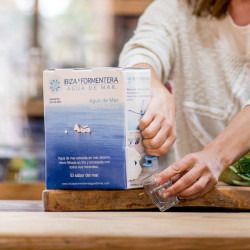
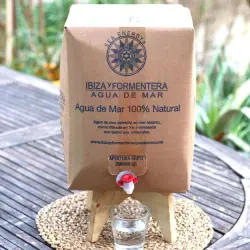
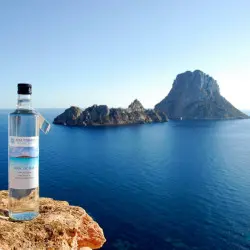
Our supplier Ibiza Agua de Mar collects sea water from a depth of 25 meters off the coast of Ibiza in a UNESCO listed area.
Concerning the harvest, here are the different physico-chemical parameters measured during the search for an optimal place for the harvest of hypertonic marine plasma, first on the radar with reading of the currents and according to the marine weather (wind, swell, rain. ..) and then by local measurement of these different parameters: taste of seawater, dissolved O2 level, PH level, redox level (ORP), salinity level (TDS), conductivity level ( PSU), alkalimetric title (TA), Pressure. It is the empirical practice of the harvesters and the reading of the various measuring instruments that makes it possible to decide on the best complex combination of these measures together to decide whether the harvest is triggered on the site or whether another location is sought.
Where does marine plasma come from ?
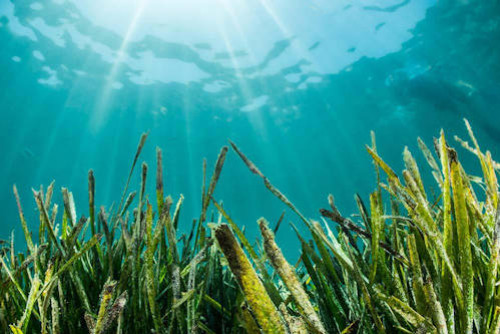
The marine plasma is collected in the high seas, off the coast of Ibiza, in a specific area classified as UNESCO with high planktonic activity and with a presence of tens of square kilometers of Posidonia. It is indeed in this specific area that lives the largest living organism listed on Earth, a posidonia herbarium of 80,000 to 200,000 years extending over 15 kilometers in length.
Source: Sophie Arnaud-Haond, Carlos M. Duarte, Elena Diaz-Almela, Núria Marbà, Tomas Sintes, Ester A. Serrão: Implications of Extreme Life Span in Clonal Organisms: Millenary Clones in Meadows of the Threatened Seagrass Posidonia oceanica
When is it best to take marine plasma ?
The ideal is to consume marine plasma, which contains, let's remember, all the elements that make up Mendeleev's periodic table, in the morning when you get up, on an empty stomach. take 1/4 of hypertonic marine plasma to mix 3/4 of spring water or filtered water.
What are the benefits of marine plasma ?
Minerals are the "fuel" used primarily by our body, which is necessary for our cells to perform their functions optimally. They are also essential for the absorption of vitamins and are responsible for enzymatic processes in cells. Cells perform all their functions with maximum vitality and the precise capacity for organic, bioavailable, alkaline cellular nutrition. Thus, sea water becomes the best mineral drink since it contains all the elements of Mendeleev's periodic table.
Another of the great benefits of seawater is its pH. As Otto Warbürg, father of cellular respiration and two-time Nobel laureate, said, “all diseases are acidic and where there is oxygen and alkalinity there can be no disease”. Due to the quality of our raw material, the hyper-oxygenated waters of Posidonia meadows (recognized by UNESCO as a World Heritage Site in 1999) and sea currents providing purity and clarity: Ibiza and Formentera Agua de Mar have an alkaline pH , between 8.1 and 8.4, which will help the body maintain a neutral pH through homeostasis. The ingestion of sea water is advised to control and maintain our PH, as well as an exceptional supplement for alkaline diets.
The antioxidant and anti-acidity power produced by seawater is due to the alkalinity provided by the minerals.
Drinking filtered seawater in a direct and controlled way is very beneficial for your health, because seawater is an excellent nutrient, containing most of the minerals of the periodic table and all of them dissolved in the best universal solvent available: l 'water.
Seawater contains all the minerals of the periodic table of elements in a bioavailable way. It is thanks to this that foods cooked in seawater are rehydrated and remineralized to make foods with high nutritional power. The problem today is that our intake of minerals through food has dropped dramatically and what is causing this? The answer is very simple: pollution, soil depletion due to intensive agricultural production and our stressful pace of life have considerably reduced the quality of food and its mineral intake, drastically reducing the minimum contribution necessary for the proper functioning of the body.
Seawater also helps us stay young, for a simple reason: the body regularly and cyclically regenerates all its cells, because their lifespan is limited in time. As we age, one of the first faculties the cell loses is the ability to hydrate. We know that the older we get, the less we drink, so drinking and ingesting seawater can help us "wake up" this ability to hydrate ourselves., 4
products
Seawater is still salt water, it seems obvious, but it is worth writing down. 10 ml of hypertonic provides about 0.35 g of salts, of which sodium is only a part. As a benchmark, EFSA considers 2.0 g of sodium per day a safe and adequate intake for adults (EFSA, 2019). Those 10 ml weigh little in a day, but they add to the salt on your plate, and it is the total that counts.
As part of a varied and balanced diet and a healthy lifestyle, this benchmark is enough to keep things clear. Low-salt diet, high blood pressure, kidney failure, pregnancy or a child: ask your doctor for advice before taking it regularly. The other points of caution are gathered in our article on the side effects of marine plasma, and marine magnesium has its own article too.
That leaves quality, and there I do not compromise. In 2006, Health Canada asked for the recall of two drinkable seawaters, one isotonic and one hypertonic, sold without authorisation, because aerobic bacteria had been found in them in unacceptable quantities; no adverse effects had been reported (Health Canada, 2006). That recall concerned two specific products, and above all it is a reminder that a seawater meant for drinking must have a traceable origin and filtration. With us, it is cold microfiltration, and it is the first question I invite you to put to any seller, ourselves included.
I would love for nobody to hesitate on the shelf any more over isotonic vs hypertonic Quinton. A bottle of sea, a measuring jug, three volumes of water, and everyone adjusts at their own pace. No more complicated than that.
Frequently asked questions
What is the difference between isotonic and hypertonic Quinton water?
Only the concentration changes. Hypertonic Quinton water, or marine plasma, is pure seawater at about 35 g of salts per kilo; isotonic is the same water diluted towards 9 g per litre, the concentration of body fluids. The origin and the proportions of minerals stay the same.
What is the difference between a hypotonic and a hypertonic solution?
A hypotonic solution is less concentrated in salts than the inside of our cells, a hypertonic solution is more concentrated. Placed in the first, a red blood cell takes in water and swells; in the second, it loses its water and shrivels. In an isotonic solution, it stays stable, because the concentrations balance out.
Is seawater hypertonic or isotonic?
Seawater is hypertonic. At about 35 g of salts per kilo, it is nearly four times more concentrated than the 9 g per litre of an isotonic solution, that of physiological saline. To get an isotonic seawater, you dilute it with about three volumes of fresh water to one volume of seawater.
What is marine plasma?
Marine plasma is seawater that has been collected then cold-microfiltered, with nothing else added. It is also called Quinton water, after René Quinton, the French biologist who studied it. Its minerals are those of seawater, mostly chloride and sodium. It exists in a hypertonic version, pure, or an isotonic one, diluted.
What are the benefits of hypertonic seawater?
The only effect studied for hypertonic seawater concerns nasal rinsing. A meta-analysis of 9 studies and 740 patients finds hypertonic saline solutions slightly more effective than isotonic ones on nose and sinus symptoms, with more tingling. As a drink, no study allows a benefit to be attributed to it.
Is Quinton water anti-inflammatory?
No. No claim of this kind is authorised for seawater or marine plasma. The available studies concern nasal comfort when rinsing, where hypertonic relieves symptoms slightly better than isotonic, and these results apply neither to drinking nor to a general effect on the body.
EFSA Panel on Nutrition, Novel Foods and Food Allergens (NDA), Turck D. et al. (2019). Dietary reference values for sodium. EFSA Journal, 17(9), e05778.
The information presented in this article is provided for information purposes only and does not constitute medical advice. Please consult a healthcare professional before changing your diet or taking any supplement.