Summary
You have been taking marine magnesium for weeks, maybe months, and yet you are still tired in the morning. The cramps return. Sleep remains fragile. What if the problem isn't the dosage, but the form of magnesium you are using ?
Marine magnesium is currently one of the best-selling dietary supplements in France. And for good reason: it is natural, derived from seawater, and its name alone evokes purity and vitality. However, there is often a significant gap between what we believe we know and the reality of what our body truly assimilates. With several decades of experience in living foods and natural superfoods, at Biovie, we are deciphering this often misunderstood topic with the honesty that characterizes us, even if it means challenging some preconceived notions.
In this article, I offer you a comprehensive overview: what exactly is marine magnesium, what are its recognized benefits, what are its limitations in terms of bioavailability, and why marine plasma represents a particularly interesting natural alternative. With, of course, an honest comparison between the three major forms of magnesium available today.
What exactly is marine magnesium ?
Let's start at the beginning. When we talk about marine magnesium, we are referring to magnesium salts extracted directly from seawater. Specifically, it is a mixture of several chemical forms: primarily magnesium oxide, but also magnesium hydroxide, chloride, and sulfate. These salts are obtained through a process of evaporation and purification of seawater.
What is important to understand is that marine magnesium is not a unique and homogeneous form. Its composition varies depending on the extraction process used, which explains why the elemental magnesium content - that is, the amount of magnesium actually usable by your body - ranges between 30% and 55% depending on the manufacturers.
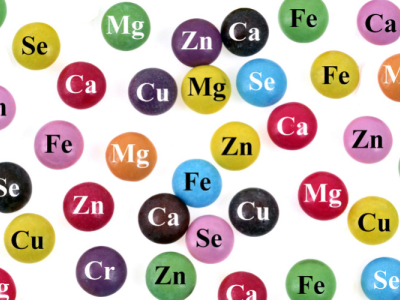
The main difference with synthetic magnesium is precisely this marine origin. Marine magnesium comes from a natural matrix, seawater, and retains traces of other minerals like zinc and selenium. This is a point that makes sense. However-and this is where things get a bit complicated-"natural" does not automatically mean "better absorbed." Magnesium oxide, which is the predominant form in most marine magnesium capsules, is indeed natural, but its bioavailability remains variable and is a subject of debate within the scientific community.
At Biovie, we have chosen to prioritize the iono-mineral totum of seawater, that is, marine plasma, rather than these isolated salts. Why? Because in marine plasma, magnesium is in ionic form, directly assimilable, and accompanied by the entire set of Trace elements in their natural proportion. But I will return to it in detail a little later.

The 7 proven benefits of marine magnesium
Before discussing the limitations, let's first give credit where credit is due. Magnesium, in whatever form, is an absolutely essential mineral for our body. It is involved in 300 to 600 enzymatic reactions - it's considerable when you think about it. Here are the main recognized benefits.
It helps reduce fatigue.
This is probably the number one reason why people turn to marine magnesium. And it's legitimate: magnesium is an essential cofactor in the production of ATP, the molecule that is literally the energy fuel for your cells. When your magnesium reserves are low, your body runs slowly. Imagine trying to start your car with a half-empty battery - that's exactly what happens at the cellular level when magnesium is lacking.
The ANSES recommends a daily intake of 380 mg for men and 300 mg for women. However, the study SU.VI.MAX showed that 75% of French people have insufficient intakes. It's huge. And the INCA 3 study confirms that nearly one in two French people could indicate a magnesium deficiency.
If fatigue is your main concern, you might also find it interesting to consult our Natural solutions for fatigue which complement a magnesium cure very well.
It supports stress and anxiety management.
Here is a well-documented vicious circle: stress depletes your magnesium reserves, and a lack of magnesium amplifies your stress response. A review published in Nutrients In 2020, Pickering, Mazur, and their collaborators highlighted this mechanism. Magnesium plays a role in regulating cortisol and participates in the synthesis of serotonin, the neurotransmitter that contributes to your sense of well-being. Specifically, when you are constantly stressed and feel that your tolerance threshold is decreasing, your body might be sending you a signal: it needs magnesium.
It can promote better sleep.
Magnesium is involved in the synthesis of melatonin, the hormone that regulates your sleep-wake cycle. It also helps to calm the nervous system. If you are one of those who toss and turn in bed at night, with a mind that won't stop racing, a magnesium deficiency might be part of the equation. Of course, sleep is multifactorial, but magnesium is clearly one of the pillars to check. To delve deeper into this topic, we have also written a comprehensive guide to help you. regain quality sleep naturally.
It supports muscle function.
Night cramps, twitching eyelids, tense muscles after moderate exertion... These small signals are often the first indicators of a magnesium deficiency. Magnesium contributes to normal muscle function and muscle relaxation after contraction. For athletes, it is a valuable ally in post-exercise recovery.
It contributes to bone health.
We often think of calcium when we talk about bones, but magnesium is just as important. It plays a role in the absorption of calcium and in maintaining normal bone density. Without enough magnesium, your body struggles to properly fix calcium - a bit like having the bricks but not the cement.
It contributes to nervous balance.
Magnesium plays a role in the transmission of nerve impulses and in normal cognitive functions. An adequate intake contributes to the proper functioning of the nervous system as a whole. This is why a deficiency can manifest as irritability, difficulty concentrating, or a general feeling of "mental fog."
It supports cardiovascular function.
Clinical meta-analyses have shown that magnesium supplementation can help reduce systolic blood pressure by 2 to 3 mmHg. Magnesium contributes to vasodilation and the maintenance of normal blood pressure. It is not spectacular when taken in isolation, but in a comprehensive approach to cardiovascular health, every contribution counts.
To discover all of the Benefits of seawater for the body, which include a natural supply of ionic magnesium, feel free to consult our dedicated article.
What are the signs of a magnesium deficiency ?
It's a question I receive very regularly. And frankly, the list of symptoms is quite telling. See if you recognize yourself in several of these signs:
- persistent fatigue in the morning, even after a full night's sleep
- eyelids that twitch involuntarily
- muscle cramps, especially at night
- an increased sensitivity to stress, an unusual irritability
- disturbed sleep, frequent nighttime awakenings
- palpitations without apparent cause
- recurrent headaches
- a drop in morale, a lack of motivation
- compulsive sugar cravings
- a feeling of general muscle tension
If you check three or four of these boxes, there is a good chance that your body is lacking magnesium. And the statistics confirm it: 77% of women and 72% of men in France are below the recommended nutritional intakes.
Certain populations are more at risk than others: women (especially during periods of hormonal stress), seniors, regular athletes, and of course all individuals subjected to chronic stress. Stress is indeed the great "robber" of magnesium: the more stressed you are, the more you consume, and the less you have to manage that same stress. It's a real vicious circle.
If you recognize several of these signs, a marine plasma treatment can help restore your mineral reserves naturally and gradually, thanks to the ionic magnesium and the full range of trace elements it provides.
Marine Magnesium vs Bisglycinate vs Marine Plasma: The Honest Comparison
Here we are, getting to the heart of the matter. And I will be transparent with you, because it's the only way to earn your trust: each form of magnesium has its strengths and limitations. None is perfect. Here is an objective comparison of the three main options available to you.
Marine magnesium in capsules
- Origin: isolated sea water salts (oxide, hydroxide, chloride, sulfate)
- Chemical form: primarily magnesium oxide
- Bioavailability: average and variable depending on the salts used
- Digestive tolerance: variable, a laxative effect is possible, especially with magnesium oxide.
- Associated trace elements: some traces of zinc, selenium
- Elemental magnesium content: 30 to 55%
- Ideal for: a tight budget and overall magnesium intake
- Average price: €
Magnesium bisglycinate
- Origin: chemical synthesis (magnesium chelated with glycine, an amino acid)
- Chemical form: chelated with glycine
- Bioavailability: high, it is the most well-studied chelated form
- Digestive tolerance: excellent, very well tolerated
- Associated trace elements: none, it is an isolated form
- Elemental magnesium content: approximately 14%
- Ideal for: targeted anti-stress support, sleep, cramps
- Average price: €€
Marine plasma (Biovie)
- Origin: cold microfiltered seawater, complete iono-mineral totum
- Chemical form: magnesium in its natural ionic form
- Bioavailability: high, the ionic form does not require a carrier to be absorbed.
- Digestive tolerance: excellent
- Associated trace elements: Complete totum of 78 trace elements in natural synergy
- Elemental magnesium content: variable, it is a long-term remineralization treatment.
- Ideal for: overall remineralization, a natural synergy between minerals
- Average price: €€
Let's be honest about the limitations of marine magnesium in capsules. Its bioavailability is a topic of debate within the scientific community, and it's important to acknowledge this. Magnesium oxide, which is the dominant form in these capsules, is not the best-absorbed form by the body. This doesn't mean it is ineffective-it simply means that a portion of the ingested magnesium will not be used by your cells.
Bisglycinate offers excellent bioavailability and very good tolerance. It is a relevant choice if you are looking for a targeted intake, particularly for stress or sleep. However, it is an isolated, synthetic form that provides only magnesium and nothing else.
At Biovie, we have chosen hypertonic marine plasma, harvested off the coast of Ibiza and cold microfiltered, because it provides magnesium in ionic form accompanied by the complete iono-mineral Totum of seawater - without any synthetic excipients. It's not just magnesium; it's a comprehensive remineralization approach.
What our clients say:
"I am very satisfied with Quinton water. I have been drinking a glass on an empty stomach in the morning for 2 months." - Mr. Grewis, Trustpilot review ★★★★★
"Marine plasma is at an unbeatable price." - Cindy.Mx, Trustpilot review ★★★★★
"It's excellent! Marine plasma, recommended and prescribed by a naturopath, has amazing side effects and really boosts health!" - Cécile B., Google review ★★★★★
"Very competitive marine plasma pricing, excellent quality, fast delivery, package arrived in perfect condition!" - Edith F., Google review ★★★★★
Marine plasma: a natural and directly assimilable source of magnesium
So, what exactly is marine plasma? It is seawater collected from deep waters, far from the coasts and sources of pollution, then cold microfiltered to remove microorganisms while preserving its full mineral richness. It is also called Quinton water, named after the biologist René Quinton who, in the early 20th century, highlighted the remarkable similarity between the composition of seawater and that of our blood plasma.
Quinton's work, starting in 1910, showed that the relative proportions of minerals in seawater are close to those in our internal environment. It's fascinating when you think about it: our body is, in a way, a miniature ocean.
What makes marine plasma particularly interesting for magnesium intake is the form in which the minerals are found. In seawater, magnesium is in ionic form, meaning it is already "ready to use" for your cells. It does not need to be processed by your digestive system, nor does it require a carrier to cross the intestinal barrier. It is direct assimilation.
And then there is the argument of the iono-mineral Totum. Marine plasma does not only provide you with magnesium: it contains the 78 trace elements of seawater in their natural proportions. These minerals work in synergy - zinc, selenium, manganese, potassium, all these elements that, together, allow your body to function optimally. It is this holistic approach that makes the difference compared to isolated magnesium. You can also learn more about the essential role of trace elements in our dedicated article.
For those who are wondering: what is the difference between hypertonic and isotonic marine plasma? Hypertonic has a higher mineral concentration than our blood plasma - it is ideal for intensive remineralization treatments. Isotonic has a concentration similar to our blood plasma - it is more suitable for people who monitor their blood pressure or who want a gentler treatment. We also have a complete article on the Differences between hypertonic and isotonic plasma for those who want to delve into the subject.
The Biovie hypertonic marine plasma is harvested off the coast of Ibiza, in an area where the posidonia meadows, classified as a UNESCO World Heritage site, act as natural purifiers. The geographical origin of marine plasma really matters., and we have written a detailed article on this subject comparing the Mediterranean and Atlantic waters.