In France, 4.5 million women are currently experiencing perimenopause-often in silence, often poorly informed. This transition phase can last between 4 and 10 years before confirmed menopause, and it generates symptoms that many attribute to fate: hot flashes, tender and painful breasts, disrupted nights, irritability, weight gain around the abdomen. Your doctor tells you "it's peri," you leave with a prescription or without an answer-and no one explains what's really happening in your body. For an overview of this period, consult our complete guide on menopause.
In reality, in the majority of cases, the natural perimenopauseThe issue at hand is not just a problem of hormone production. It is a problem of elimination. And this is precisely where a living diet can play a decisive role. Here is an article that is very close to my heart. Today, I am sharing with you what science says about these mechanisms and how to implement a concrete protocol in 21 days.
Perimenopause and excess estrogen: what exactly are we talking about ?
What is estrogen dominance ?
Here is a term that you will hear more and more, and it deserves a proper explanation. The estrogen dominance does not necessarily mean that you have too much estrogen in absolute terms. It's more subtle than that.
During perimenopause, progesterone drops first and more abruptly than estrogen. This relative imbalance-too much estrogen compared to a collapsed progesterone level-is what is called estrogen dominance. And according to Dr. Christiane Northrup, a leading author on women's health, about 70 to 80% of perimenopausal women show signs of relative estrogen dominance. This is a considerable proportion, and yet this imbalance remains largely underdiagnosed.
What further exacerbates the situation is a factor that is greatly underestimated: the recirculation of already used estrogens. When the liver and microbiota do not properly eliminate metabolized hormones, they are reabsorbed and put back into circulation, creating a relative excess. It is a vicious cycle that diet can truly help break - and this is where it gets interesting.
What are the symptoms of excess estrogen during perimenopause ?
If you are in perimenopause and you recognize several of these symptoms, there is a strong chance that your hormonal balance is disrupted by an elimination problem. To learn more about natural solutions for hot flashes, we have compiled a dedicated guide:
Breasts tense and painful in the second half of the cycle
Water retention, particularly in the legs and hands
Heavy or irregular periods - a classic sign of excess estrogen during perimenopause
Irritability and unexplained mood swings
Difficulties losing weight, particularly around the belly and hips
Chronic fatigue in the mid-afternoon
Sleep disorders, nighttime awakenings
Hormonal headaches
These symptoms are not inevitable. They indicate that your body needs support in its natural hormonal elimination functions. And good news: dietary measures are concrete, accessible, and scientifically documented.
Why are the liver and the microbiome at the heart of hormonal detoxification ?
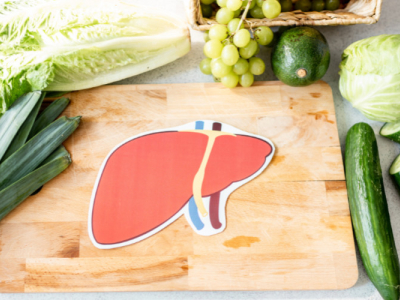
The liver: the key organ for metabolizing estrogens
We too often forget that the liver is a true hormonal conductor and that the liver detox during perimenopause is a central issue. It metabolizes estrogens in three distinct phases. Specifically, here's what happens in your body:
In Phase I, The liver converts active estrogens into intermediate forms. This process requires specific micronutrients - notably B vitamins, zinc, and magnesium.
In Phase II, these intermediate forms are neutralized and made water-soluble so they can be eliminated. This is where things can get stuck: if the liver is overloaded, deficient in sulfur, or insufficiently supplied with fiber, this phase slows down. The "active" estrogens continue to circulate.
In Phase III, the neutralized hormones are excreted via the bile, then the feces.
When phase II is slowed down - which is very common in women aged 40 to 55, exposed to an environment rich in endocrine disruptors - estrogens are not properly inactivated. Our article on the best foods to naturally support your liver health Detail all available hepatic dietary levers.
The microbiota and the estrobolome: the gut-hormone connection that no one explains to you
You may have heard of the microbiome. But do you know about theestrobolome ?It is a group of intestinal bacteria specialized in regulating the enterohepatic cycle of estrogens. In simple terms: these bacteria determine whether the estrogens already metabolized by the liver are permanently eliminated or reactivated and reabsorbed.
A study published in Maturitas in 2017 by Baker et al. clearly established this link between Gut microbiota and female hormones : women with a depleted microbiome eliminate 50% less estrogen via fecal transmission compared to those with a diverse flora. Fifty percent. This is a piece of information that, in my opinion, should be at the heart of every gynecological consultation.
And the microbiome of a 45-year-old woman is nothing like it was when she was 25. Years of stress, antibiotics, processed food, and endocrine disruptors have profoundly altered this flora. To understand the functioning of emunctories and their role in hormonal elimination, our comprehensive article will guide you.
How does chlorella help eliminate excess estrogen ?
Video resource - Justine Lambolley, a naturopath, explains the role of chlorella in supporting perimenopause and the importance of marine plasma during this transitional period.
Chlorophyll and Toxin Binding: The Mechanism Explained
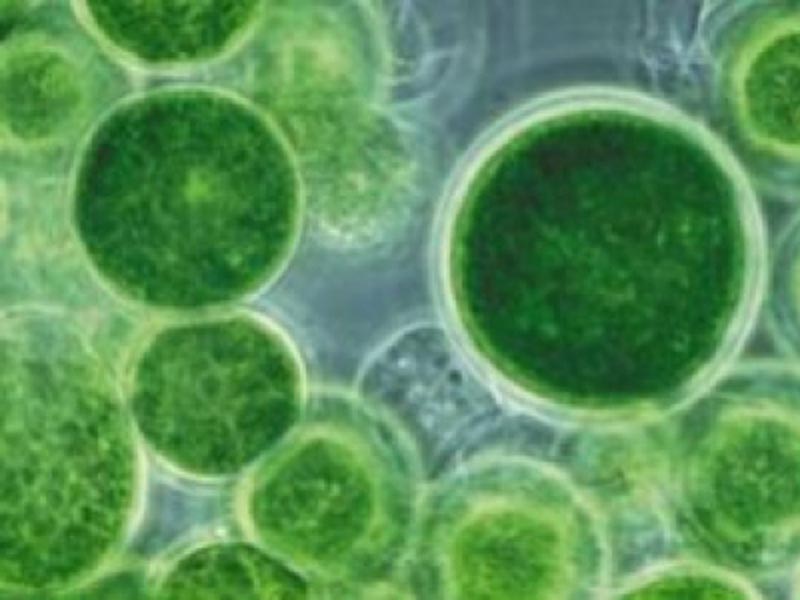
The Chlorella is probably one of the most misunderstood algae. It is often reduced to its role in heavy metal chelation - which is real and important - but its action on the female hormones is much wider.
Chlorella contains up to 3% chlorophyll, which constitutes the highest known concentration in plant-based food. This chlorophyll has a remarkable property: it binds to liposoluble compounds in the small intestine, including non-eliminated estrogens, helping to interrupt their reabsorption. To learn more about the detailed benefits of chlorella, our dedicated article provides a comprehensive overview of the mechanisms.
In practice: the estrogens metabolized by the liver, which would normally have been reabsorbed due to an ineffective estrobolome, are "captured" by chlorophyll and excreted with the feces. Simple. Mechanical. And supported. ANSES, in its 2022 report on algae in human nutrition, confirms the exceptional nutritional profile of chlorella and the richness of its bioactive compounds.
What dose of chlorella is effective during perimenopause ?
The progressive protocol we recommend for the Benefits of chlorella in perimenopause, over three weeks:
Week 1 : 1 to 2g on an empty stomach or before meals
Week 2 : 3 to 4g per day
Week 3 and beyond : 5g per day
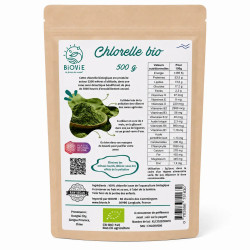
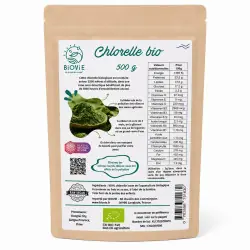
A minimum treatment of 6 to 8 weeks is generally recommended to observe effects on hormonal balance. Biovie chlorella is Ecocert certified, produced without solvents, and has a broken cell wall for better assimilation.
Precaution: if you are taking anticoagulants or have a history of iodine hypersensitivity or thyroid disease, consult your doctor before starting.
How to incorporate Biovie chlorella into your hormonal routine ?
Specifically, here is the morning routine we suggest - and that I have personally adopted to support Aurélie in her own transition:
On an empty stomach, right after waking up: a large glass of lukewarm water with a few drops of lemon juice.
4 to 5g of organic chlorella Biovie
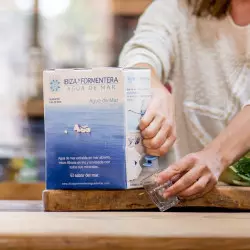
20ml of Quinton isotonic marine plasma, 20 minutes later
Simple. No complex preparation. Less than 3 minutes each morning. And at about €0.80 per day for chlorella, it's one of the most accessible protocols available for how to naturally rebalance your hormones during menopause.
Marine plasma during perimenopause: remineralize to rebalance
Why mineral deficiency worsens estrogen dominance
Here's something that is not often mentioned: the liver enzymes responsible for phase II of hormonal detoxification need minerals to function properly. This is the direct link between Marine plasma and female hormones. Zinc, magnesium, selenium, copper - without these cofactors, enzymes slow down, and the liver struggles to inactivate estrogens.
However, women aged 45 to 55 often suffer from chronic mineral deficiency. The reasons are numerous: prolonged stress (which depletes magnesium), depleted agricultural soils, processed foods, endocrine disruptors... Isotonic marine plasma precisely addresses this issue by providing a full spectrum of bioavailable minerals.
Seawater contains 78 elements of Mendeleev's periodic table in ionic form and is directly assimilable. It was René Quinton, a French biologist from the early 20th century, who formalized the idea that the composition of marine plasma is remarkably close to our internal cellular environment.
Isotonic or hypertonic: which one to choose during perimenopause ?
Isotonic marine plasma (diluted to the concentration of blood plasma) is the mildest. It deeply remineralizes without straining the kidneys. It is the one I recommend as a first choice for perimenopause, especially for women who are tired or going through a period of depletion.
Hypertonic marine plasma (Pure, undiluted seawater) is more concentrated and stimulating. It is more suitable for people who are already well remineralized or who are looking for a more energizing effect.
How does fermentation strengthen the estrobolome ?
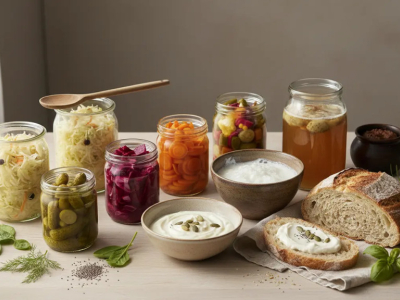
If I had to choose a single food to add to the diet of a woman in perimenopause, it would probably be homemade sauerkraut. Not because it's trendy - but because the science on the Fermented vegetables and hormones justify it convincingly.
Fermented vegetables provide live lactic bacteria - Lactobacillus, , Pediococcus, , Leuconostoc - which directly populate and diversify the estrobolome. These bacteria produce enzymes that participate in the management of the enterohepatic cycle of estrogens. A balanced estrobolome means fewer estrogens are reabsorbed, and therefore less estrogen dominance.
The study by Wastyk et al., published in Cell In 2021 (a randomized clinical trial conducted at Stanford) showed that a diet rich in fermented foods increased the diversity of the microbiome of 15 to 30% in just 10 weeks. Frankly, it's the most favorable benefit-effort ratio I know of in this field. Also check out our selection of the 15 Best Fermented Foods for Your Gut Flora to further your practice.
Which fermented vegetables are most effective for hormones ?
Not all fermented foods are equal in this hormonal context. The most interesting ones within the framework of the Estrogen dominance diet are:
Sauerkraut : undisputed queen, rich in Lactobacillus and vitamin C. It contains glucosinolates from cabbage which, during fermentation, generate DIM (3,3'-diindolylmethane) - a compound of cruciferous vegetables which participates in the metabolism of estrogens.
Kimchi : Korean fermented dish made from cabbage and chili, highly diverse in lactic bacteria and bioactive compounds.
Fermented broccoli : particularly rich in sulforaphane (the sulforaphane-estrogen-broccoli relationship is well documented today) - a compound known to support phase II liver detoxification.
Lacto-fermented fennel : excellent for digestive symptoms often associated with perimenopause.
Quick Recipe: Sauerkraut with Fennel and Caraway (15 minutes of preparation)
Here is a recipe that we regularly make at home. Simple, inexpensive (about €1.50 for a one-liter jar), and remarkably effective for the microbiome and hormonal balance during perimenopause.
The Biovie 21-day hormonal detox protocol: how to implement it ?
It is not a restrictive diet. It is a protocol of abundance: we add powerful foods to naturally support perimenopause symptoms, we don't remove anything. Over three weeks, here's how to structure it gradually.
Week 1: Activate liver detox pathways
The goal of this first week is to prepare the liver to better metabolize estrogens.
Every morning on an empty stomach: warm water + lemon juice + 3g of organic chlorella Biovie
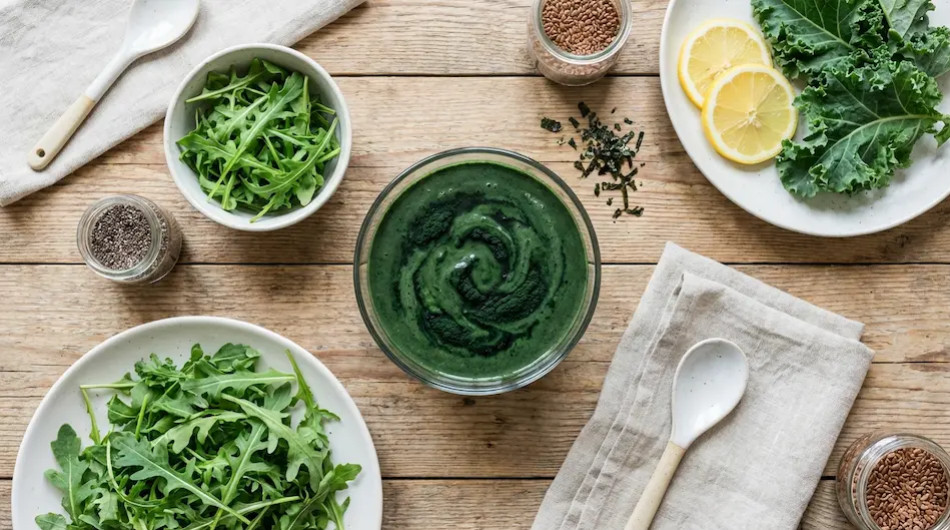
Add to daily meals: arugula, black radish, artichoke, dandelion
Start with a small portion of homemade lacto-fermented vegetables (2 to 3 tablespoons per meal)
1 ampoule of isotonic marine plasma Quinton each morning
Week 2: Remineralize and Nourish the Microbiota
Increase chlorella to 5g per day
Continue the isotonic marine plasma (20ml in the morning on an empty stomach)
Increase the portions of fermented vegetables (1 portion per meal)
Add daily cruciferous vegetables: broccoli, cauliflower, kale - for their DIM and sulforaphane content.
Continue with isotonic marine plasma and fermented vegetables daily.
Introduce ZenCleanz ONE digestive enzymes if needed to support digestion.
Objectively evaluate the changes: sleep quality, breast sensitivity, mood, energy level, abdominal comfort.
Consistency is more important than perfection. For how to lose belly fat during perimenopause through diet, results on water retention and the tendency for hormonal storage can be observed as early as 4 to 6 weeks into a regular protocol. This is what we have observed for 18 years at Biovie.
What scientific studies say about these approaches
I am an ISTOM engineer, and I never share information without relying on solid and verifiable sources. Here are the main studies that have shaped my beliefs on this subject:
Baker JM, Al-Nakkash L, Herbst-Kralovetz MM. (2017, Maturitas) - Observational study on the microbiota-estrogen axis: demonstration that women with a depleted microbiome excrete 50% less estrogen through feces. View on PubMed
Wastyk HC et al. (2021, Cell, Stanford) - Randomized clinical trial: a diet rich in fermented foods increases microbial diversity by 15 to 30% in 10 weeks. View the study
Nakano S, Takekoshi H, Nakano M. (2005, Plant Foods for Human Nutrition) - Essai clinique sur la chlorella : rôle de la chlorophylle dans la réduction de la charge en composés liposolubles dans l'organisme. Voir sur PubMed
Rajoria S et al. (2011, Thyroid) - Essai clinique sur le DIM (issu des crucifères fermentés) : modulation du métabolisme des œstrogènes.
ANSES (2022) - Expert report on algae in human nutrition: confirmation of the exceptional nutritional profile of chlorella. ANSES.fr
* A varied and balanced diet and a healthy lifestyle are important. The beneficial effect of chlorella contributes to supporting the body's natural elimination functions. The beneficial effect is obtained with a daily consumption of 3 to 5g of organic chlorella as part of a balanced diet. These approaches do not replace medical supervision.
FAQ - Your questions about hormonal detox during perimenopause
What is estrogen dominance during perimenopause, and how can it be recognized ?
Estrogen dominance refers to an imbalance between estrogen and progesterone, common during perimenopause. It is not necessarily an absolute excess of estrogen, but a relative excess: progesterone drops first, leaving estrogen comparatively dominant. The Symptoms of excess estrogen during perimenopause include tender and painful breasts before menstruation, water retention, irritability, heavy or irregular periods, difficulty losing weight (especially around the belly and hips), fatigue, and sleep disturbances. This imbalance is often related to faulty hormonal elimination (overloaded liver, depleted estrobolome) rather than overproduction.
How can chlorella help support the elimination of excess estrogen ?
The Chlorella helps support hormonal balance during perimenopause. on two complementary mechanisms. Its exceptional chlorophyll content (up to 3%) allows it to bind to liposoluble compounds in the intestine, helping to interrupt their reabsorption - including non-eliminated estrogens. It also supports the natural liver detox pathways by contributing to the elimination of heavy metals that interfere with hormone receptors. A gradual protocol of 5 to 15 tablets per day over 6 to 8 weeks is recommended to support these natural functions.
What dose of chlorella is recommended to support hormonal balance during perimenopause ?
A progressive protocol is recommended: 2 to 3g per day during the first week, 4g tablets in the second week, then 5g/day from the third week onwards. The intake should be on an empty stomach or before meals with a large glass of water. A course of at least 6 to 8 weeks is necessary to observe noticeable results on the natural hormonal detox. The certified organic chlorella from Biovie, with its broken cell wall for better assimilation, is particularly suited for this protocol.
Do fermented vegetables really affect female hormones ?
Yes, via the estrobolome: a collection of gut bacteria specialized in regulating the enterohepatic cycle of estrogens. When this estrobolome is depleted, estrogens already metabolized by the liver are reactivated and reabsorbed. The link between Fermented vegetables and female hormones is therefore direct: sauerkraut, kimchi, and fermented cruciferous vegetables enrich the estrobolome and contribute to the fecal elimination of estrogens. The Stanford 2021 study (Wastyk et al., Cell) showed an increase of 15 to 30% in microbial diversity in 10 weeks.
Can chlorella, marine plasma, and fermented vegetables be combined during perimenopause ?
Yes, these three elements work in synergy to naturally support perimenopause symptoms. Chlorella supports liver detoxification and helps interrupt the enterohepatic cycle of estrogens. Quinton isotonic marine plasma remineralizes the body and contributes to the proper functioning of liver enzymes. Fermented vegetables strengthen the intestinal estrobolome. This protocol natural hormonal detox for women aged 40 can be started gradually over 21 days. Precaution: in case of thyroid disease or anticoagulant treatment, consult your doctor before starting.
Conclusion
Here is what I wanted to share with you today. The natural perimenopause Management is not a hormonal failure to be passively endured - it is often a signal that certain essential organs (the liver, the microbiota) need targeted dietary support. Chlorella, isotonic marine plasma, and lacto-fermented vegetables are not miracle cures. They are exceptionally nutrient-dense foods, whose biological mechanisms are now documented in serious studies.
In concrete terms, the 21-day protocol I propose does not require you to disrupt your daily routine. A glass of warm water and a few chlorella tablets in the morning, a vial of marine plasma on an empty stomach, and a portion of fermented vegetables with each meal - that's all. In terms of investment, we're talking about a few euros per day for the supplements, and €1.80 for a jar of homemade sauerkraut if you use our seawater.
Baker JM, Al-Nakkash L, Herbst-Kralovetz MM. (2017, Maturitas) - Étude observationnelle sur l'axe microbiote-œstrogènes : démonstration que les femmes dont le microbiome est appauvri éliminent 50 % moins d'œstrogènes par voie fécale. Voir sur PubMed
Wastyk HC, Fragiadakis GK, Perelman D, et al. (2021). "Gut-microbiota-targeted diets modulate human immune status." Cell, 184(16), 4137–4153. (Randomized clinical trial) - DOI
Nakano S, Takekoshi H, Nakano M. (2005, Plant Foods for Human Nutrition) - Essai clinique sur la chlorella : rôle de la chlorophylle dans la réduction de la charge en composés liposolubles dans l'organisme. Voir sur PubMed
Cavalieri E, Rogan E. (2016). "Depurinating estrogen-DNA adducts in the etiology and prevention of breast and other human cancers." Future Oncology, 6(1), 75–91. (Revue) - PubMed
Rajoria S et al. (2011). "3,3'-Diindolylmethane Modulates Estrogen Metabolism in Patients with Thyroid Proliferative Disease." Thyroid, 21(3). (Clinical trial)
ANSES. (2022). "Safety and Benefits of Algae in Human Nutrition." Expert Report. - ANSES.fr