



These rolls owe their vibrant colour to a sauce of cashews blended with raw beetroot, which generously coats nicely crunchy sprouts. Everything comes together in a few minutes on a board, with no mat and no rice. It is a fresh and original snack, or a light starter off the beaten track. Make an extra portion of sauce: it is delicious as a dip with vegetable sticks.
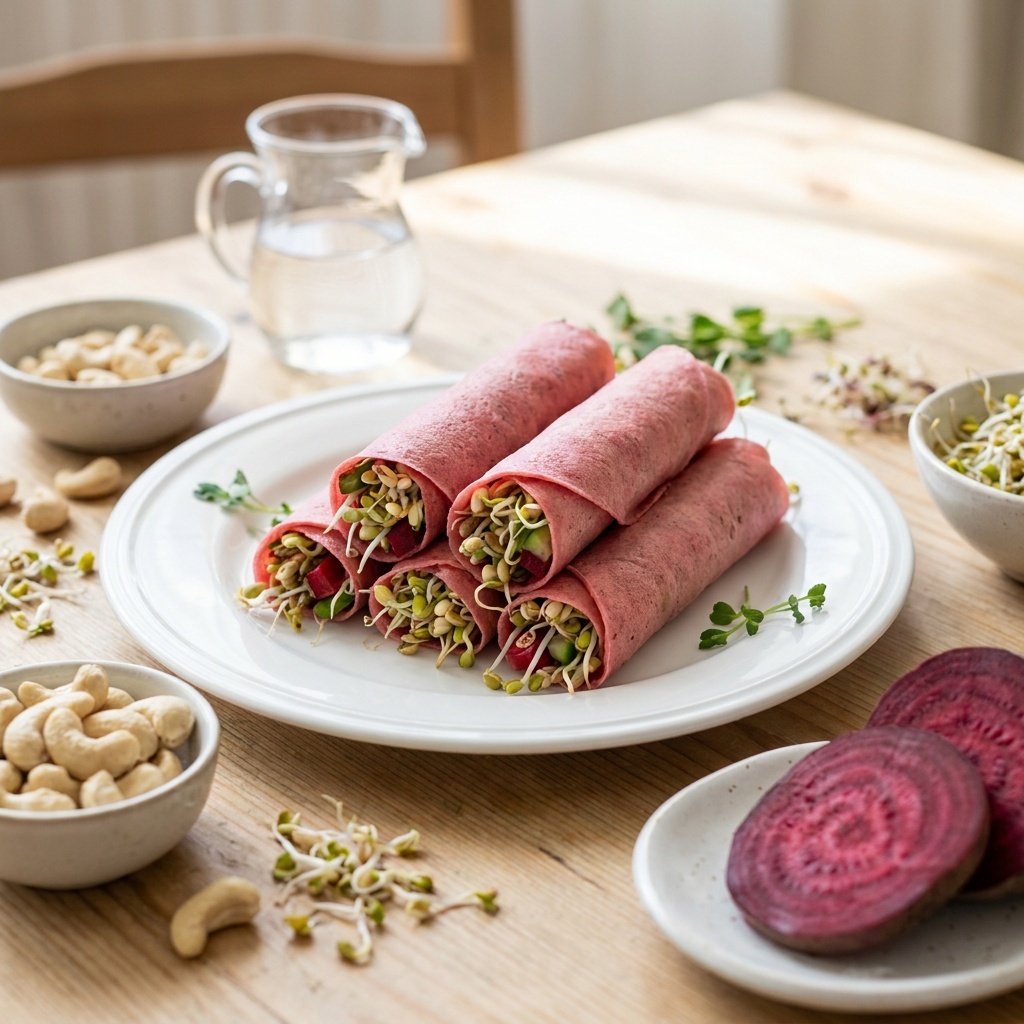
Nori rolls with sprouts and a pink cashew-beetroot sauce

Share this article
Ingredients
Pink sauce
- 150 g cashews
- 120 ml filtered water
- 1 raw beetroot, peeled and cut into pieces
- 2 teaspoons lemon juice
- 1/2 teaspoon sea salt
Rolls
- nori sheets
- an assortment of sprouted seeds, including alfalfa
Method
- Blend all the sauce ingredients in a blender until you have a smooth cream.
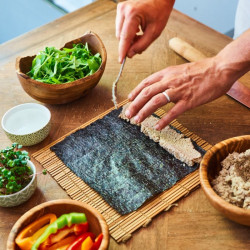
- Lay a nori sheet on a board, shiny side down.
- Top it generously with sprouts.
- Spoon over a good amount of pink sauce, then add a few more sprouts.
- Roll up without squeezing too tightly and cut in half.
- Serve straight away, with a small bowl of pink sauce for dipping.
Tip
Roll the nori sheet like a wrap rather than like a tightly packed maki: it tears less and is easier to bite into. Sprout your own alfalfa in a jar, allowing five to six days of rinsing morning and evening before it is ready to harvest.
The full range ALGAE
26 products
Discover the full range
FAQ: your questions about nori rolls with sprouts
How long do nori sheets keep?
In their original packaging, well sealed and away from moisture, heat and light, nori sheets keep for many months, as long as you respect the date shown. Once opened, carefully reseal the bag, ideally with the desiccant sachet supplied. A sheet that has absorbed moisture turns soft and loses its flavour.
What does “nori” mean in Japanese?
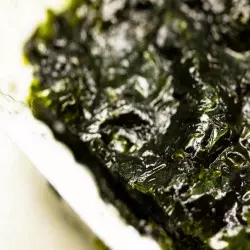
In Japan, nori refers both to the red seaweeds of the genus Pyropia used for these sheets and to the sheets themselves, made by spreading out and then drying the chopped seaweed. It is the seaweed used for maki and onigiri. In the West, it is sometimes also called “laver” or “nori seaweed”.
Which sprouted seeds can you eat?
The most common are alfalfa, radish, broccoli, clover, mung bean, lentil, fenugreek, sunflower and green pea. Always use seeds sold specifically for sprouting. Some seeds, on the other hand, should not be eaten raw once sprouted, such as red kidney beans or seeds from the tomato and potato family.
How do you make a beetroot sauce?
Blend a peeled raw beetroot with a creamy base (cashews, plant-based yoghurt or tahini), a little water, lemon juice and salt until smooth. The bright pink colour appears instantly. Adjust the thickness with water depending on how you use it: thicker to fill rolls as here, more fluid to dress a salad.
Share this article