The low FODMAP diet answers a scene many people know: a chickpea salad, an apple, a hint of garlic in the dressing, a "healthy" meal, and yet your belly swells. For 2 to 6 weeks, this diet cuts back five families of sugars that the small intestine absorbs poorly, then brings them back one at a time to spot the ones that cause trouble. This Biovie page draws on the publications of Monash University, which designed the diet, and on French and British medical guidelines.
I am neither a doctor nor a dietitian, so let me say it right away. As an ISTOM engineer and the founder of Biovie since 2007, I come from the world of sprouted seeds: as a student I lived in a room with no kitchen, and it was by sprouting seeds intensively that I had something fresh on my plate. So while reading this research, a rather naive question kept going round in my head: what is left of a living plate once you remove garlic, onion, apple and chickpeas?
What is the low FODMAP diet?
A so-called "FODMAP-free" diet is in reality a diet low in fermentable sugars: the word "free" is misleading. It scares people, that little word, and it shouldn't. You follow the diet for a few weeks, then you spot the sugars that cause trouble by reintroducing them one at a time, and you keep an eating pattern as broad as possible.
What does FODMAP stand for?
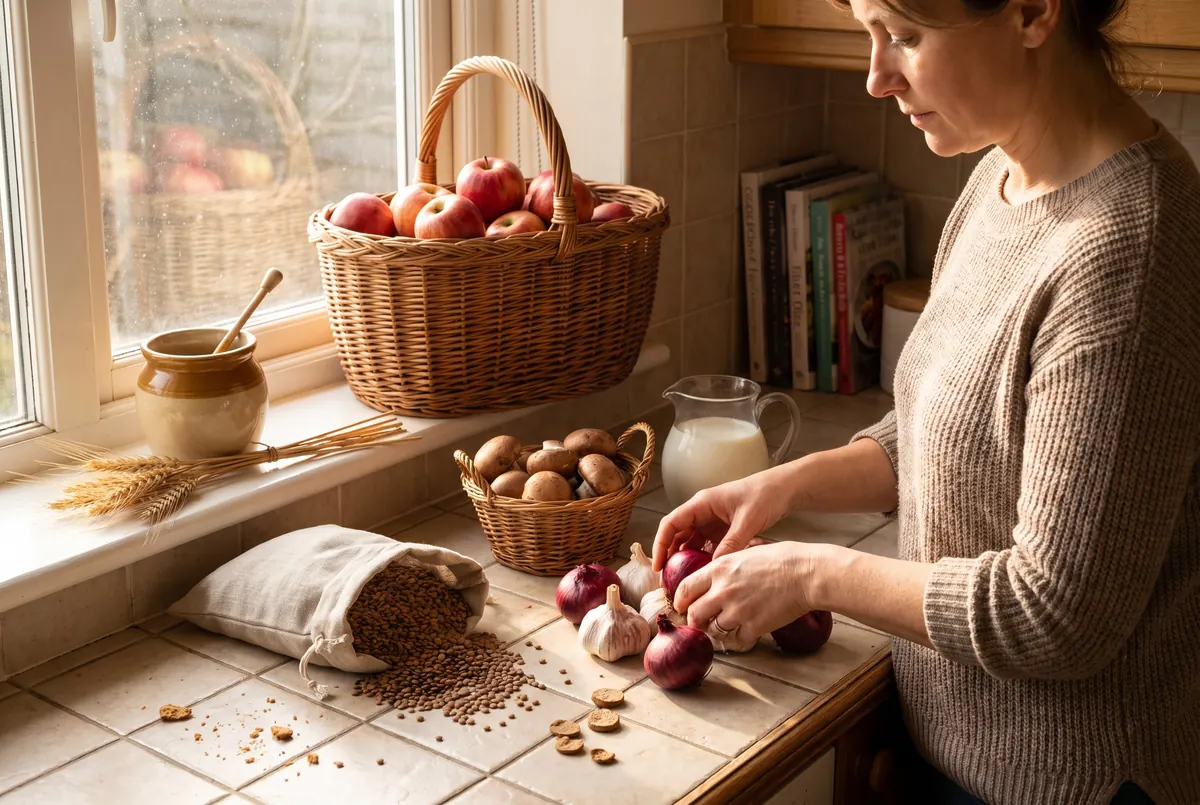
The acronym comes from English, and it is not exactly appetising: Fermentable Oligo-, Di-, Monosaccharides And Polyols (Gibson and Shepherd, 2010). Behind this code name hide five very concrete families (Monash University):
- excess fructose, the kind found in apples or honey;
- lactose from cow's milk;
- fructans, found in wheat and in onion;
- the galactans of legumes;
- polyols, present in mushrooms as well as in "sugar-free" sweets.
Why these sugars bother some intestines
Think of a bottle of apple juice forgotten for a few days in a warm kitchen. The cap bulges. Micro-organisms found sugar, feasted on it, and turned it into gas.
In the gut, Gibson and Shepherd describe a similar scenario: these small molecules, poorly absorbed by the small intestine, draw in water, then the bacteria of the colon ferment them quickly, hence the gas and the feeling of a tight belly. The authors put it forward as a hypothesis about the mechanism, and they are honest enough to specify that it does not prove the diet's effectiveness on its own.
But there is the other side of the coin, and it is the one closest to my heart. These same sugars also feed the bacteria in our gut, and that is one of the reasons why nobody tries to remove them for good. You don't put your tenants on a permanent diet.
What studies say about the low FODMAP diet
The low FODMAP diet is closely studied in people with irritable bowel syndrome (IBS). Two notions before the numbers. In a crossover trial, each participant tries both diets one after the other: the person is compared with themselves. And symptoms are often scored on a scale from 0 to 100 mm, a simple 10 cm line on which each participant puts a mark, from no discomfort at all to the worst discomfort.
In 2014, a single-blind randomised crossover trial followed 30 people with IBS and 8 controls, 21 days on each diet (Halmos et al., 2014). Overall symptom score: 22.8 mm on the low-FODMAP regimen, against 44.9 mm on a typical Australian diet (p < 0.001). On the 10 cm line, the mark moves back by half, or nearly so. The controls without IBS saw no change, which makes sense: for them, there was nothing to soothe.
A single study can be wrong, and I am always a little wary of one beautiful result. In 2022, a network meta-analysis pooled 13 randomised trials and 944 patients (Black et al., 2022). Compared with the usual diet, the low FODMAP diet shows a relative risk of 0.67 (95% CI 0.48 to 0.91) of symptoms not improving, and it comes first on every outcome studied. In other words, a third less risk of staying without relief.
And the authors, to their credit, point out their own limits: trials run mostly in hospital settings, and a reintroduction phase that was not studied.
Last trial, in 2017, and the most instructive in my eyes: 104 adults with IBS, followed for 4 weeks (Staudacher et al., 2017). Their IBS-SSS severity score came to 173 on the FODMAP-restricted diet, against 224 on a "placebo" diet (p = 0.001). The share of people who say they feel adequately relieved depends on how you count: 57% against 38% in intention-to-treat, that is, keeping everyone who started the trial (p = 0.051), and 61% against 39% among those who followed it to the end (p = 0.042). Roughly, six people out of ten on one side, four on the other.
The p-value is the probability of seeing such a gap if the diet did nothing: the smaller it is, the less chance holds up as an explanation. At 0.051, you come close to the threshold set by convention without crossing it, hence the label "not significant". A whisker. So the diet does not help everyone, and that is precisely why reintroduction matters so much.
The 3 steps of the FODMAP diet
Picture a fuse box that keeps tripping. What does the electrician do? They switch everything off, then put the fuses back one by one to find the culprit. They don't leave the house in the dark for months. The FODMAP diet follows this engineer's logic, and that is why the strict phase is short: it is the reintroduction that does the work. Monash University, by the way, speaks of a swap diet, "not an elimination diet" (Dwyer, 2018).
Step 1: cut back on FODMAPs, 2 to 6 weeks
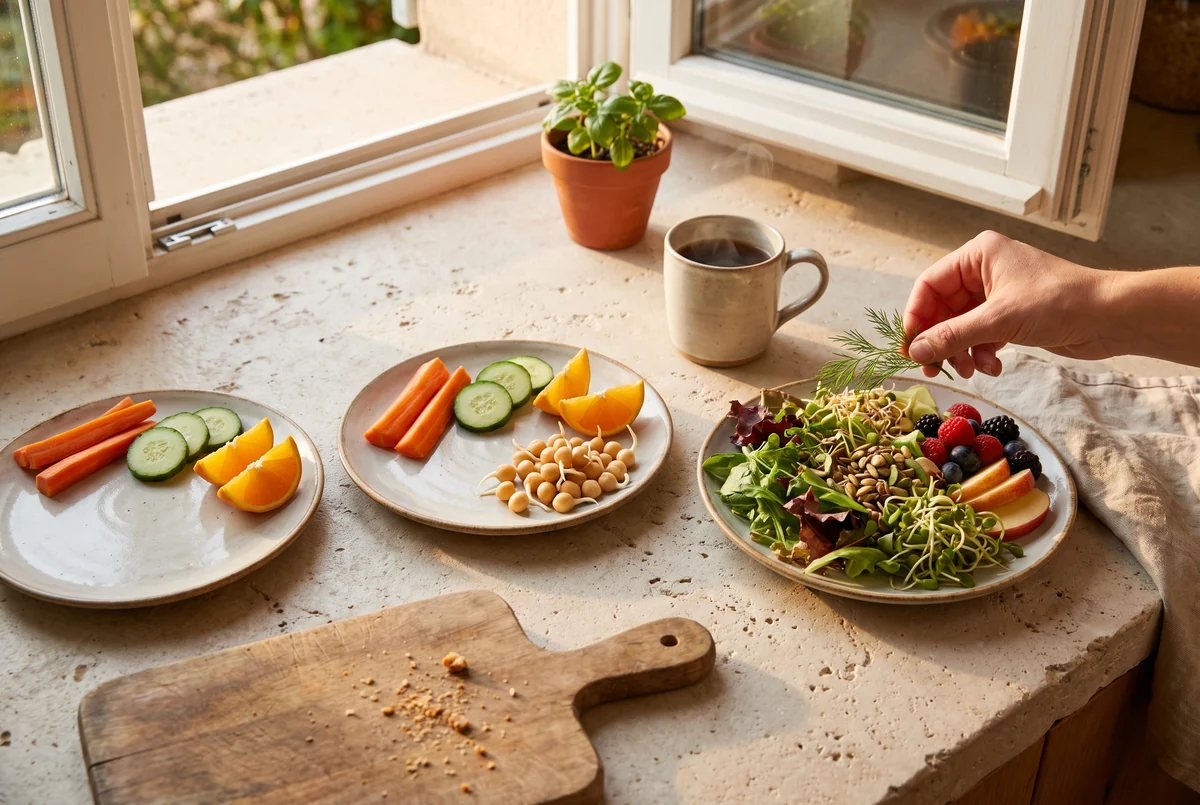
For 2 to 6 weeks, under a dietitian's supervision, you replace high FODMAP foods with low FODMAP equivalents: kiwi takes the place of apple, fresh herbs the place of onion. You swap rather than remove. It is an approach I have defended forever, well beyond this diet: we add, we substitute, we don't strike entire aisles off the shopping list.
Step 2: reintroduce group by group
The base of the diet stays low in FODMAPs, and you test one subgroup at a time, with a few days of pause between two tests: you put a fuse back, then wait to see if it holds. Monash counts about 6 to 8 weeks for most people. The French National Society of Coloproctology advises starting reintroduction from the 2nd month (SNFCP).
Step 3: personalise for the long term
You bring back everything that goes down well and only avoid the trigger foods. Nothing is set in stone, though: tolerance changes over time, and Monash advises retesting the foods that caused problems later on.
So why do you read 4 to 6 weeks on one page, 6 to 8 on another? Some pages confuse the strict phase with the total duration, others follow different hospital protocols. The sourced benchmarks, for their part, agree: 2 to 6 weeks of strict phase, then a reintroduction started by the 2nd month at the latest. As for the time before an effect, the 2014 and 2017 trials measured symptoms after 21 days and 4 weeks on the diet.
Low and high FODMAP foods: the table
Here is the low FODMAP foods list as Monash University publishes it, sorted by food family. It does not give portions. An important nuance for anyone looking for the foods to avoid: no food is forbidden, it is limited for a while.
| Food family | Rather high in FODMAPs (to limit in step 1) | Rather low in FODMAPs |
|---|---|---|
| Vegetables | Artichoke, asparagus, garlic, green peas, leek, mushrooms, onion, red bell pepper | Eggplant, green beans, bok choy, green bell pepper, carrot, cucumber, lettuce, potato |
| Fruits | Apple, apple juice, cherries, dried fruit, mango, nectarine, peach, pear, plum, watermelon | Cantaloupe melon, kiwi, mandarin, orange, pineapple, blueberry |
| Dairy and milk drinks | Cow's milk, custard, condensed milk, ice cream, soy milk (whole soybeans), yogurt | Store-bought almond milk, brie, camembert, feta, hard cheeses, lactose-free milk, soy milk (soy protein) |
| Proteins | Most legumes, some marinated or processed meats | Eggs, firm tofu, tempeh, plain meats, poultry and fish |
| Breads and cereals | Wheat, rye or barley breads, breakfast cereals, biscuits | Quinoa flakes, rice, quinoa or corn pasta, plain rice cakes, spelt sourdough bread, breads without wheat, rye or barley |
| Sugars | Glucose-fructose syrup, honey, sugar-free sweets | Dark chocolate, maple syrup, rice syrup, table sugar |
| Nuts and seeds | Cashews, pistachios | Macadamias, peanuts, pumpkin seeds, walnuts |
The FODMAP content depends on the portion. A handful of cashews and a salad bowl of them don't tell the same story, and Monash publishes reference portions food by food in its app (Tuck, 2017). This table is a compass for step 1, and only for step 1.
Low FODMAP diet and living food: keeping a raw, colourful plate
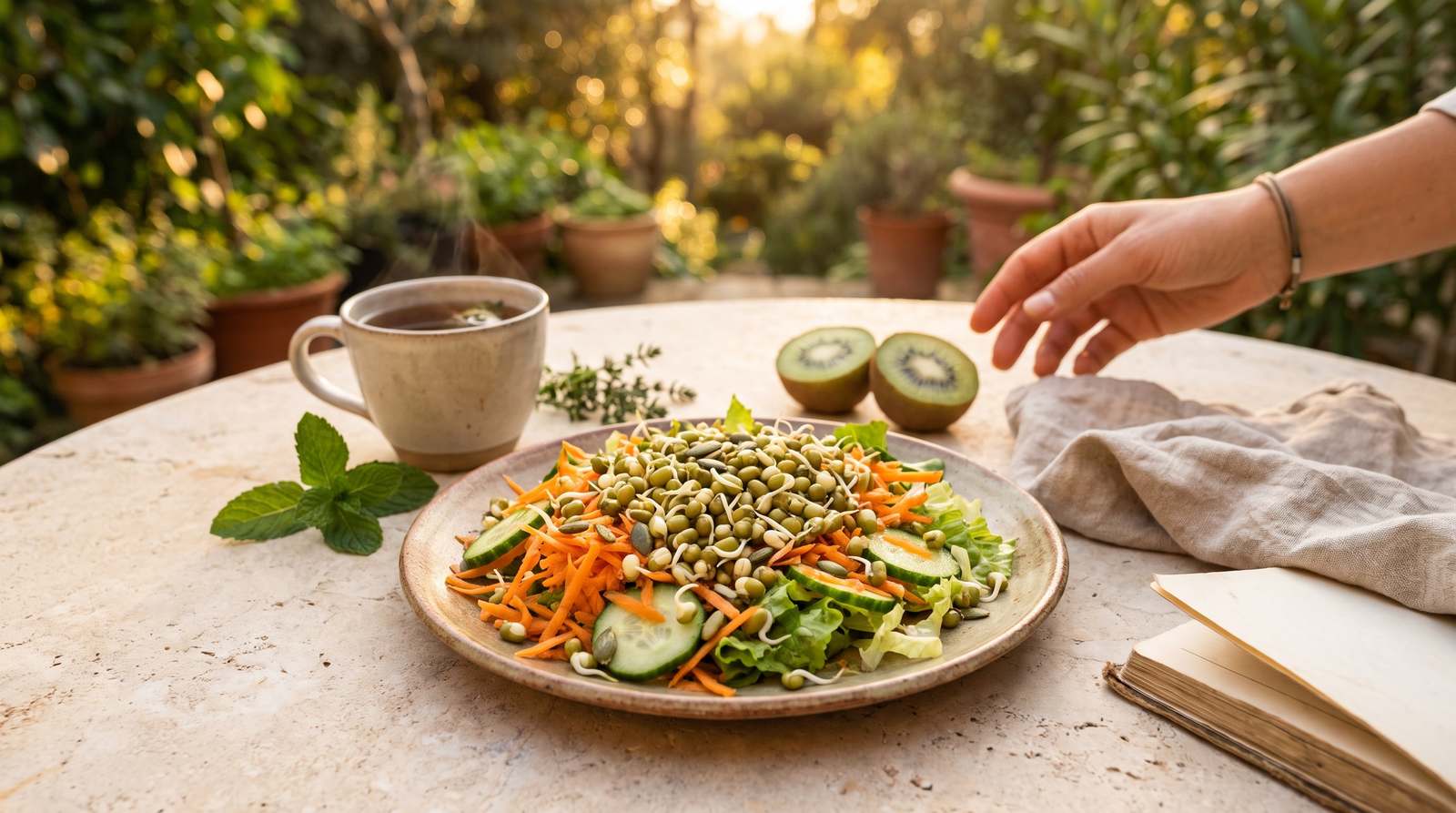
Back to my starting question. We are not what we eat but what we absorb: I have long been convinced of it, and this diet almost illustrates it, since it is precisely about sugars that the small intestine absorbs poorly. Good news, nothing in the FODMAP diet forces you to give up raw food during the first phase.
Sprouted seeds, a case apart
This is the passage of the literature that delighted me most. In 2017, the Monash team compared six seeds, sprouted and unsprouted: wheat, barley, rye, chickpea, kidney bean and mung bean (Tuck, 2017). Sprouting lowered their FODMAP content, except for the chickpea, slightly up (there is always one to break the rule). Sprouted mung bean and barley even go from "high" to "low", a remarkable result for two such common seeds.
To explain it, the author puts forward a hypothesis, which she herself presents as needing confirmation: sprouting enzymes would cut the oligosaccharides. I find in it an image dear to me, that of the carpentry workshop where you would be handed planks already sawn rather than logs. If the hypothesis holds, part of the cutting of these sugars would happen inside the seed, before the plate. Monash simply advises testing a small amount and observing, with no portion size given to date.
Low FODMAP raw vegetables and fruits
Carrot, cucumber, lettuce, green beans and green bell pepper are among the low foods, as are kiwi, orange, pineapple and blueberry. The plate stays colourful. No more garlic or onion in the dressing? No problem: fresh herbs chopped at the last moment flavour it very well, and they are no consolation prize.
Sourdough, seeds and nuts
Spelt sourdough bread sits on the low side of the list, like pumpkin seeds, walnuts and macadamias. As part of a varied and balanced diet and a healthy lifestyle, these foods keep their place from step 1. You only have to look at the great, very plant-based food traditions, such as Okinawa's plant-based plates, to remember that a plate rich in plants is anything but a sad plate.
And seaweed, you may ask, or lacto-fermented foods? The sources for this article measure nothing for them: so I'd rather say nothing about them here than tell you stories. It costs me a little, as you can imagine.
A day of low FODMAP menus, the living version
On a low FODMAP diet, a day's menu can stay largely raw and colourful. Here is an example made only of foods classed as low by Monash, plus mung bean sprouts:
- in the morning, a slice of spelt sourdough bread with an egg, then a kiwi or an orange;
- at noon, a big salad of grated carrot, cucumber, lettuce and green bell pepper, with firm tofu, pumpkin seeds and a generous handful of mung bean sprouts;
- in the evening, potatoes and green beans with tempeh or plain fish, then blueberries.
No quantities here: they depend on your appetite and on the portions validated with your dietitian. As for recipes, start from the low foods and play with fresh herbs and seeds. As part of a varied and balanced diet and a healthy lifestyle, a day like this covers a lot of cravings without leaving the list of low FODMAP foods.
Prepare ahead and store without waste
Step 1 is far easier to stick to when the fridge is ready: a carrot and potato soup made in one go, green beans cooked ahead, quinoa flakes and seeds within reach. In the evening, you assemble, and that's it. At our place, big batches have long ended up in vacuum-sealed jars, like our basins of almonds soaked, sprouted, then dehydrated, enough to last several months. You don't spend the weekend on it, but you do spend some time.
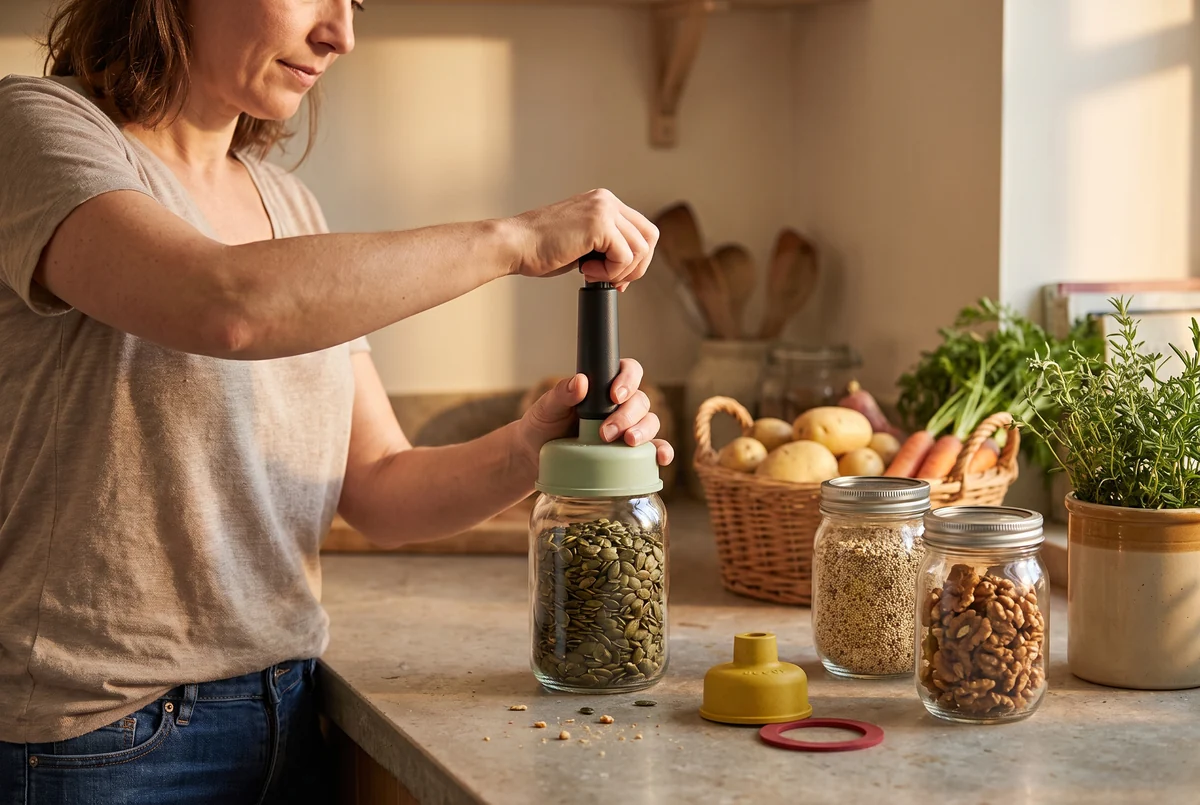
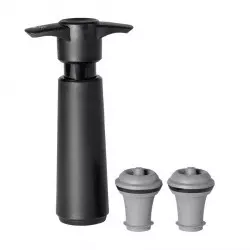
The BocUp kit vacuum-seals your jars with a bell and a small hand pump, with no electricity and no plastic bag. It works with the glass jars you already have, as long as they have "shoulders" and a 65 or 84 mm lid: reuse, nothing else to buy. According to the manufacturer, fresh foods keep up to 5 times longer (a vegetable soup goes from 2 days to 8 to 10 days), and dry foods stay safe from humidity and moths. Sunday's soup then lasts until the following week.
Careful, vacuum does not replace the fridge or the freezer, and it does not sterilise: vacuum-sealed soup goes in the refrigerator. I went through the benefits of vacuum sealing at home in a dedicated article.