



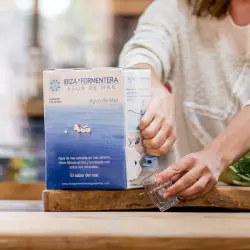

Today, I am sharing with you an article that has been very close to my heart for a long time. I have been working with marine plasma at Biovie for years, since our beginnings in 2007, and yet I still notice that the form hypertonic often remains misunderstood. I get asked dozens of questions about it every week: how to take theQuinton® hypertonic water (Attention, Quinton® is a registered trademark of Quinton Laboratories and cannot be used for commercial purposes), does it really dehydrate ? Honestly, it was time to create a complete guide.
To simplify: Quinton® plasma = seawater collected under specific conditions = hypertonic marine plasma = seawater
What you will find here is the practical guide I wish I had at the beginning: concrete, rigorous, straightforward, with the protocols I have refined over time and the answers to the objections I hear most often.
What exactly is Quinton® hypertonic ?
The Quinton® plasma: also called Quinton® hypertonic serum: it is seawater normally collected by boat (not everyone does it by boat, absolutely check with your supplier that this is indeed the case, as many harvesters pump from the coast, and the plankton does not remain stationary at the pipe openings...) in specific planktonic areas, micro-filtered cold to preserve the entirety of its mineral composition.
There are two forms, and the confusion between them is one of the most common sources of error.
The form isotonic is diluted to 9 g/L of salt, this is exactly the concentration of human blood plasma. It is milder in taste and suits people sensitive to salt.
The formHypertonic, the one referred to in this article, is seawater in its natural concentration: 33 to 35 g/L of salt, which is 3.5 times the concentration of blood plasma. It is seawater at its natural concentration, saltier than the isotonic form. To explore this distinction further, I have written a dedicated article for understand the difference between the two forms.
To go further: I explain in a video why the harvesting area is the key factor in the quality of marine plasma.
An extraordinary composition: the 78 ionic trace elements
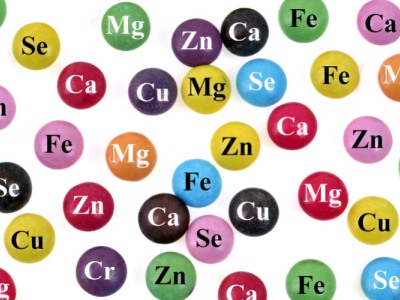
This is where it gets really fascinating. Seawater, and therefore the Quinton® hypertonic: contains all the elements of Mendeleev's periodic table. Specifically, 78 trace elements and minerals, in a so-called ionic form.
The 78 elements coexist in proportions that reflect those of the primary marine environment.
The role of trace elements in the body is actually a topic I have addressed separately, as it is so vast.
The video that explains everything about the composition of seawater:
Everyday use
Specifically: take your ampoule in the morning on an empty stomach, wait a few minutes before eating.
⭐⭐⭐⭐⭐ "I am very satisfied with Quinton® water. I have been drinking a glass on an empty stomach in the morning for 2 months."
- Mr. Grewis, Biovie client (Trustpilot)
Share this article
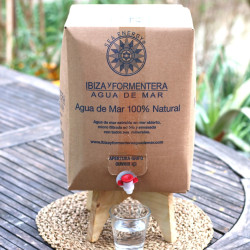
15L Microfiltered seawater
€45.40 In stock
Intake before and after exercise
Recommended sports protocol:
- The day before an intense effort: 1 to 2 ampoules during the day, diluted in a large glass of water
- Within 2 hours after exercise: 1 ampoule under the tongue, or diluted according to your preference
- The next day (D+1): 1 ampoule in the morning on an empty stomach
⭐⭐⭐⭐⭐ "Excellent site with a selection of quality products at fair prices, including Quinton® water."
- Julie Cipriani, loyal customer (Trustpilot)
Hypertonic seawater nasal spray: how to use it
How to properly use hypertonic seawater nasal spray:
- Use a suitable spray bottle, specifically designed for nasal use.
- 2 to 3 puffs per nostril, 2 to 3 times a day
- Gently blow your nose after each application
- Do not exceed 7 to 10 days of continuous use; for regular use, 1 to 2 times per day is sufficient.

Hypertonic seawater dosage: the concrete week-by-week guide
This is THE section you won't find anywhere else. Most product sheets simply state "1 ampoule per day" without any details on the timing, duration, or phases of a marine plasma cure.Hypertonic.
Standard protocol, 3-week course
Week 1: gradual start-up
- 1 ampoule in the morning on an empty stomach, diluted in a glass of water (150-200 mL)
- Wait 15 to 20 minutes before having breakfast.
- If possible, avoid coffee in the 30 minutes that follow.
Week 2: Ramp-up
- 1 ampoule in the morning on an empty stomach (always)
- Possibility of adding 1 bulb in the middle of the afternoon, 30 minutes before a meal
- Some people prefer to take the 2 capsules in the morning, both options are possible.
Week 3: Intensive phase
- 2 Hypertonic marine plasma drinkable ampoules per day: 1 in the morning on an empty stomach + 1 in the late afternoon
- Increased hydration recommended (1.5 to 2 liters of water per day minimum)
After the treatment: 1-week break, then resume with a dosage of 30ml/day, 5 days a week.
Quinton® hypertonic in the morning or evening ?
The question comes up often. My advice: The morning on an empty stomach is ideal.. Here is why.
Taking it in the evening can disrupt the sleep of some people sensitive to sodium.
Taking it in the evening remains a valid option if the morning is impossible, the key is to maintain regularity in the Quinton® hypertonic treatment.
Quinton® hypertonic for children: what dosage ?
It is possible to use marine plasma.Hypertonic in children, but the rules differ according to age and usage.
- For nasal rinsing: Sprays specifically formulated for infants exist, with a reduced dose and a suitable nasal adapter.
- In oral usage: only on the advice of a healthcare professional; prefer the isotonic form for children under 12 years old
- In oral use among teenagers: ½ ampoule in the morning, in a large glass of water
The full range Marine Plasma
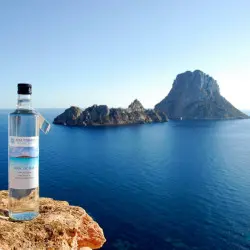
What is marine plasma ? So-called hypertonic marine plasma is simply seawater harvested and filtered under very specific conditions. Our supplier Ibiza Agua de Mar collects sea water from a depth of 25 meters off the coast of Ibiza in a UNESCO listed area. Concerning the harvest, here are the different physico-chemical parameters measured during the search for an optimal place for the harvest of hypertonic marine plasma, first on the radar with reading of the currents and according to the marine weather (wind, swell, rain. ..) and then by local measurement of these different parameters: taste of seawater, dissolved O2 level, PH level, redox level (ORP), salinity level (TDS), conductivity level ( PSU), alkalimetric title (TA), Pressure. It is the empirical practice of the harvesters and the reading of the various measuring instruments that makes it possible to decide on the best complex combination of these measures together to decide whether the harvest is triggered on the site or whether another location is sought. Where does marine plasma come from ? The marine plasma is collected in the high seas, off the coast of Ibiza, in a specific area classified as UNESCO with high planktonic activity and with a presence of tens of square kilometers of Posidonia. It is indeed in this specific area that lives the largest living organism listed on Earth, a posidonia herbarium of 80,000 to 200,000 years extending over 15 kilometers in length. Source: Sophie Arnaud-Haond, Carlos M. Duarte, Elena Diaz-Almela, Núria Marbà, Tomas Sintes, Ester A. Serrão: Implications of Extreme Life Span in Clonal Organisms: Millenary Clones in Meadows of the Threatened Seagrass Posidonia oceanica When is it best to take marine plasma ? The ideal is to consume marine plasma, which contains, let's remember, all the elements that make up Mendeleev's periodic table, in the morning when you get up, on an empty stomach. take 1/4 of hypertonic marine plasma to mix 3/4 of spring water or filtered water. What are the benefits of marine plasma ? Minerals are the "fuel" used primarily by our body, which is necessary for our cells to perform their functions optimally. They are also essential for the absorption of vitamins and are responsible for enzymatic processes in cells. Cells perform all their functions with maximum vitality and the precise capacity for organic, bioavailable, alkaline cellular nutrition. Thus, sea water becomes the best mineral drink since it contains all the elements of Mendeleev's periodic table. Another of the great benefits of seawater is its pH. As Otto Warbürg, father of cellular respiration and two-time Nobel laureate, said, “all diseases are acidic and where there is oxygen and alkalinity there can be no disease”. Due to the quality of our raw material, the hyper-oxygenated waters of Posidonia meadows (recognized by UNESCO as a World Heritage Site in 1999) and sea currents providing purity and clarity: Ibiza and Formentera Agua de Mar have an alkaline pH , between 8.1 and 8.4, which will help the body maintain a neutral pH through homeostasis. The ingestion of sea water is advised to control and maintain our PH, as well as an exceptional supplement for alkaline diets. The antioxidant and anti-acidity power produced by seawater is due to the alkalinity provided by the minerals. Drinking filtered seawater in a direct and controlled way is very beneficial for your health, because seawater is an excellent nutrient, containing most of the minerals of the periodic table and all of them dissolved in the best universal solvent available: l 'water. Seawater contains all the minerals of the periodic table of elements in a bioavailable way. It is thanks to this that foods cooked in seawater are rehydrated and remineralized to make foods with high nutritional power. The problem today is that our intake of minerals through food has dropped dramatically and what is causing this? The answer is very simple: pollution, soil depletion due to intensive agricultural production and our stressful pace of life have considerably reduced the quality of food and its mineral intake, drastically reducing the minimum contribution necessary for the proper functioning of the body. Seawater also helps us stay young, for a simple reason: the body regularly and cyclically regenerates all its cells, because their lifespan is limited in time. As we age, one of the first faculties the cell loses is the ability to hydrate. We know that the older we get, the less we drink, so drinking and ingesting seawater can help us "wake up" this ability to hydrate ourselves., 4 products
Discover the full range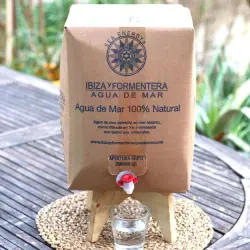
Myth vs Reality: Does hypertonic seawater really dehydrate ?
Frankly, this is the objection I hear most often, and it deserves a clear and scientific response.
The myth: Swallowing a very salty solution would "draw water out" of the cells by osmosis, causing internal dehydration.
The reality: It is true on a large scale, drinking several liters of pure seawater would indeed dehydrate you. But within the context of a reasonable use of thesea water(20 mL per day, diluted in water), the amounts of salt ingested remain quite proportionate.
To give you an idea: 20 mL of Sea water contain approximately 600 to 700 mg of sodium.
The sine qua non condition is the Dilution. . Hypertonic marine plasma is never consumed pure orally, always diluted in a large glass of water.
Contraindications of hypertonic marine plasma to know
I prefer to be transparent about this because it is also a sign of trust that you deserve.
The Hypertonic marine plasma is not recommended, or should be used with caution, in the following situations:
- Uncontrolled arterial hypertension: The sodium content requires special caution; consult your doctor.
- Kidney failure: The kidneys regulate the elimination of sodium; a kidney pathology can impair this ability.
- Pregnancy and breastfeeding: No formal documented contraindication, but a prior medical consultation is still recommended.
- Strict low-sodium diet: to be avoided in this context
- Sensitivity to salty taste: In this case, prefer the isotonic form or dilute further.
To go further, our article on the origin of the harvest and its influence on quality will help you better understand the spectrum of available forms.
⭐⭐⭐⭐⭐ "Biovie is the site for products you can buy with your eyes closed. I have been ordering Quinton®, sprouting seeds, algae, and more for several years... Everything is of exceptional quality."
- Pascale Bourguignon, loyal customer (Trustpilot)
⭐⭐⭐⭐⭐ "I buy seawater from Biovie! Great quality, I am delighted to have my Quinton® water. You can trust them!"
- Eve Clochard (Trustpilot)
Hypertonic marine plasma and lactic fermentation: an unknown culinary use
Here is an angle that very few people know, and that Aurélie and I have extensively explored in our book. Seaweed in everyday life (Gallimard, 2024). hypertonic seawater can replace salt in your lacto-fermentations, fermented vegetables, kimchi, homemade sauerkraut, by providing not only the sodium necessary for fermentation but also all 78 trace elements.
The result is remarkable: an aromatic complexity different from that obtained with simple white salt. If this topic interests you, our article on the Lacto-fermentation with marine plasma go into detail.
How to choose a quality hypertonic marine plasma
Not all marine plasmas are the same, far from it. Here are the criteria that make the difference.
The place of harvest is fundamental. I work with partners who collect seawater in Ibiza, in areas with high plankton activity, at a depth of 25 meters, with real-time measurements (dissolved oxygen, pH, conductivity, salinity) before each collection. The question of how to choose a reliable source should not be overlooked.
How is a marine plasma harvest actually conducted ?
The level of filtration conditions legal use. A filtration at 0.01 micron (ultra-filtration) is mandatory for products of hypertonic marine plasma intended for drinking and oral use, this is the standard we impose on our suppliers.
What I have observed at Biovie over the past 18 years
In reality, the Hypertonic seawater is one of the most loyalty-inducing products we have at Biovie. It's not an impulse purchase that you try once and forget about, it's a product that you incorporate into a routine.
⭐⭐⭐⭐⭐ "Annual order of marine plasma. Fast delivery and quality product."
- Denis Leclercq (Trustpilot)
There you go. Nothing more to add.
In summary: what to remember about hypertonic marine plasma
Hypertonic marine plasma is not a magical product, and I am wary of those who present it as such. It is cold micro-filtered seawater, consumed diluted, at an appropriate dose.
The condition remains the same: regularity and appropriate dosage.
Try it, and you'll love it !
FAQ, Frequently Asked Questions about Quinton® Hypertonic
Why take Quinton® hypertonic ?
For its composition of 78 trace elements and ionic minerals. It is also the form used for hypertonic nasal rinsing.
What is the difference between Quinton® hypertonic and isotonic ?
The hypertonic form is seawater in its natural concentration (33-35 g/L), which is 3.5 times more concentrated than blood plasma. The isotonic form is diluted to match the concentration of plasma (9 g/L). Quinton® hypertonic is more concentrated in salt; the isotonic form is milder in taste and suits people sensitive to salt. For further information: our comparative article.
When is it recommended to take hypertonic marine plasma ?
The morning on an empty stomach is ideal, 15 to 20 minutes before breakfast. For athletes, taking it within 2 hours after exercise is recommended.
What are the possible side effects of Quinton® water ?
Rare and generally mild: slight nasal burning sensation for the spray, transient digestive discomfort in individuals sensitive to sodium during initial use. If in doubt, dilute further.
What are the contraindications to consuming seawater ?
Uncontrolled high blood pressure, kidney failure, strict salt-free diet. Consult your doctor if you are pregnant or breastfeeding.
Is Quinton® water an anti-inflammatory ?
It is a foodstuff: no therapeutic property is attributed to it.
What are the benefits of hypertonic seawater ?
Hypertonic Quinton water is seawater collected offshore and cold micro-filtered; its detailed mineral composition is given in the product's technical sheet.
Is seawater good for osteoarthritis ?
No. If you have a health problem, ask your doctor for advice.