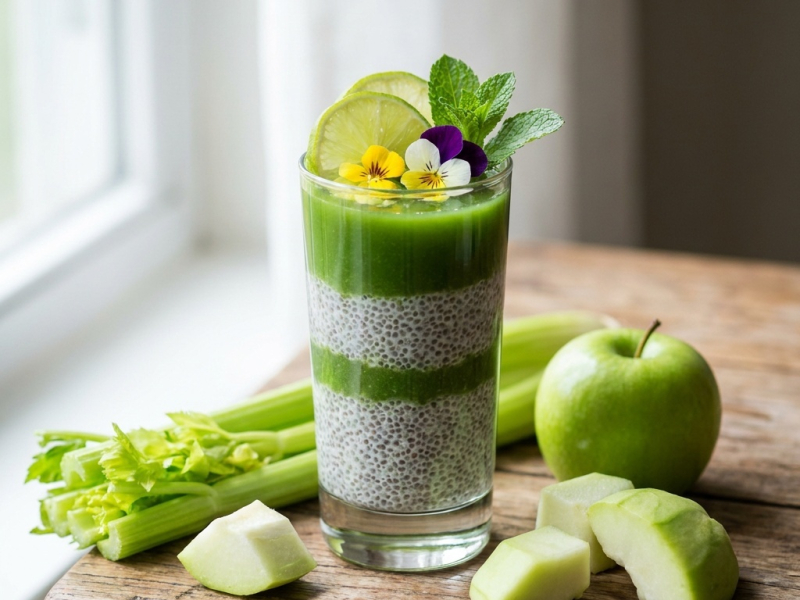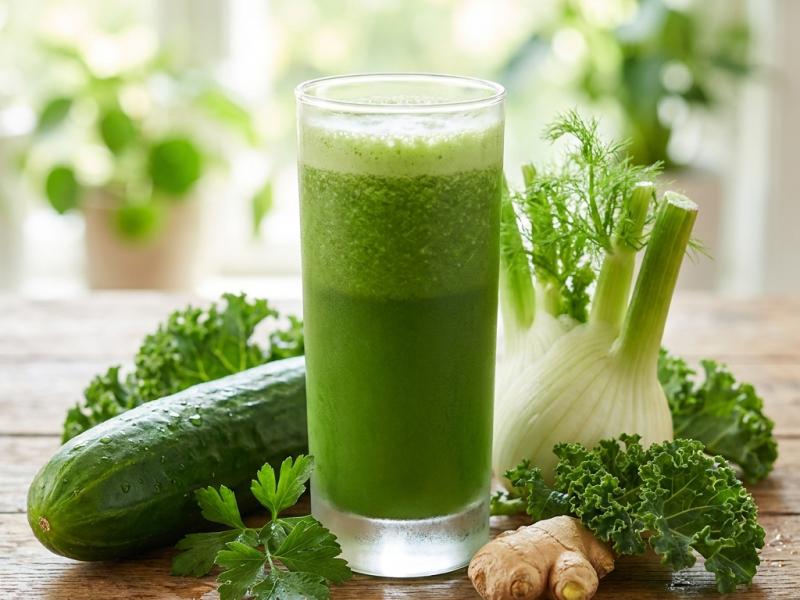









This is the green juice for the days when you don't want to think: you wash, roughly chop, push through the juicer, drink. Crisp, fragrant autumn apples round out the kale and romaine, which on their own would be a little harsh. Celery and cucumber bring volume and freshness, lemon the touch of acidity that wakes everything up and slows oxidation. Count on about a litre for the quantities given, or two good glasses. The order matters: alternate leaves and juicy ingredients, because the leaves jam far less when an apple comes along to push them.
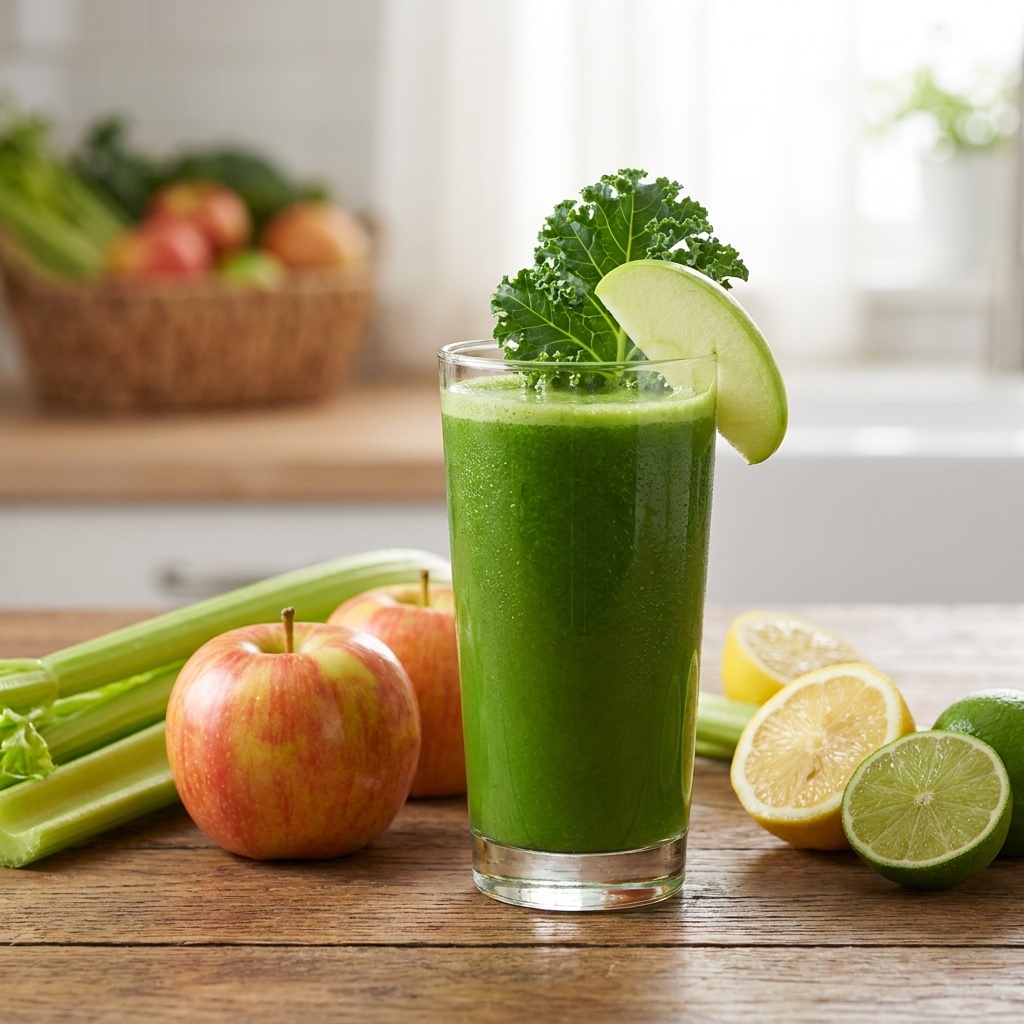
Green juice with apple, celery and kale
Share this article
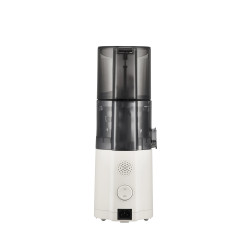
Ingredients
- 5 to 7 crisp apples (Pink Lady, Chantecler, reine des reinettes)
- the juice of 2 to 3 lemons or limes
- 5 to 6 celery stalks
- 1 cucumber
- 1/2 romaine lettuce
- 1 bunch of kale
Method
- Wash the fruit and vegetables and cut them into pieces that fit the chute of your juicer. Apples go in whole with the skin on, just remove the stem.
- Feed the ingredients in alternately: a handful of kale or romaine leaves, then a piece of apple or cucumber to push them through. Finish with the celery.
- Squeeze the lemons by hand and add the juice straight to the jug. Stir well and serve right away.
Tip
Fresh juice oxidizes fast: it loses its color and flavor within an hour at room temperature. Drink it within half an hour, or fill a glass bottle to the brim, cork it and keep it in the fridge: it will hold for 24 hours without major deterioration, 48 at most. The lemon juice added at the end isn't there only for flavor, it genuinely slows browning. If the result seems too sweet, remove two apples and add half a cucumber: the texture doesn't change, only the sugar level drops. And keep the pulp, it goes very well into a soup or dehydrated crackers.
The full range EQUIPMENT
Biovie's equipment covers everything needed to prepare and store living food at home: Hurom blenders and juice extractors, Ecofiltro and Mizora water filters, Easygreen sprouters, BocUp vacuum sealing bells, filter bottles, and small olive wood items for the table. It covers the whole chain, from germinating seeds to storing prepared meals, including the water you drink and the juices you press. To get started, the two purchases that change daily life the most are a juice extractor and an automatic sprouter; to go further, water filters and small equipment complete a kitchen designed to last., 46 products
Discover the full range


FAQ: your questions about apple, celery and kale green juice
What are the benefits of celery and apple juice?
Celery is mostly water, close to 95%, with potassium, a little vitamin K and the aromatic compounds that give it its recognizable taste. The apple provides sugars, organic acids and the polyphenols concentrated in the skin, provided you juice it whole. What a juice leaves behind is the fiber, which stays in the pulp: a juice therefore doesn't replace whole fruit and vegetables, it complements a plate that does contain the fiber.
What is the recipe for an anti-inflammatory green juice?
This formula circulates a lot, and it should be taken for what it is: a marketing shortcut, not a promise. No juice treats anything. That said, recipes sold under this label almost always revolve around the same ingredients: leafy greens such as kale, spinach or romaine, celery, cucumber, fresh ginger, fresh turmeric and lemon, with an apple to make it drinkable. Our juice includes most of it; add two centimetres of fresh ginger if you like the kick.
Is it good to drink celery juice in the evening?
Nothing forbids it. In practice, most fans drink it in the morning on an empty stomach, because it goes down more easily and is less easily forgotten during the day. In the evening, the volume of water it represents may simply cut your night short. Then there is the practical constraint: a juice is drunk within minutes of extraction, and the evening is rarely when you feel like cleaning a juicer.
Share this article
Related articles