



Peppers and cashews blend into a smooth, single-serving soup with no stove involved at all - running the blender a little longer than usual warms the mixture gently through friction, just enough to take the chill off without cooking anything. A portion of the pepper stays diced and unblended, stirred in by hand once the base is smooth, so every spoonful has some bite against the silky texture of the rest. It is the cashews that give the soup its body, thickening it into something closer to a bisque than a thin vegetable puree, while the peppers carry the sweetness and the colour on their own. Because it is ready in the time it takes to blend, this recipe works very well as a fast lunch on days when a simmered soup feels like more effort than the moment allows. The flavour stays frankly that of raw, cold-pressed pepper rather than the deeper, slightly caramelised sweetness of a roasted red pepper soup - a difference worth knowing going in if you are used to the cooked version. A little basil on top adds an herbal note the base does not have on its own.
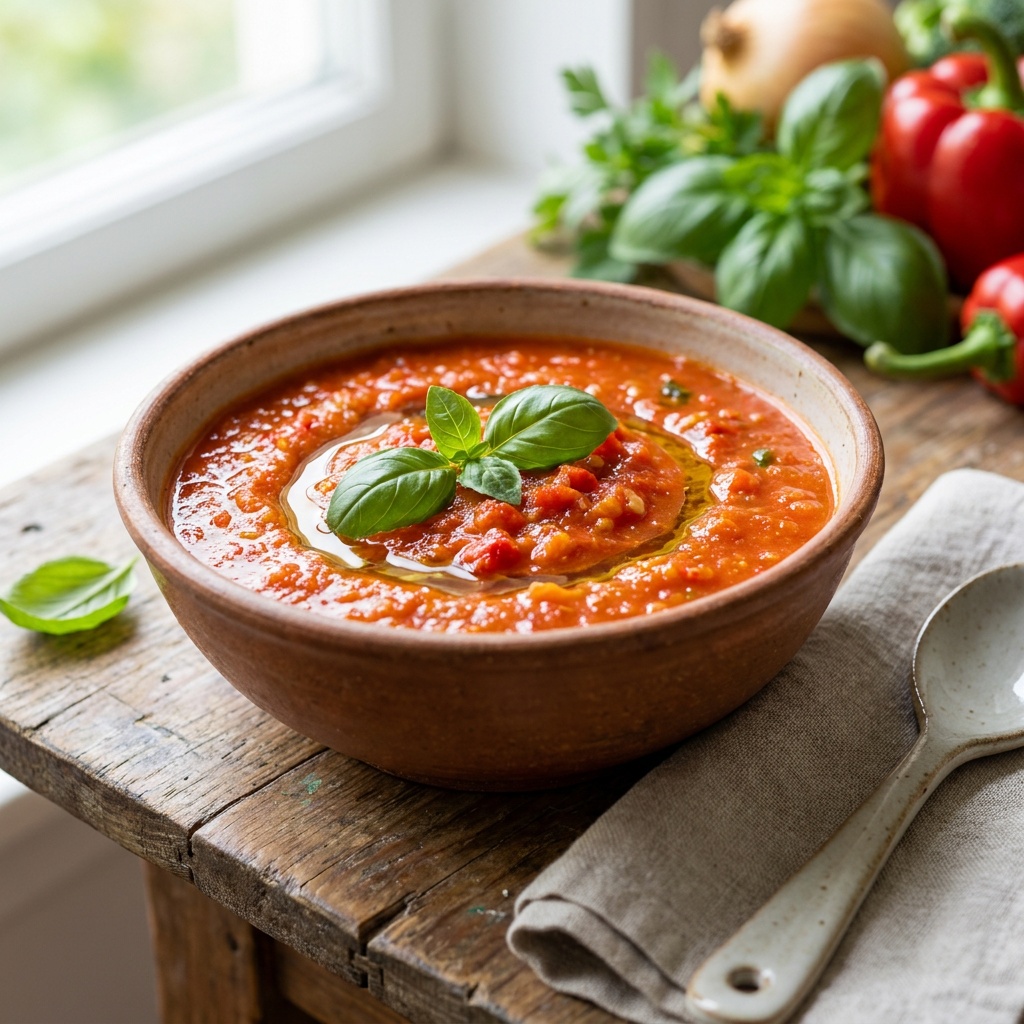
Raw red pepper soup, a single serving in the blender

Share this article
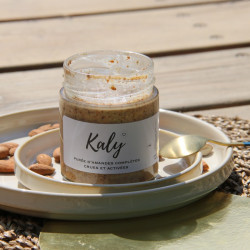
Activated almond puree
€15.70
Ingredients
- 1 cup roughly chopped red bell peppers (about 1 medium pepper)
- 1/3 cup cashews
- 1/2 cup water
- 1/2 teaspoon sea salt
- 1/2 cup red bell pepper, diced (set aside, not blended)
Preparation
- Blend the peppers, cashews, water and salt (holding back the reserved half cup of diced pepper) in a high-speed blender until smooth. Letting it run a little longer lets the friction of the blades warm the soup slightly.
- Pour the soup into a bowl, then stir in the reserved diced pepper by hand.
- Garnish however you like - a sprinkle of dried basil works well - and eat right away.
Tip
Resist the urge to over-blend in search of more warmth: friction only takes the soup to room temperature, never hot, so treat it as a chilled or lightly warmed soup rather than a heated one. A high-speed blender gives the smoothest result; a standard blender will leave a little more texture from the cashews. If you cannot find cashews or would rather avoid them, an activated almond butter plays exactly the same thickening role, for a slightly more pronounced flavour.
The full range Oilseeds, nuts, seeds
20 products
Discover the full range

FAQ: your questions about raw red pepper soup
Can you eat red bell pepper raw?
Not only can you, but that is its most interesting form nutritionally. Red pepper is one of the vegetables richest in vitamin C, and since that vitamin is heat-sensitive, cooking loses a notable part of it. Choose one ripe and firm, with smooth skin: that is the stage at which it is sweetest, the red having had time to develop its sugars, where a green pepper, picked before maturity, stays noticeably more bitter.
Is raw pepper more digestible than cooked pepper?
Generally it is rather the opposite. Pepper skin contains cellulose that cooking softens and that the stomach often handles better once tenderised; raw, it stays tougher. Blending the pepper, as in this soup, gets around the obstacle fairly well since the blades do part of the grinding work. If digestion remains uncomfortable, peel the peppers with a vegetable peeler before they go in the blender.
What are the benefits of raw peppers?
Raw red pepper mainly provides vitamin C - more, weight for weight, than most citrus fruits - along with the carotenoids responsible for its colour, fibre and a great deal of water, for very few calories. It is also a vegetable that lends itself well to raw eating in all its forms, from sticks to blended soup by way of julienne, which helps eat it regularly without tiring of it.
How do you make a red pepper velouté?
There are two schools. The cooked version roasts the peppers, which concentrates their sugars and brings that characteristic smoky note, then blends them with a stock. The raw version, the one on this page, replaces the roasting with a fatty thickener - here cashews, but a nut butter or an avocado does the same job. The difference in flavour is real: raw stays bright and vegetal, roasted sweeter and rounder.
Share this article