






Blueberry and lavender both offer delicate, floral scents that lift each other in this raw cheesecake. A crunchy activated buckwheat base brings character, while the cashew, banana and blueberry filling literally melts in the mouth. A dessert as pretty as it is refined, perfect for a special occasion.
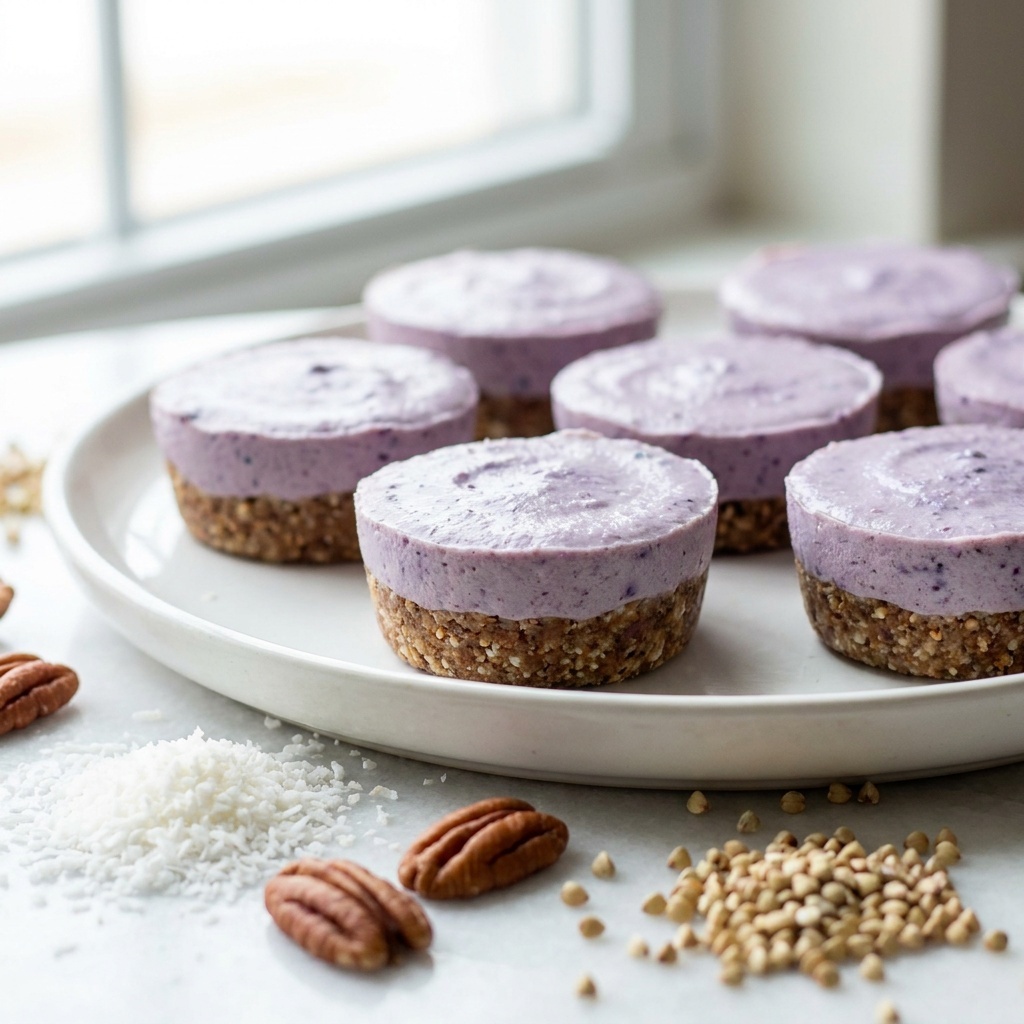
Mini raw blueberry lavender cheesecakes

Share this article
Ingredients
For the base
- 1 cup desiccated coconut
- 1/2 cup pecans
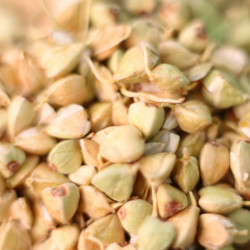
- 1/4 cup activated buckwheat (sprouted and dehydrated)
- 3/4 cup dates
- A pinch of salt (equivalent to 1 tablespoon - 15 ml - of seawater)
- 1 tsp coconut oil
For the filling
- 1 large well-ripened banana (but not too ripe)
- 1 cup raw cashews, soaked
- 125 g blueberries
- 1/2 tsp dried lavender
- 1/2 cup coconut milk
- 1/4 cup coconut oil
- 1 tbsp lime juice
- 1 tbsp coconut nectar
- A pinch of salt (equivalent to 1 tablespoon - 15 ml - of seawater)
Preparation
- For the base, put all the ingredients into the food processor and blend until everything binds. The texture should hold together when pressed between your fingers.
- Divide the base between two small springform tins and chill so it sets.
- Soak the cashews for about 2 hours, then drain and rinse them well.
- Put all the filling ingredients into a powerful blender and blend until completely smooth and creamy.
- Pour the filling over the bases and return to the freezer for at least 3 hours to set.
- Decorate as you please and eat straight from the freezer, or let it soften slightly for a more melting texture.
Tip
These cheesecakes keep 4 to 5 days in the fridge, or up to a month in the freezer: ideal for making a dessert ahead.
The full range Oilseeds, nuts, seeds
20 products
Discover the full range


FAQ: your questions about raw buckwheat cheesecakes
What is sprouted buckwheat?
It is a hulled buckwheat groat that has been soaked, rinsed and then left to sprout for one or two days, until a small white shoot appears. Many raw recipes, like this one, go further and dehydrate it afterwards at low temperature: you then get a dry, very crunchy grain, often called activated buckwheat or 'buckwheaties'. Sprouting transforms part of the starch and reduces the compounds that hinder mineral uptake - hence its reputation as a more digestible grain than raw buckwheat.
How long should you soak nuts?
It varies noticeably from one nut to another. Almonds, with their thick skin, need 8 to 12 hours; hazelnuts the same. Walnuts and pecans are happy with 4 to 6 hours. Cashews are the quickest: 2 to 4 hours are enough, as in this recipe, and beyond that they turn slimy. Always rinse after soaking, and use them straight away or keep them for 48 hours at most in the fridge.
How long can you keep sprouted seeds?
Fresh sprouts keep 3 to 5 days in the fridge, in a closed but not airtight box - they need a little air. Rinse and drain them carefully before putting them away: it is standing moisture that turns them. Once dehydrated, like the activated buckwheat in this recipe, it is quite another story: dry and well stored in a jar away from light, it keeps for several months without losing its crunch.
Share this article