

Micro algae
Take advantage of the many nutritional contributions offered by spirulina, chlorella or klamath, microalgae from organic aquaculture
There are 8 products.
You have seen 8 of 8 products
Questions & answers
All about Micro algae.
The questions we get asked most often, and our straight answers.
❇️ What are microalgae?
🟢 Freshwater microalgae are in a way our "biological ancestors" and represent one of the solutions to current issues of world hunger, pollution from agribusiness, and nutritional balance. Having appeared on Earth about 3 billion years ago, these microscopic organisms have significantly contributed to creating favorable conditions for the existence of current life forms by helping to enrich the Earth's atmosphere with oxygen.
Having evolved very little since their appearance, microscopic algae have constantly adapted to the changes that have transformed the planet up to today. They continue to naturally develop in freshwater lakes characterized by warm, alkaline waters rich in nutrients.
🟢 In reality, neither algae nor plant, they belong to the family of cyanobacteria.
Only chlorella can truly be considered a microscopic algae. It is indeed a eukaryotic organism, meaning it has a nucleus that contains all of its genetic material.
Spirulina and klamath, on the other hand, are prokaryotic organisms: lacking a nucleus, their genetic material is stored directly within the cytoplasm.
🟢 Rediscovered by Westerners in the 20th century, these microorganisms had already been part of the diet of certain peoples for several hundred years... In the 16th century, the Spanish conquistador Hernán Cortés reported in his memoirs having observed the Aztecs harvesting spirulina on Lake Texcoco in Mexico. They would then dry it in the sun before consuming it in the form of cakes called "tecuitlatl." The harvesting of wild spirulina is also an ancestral tradition in Africa, particularly among the Kanembu tribe, established north of Lake Chad, who have enjoyed it in the form of cakes since time immemorial.
❇️ Which microalgae do we offer you?
On our online store, you will find a wide range of microalgae, in different formats and packaging:
🟢 Organic spirulina in the following forms:
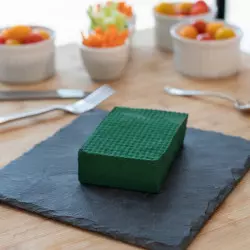
- Fresh organic spirulina, available in 400g blocks, of French origin, very rich in nutrients, ready to be consumed,
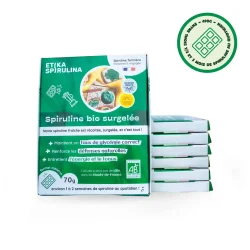
- Frozen fresh organic spirulina, available in 70g tablets each, of French origin, containing all the benefits of spirulina preserved in a frozen form, for practical and prolonged use,
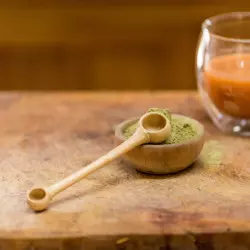
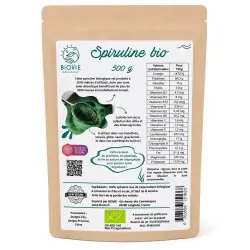
- Organic spirulina powder from organic aquaculture, dried using the spray drying method, for easy integration into your recipes,
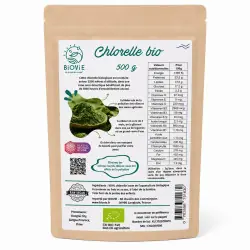
🟢 Organic chlorella powder (also called chlorella), known for its detoxifying properties, it strengthens the immune system and improves digestion.
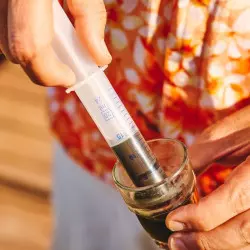
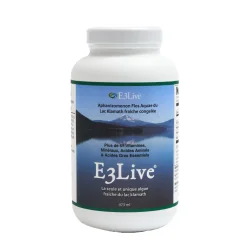
🟢 Wild Klamath algae, available in liquid bottle, an exceptional superfood from the pure waters of Klamath Lake in Oregon, USA
❇️ Where do our various microalgae come from?
Below and on each of our product sheets, you will find more details about the suppliers we work with:
🟢 For the fresh spirulina, we work with UMAMIZ, an artisan and modern farm in Hérault. Their spirulina is grown in a greenhouse, pressed to remove excess water, and then packaged in 400g blocks. It is certified organic by Ecocert. The production adheres to strict ecological standards, including waste management and the use of phytoremediation systems for cleaning water. This approach ensures a high-quality product, rich in essential nutrients and easy to incorporate into daily diets.
🟢 For the frozen fresh spirulina, we work with ETIKA SPIRULINA, an NGO committed to fighting malnutrition in Asia and promoting sustainable urban agriculture. Their spirulina is grown in northern France, ecologically, adhering to strict waste management and energy footprint standards. It is immediately frozen after harvest to preserve its nutrients and then packaged in convenient tablet form.
🟢 Our spirulina powder comes from an organic aquaculture located in a semi-desert steppe area of Inner Mongolia, at an altitude of 3000 meters. This region, far from urban and industrial centers, benefits from optimal sunlight. The spirulina is grown in greenhouse ponds to protect the crops and ensure maximum purity. The drying is done by spray drying to preserve the nutritional qualities of the spirulina.
🟢 For the chlorella, our producer is located in a semi-desert steppe area of Inner Mongolia (China), on a plateau at 3000 meters altitude receiving more than 3000 hours of sunlight per year, offering ideal production conditions. The production area is far from major urban centers, industrial areas, roads, and benefits from a very pure atmosphere at altitude. The production ponds are located under greenhouses to protect the crops from insects, airborne micro particles, and dust carried by the wind. The generous sunlight ensures an adequate temperature under the greenhouses, with a wide day/night thermal amplitude favorable to the growth of microalgae.
🟢 For Klamath algae, we work with the company E3LIVE, the supplier of Klamath algae that we consider the most serious and longest established. E3LIVE is indeed the only supplier in the world with a complete infrastructure on the lake itself, allowing them to apply extremely rigorous sanitary processes, with harvesting boats developed by the company's founders, a docking platform on the lake, transshipment infrastructures, and immediate cooling units on site.
Watch a video report we made on site during an algae harvest:
As well as a video of an interview with the founder of the company E3LIVE:
❇️ What are their nutritional benefits? And how do you use them?
🟢 The exceptional richness in micronutrients of microalgae such as spirulina, chlorella, and klamath allows them to be classified as superfoods: vitamins, minerals, amino acids, enzymes, fatty acids, and natural pigments are found in large quantities.
Their content of digestible and easily assimilable plant proteins is also remarkable: proteins indeed represent more than half of their dry weight.
Besides their richness in plant proteins, chlorella, klamath, and spirulina each contain all eight essential amino acids and are an excellent source of bioavailable iron.
Alkalizing, they help to deacidify the body and thus limit the development of inflammatory pathologies.
It is important to note that their nutritional value depends on the density and nutritional profile of their growth environment as well as the quality of the harvesting, dehydration, and packaging processes. This is why at Biovie we place great importance on the quality of our products and our suppliers.
🟢 A few grams per day are enough to enjoy their benefits and enrich your diet!
It is recommended to consume them preferably in the morning or at noon to enjoy their benefits throughout the day.
They can be taken as a course of treatment, for example, 2 courses of 1 to 3 months per year (in autumn to strengthen the immune system and in spring to eliminate toxins), or as daily maintenance by taking a smaller amount.
It is not recommended to take them at the same time but rather to alternate according to your needs!
🟢 For more information, check out our following blog articles:
How to consume spirulina?
Spirulina and microcystins: check the quality!
What is the price of spirulina?
Spirulina: the complete guide to scientifically proven benefits
Spirulina and weight loss: what scientific studies reveal
Spirulina and immunity: how to strengthen your immune system
12 effective tips to mask the taste of spirulina
What are the benefits of chlorella?
Chlorella: Super-algae with multiple virtues for your health
Klamath, the regeneration algae
Klamath Algae: Testimony of Mark, Betty, and Gwen