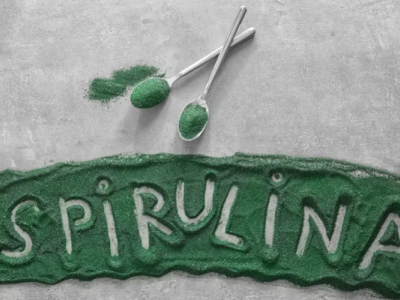
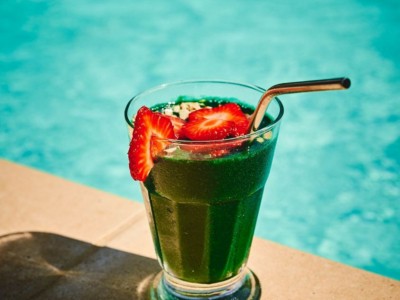
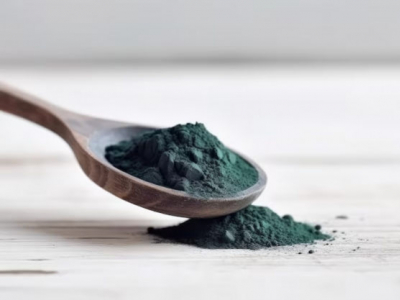
We have been consuming spirulina for many years, and frankly, it's one of the superfoods that accompanies us daily and that we take with us when we travel (along with our sprouted seeds and our dehydrated seaweed). But beyond our personal experience, what motivated me to write this comprehensive guide on the benefits of spirulina is the impressive number of scientific studies published in recent years on this exceptional micro-alga.
Spirulina contributes to reducing fatigue, supports the immune system, and helps maintain normal muscle function thanks to its richness in protein and iron. More than 20 studies published in leading scientific journals such as Clinical Nutrition (2) or Antioxidants (4) demonstrate its effects on cholesterol, energy, and sports recovery. This is why the World Health Organization described it as the "best food of the 21st century for humanity" (21).
What exactly is spirulina?
Spirulina, scientifically named Arthrospira platensis, is not really a seaweed in the classic sense of the term. It's a cyanobacterium, a micro-organism that appeared on Earth more than 3.5 billion years ago. To give you an idea, it's one of the first living organisms to have produced oxygen on our planet.
If you'd like to discover spirulina's thousand-year-old history, know that the Aztecs were already harvesting it from Lake Texcoco in Mexico, where they called it "tecuitlatl". In Africa, populations around Lake Chad consumed it in the form of dried cakes called "dihé". This blue-green micro-alga therefore fed humanity long before modern science took an interest in it.
A truly exceptional nutritional composition
In concrete terms, what makes spirulina so unique is its nutritional density. It contains between 60 and 70% protein by dry weight, three times more than beef. And these proteins are complete, with all 8 essential amino acids present. Digestibility is excellent, between 85 and 95%, which means your body actually absorbs what it takes in.
Here is what spirulina contains:
Protein: 60-70% of dry weight, complete amino acid profile
B vitamins: B1, B2, B3, B6, B8, B9, and a form of B12 (pseudovitamin)
Fat-soluble vitamins: D, E, K
Beta-carotene: a precursor of vitamin A, 10 times more than carrots
Iron: 28 to 50 mg per 100g, in plant-based ferric form (7)
For the spirulina powder that we offer, here are the measured values per 100 g, and converted to a 5 g serving (a typical course is between 3 and 5 g per day):
Protein: 66.3 g/100 g - i.e. 3.3 g for 5 g
Iron: 81.4 mg/100 g - i.e. 4.1 mg for 5 g
Carotenoids (including beta-carotene): 242 mg/100 g - i.e. 12.1 mg for 5 g
Chlorophyll (including chlorophyll A: 850 mg/100 g): 1.7 g/100 g - i.e. 85 mg for 5 g
Phycocyanin: 12.3 g/100 g - i.e. 615 mg for 5 g
These values are specific to our organic spirulina powder; they vary from batch to batch and supplier to supplier depending on growing and drying conditions - which is exactly why it's worth demanding a real nutritional data sheet rather than a generic average.
Phycocyanin: the secret behind spirulina's benefits
What truly sets spirulina apart from other superfoods for health is phycocyanin. This blue pigment, responsible for spirulina's characteristic color, is a powerful antioxidant found nowhere else in everyday food.
A study published in Current Protein and Peptide Science (1) demonstrated that phycocyanin has remarkable antioxidant and anti-inflammatory properties. It inhibits COX-2, a mechanism similar to that of non-steroidal anti-inflammatory drugs, but naturally (1). Researchers also observed a reduction in pro-inflammatory cytokines (1).
Spirulina also contains gamma-linolenic acid (GLA), an anti-inflammatory omega-6 rare in the diet, and calcium spirulan, a polysaccharide with immunomodulatory properties (20).
The 10 proven benefits of spirulina
I'm going to walk you through the benefits of spirulina that are genuinely documented by scientific research. Because, frankly, a lot gets written online, but not everything is backed by the same level of evidence. So I've ranked these benefits according to the strength of the available studies.
1. Lipid profile: a contribution documented by several meta-analyses
This is probably the best-documented benefit. A meta-analysis published in 2016 in Clinical Nutrition (2) compiled the results of 7 randomized clinical trials. The results are truly impressive:
Reduction in total cholesterol: -46.76 mg/dL (2)
Reduction in LDL cholesterol (the "bad" cholesterol): -41.32 mg/dL (2)
Reduction in triglycerides: -44.23 mg/dL (2)
Increase in HDL cholesterol (the "good" cholesterol): +6.06 mg/dL (2)
These results are statistically significant (p<0.001) (2). The mechanism of action was elucidated by a Japanese study published in the Journal of Nutrition (3): phycocyanin inhibits intestinal cholesterol absorption and reduces its biliary reabsorption, thereby increasing its excretion (3).
A review published in Cardiovascular Therapeutics (19) confirms spirulina's overall action on all parameters of metabolic syndrome, combining lipid-lowering, antioxidant, and anti-inflammatory effects (19).
For those looking to naturally strengthen their immune system while keeping an eye on their lipid profile, spirulina represents a particularly interesting option, as part of a varied and balanced diet and a healthy lifestyle.
2. Powerful antioxidant action
A systematic review published in 2021 in Antioxidants (4) analyzed 9 studies involving 415 subjects. The researchers observed a significant effect on total antioxidant capacity (TAC) and an improvement in superoxide dismutase (SOD), a key enzyme in antioxidant defense (4).
In concrete terms, the benefits of spirulina include protecting your cells against oxidative stress, that accelerated cellular aging caused by free radicals. And this isn't just an abstract concept: oxidative stress is involved in numerous chronic conditions.
3. Energy boost and fatigue reduction
Do you feel tired from the moment you wake up? Spirulina can help reduce this fatigue, and it's not just an impression. A study published in Antioxidants in 2020 (5) demonstrated that spirulina stimulates NK (Natural Killer) cells, improves the innate immune response, and reduces markers of fatigue (5).
The mechanism is twofold: on the one hand, spirulina's highly bioavailable iron combats iron-deficiency anemia, a common cause of fatigue (7). On the other hand, its richness in B vitamins supports energy metabolism.
4. Correcting iron-deficiency anemia
This is a topic that is particularly close to my heart, because anemia affects an enormous number of women. A study conducted on women aged 18 to 22 (6) showed that supplementing with 5g of spirulina per day for 30 days significantly improves hemoglobin levels (6).
What's remarkable is that spirulina's iron (plant-based ferric iron) is well absorbed while causing fewer gastrointestinal side effects than pharmaceutical iron (6). A bioavailability study published in the Journal of Agricultural and Food Chemistry (7) confirmed that spirulina's iron is comparable to heme iron in terms of absorption, without the oxidative side effects of ferrous iron (7).
Another study published in Cellular and Molecular Immunology (16) showed particular benefits in elderly people, with a significant increase in hemoglobin and an improvement in immune markers (16).
For women looking for the benefits of spirulina for their health, this is a compelling argument. For comparison, 10g of spirulina provides as much iron as a steak.
5. Relief from allergic rhinitis
If you suffer from seasonal allergies, here's some good news. A randomized double-blind clinical trial, published in European Archives of Oto-Rhino-Laryngology (8), tested 2g of spirulina per day for 12 weeks in people suffering from allergic rhinitis.
The results show a significant reduction in symptoms: runny nose, congestion, sneezing (8). The improvement in quality of life was notable (8). The identified mechanism is a modulation of the Th2 immune response, the one involved in allergic reactions (8).
6. Athletic performance and recovery
A review published in 2024 in the Journal of Dietary Supplements (9) reviewed the benefits of spirulina for athletes. The conclusions are encouraging:
Improved body composition in overweight subjects (9)
Improved aerobic capacity in untrained or moderately trained subjects (9)
Improved muscular strength and power (9)
Reduced lipid peroxidation and inflammation (9)
Accelerated muscle recovery (9)
For athletes interested in nutrition and athletic performance, spirulina represents a genuinely interesting natural supplement.
7. Benefits of spirulina for the skin and sun preparation
With its richness in beta-carotene (10 times more than carrots), spirulina helps prepare the skin for the sun. If you're looking to optimize your tan while protecting your skin, check out our article on spirulina for a beautiful tan.
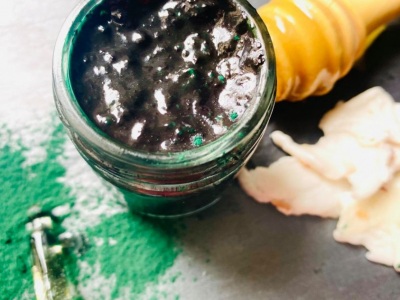
Spirulina's antioxidants, notably phycocyanin and beta-carotene (4), help protect cells against damage caused by UV rays. And for external application, you can even prepare a coconut-spirulina after-sun mask.
8. Blood sugar support
An animal model study published in Pharmaceutical Biology (10) highlighted the antidiabetic potential of phycocyanin. The results show a reduction in fasting blood glucose and an improvement in insulin sensitivity (10).
Another study in humans published in the Journal of Medicinal Food (11) using 4.5g of spirulina per day for 6 weeks observed a reduction in systolic blood pressure and an improvement in lipid profile (11), two parameters often impaired in metabolic syndrome.
9. Natural detoxification
Spirulina has a surprising ability to bind heavy metals. A clinical study published in Clinical Toxicology (12) tested the combination of spirulina and zinc in patients suffering from chronic arsenic poisoning (unfortunately common in certain regions of the world).
The results show a significant reduction in arsenic levels in hair and urine, as well as an improvement in symptoms (12). The mechanism involves natural chelation of heavy metals (12), thereby supporting the body's natural elimination functions.
10. Support for the gut microbiota
A study published in the Journal of Nutritional Biochemistry (13) showed that spirulina increases populations of Roseburia and Lactobacillus in the gut, while protecting against age-related liver inflammation (13).
Older but equally relevant, a study in the International Journal of Food Microbiology (14) had already demonstrated that spirulina stimulates the growth of Lactococcus lactis, Streptococcus thermophilus, Lactobacillus casei, L. acidophilus, and L. bulgaricus (14). This is a genuine prebiotic effect.
Women have particular nutritional needs, especially for iron. With 20 to 50% of women suffering from iron deficiency according to studies, spirulina represents an interesting natural solution.
Muscle protection: antioxidant effect against oxidative damage (4, 9)
Protein content: 60-70% complete protein
For endurance athletes as well as those practicing strength training, spirulina represents a particularly interesting source of plant-based protein.
Other benefits documented by research
Neuroprotection
A study published in Archives of Physiology and Biochemistry (17) showed that spirulina protects against cerebral oxidative stress and improves cognitive functions (17). These results suggest interesting potential in the context of brain aging.
Laboratory research: polysaccharides and phycocyanin
This is an area of fundamental research, not an established benefit in humans: I prefer to state this as clearly in the heading as in the conclusion. A systematic review published in the Journal of Cancer Research and Therapeutics (18) analyzed 1306 articles examining the cellular mechanisms of spirulina. The researchers document antiproliferative effects in vitro (in the laboratory, on isolated cells, not in humans), with mechanisms of action involving apoptosis and cell cycle arrest (18). The active compounds identified are phycocyanin and polysaccharides (18).
Another study published in Evidence-Based Complementary and Alternative Medicine (20) confirms cytoprotective effects and antitumor activity, also in vitro (20).
Let's be clear about what this actually means: preliminary laboratory results, obtained outside any living organism, in no way allow us to claim that spirulina "prevents" or "treats" cancer, nor to draw any connection with dietary consumption. This is a line of fundamental research worth following, nothing more at this stage - and certainly not a reason to forgo medical follow-up.
What ANSES says: risks, contraindications, and vitamin B12
I prefer to address this topic head-on, because it's a legitimate question, and because an honest answer serves our readers better than an awkward silence. Yes, there are risks with spirulina - but they are, for the most part, linked to the quality and origin of the product, not to spirulina itself. This is in fact the heart of the matter: a poorly controlled spirulina can be a problem; a traced and tested spirulina is an entirely different matter.
The real risks identified
ANSES (the French Agency for Food, Environmental and Occupational Health & Safety) published a report in 2017 (15) identifying two main risks associated with poor-quality, non-organic spirulina:
Microcystin contamination: these toxins come from other cyanobacteria that can contaminate poorly controlled spirulina cultures (15)
Heavy metals: lead, mercury, arsenic depending on the growing environment (15)
Aside from the risk of contamination, ANSES considers that spirulina poses no health risk at usual doses (15). The report recommends favoring the best-controlled supply chains - which is exactly why we detail below the precise origin and certifications of each of our three references.
Adverse effects actually reported
ANSES's nutrivigilance system recorded, up to 2017, 49 reports of adverse effects potentially linked to spirulina-based food supplements (22). Of these 49, only 10 were sufficiently documented to be analyzed, and only 4 were judged to be strongly attributable to spirulina (22). The reported effects were mainly digestive, more rarely muscular, hepatic, or allergic (22). In other words: the signal exists and deserves to be known, but it remains rare and concerns, in the vast majority of documented cases, products whose quality was not guaranteed.
Actual contraindications
Some people should avoid or limit spirulina, or discuss it with their doctor beforehand (15):
Phenylketonuria: spirulina contains phenylalanine - a formal contraindication
Anticoagulant treatment: presence of vitamin K, which may interfere with treatment
Autoimmune diseases (multiple sclerosis, lupus, rheumatoid arthritis): the immunostimulant effect may be problematic
Hemochromatosis: spirulina is rich in iron, to be avoided in case of iron overload
Allergic predisposition: as a precaution, if there is no prior history of consumption
Outside of these specific cases, spirulina is considered safe by ANSES and health authorities, provided it is certified and tested.
And what about vitamin B12?
This is a point on which I want to be transparent, especially for our plant-based readers: spirulina contains a molecule from the B12 family, but it is mostly a pseudo-vitamin B12, which the human body does not absorb like the active form. Studies disagree on the actual bioactive share: you therefore cannot rely on spirulina to meet your B12 needs. On a vegan diet, the only reliable option remains specific supplementation, checked with a blood test. We prefer to state this clearly, even though it doesn't serve our business.
This is why it is absolutely essential to choose a certified organic spirulina with verifiable batch testing, as part of a varied and balanced diet and a healthy lifestyle.
Possible mild side effects
Aside from the cases above, the effects reported at the start of a course are generally mild and temporary:
Mild digestive issues at the start (bloating, nausea)
Headaches (often linked to a detox effect)
Rare skin reactions
My advice: start with a low dose (1g/day) and gradually increase to the desired dose (3-4g/day). This allows your body to adjust.
After 18 years of experience at Biovie in the field of superfoods, I can tell you that quality really makes the difference. Here are the essential criteria:
Selection criteria
Essential criterion: organic certification: guarantees the absence of pesticides and control over growing conditions
Batch monitoring and testing: verification of heavy metals and microcystins (15)
Full traceability: from the growing pond to the finished product
The price of spirulina per kilo can vary considerably, but remember that a lower-quality product can be ineffective or even dangerous. Per gram of protein, a quality organic spirulina remains comparable to organic beef.
Where does Biovie's spirulina come from: three origins, three traceability systems
Rather than asking you to simply take our word for it, here is exactly where our three references come from, and what sets them apart:
Spirulina powder comes from a supplier located in Jiangsu province, China, selected by Éric after in-depth research into certification and traceability. It is certified organic under EU, USDA, and Canada standards, produced according to the ISO 22000 quality standard, and dried by spray drying rather than long convection drying - a method recognized by Ecocert for preserving heat-sensitive nutrients.
Fresh spirulina and frozen spirulina are produced by Etika Spirulina, at our producer Xavier's facility in northern France. Grown in ponds, it is simply pressed to remove excess water - without drying or heating - and packaged while maintaining the cold chain.
In both cases, batch testing (microcystins, heavy metals) is part of our non-negotiable sourcing criteria - exactly what ANSES recommends. These test reports (microcystins, heavy metals) are available on simple request at sav@biovie.fr.
Powder, fresh, or frozen: which format should you choose?
We offer spirulina in three genuine formats, each with its own use:
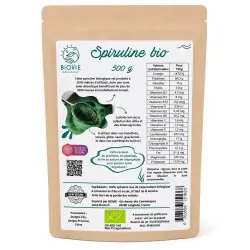
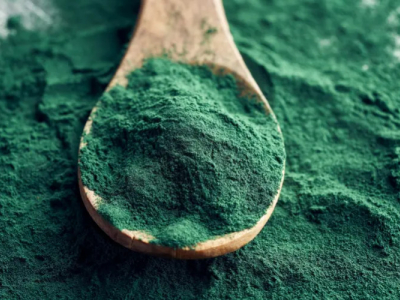
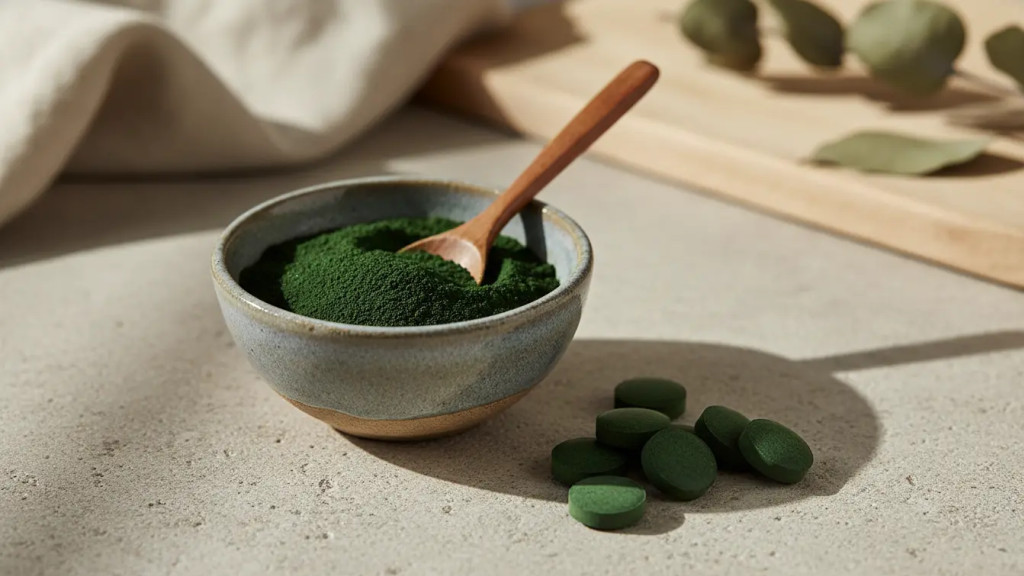
Powder (500 g pouch): the most economical and most concentrated form (66.3 g of protein per 100 g). Keeps for several months in a cool, dry place away from light. Recommended dose: 3 g/day for maintenance, to be increased gradually. Strong, iodine-like taste - dissolves in a fatty medium (oil, yogurt, smoothie), forms clumps in water alone.
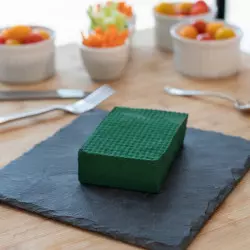
Fresh (400 g block): living spirulina, simply pressed, never dried. Creamy texture close to tofu, neutral taste with an umami note. Keeps for 10 days in the refrigerator (15 to 20 days if cooked with olive oil or honey). Recommended dose: 20 g/day. Delivery in France only, via Chronofresh.
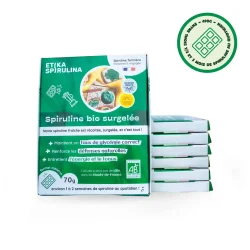
Frozen (6 x 70 g tablets): the same fresh spirulina as above, but frozen for extended storage in the freezer - a practical option for spreading out your consumption without the constraints of the fresh version's short shelf life. Same origin, same producer, same recommended dosage.
In practical terms: if you're discovering spirulina or want to dose it precisely in a recipe, go for the powder. If the taste has always put you off, or you want to cook it as a food in its own right, try the fresh or frozen version. Find all three references in our spirulina section.
The typical daily dose is 3 to 4 grams of powder (the equivalent of 20 g of fresh spirulina). For athletes or during an intensive course, you can occasionally go up to 10g per day of powder. Always start with a low dose (1g) and increase gradually over 1 to 2 weeks.
Clinical studies generally use doses of 2 to 4 or 5g per day (2, 8, 11).
Duration of a course
To observe significant results, allow for a minimum of 4 to 6 weeks. Scientific studies generally use protocols of 6 to 12 weeks (2, 8, 11). Spirulina can also be consumed continuously, as Aurélie and I do.
Best time to take it
In the morning: to benefit from the energy boost
Before exercise: to improve performance (9)
Between meals: to optimize absorption
Avoid taking it in the evening if you are sensitive to its stimulating effect.
Seaweeds that complement spirulina
Spirulina pairs perfectly with other seaweeds that have complementary properties:
Chlorella: excellent for detoxification, rich in chlorophyll
Klamath algae: particularly interesting for cognitive function
Nori: the sushi seaweed, a source of protein and minerals
These edible seaweeds can be combined or alternated according to your needs.
Frequently asked questions about spirulina
What are the 10 benefits of spirulina?
The 10 scientifically documented benefits of spirulina are: cholesterol reduction (2), antioxidant action (4), energy boost (5), anemia correction (6, 7), allergy relief (8), improved athletic performance (9), skin benefits, blood sugar support (10, 11), natural detoxification (12), and gut microbiota support (13, 14).
Is it good to take spirulina every day?
Yes, spirulina is a food that can be consumed daily. Clinical studies use protocols of 6 to 12 weeks of daily consumption without adverse effects (2, 8, 11). We ourselves have consumed it daily for more than 15 years.
What are the side effects of spirulina?
The side effects are generally mild: mild digestive issues at the start of a course, transient headaches, rarely skin reactions. ANSES's nutrivigilance system recorded 49 reports in France, of which only 4 were judged to be strongly attributable to spirulina (15, 22). They disappear by starting with a low dose and increasing gradually.
Who should not take spirulina?
People with phenylketonuria (due to the presence of phenylalanine), those on anticoagulants (vitamin K), suffering from hemochromatosis (iron overload), or autoimmune diseases (immunostimulant effect) should consult their doctor before taking spirulina (15).
When do you see the effects of spirulina?
The first effects on energy can be felt within 2 weeks. For effects on cholesterol or anemia, allow at least 4 to 6 weeks (2, 6). Clinical studies show significant results after 6 to 12 weeks of use (2, 8).
Does spirulina help you lose weight?
Spirulina is not a miracle weight-loss product, but it can support a weight-loss approach. Its richness in protein promotes satiety, and studies show an improvement in body composition in overweight individuals (9).
Does spirulina cleanse the liver?
Spirulina supports the body's natural elimination functions. Studies show protection against liver inflammation (13) and an ability to bind heavy metals (12). It contributes to normal liver function as part of a balanced diet.
Is spirulina good for hair?
Yes, thanks to its richness in iron (7), zinc, B vitamins, and beta-carotene. These nutrients contribute to the maintenance of normal hair. Many people report an improvement in their hair quality after a few weeks of use.
What is the best form of spirulina?
It mainly depends on how you plan to use it. Powder is the most economical and the most nutrient-concentrated, ideal for precise dosing in a recipe. Fresh or frozen spirulina, produced in France, has a neutral taste and can be cooked as a food in its own right, without any drying step. The most important thing remains quality: choose a certified organic spirulina whose origin and batch test results are publicly available (15).
Can you take spirulina during pregnancy?
Spirulina can be a natural source of iron during pregnancy (7), but always consult your doctor or midwife before taking any supplements. Spirulina's iron is well tolerated and may help prevent anemia during pregnancy.
In summary
So there you have it - I think I've covered what science tells us today about the benefits of spirulina. It's truly one of the most studied superfoods, with more than 20 quality studies that I was able to cite in this article.
What strikes me after all these years is how much these studies confirm what ancient civilizations already understood intuitively. The Aztecs and the populations around Lake Chad had understood that this small blue-green alga was a nutritional treasure.
Of course, spirulina is not a medicine and does not claim to cure anything. But as a quality organic food supplement, whose origin and test results we publish, it can genuinely contribute to your daily vitality.
My final piece of advice: choose a quality, traceable organic spirulina, start gradually, and give yourself time to observe the effects.
Scientific References
Romay C, et al. "C-Phycocyanin: A Biliprotein with Antioxidant, Anti-Inflammatory Properties." Curr Protein Pept Sci, 2003;4(3):207-216. PubMed
Serban MC, et al. "A systematic review and meta-analysis of the impact of Spirulina supplementation on plasma lipid concentrations." Clinical Nutrition, 2016;35(4):842-851. PubMed
Nagaoka S, et al. "A novel protein C-phycocyanin plays a crucial role in hypocholesterolemic action." J Nutr, 2005;135(10):2425-2430. PubMed
Kalafati M, et al. "The effects of Spirulina supplementation on antioxidant status: A systematic review and meta-analysis." Antioxidants, 2021. PubMed
Finamore A, et al. "Antioxidant, Immunomodulating, and Microbial-Modulating Activities of Spirulina." Antioxidants, 2020. PubMed
Niang K, et al. "Spirulina supplementation in anemic young women." J Nutr Health Food Sci, 2015.
Walter A, et al. "Spirulina iron is highly bioavailable in humans." J Agric Food Chem, 2016.
Cingi C, et al. "The effects of spirulina on allergic rhinitis." Eur Arch Otorhinolaryngol, 2008;265(10):1219-1223. PubMed
Chaouachi M, Vincent S, Groussard C. "A Review of the Health-Promoting Properties of Spirulina with a Focus on Athletes' Performance and Recovery." J Diet Suppl, 2024;21(2):210-241. PubMed
Ou Y, et al. "Antidiabetic potential of phycocyanin: Effects on KKAy mice." Pharm Biol, 2013;51(5):539-544. PubMed
Torres-Durán PV, et al. "Antihyperlipidemic and antihypertensive effects of Spirulina maxima." J Med Food, 2007;10(2):259-262. PubMed
Misbahuddin M, et al. "Efficacy of spirulina extract plus zinc in patients of chronic arsenic poisoning." Clin Toxicol, 2006;44(2):135-141. PubMed
Neyrinck AM, et al. "Spirulina Protects against Hepatic Inflammation in Aging." J Nutr Biochem, 2017. PubMed
Parada JL, et al. "Lactic acid bacteria growth promoters from Spirulina platensis." Int J Food Microbiol, 1998;45(3):225-228. PubMed
ANSES. "Spiruline : des risques de contamination." Rapport 2017. ANSES
Selmi C, et al. "The effects of Spirulina on anemia and immune function in senior citizens." Cell Mol Immunol, 2011;8(3):248-254. PubMed
Gargouri M, et al. "Spirulina mitigates cognitive dysfunction." Arch Physiol Biochem, 2019.
Ravi M, et al. "Anticancer activity of Spirulina: A systematic review." J Cancer Res Ther, 2021.
Deng R, Chow TJ. "Hypolipidemic, antioxidant and antiinflammatory activities of microalgae Spirulina." Cardiovasc Ther, 2010;28(4):e33-e45. PubMed
Liu Q, et al. "Medical Application of Spirulina platensis." Evid Based Complement Alternat Med, 2016. PubMed
OMS/FAO - Position sur la spiruline comme "meilleur aliment du 21ème siècle pour l'humanité" - Conférence IIMSAM.
ANSES / Vigil'Anses. "Compléments alimentaires à base de spiruline : bilan des signalements de nutrivigilance." Vigil'Anses n°4, février 2018. ANSES
A varied and balanced diet and a healthy lifestyle are important.




.webp)