





This is the starter that always surprises guests: a soup scented with the herbs of the year's end, served warm, although it has never seen a saucepan. The secret lies in two things: an infusion prepared hot that serves as the base, and a powerful blender whose blades warm the mixture through friction alone. Miso and seaweed bring the salty depth, coconut oil the smoothness, and the sage, rosemary and thyme trio the scent of winter meals. Serve it in a small glass, before the rest of the meal.
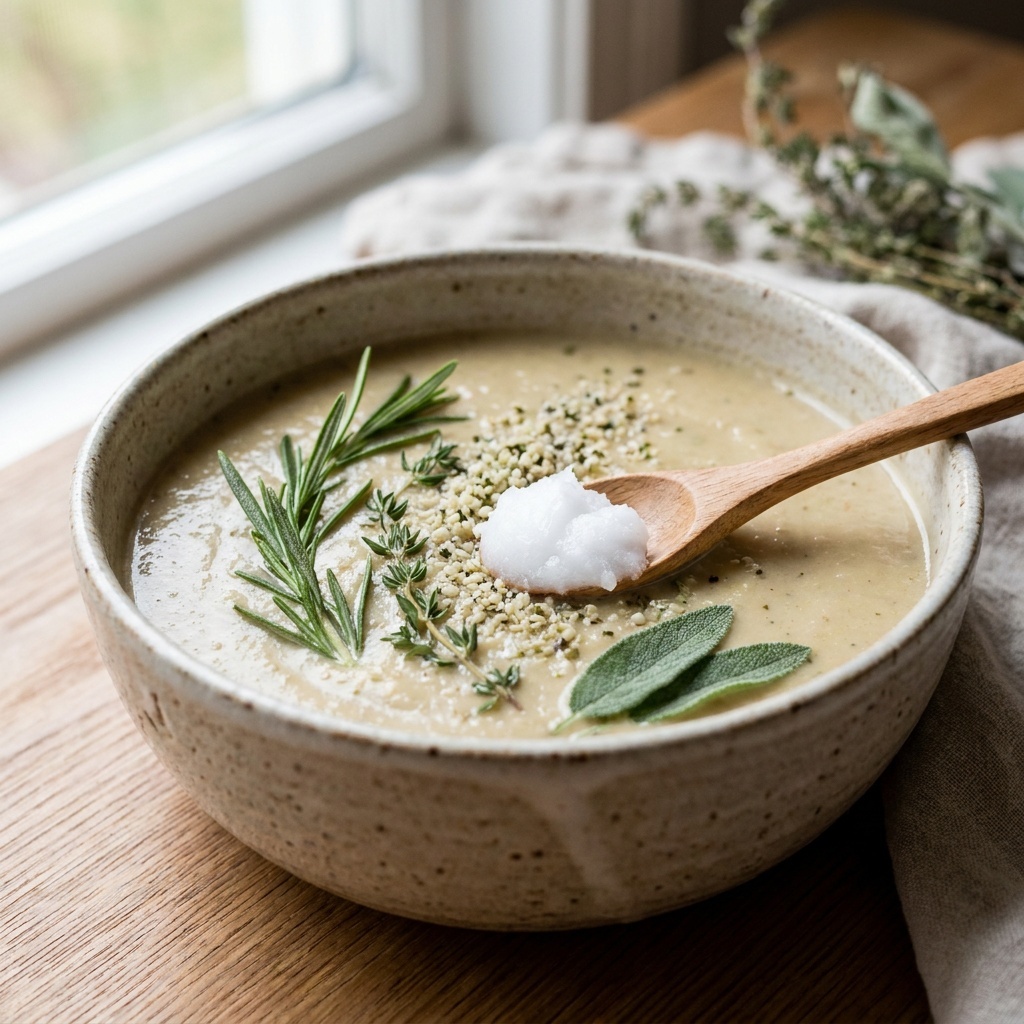
Raw herb, miso and seaweed soup for the holidays

Share this article
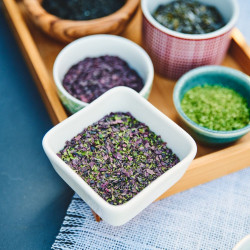
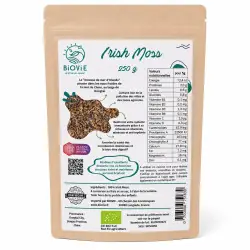
Dehydrated Gourmet Seaweed Mix (Sea Lettuce, Dulse, Nori) Organic
€17.20 Last items in stock
Ingredients
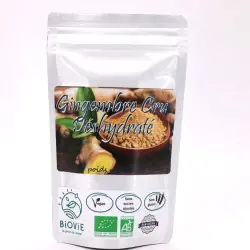
- 600 ml hot herbal infusion (goji berries, he shou wu and ginger make a pleasant trio)
- 3 tbsp miso (chickpea miso works very well)
- 3 tbsp dried seaweed (dulse, sea lettuce, nori, or your favourite blend)
- 1 and a half tbsp virgin olive oil
- 1 and a half tbsp coconut oil
- 2 tsp hemp seeds
- 1 tsp freshly squeezed lime juice
- 1 tsp fresh or dried rosemary
- 1 tsp fresh or dried sage
- 1/2 tsp maca powder
- 1/4 tsp fresh or dried thyme
- 1/8 tsp cayenne pepper
- 1 pinch of sea salt (or the equivalent of 1 tablespoon - 15 ml - of seawater)
- Optional: 1 garlic clove, a little more cayenne pepper depending on how much heat you like
Method
- Make the herbal infusion and let it cool just enough to handle without burning yourself.
- Pour it into the blender with all the other ingredients.
- Blend at full speed for 1 to 2 minutes, until creamy and perfectly smooth.
- Taste and adjust the salt, lime juice and cayenne pepper to your liking.
- Serve straight away in small glasses: the friction of the blades and the starting infusion are enough for a warm soup.
Tip
Chickpea miso gives a noticeably milder result than classic soy miso: if you use a brown or barley miso, start with two spoons and adjust after tasting. Since miso and seaweed are already salty, always taste before adding the smallest pinch of salt. Never bring the infusion to the boil before blending: above sixty degrees or so, unpasteurised miso loses its point and the preparation stops being raw. This soup is drunk within the hour, it does not like waiting.
The full range Dry algae
10 products

FAQ: your questions about raw herb and miso soup
How do you make vegetarian miso soup?
Traditional miso soup contains dashi, a broth made from dried bonito, so from fish. For an entirely plant-based version, that dashi is replaced by a kombu broth, made by simply soaking a piece of kombu seaweed in water for several hours, or by an infusion of dried mushrooms. The rest does not change: the miso is stirred in off the heat, in a liquid that is hot but never boiling. In this recipe, the herbal infusion plays the role of the broth.
What is the equivalent of miso?
The closest is tamari or shoyu, two fermented soy sauces that bring the same salty, umami note in liquid form. Failing that, a fermented nut paste or a spoonful of black olive purée gives comparable depth, without the same complexity. In a raw soup, miso remains unbeatable: it is a living fermented food, stirred in without ever being heated.
What does miso taste like?
Miso is frankly salty, with a depth known as umami: a round, long-lasting flavour close to that of a strong broth. Depending on the variety, notes of hazelnut, caramel or dried fruit are added. White miso, fermented for a few weeks, is mild and slightly sweet; brown or hatcho miso, fermented for several years, is powerful and almost earthy. For a raw soup, it is better to start with a light miso.
Is miso bad for your health?
Miso is above all a very salty product: one tablespoon provides roughly 1 g of salt, which matters if you are watching your intake. It also contains tyramine, an amine some people are sensitive to. Otherwise, it is a traditional fermented food eaten daily in Japan for centuries. The only real waste would be to boil it, which destroys the micro-organisms of the fermentation.
Share this article