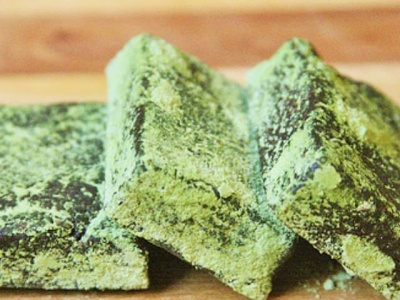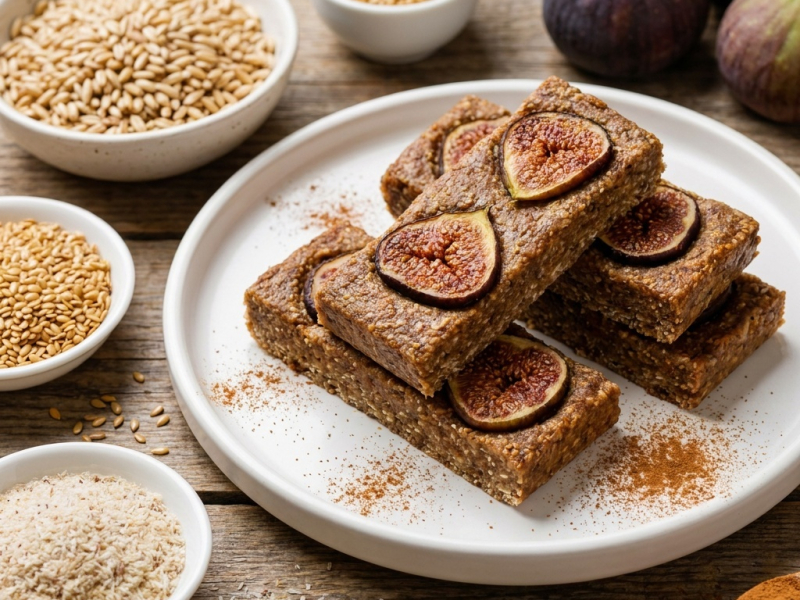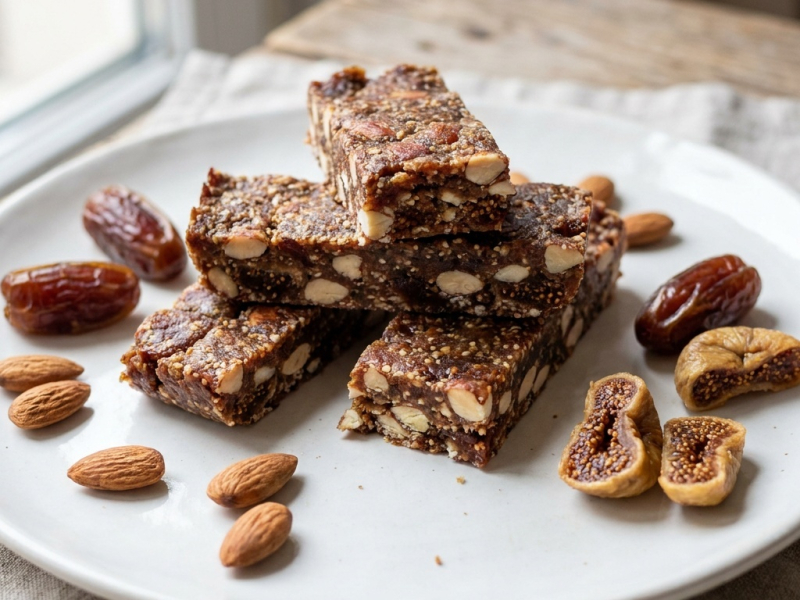









This indulgent bar pairs the sweetness of dried figs and prunes with the bitterness of raw cocoa, lifted with a hint of star anise and Siberian ginseng. An original combination that pleasantly surprises the palate, between spiced notes and the melt-in-the-mouth vanilla-prune cream that accompanies it. Ideal to keep in the freezer for a treat within easy reach.
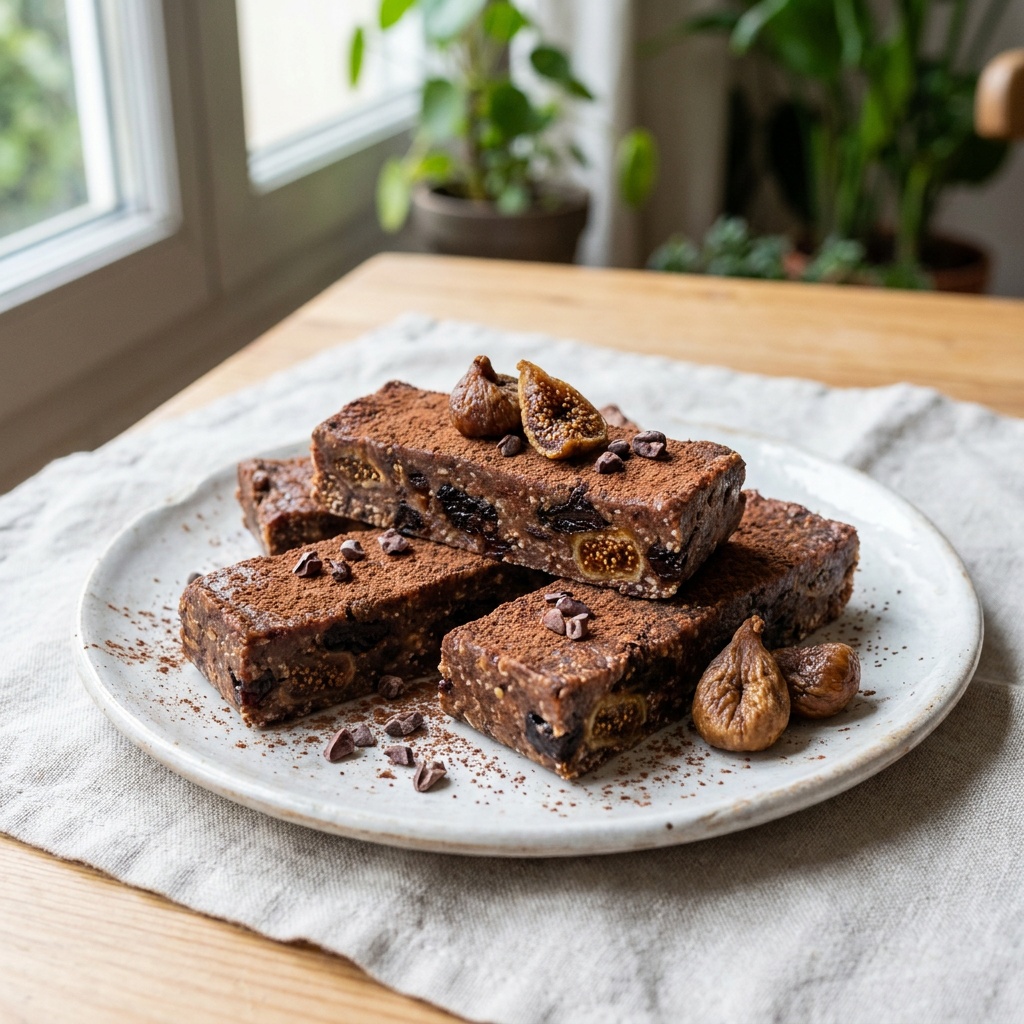
Raw Fig, Prune and Cocoa Bars
Share this article

Organic activated whole almonds
€18.90 In stock
Ingredients
Fig, prune, cocoa and star anise base
- 1 cup activated almonds
- 1/2 cup prunes
- 4 large dried figs
- 2 to 3 pinches freshly ground star anise
- 1 1/2 tsp vanilla paste
- 1 tbsp Siberian ginseng powder
- 1/4 cup cocoa powder
Prune-vanilla cream
- 1/2 cup cashews, soaked 8 hours
- 1/4 cup prunes
- 2 tsp vanilla paste
- 1 tbsp coconut oil
- 1/2 cup filtered and hydrogenated water
- 2 tsp honey
- 1 pinch coarse sea salt (equivalent to 1 tablespoon - 15 ml - of seawater)
Method
- Blend the almonds in a food processor until finely ground.
- Add the cocoa, ginseng, star anise and vanilla paste, then blend to combine.
- Cut the dried figs and add them to the processor with the prunes, one at a time, until you get a smooth paste.
- Transfer to a 23 cm square tin lined with baking paper and press firmly, smoothing the surface.
- Place in the freezer while you make the cream.
- Drain the cashews, roughly chop the prunes, then blend all the cream ingredients until smooth.
- Serve the bars with a spoonful of cream and a thin slice of dried fig.
Tip
If your prunes or figs are a little dry, let them soak for a few minutes in warm water before using: the paste will be much easier to work with.
The full range Oilseeds, nuts, seeds
20 products
Discover the full range

FAQ: your questions about dried figs
Is it good to eat dried figs?
It's a particularly interesting dried fruit: around 10 g of fibre per 100 g, an unusually high plant calcium content for a fruit, plus magnesium, potassium and polyphenols. Like any dried fruit, it also concentrates sugars - nearly 50 g per 100 g - which calls for moderation rather than avoidance. Paired with nuts, as in these bars, the fig's sugar is absorbed more slowly thanks to the fats and fibre alongside it.
How many dried figs a day?
The usual guideline is around two to four figs, or 20 to 30 g, which is roughly equivalent to one serving of fruit. That's already a notable amount of sugar, and more doesn't add much nutritionally. For people watching their blood sugar, the trick stays the same: never eat them alone, but with a source of fat or protein that slows down absorption.
What's the best time to eat dried figs?
There's no established optimal time, but a few common-sense pointers. As a pre-exercise or mid-afternoon snack, dried fig does its job very well: available sugar, fibre, minerals. At breakfast, it fits nicely into a porridge or muesli. In the evening, its high fibre content suits some people and bothers others. What matters most is the quantity and what you pair it with, far more than the time of day.
Dried fig versus prune: what's the difference?
Both are dried fruits rich in fibre and sugars, but they come from different fruits and don't have the same profile. The prune is a dried plum: moister, tangier, rich in sorbitol, which explains its reputation for digestion. The dried fig is sweeter, grainier because of its tiny seeds, and noticeably richer in calcium. In these bars, the two complement each other: the prune brings softness, the fig brings structure.
Share this article
Related articles