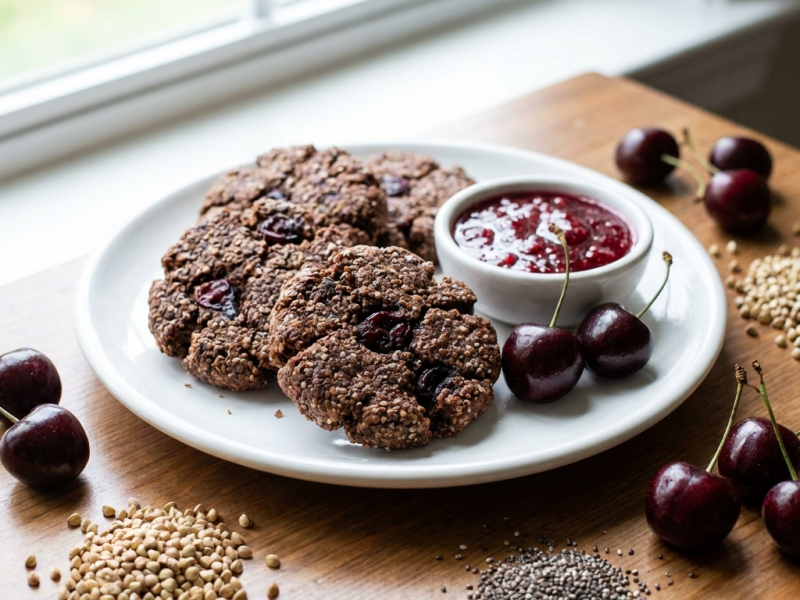


These little cookies usually disappear before they have cooled down, which is ironic for a recipe with no baking. The base, made of dates, desiccated coconut and a little carob, blends in three minutes and is shaped by hand. On top goes a strawberry jam obtained by simply blending strawberries with dates, without an ounce of added sugar or a single saucepan. It is low in fat, naturally sweet and perfectly suited to a children's snack.
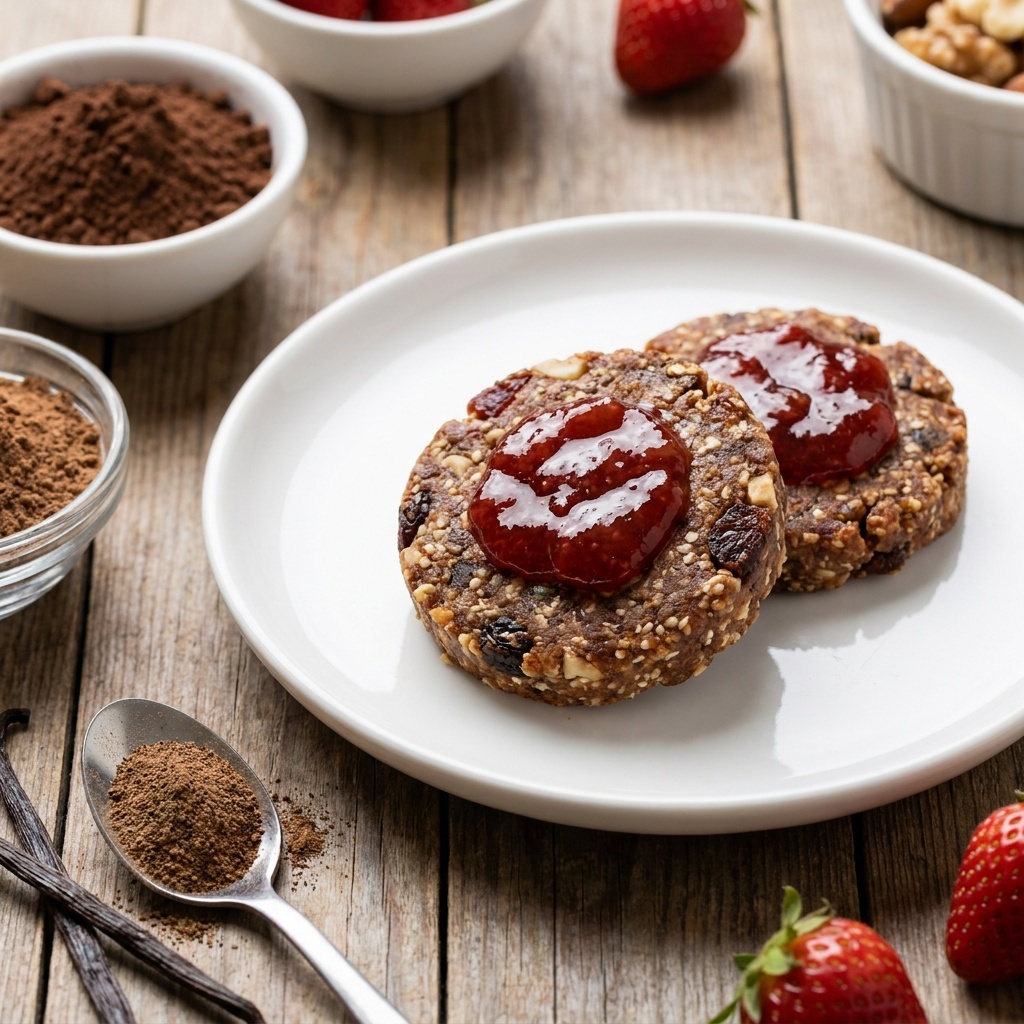
Raw date cookies with no-cook strawberry jam

Share this article
Ingredients
For the cookies
- 250 g pitted dates
- 30 g desiccated coconut
- 2 tbsp carob flour
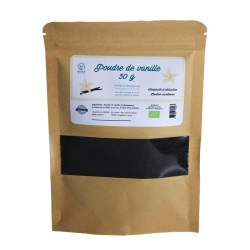
- 1 tsp vanilla powder
For the strawberry jam
- 300 g fresh strawberries (or frozen then thawed)
- 250 g pitted dates
For the finish
- 1/4 tsp vanilla powder
- A few fresh strawberries
Method
- In a food processor, first blend the 250 g of dates intended for the cookies until you get a paste.
- Add the desiccated coconut, the carob flour and the vanilla, then blend until the mixture clearly clumps together.
- Shape round cookies about 4 cm across between your palms, then flatten them slightly with your fingertips, hollowing the centre a little.
- For the jam, blend the strawberries and the remaining 250 g of dates until smooth and glossy.
- Spoon a generous amount of jam into the hollow of each cookie, decorate with a slice of fresh strawberry and a touch of vanilla.
Tip
If your dates are dry, soak them for ten minutes in warm water and drain them carefully before blending: too much water and the dough no longer holds. The jam is deliberately thick, since the dates act as the setting agent; if it seems too dense, loosen it with a spoonful of lemon juice rather than water. Depending on the season, swap the strawberries for raspberries or blueberries, the method stays identical. The filled cookies are eaten within two days, the jam alone keeps five days in the fridge.
The full range Plant-based oils and spices
11 products
FAQ: your questions about raw cookies with strawberry jam
What replaces sugar in jam?
Dried fruit does the job very well, and that is what is used here: dates bring both the sweetness and the thickness, which solves two problems at once. Dried apricots, figs or raisins also work, with different flavours. For a more neutral result honey is fine, but it does not thicken and you then have to rely on chia seeds for texture. In every case you lose the long shelf life sugar provided: the jam becomes a fresh product.
What is the most effective natural setting agent for jam?
Chia seeds are probably the simplest: two tablespoons for 300 g of fruit, fifteen minutes of rest, and the mucilage they release sets the mixture. Agar-agar gels much more firmly but requires boiling, which rules out raw recipes. Ground flaxseed gives a result close to chia, visually more discreet. And blended dates, used here, thicken through sheer density, with no additive at all.
How do you use carob flour?
Carob flour is used exactly like cacao powder, as a direct replacement in the same proportions. It is naturally sweet, which lets you cut back a little on the sweetener, and it contains neither caffeine nor theobromine. Its flavour is milder and slightly caramelised, less bitter than cacao. You will also find it in hot drinks, biscuit doughs and raw bites.
What can I use to replace cacao powder?
Carob is the most common substitute, weight for weight, with a milder result. To stay in the cacao family while changing the texture, finely ground cacao beans also do the job. In a raw recipe you can also play with other coloured, fragrant powders such as açai or baobab, accepting that the flavour changes completely. There is no substitute that reproduces the bitterness of cacao exactly.
Share this article