This kale salad with pear and flax-cranberry dressing is one of the living-food recipes I make most often at home. In 15 minutes, with no cooking, it combines raw kale massaged with marine plasma, the sweet softness of pear, and a flax-cranberry vinaigrette that is tangy, crunchy and remarkably rich in omega-3. Difficulty: easy. Servings: 2 people.
Why is this kale recipe different from the others?
Honestly, most of the kale salad recipes you find online look alike: olive oil, lemon juice, maybe a few seeds. It is not bad, but it does not really make the most of the potential of this extraordinary vegetable.
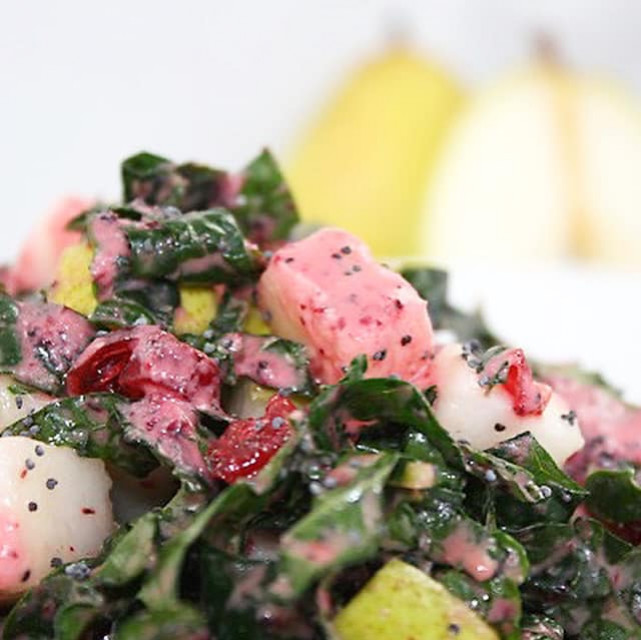
Here, the angle is different. I use flaxseed oil, one of the most concentrated plant sources of omega-3 fatty acids, and marine plasma as the seasoning base in place of table salt. Each ingredient is chosen for its nutritional density, not only for its taste. And yet the result is frankly delicious. The flax-cranberry dressing blended in the blender gives a deep purple-red color that guests always notice, and the texture of kale massaged with marine plasma, tender and slightly glossy, has nothing to do with unprepared raw kale.
That is what a no-cook kale salad means in living food: nothing sacrificed on pleasure, everything gained on nutrition.
The key ingredients
Kale: the king of leafy vegetables
Kale is one of the densest vegetables in micronutrients in plant-based eating. According to the ANSES Ciqual composition table (2024), 100 grams of raw kale provide about 93 mg of vitamin C It also contains glucosinolates, the sulfur compounds that give it its bitterness. Its 93 mg of vitamin C per 100 g (116% of NRV) contribute to protecting cells against oxidative stress.
For a raw kale recipe that is pleasant to eat, two steps are non-negotiable: remove the stems (bitter and fibrous) and massage the leaves with the marine plasma for 1 to 2 minutes. This massage softens the cellulose and makes the micronutrients easier to assimilate. In practice, you will see the leaves change texture under your fingers, a sign that the magic is working.
Flaxseed oil: the best plant source of omega-3
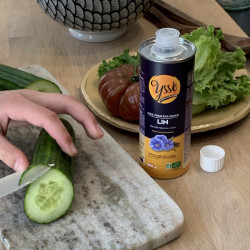
Flaxseed oil is the richest in ALA (alpha-linolenic acid, omega-3) of all common vegetable oils: it contains about 57 g per 100 g according to Ciqual ANSES, a content clearly higher than walnut or hemp oil. Alpha-linolenic acid (ALA) contributes to the maintenance of normal blood cholesterol levels; this beneficial effect is obtained with a daily intake of 2 g of ALA, about one teaspoon of flaxseed oil.
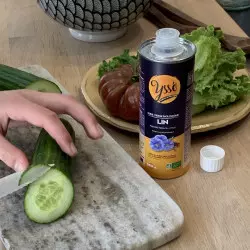
Absolute rule: flaxseed oil is never heated. Heat destroys its omega-3 and creates undesirable compounds. It is used raw only, exactly as in this recipe. To go deeper into the subject, read our article on flaxseed oil, and discover our comparison of flaxseed oil and camelina oil to choose according to your needs. To go even further, our article on choosing your vegetable oils will give you all the keys.
Dried cranberries: the tangy accent of the dressing
Dried cranberries give the dressing its characteristic red color, its natural acidity and their proanthocyanidins, natural pigments of the fruit. Their sweet-tart touch perfectly balances the natural bitterness of the kale and the roundness of the pear. If you can, choose dried cranberries with no added sugar to keep the best nutritional profile.
Marine plasma: the living mineral seasoning
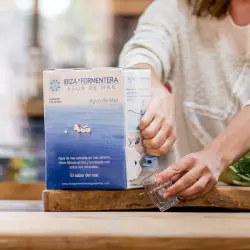
Rather than table salt, this kale salad uses marine plasma for the massaging. It contains sodium and other minerals from seawater, and it softens the leaves as you massage them. It is one of the signatures of Biovie's living cuisine: replacing refined salt with a complete marine mineral, which brings much more than a simple salting effect. To learn all about its origins and specifics, read our article marine plasma: Mediterranean or Atlantic?
Find the marine plasma used in this recipe to soften the kale.
The recipe: kale and pear salad with flax-cranberry dressing
Preparation time: 15 min, No cooking, For 2 people
Ingredients
For the salad:
1 branch of kale (about 150 g of leaves)
3 cl of Biovie marine plasma
1 pear (Conference or Williams type), diced
For the flax-cranberry dressing:
30 g of dried cranberries
12 cl of Biovie flaxseed oil (raw, first cold pressing)
1 tablespoon of honey (or maple syrup for a 100% vegan version)
1 teaspoon of onion powder
1 teaspoon of lemon juice
1 tablespoon of poppy seeds
A little water (to adjust the consistency)
Step-by-step preparation
Step 1, Prepare the kale: Remove the kale stems and cut the leaves into pieces of even size. Place them in a large salad bowl.
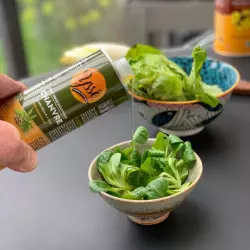
Step 2, Soften the kale: Pour the 3 cl of marine plasma over the leaves. Massage gently but firmly with your hands for 1 to 2 minutes, until the leaves become more tender and slightly glossy. This step is essential, do not skip it. It breaks down the fibers and allows far better assimilation of the kale's micronutrients.
Step 3, Prepare the flax-cranberry dressing: Place the dried cranberries, flaxseed oil, honey (or maple syrup), onion powder, lemon juice and poppy seeds in a blender. Blend until you get a smooth, slightly thick dressing. Adjust the consistency with a little water to your preference.
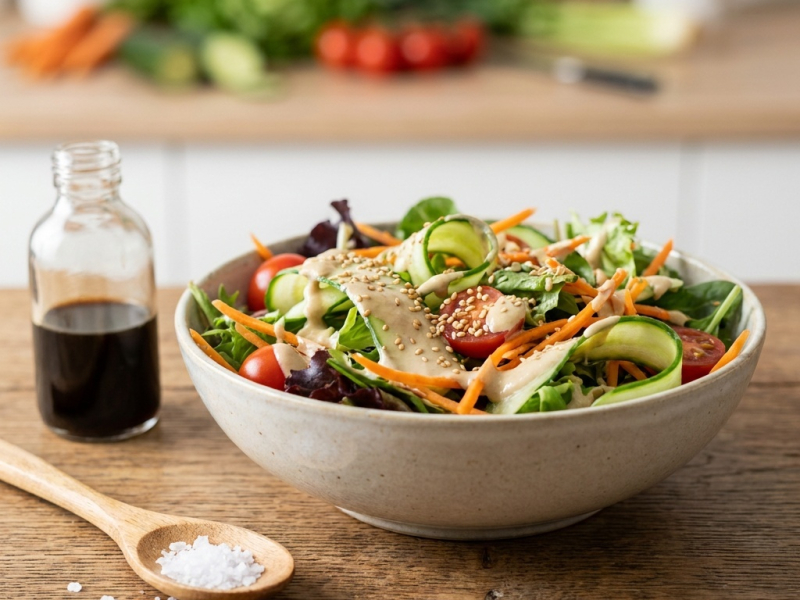
Step 4, Plate the salad: On a nice plate or in a bowl, arrange the massaged kale. Add the diced pear. Spoon the flax-cranberry dressing generously over the top. That is it, it is ready.
Preparation tips and variations
How do you eat raw kale without it being unpleasant? The answer fits in one sentence: massage it enough. Kale that is not worked enough stays tough and bitter. Really count 1 to 2 minutes of vigorous massage, you will see and feel the difference. If you do not have marine plasma on hand, a few extra drops of lemon will do, but marine plasma brings a mineralization that lemon does not strictly replace.
How do you season a kale salad to reduce the bitterness? Three levers combined: a fat (flaxseed oil here), an acid element (lemon juice) and a sweet counterpoint (the pear, the honey, the cranberries). That is exactly what this flax-cranberry dressing does. Let the salad rest for 5 minutes after seasoning, the bitterness fades even more.
Variations to try:
Replace the pear with a Pink Lady apple for a crunchier, tangier version (kale apple salad).
Add a handful of sprouted sunflower seeds for extra texture and a contribution of plant protein.
Honey-free version: replace it with maple syrup or a few dates blended into the dressing.
For a more complete meal, add 50 g of cold cooked quinoa or a few cashew nuts (kale quinoa salad).
Storage: Massaged kale keeps for 24h in the refrigerator. The flax-cranberry dressing keeps for 3 to 4 days in a cool place in an airtight jar, re-blend before using.
Yes, kale can perfectly well be eaten raw, as long as it is prepared properly. The key is to remove the stems (bitter and tough) and to massage the leaves with a slightly acidic or salty seasoning (lemon juice, marine plasma) for 1 to 2 minutes. This massage softens the fibers, reduces the bitterness and makes kale much more pleasant to chew. It is the technique used in this recipe.
How do I season a kale salad so that it is less bitter?
The bitterness of kale softens with three techniques combined: massaging by hand with a fat (oil) or an acid (lemon, vinegar), pairing with sweet ingredients (pear, honey, cranberries), and resting time (let the salad rest for 5 minutes after massaging). In this recipe, the flaxseed oil, the honey and the tart cranberries play this role perfectly.
What are the contraindications of kale?
Kale is very rich in vitamin K, which plays a role in blood clotting. People on anticoagulant treatment (notably warfarin / vitamin K antagonists) should consult their doctor before eating it regularly and in large amounts. In addition, since kale contains goitrogens (substances that interfere with iodine), people with untreated hypothyroidism should moderate their consumption of it raw. Apart from these particular cases, kale presents no contraindication for most healthy people.
What does kale contain?
According to the ANSES Ciqual table, it provides vitamin C (~93 mg/100g), vitamin K, calcium (~150 mg/100g), potassium (~490 mg/100g), dietary fiber and glucosinolates.
First cold-pressed virgin oils (camelina, flax, hemp) and organic spices dried below 42 °C make up this range: turmeric, ginger, Ceylon cinnamon (lower in coumarin than the Cassia sold commercially) and Bourbon vanilla. In cooking, turmeric pairs well with black pepper and a fat. Camelina or flax: camelina keeps better, while flax, with its stronger taste, oxidises faster once opened., 12
products
1. French Agency for Food, Environmental and Occupational Health & Safety (ANSES). Ciqual 2024 food nutritional composition table. Data on raw kale and flaxseed oil. Accessed in March 2026.
Disclaimer: The information presented in this article is provided for information purposes only and does not constitute medical advice. Consult a qualified health professional before changing your diet or supplementation. Within the framework of a varied and balanced diet and a healthy lifestyle.