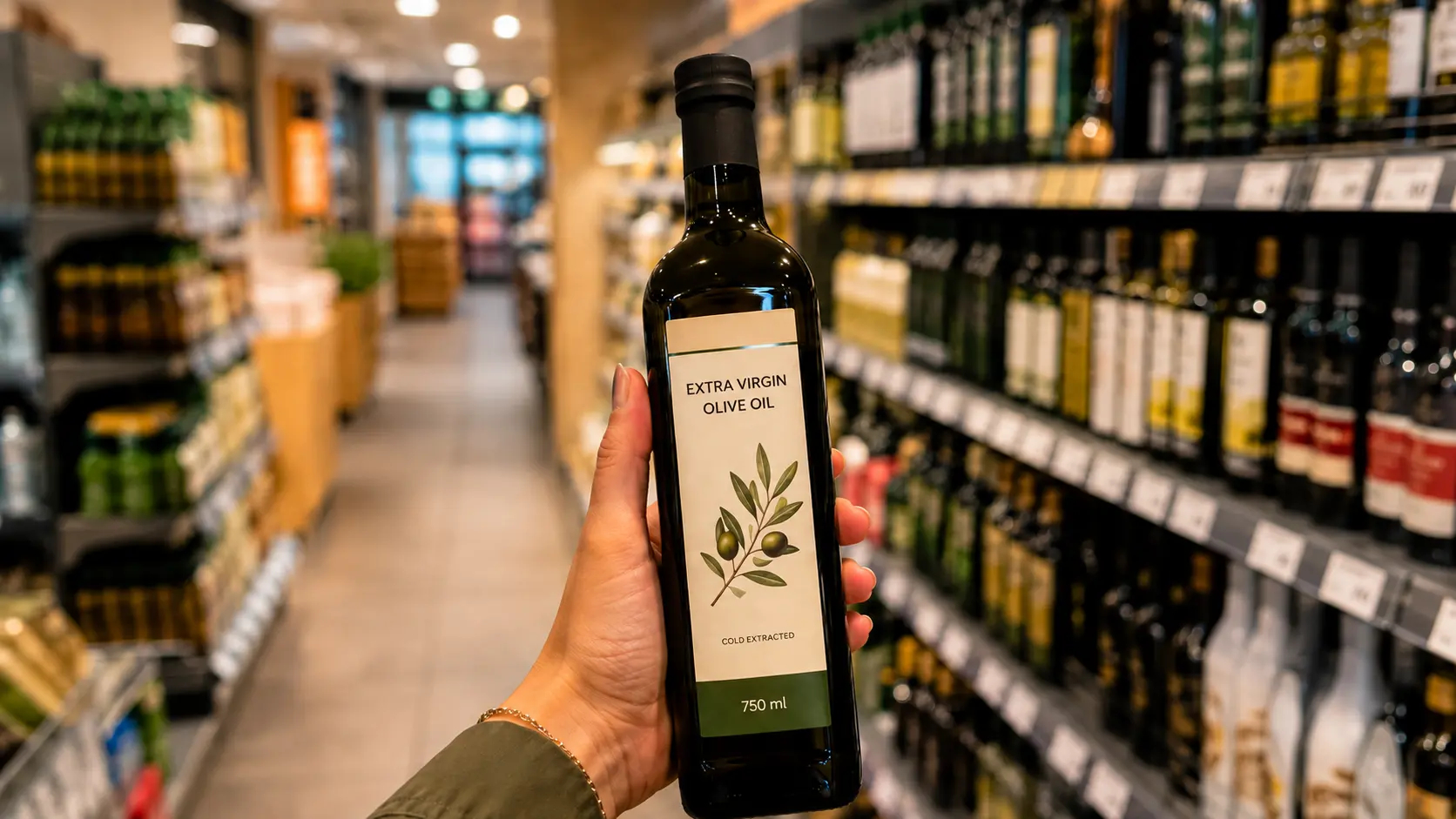
Of the twenty extra virgin olive oils tested in a laboratory by UFC-Que Choisir in June 2025, only five genuinely earned their label. Thirteen were downgraded to plain "virgin" - one category below - because of sensory defects (rancid, musty, fusty). Two were judged unfit for consumption. This is not an isolated case: it is the recurring picture of a market where the label and the contents of the bottle do not always tell the same story.
« When it comes to food, quality has to come first, and I've become very demanding about where my food comes from. I say this in all transparency: Biovie's existence is a real opportunity for anyone who cares about their health. » - Jonathan Tabutin, 5-star Google review
You do not need a laboratory to form a solid opinion about a bottle before buying it. There are six checks you can verify in under a minute, right at the shelf, plus a simple taste test you can repeat at home. That is what this guide sets out to do - without naming any brand, and without selling you the idea that there is one universal "best olive oil."
What Official Checks Reveal
The UFC-Que Choisir figure is not an isolated case. In 2021, the French consumer protection agency DGCCRF inspected 211 businesses linked to the olive oil supply chain: 39% showed an irregularity. Of 130 samples analysed to verify category, origin or the presence of blending with other oils, 42% turned out to be non-compliant.
This needs an immediate caveat, because the word "fraud" sounds alarming and does not apply to every case. A good share of these irregularities concern labelling - a poorly stated origin, an unfounded claim - rather than a health risk. You are not risking food poisoning by buying a downgraded olive oil: you risk paying the price of an extra virgin for an oil that no longer tastes like one, with an estimated value gap of 20 to 30%. Some of the decline also comes from ageing on the shelf and poorly controlled storage conditions, not only from an intention to deceive. This is precisely the distinction most often missing from articles that list the "best olive oils" without ever explaining why a bottle degrades in the first place.
The Three Forms of Deception
Behind a bottle that looks perfectly compliant, three different traps can be hiding, and they are not all equally serious.
Disguised Origin
A blend of oils from several European Union countries, presented in a way that suggests a single origin. I want to stress the word "blend" - it is the regulatory term, never "mix," which refers to something else entirely (adding non-olive oils, for its part, is banned for the extra virgin category).
Cutting
More serious: cutting with lampante oil - a lower-grade olive oil, not fit for consumption as is - or with cheaper oils. In November 2023, Operation Omegabad, run by Spain's Guardia Civil and Italy's Carabinieri under Europol's coordination, seized more than 260,000 litres of oil sold as extra virgin that had in fact been cut with lampante oil. The operation's name played on words: "omega" for the fatty acids a genuine olive oil is praised for, "bad" for what was actually inside the containers.
Overclassification
The third trap - the most frequent, and paradoxically the most legal-looking - is overclassification: a virgin oil (second category, acidity up to 2%) sold as extra virgin (maximum acidity 0.8%). This is exactly what comparative tests reveal year after year.
To explore the question of industrial refining further, our article on choosing organic vegetable oils explains why cold mechanical extraction changes everything compared with an industrial process.
What the Label Says, and What It Doesn't
Many readers assume that acidity and polyphenol content must appear on the label. That is not the case. European regulation requires the category (extra virgin, virgin, etc.) and the origin, but leaves acidity, the harvest date and sensory descriptors optional. A bottle can therefore be perfectly compliant without ever showing a single figure - which makes the visual checks all the more useful.
On the extraction method, two wordings circulate: "first cold pressed" remains permitted, under strict process conditions, but the current official wording is "cold-extracted" (never "cold extraction," which does not exist in the regulatory text).
At Biovie, we apply this exact same cold mechanical extraction standard to our organic oils - it is what we learned working with Yssé, an artisan mill in Brittany that screw-presses our flax and hemp oils without excessive heating.
The Six Checks You Can Verify on the Label
Here is what I personally check in under a minute at the shelf - before putting the bottle back if one of these points worries me.
1. The Regulatory Category, Spelled Out in Full
"Extra virgin olive oil" must appear explicitly. There is no room for ambiguity: it is the first line to read.
2. The Origin Statement
Distinguish a clearly stated single origin ("olive oil from Greece," for example) from "a blend of olive oils originating in the European Union" - the latter wording means the oil comes from several countries, with no fine-grained traceability. Neither is necessarily better: what matters is that the information is legible and not disguised.
« At Biovie, there's real research into quality suppliers and producers, right down to how things are made - I genuinely trust it. » - Nath L., 5-star Google review
3. The Harvest Date
Optional - which makes it a strong voluntary signal when it does appear on the label. A producer who displays it agrees to be judged on the freshness of their oil, which loses sensory quality over time.
4. The Container
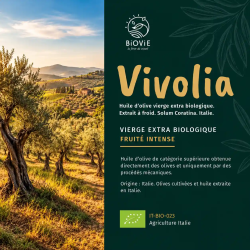
Clear glass lets light through, and light degrades the oil. Favour dark glass, an opaque metal tin, or a flexible Bag-in-Box pouch. Also avoid half-empty bottles sitting on a shelf exposed to light: the oxygen in the empty space speeds up oxidation.
5. Acidity, When It Is Shown
A figure on its own means little without context: low acidity shown alongside the peroxide value, wax content and UV absorbance is a sign of rigour. An isolated acidity figure, without these other indicators, is closer to marketing than to useful information.
6. The Price per Litre
There is a physical floor below which an extra virgin olive oil cannot be produced under normal conditions (the cost of the raw material, the harvest, the extraction). An abnormally low price remains the simplest signal to read, with no need for any other information.
To go further on another commonly misunderstood marker - labels - our guide to trustworthy organic labels explains how to tell a real certification from a marketing logo.
Official panels follow a protocol set by the International Olive Council (COI/T.20/Doc. No. 15): eight to twelve trained tasters, coded dark-coloured glasses covered with a watch glass, oil warmed to around 28°C, a room kept between 20 and 25°C, and a maximum of four samples per session. You obviously do not have this set-up at home, but the principle can be reproduced in five simple steps.
Pour a little oil into a dark-coloured glass (a wine tasting glass works well). Cover it with a saucer and warm it for a few moments between your hands, up to around 28°C - the temperature that best releases the aromas. Smell it first, without swirling. Then take a small sip while drawing in a little air at the same time, as if "chewing" the oil.
What you are looking for is the fruity / bitter / pungent triad, characteristic of a fresh extra virgin oil. The pungency in particular - that sensation that catches the back of the throat - is not a defect: it is the trace of a compound called oleocanthal, present in freshly extracted oils rich in polyphenols. A research team showed in 2005, in the journal Nature, that this compound acts on the same cyclo-oxygenase enzymes as ibuprofen - an interesting research lead regarding its composition, but one that makes olive oil neither a medicine nor a substitute for treatment.
Conversely, three defects disqualify an oil from the extra virgin category: rancid, musty-humid, and fusty (fermentation). If you recognise them, the oil is not dangerous - it simply no longer has anything of an extra virgin about it. Between two tastings, cleanse your palate with a small piece of apple.
The False Test Everyone Repeats
No, a good olive oil does not necessarily solidify in the refrigerator, contrary to a very widespread belief. Solidifying depends on the oil's fatty acid profile, the olive variety and the exact temperature of the refrigerator - not on its quality. An oil that stays liquid in the cold is neither better nor less genuine than one that solidifies. Despite its popularity, this test tells you nothing useful.
Why a Producer Who Publishes Its Lab Analyses Is a Strong Signal
Nothing obliges a producer to publish a lab report on its oil. Doing so means agreeing to be checked - and it is the hardest signal to fake, because it exposes a method, not just a number.
I am not an olive oil producer. My job, for nineteen years at Biovie, has been to select suppliers and read their lab analyses before listing a product - on algae, sprouted seeds, superfoods, and now on olive oil. The question I systematically ask is not "what is the number?" but "how was this number obtained, and by whom?" That is exactly the same logic I am suggesting you apply yourself at the shelf, using the six checks above.
« The quality is top-notch, and so is the transparency and expertise. You can tell every product listed has been thoroughly vetted and the suppliers visited in person. » - delf, 5-star Trustpilot review
On polyphenols specifically - a closely regulated subject, with an approved health claim and precise dosage conditions - we would rather point you to a dedicated article than treat it lightly here.
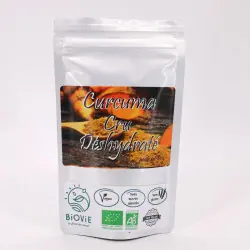
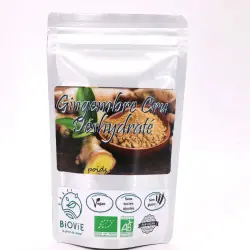
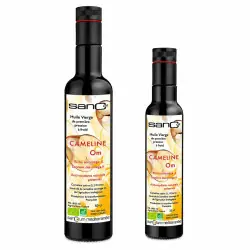
First cold-pressed virgin oils (camelina, flax, hemp) and organic spices dried below 42 °C make up this range: turmeric, ginger, Ceylon cinnamon (lower in coumarin than the Cassia sold commercially) and Bourbon vanilla. In cooking, turmeric pairs well with black pepper and a fat. Camelina or flax: camelina keeps better, while flax, with its stronger taste, oxidises faster once opened., 12
products
There is no universal answer that applies to every bottle in a given shop. What matters are the category spelled out in full, a legible origin, an opaque container, and a price consistent with the real cost of production. An oil that ticks these boxes has a good chance of being what it claims to be.
What is the best olive oil according to UFC-Que Choisir?
The June 2025 comparative test examined twenty oils sold in supermarkets: five fully met the extra virgin category, thirteen were downgraded to virgin for sensory defects, and two were judged unfit for consumption. The organisation does not recommend a single brand, but reproducible selection criteria.
What is the best supermarket olive oil?
Comparative tests show that both supermarkets and specialist retailers carry some compliant bottles and some that are less so. The container, a precise origin statement, and the harvest date remain reliable signals, whatever the buying channel.
What is the healthiest olive oil?
A fresh extra virgin olive oil, rich in polyphenols and correctly stored, retains more compounds of interest than an oxidised or lower-category oil - as part of a varied and balanced diet and a healthy lifestyle. The pungency at the back of the throat, mentioned above, is a sign of freshness, not a health criterion on its own.
How can you recognise a good extra virgin olive oil?
By cross-checking several signals rather than relying on just one: the category spelled out in full, a precise origin, an opaque container, a harvest date if present, a coherent price per litre - and, if you want to go further, a five-step home taste test.
Which olive oil should you avoid?
Ones whose label stays vague about origin, sold in clear glass exposed to light, at a price clearly below the real cost of producing an extra virgin oil. None of these signals is proof on its own, but taken together they should raise a flag.
Is an olive oil that solidifies in the refrigerator better?
No. Cold solidification depends on the fatty acid profile and the olive variety, not on the quality of the oil. It is a popular test but has no diagnostic value.
In Summary
You do not need to be an olive-growing expert to stop being fooled. Six checks on the label, a five-step taste test, and attention to a producer's transparency: that is amply enough to choose with full knowledge of the facts.
« A trustworthy site, quality products at fair prices […] I really appreciate the articles and videos, which are genuinely informative and help you buy with full knowledge. » - BELLION Laurence, 5-star Trustpilot review
References
UFC-Que Choisir (2025). "Huiles d'olive : des 'vierges' pas si 'extra'". quechoisir.org.
DGCCRF (2021). "Qualité et étiquetage de l'huile d'olive : un taux d'anomalie encore trop élevé". economie.gouv.fr/dgccrf.
Beauchamp G.K., Keast R.S.J. et al. (2005). "Ibuprofen-like activity in extra-virgin olive oil". Nature, 437, 45-46. DOI: 10.1038/437045a.
Maestrello V. et al. (2022). "Nuclear magnetic resonance spectroscopy in extra virgin olive oil authentication". Comprehensive Reviews in Food Science and Food Safety, 21, 4056-4075. DOI: 10.1111/1541-4337.13005.
Barbieri S. et al. (2020). "Alignment and Proficiency of Virgin Olive Oil Sensory Panels: The OLEUM Approach". Foods, 9(3), 355. DOI: 10.3390/foods9030355.
Covas M.-I. et al., EUROLIVE Study Group (2006). "The Effect of Polyphenols in Olive Oil on Heart Disease Risk Factors". Annals of Internal Medicine, 145(5), 333-341. DOI: 10.7326/0003-4819-145-5-200609050-00006.
The information presented in this article is provided for informational purposes only and does not constitute medical advice. Consult a healthcare professional before making any changes to your diet or taking any supplements. As part of a varied and balanced diet and a healthy lifestyle.