How to store fresh seaweed, freeze it and use it without waste
To know how to store fresh seaweed, remember two tools: the fridge, with seaweed always covered in its salt or brine, and the freezer, in small portions, for whatever you won't finish in time. Without salt, fresh seaweed only lasts a few days, because the bacteria end up winning. I'm an ISTOM engineer, I founded Biovie in 2007, and these guidelines rest on three storage studies and on ANSES opinions.
July 2026, a question lands in customer service: "How long does fresh kombu keep in the fridge?" Two others follow the same month, on freezing and on our assortment. Good question, really: what do you do with the rest of an open jar on a Monday night, when Sunday is coming around?
How to store fresh seaweed in the fridge, and for how long?
Unsalted fresh seaweed keeps for a few days in the fridge: 7 to 9 days at +2.8 °C for washed kelp, sometimes only 2 to 4 days at 5 °C. Fresh seaweed in salt lasts much longer, because salt and cold both slow down bacteria.
Honestly, the answers you find online to how long until seaweed goes bad are enough to confuse anyone: a few days here, months there. Nobody is lying. Those figures simply describe different foods.
The storage studies cover fresh, unsalted seaweed grown in Northern Europe, not Biovie's products. On washed or blanched sugar kelp kept at +2.8 °C, a storage study carried out in Denmark sets the sensory shelf life at 7 to 9 days; the end coincides with more than 7 log CFU/g of bacteria, and both sweetness and umami drop along with mannitol and free glutamic acid (Wirenfeldt et al., 2022). Put differently, 7 log means 10 million bacteria in a single gram of seaweed, and you notice it in your mouth before you see it.
A Scottish study on fresh Alaria esculenta and Saccharina latissima, tested from 0 to 15 °C, reports 2 to 4 days at 5 °C for some batches, with big gaps from one harvest to the next (Lytou et al., 2021). The gap between the two studies comes down to temperature, species and harvested batch. Barely more than two degrees separate the two trials, about the difference between the back of a fridge and its door.
Fresh, salted or dried: three storage logics
State of the seaweed
What protects it
Where to keep it
Fresh, unsalted
Cold alone
At the back of the fridge, a few days
Fresh, in salt
Salt and cold
In the fridge, covered in its salt or brine
Dried
The absence of water
Somewhere dry, in a closed jar
Our fresh seaweed in salt falls under the second row, and while the jar is closed, the date on the label is what counts. Seaweed grew in cold, salty water; keeping it cold and salted is just common sense: watching nature.
The right habits
A clean, dry spoon, every time.
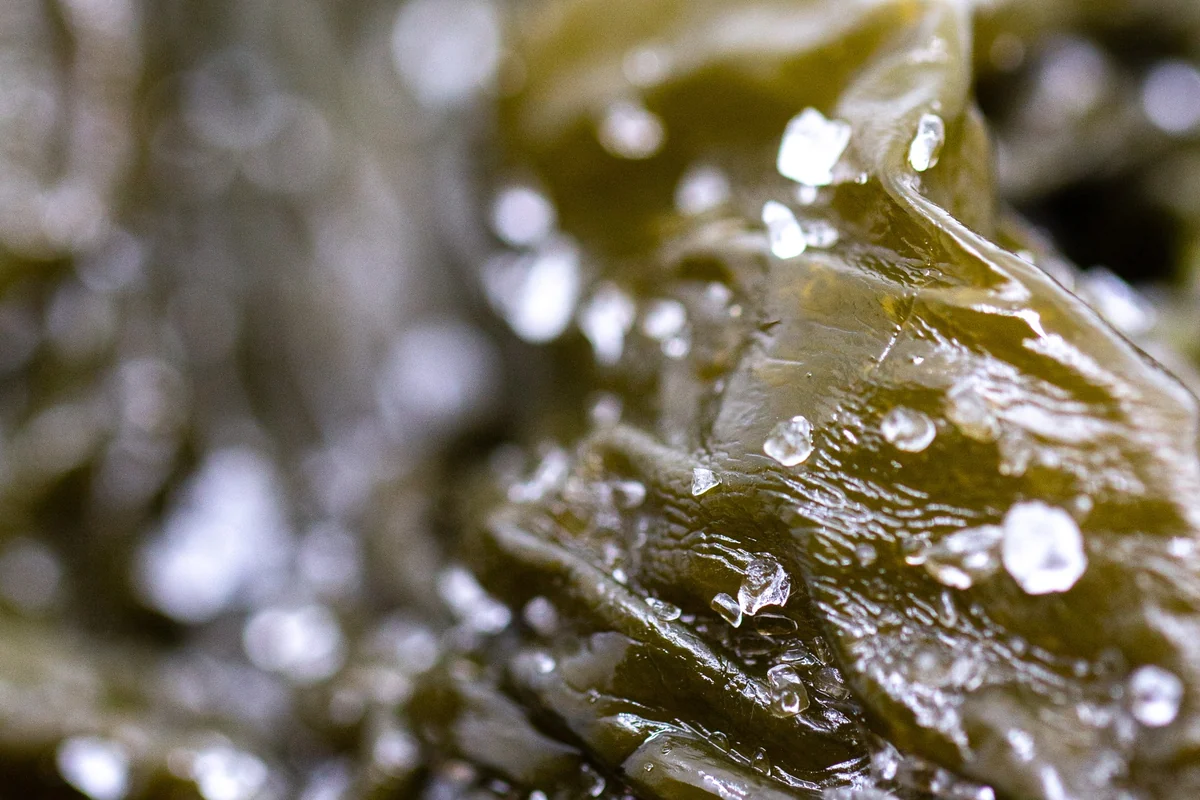
Seaweed always covered in its salt
The bottom of the fridge rather than the door.
Can you freeze fresh seaweed?
Yes, you can freeze fresh seaweed, as long as you accept that it loses water when it thaws, and with that water some of its soluble compounds.
An experimental study on Alaria esculenta measured it: after industrial freezing, thawing releases an exudate of 57% of the fresh weight (Sund et al., 2024). Out of 100 g of seaweed, more than half ends up as juice at the bottom of the bowl. Speed changes everything: 20% loss with fast freezing, up to 42% with slow freezing. This exudate carries off mostly minerals, alanine, aspartic acid and mannitol, in other words part of the seaweed's sweet flavour.
Think of a bottle of water forgotten in the freezer: when the cold arrives slowly, the water forms big crystals that damage the cells, and once thawed, the seaweed leaks like a pierced waterskin.
In practice, it all comes down to speed. Spread the portions flat in a thin bag, because a thin layer freezes much faster than a block. Plan one portion per use, thaw it in the fridge and keep it for seasoning, since the texture becomes softer. It's the same logic as for preserving fruit and vegetables for winter: you freeze the surplus in portions that you use one by one.
Freezing a seaweed tartare
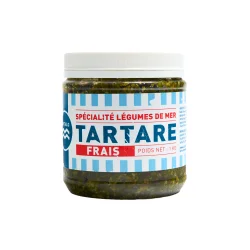
Tartare is an already seasoned mix, and no study measures what freezing does to it. That said, it's something I've done for years because, when I make 3 kg of garlic tartare, I don't want to eat it all within the next 3 weeks. So I usually freeze about half. I haven't noticed any change in taste or texture and this practice suits me very well.
Assortment of 4 seaweeds: separate or mixed?
On July 28, we were asked whether it was better to keep the four seaweeds of the assortment separate or put them together in a single jar. My answer: separate.
Each seaweed has its own texture and use, and mixing them forces you to desalt everything at the same time. Kombu, thick, goes into broth; dulse and sea lettuce, tender, are eaten raw; wakame finds its place in a salad.
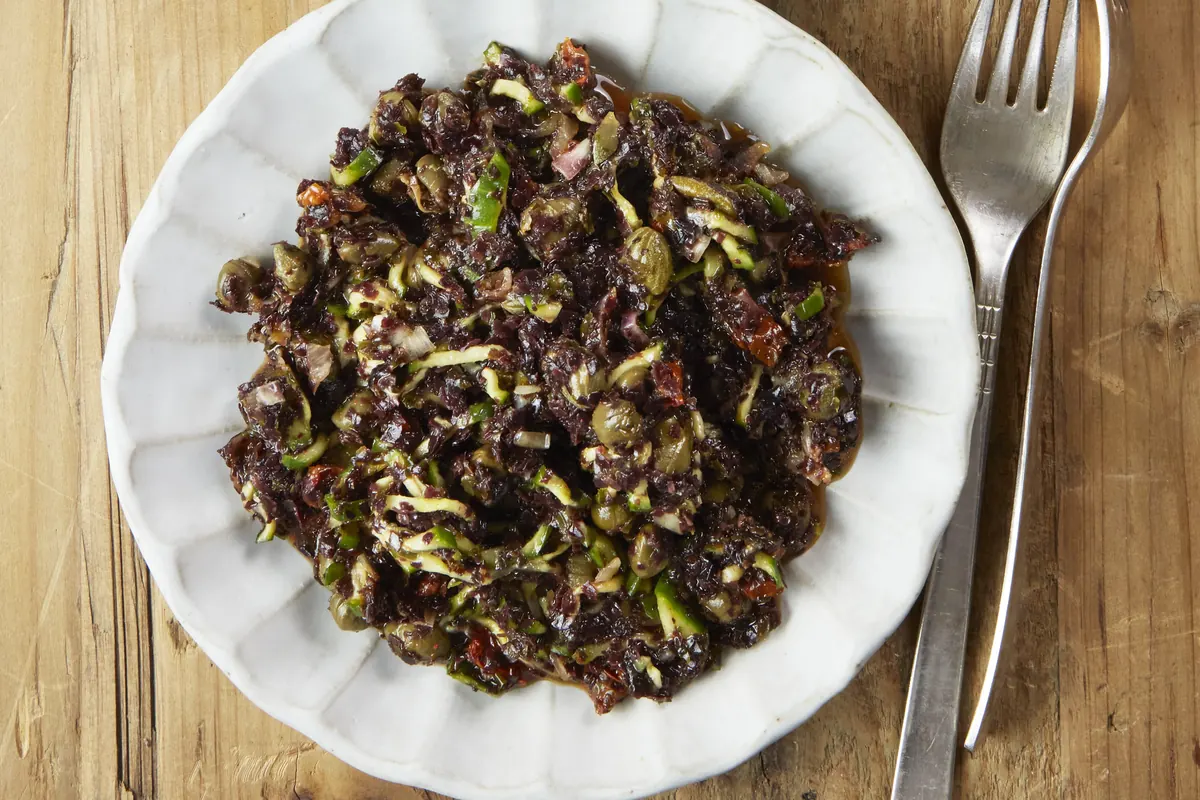
If you prefer a ready-to-spoon mix, that is precisely the role of the fresh seaweed tartare.
Take out the quantity for the day, rinse it under cold water, then let it soak in a bowl of fresh water; taste, and change the water if it is still too salty. The rest waits in its salt, in the fridge, without losing its protection. No cooking: the one exception is fresh kombu, infused in a hot broth below boiling point, whereas fresh wakame, fresh sea lettuce and fresh dulse are eaten raw. Of course you can cook them, but it's not something I recommend. Personally I find it a real shame to cook seaweed outside of broths.
What remains is use, and the question of how to prepare fresh seaweed without following a recipe.
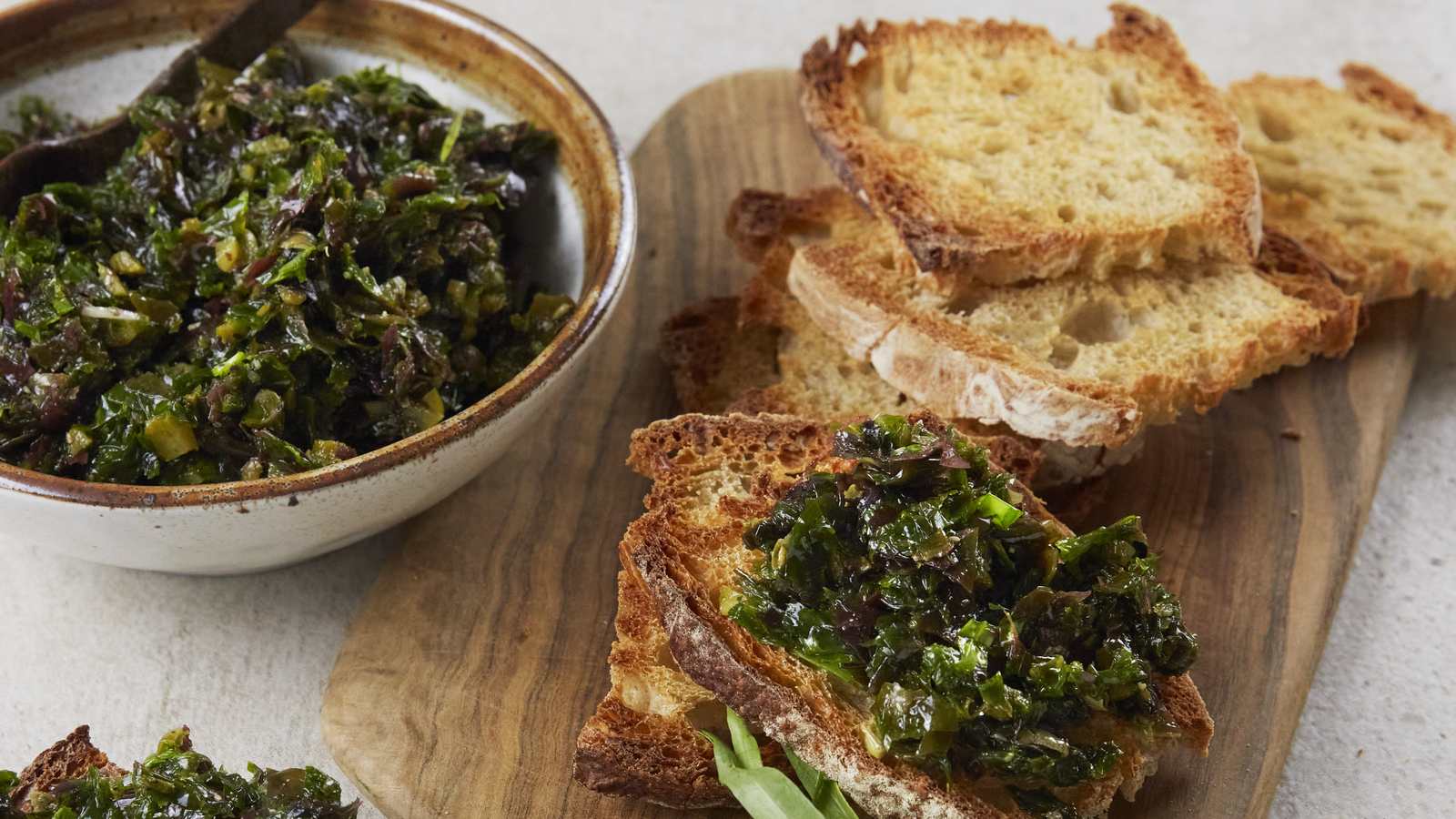
No recipe needed. A spoonful on a slice of bread, a few strands in a salad or on raw vegetables, a bit blended into a vinaigrette, another on a breakfast toast, and there you go, already enough to slip some into every meal. On a hot dish, grains or steamed vegetables, add the seaweed after cooking, off the heat, at the moment of serving. That's an important point: don't stir seaweed in at the start of a cooked recipe.
Why off the heat? They keep their texture and that iodine taste you come looking for in the first place. Fresh seaweed never goes in a frying pan or a deep fryer: it is eaten raw, or placed on a lukewarm dish. A few spoonfuls here and there add variety to the plate, as part of a varied and balanced diet and a healthy lifestyle.
The day you open the jar, make two piles. What you'll eat in the coming days stays in the fridge, covered in its salt. The rest goes straight into the freezer, in portions, before it has started to age.
That may be the simplest answer to the question of how to store fresh seaweed: don't give it time to spoil.
In reality, seaweed works like a sponge: it concentrates what the water it grows in contains, including cadmium, lead, arsenic and iodine. Saying so is part of the job. Should you be wary of every bowl of seaweed salad because of that? No, you mostly need to know how to read the guidelines.
ANSES proposes a maximum content of 0.35 mg of cadmium per kilo of dry matter (ANSES, 2020). In the data analysed by the agency, 26% of the samples exceeded the value of 0.5 mg/kg of dry matter recommended until now in France. A little more than one sample in four, then: enough to justify a stricter threshold, without making seaweed a food to avoid.
Brown seaweeds like wakame and red ones like nori are the most affected, and the agency also points to hijiki, eaten with rice, for inorganic arsenic. With the 0.35 mg/kg threshold, the share of seaweed in the tolerable dose of cadmium would go from 19% to 11.5%.
On iodine, ANSES calls for vigilance and refers to the EFSA safety limit, 600 µg per day for an adult (ANSES, 2018). Laminaria and Saccharina, the kombu family, are among the seaweeds richest in iodine: kombu is therefore measured by the pinch. The agency advises against seaweed without medical advice for people with a thyroid, heart or kidney disorder, and for pregnant or breastfeeding women. For a healthy adult, small amounts of seaweed have their place as part of a varied and balanced diet and a healthy lifestyle.
At European level, Recommendation (EU) 2018/464 asks Member States to monitor arsenic, cadmium, lead, mercury and iodine in seaweed, with a view to possible maximum levels (European Commission, 2018).
What Biovie analyses
Biovie has its seaweed analysed and publishes the results. An analysis tells you what a batch contains on a given date; it does not guarantee the absence of every contaminant, and that is precisely why we keep analysing. The day this European monitoring leads to common maximum levels, choosing your seaweed will become simpler for everyone, and I'm hopeful of seeing that day come.
Frequently asked questions
How long does fresh seaweed last in the fridge?
Only a few days if it isn't salted: 7 to 9 days at +2.8 °C for washed kelp in a Danish study, sometimes 2 to 4 days at 5 °C in a Scottish study. In salt, in a closed jar, it keeps until the date shown on the label, because salt and cold slow down bacteria.
Can you freeze fresh seaweed?
Yes, ideally fast and in small portions. On Alaria esculenta, thawing loses 20% of the fresh weight as exudate after fast freezing, against up to 42% after slow freezing. Spread the seaweed flat in a thin bag, one portion per use, and thaw it in the fridge.
Do you need to refrigerate seaweed after opening?
Always. Once the jar is open, keep the seaweed at the bottom of the fridge, covered in its salt or brine, and help yourself with a clean spoon. Never put seaweed that has left the jar back into it, and freeze in portions whatever you won't eat in the coming days.
How do you prepare fresh seaweed?
By rinsing it, desalting it in a bowl of fresh water, then eating it raw or adding it to a dish after cooking, off the heat. No frying pan or deep fryer: only kombu is heated, infused in a broth below boiling point. On a slice of bread or in a salad, the others keep all their texture.
How can you tell if fresh seaweed has gone bad?
An unpleasant smell, a slimy texture and a dull colour are signs of bacterial spoilage: in that case, throw it away. In the storage studies, the end of shelf life coincides with a high bacterial load, above 10 million bacteria per gram, and with a loss of sweetness and umami.
Is eating seaweed good for your health?
Seaweed has its place as part of a varied and balanced diet and a healthy lifestyle: it provides minerals, including iodine. The amount matters, and ANSES advises against it without medical advice in case of a thyroid, heart or kidney disorder, pregnancy or breastfeeding. For the details, see the nutrients in sea seaweed.
How do you dry seaweed?
It's possible, but fresh seaweed you've bought is better kept in the cold or in the freezer. Drying mostly concerns seaweed that has just been harvested: it then becomes a different product, which keeps in a dry place in a closed jar. For a jar of seaweed in salt, freezing in portions remains the simplest gesture.
The information presented in this article is provided for information purposes only and does not constitute medical advice. Consult a healthcare professional before making any change to your diet or supplementation.