How to Become Vegan Gradually: Where to Start, Step by Step
To work out how to become vegan without turning everything upside down, start by adding plant-based meals you already like, then remove animal products one category at a time, and plan for vitamin B12 and iodine from the very beginning. Count on several weeks: a habit takes a median of 66 days to settle in. At Biovie, we built this page on the positions of the Academy of Nutrition and Dietetics, the German Nutrition Society and EFSA.
Eighteen days for some, two hundred and fifty-four for others: that is how long it took, in the most cited study on habits, for a new daily gesture to become automatic. Nobody changes at the same pace.
For my part, I have been eating plant-based since the early 1990s, and I did not change everything in one day. I trained as an ISTOM engineer, and I spent about ten years supporting farmers converting to organic: a farm is not converted on a Monday morning. Neither is a plate.
How to become vegan gradually: where to start?
A big preliminary point: I really don't care about labels or categories. Food matters to me, respecting my values does too, but so does social life. My compass has always been how I feel, physically and emotionally. This article is about veganism, because it is a clearly defined line; for my part, I talk more about plant-based eating. That said, here are the five steps of how to become vegan for beginners, in the order I recommend them:
Clarify your reason: animals, the environment or health.
Add plant-based meals you already like.
Replace one meal a week, then one a day.
Remove one category at a time: meat, fish, eggs, dairy.
Plan for vitamin B12 and seaweed as soon as you completely remove animal products.
This order keeps meals satisfying at every stage. We add before we remove, and it is this progression that makes the transition sustainable. That is how to become vegan in stages while protecting your enjoyment of eating.
The "all or nothing" of the first Monday seems to me, on the contrary, the shortest road to giving up. If you wonder how to become vegan slowly, the answer starts there. I speak from experience. When I discovered living food, in the early 2000s, I spent a year and a half eating 100% raw, almost religiously, and I even proselytised, before coming back to something more sustainable, with a little cooked food. It was a personal experiment, and I don't offer it to anyone as a model.
Then there is the difference between vegetarian and vegan, which confuses many beginners. A vegetarian eats no meat and no fish. A plant-based eater (végétalien in French) puts no animal product on the plate: no eggs, no dairy, no honey, no insect-derived colourings. A vegan applies the same rule to the rest of their life, from leather to wool.
Everyone moves at their own pace: there is no right speed, only yours.
How long does it take to become vegan?
In a study published in 2010 (Lally et al., 2010), 96 volunteers adopted a new daily behaviour of their choice and followed it for 84 days. It took them a median of 66 days for the gesture to become automatic, with a range of 18 to 254 days depending on the person.
Sixty-six days is a little over two months: start at the September back-to-school and the gesture feels natural by early November. Automatic means you do it without thinking, like brushing your teeth. The median is the person in the middle: half of the participants got there faster.
The famous "21 days" have no scientific basis of this kind. Above all, in this study, a single missed day did not slow down habit formation. A slip cancels nothing.
One caveat only: the study is small, run on students with simple gestures, and it says nothing specific about veganism, which asks you to change several gestures at once, hence my advice to install them one after the other.
Here is an indicative timetable for how to transition to a vegan diet, to stretch as you need if you want to become vegan gradually:
Period
What you do
To plan for
Month 1: add
Plant-based dishes you already like; one plant-based meal a week.
Two or three backup recipes.
Month 2: replace
One plant-based meal a day; meat removed, then fish.
Start vitamin B12.
Month 3: remove
Eggs and dairy removed.
B12 continuously, a check on iodine.
If one month takes you two, take them: the timetable adapts to you, never the other way round.
Add before you remove: the basics of a vegan plate
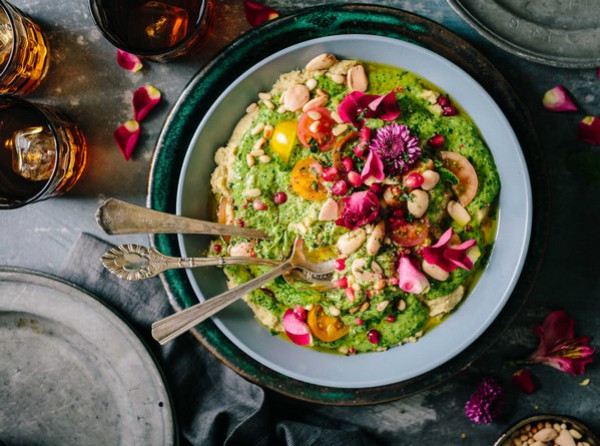
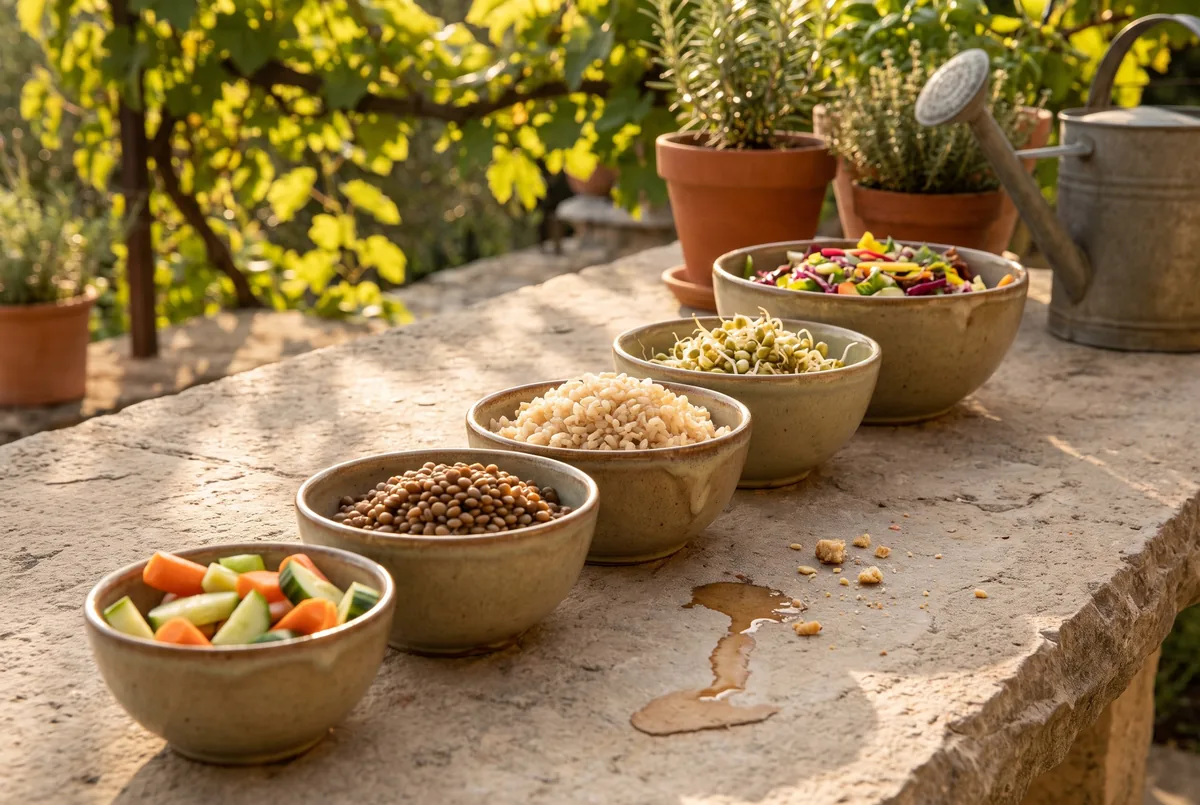
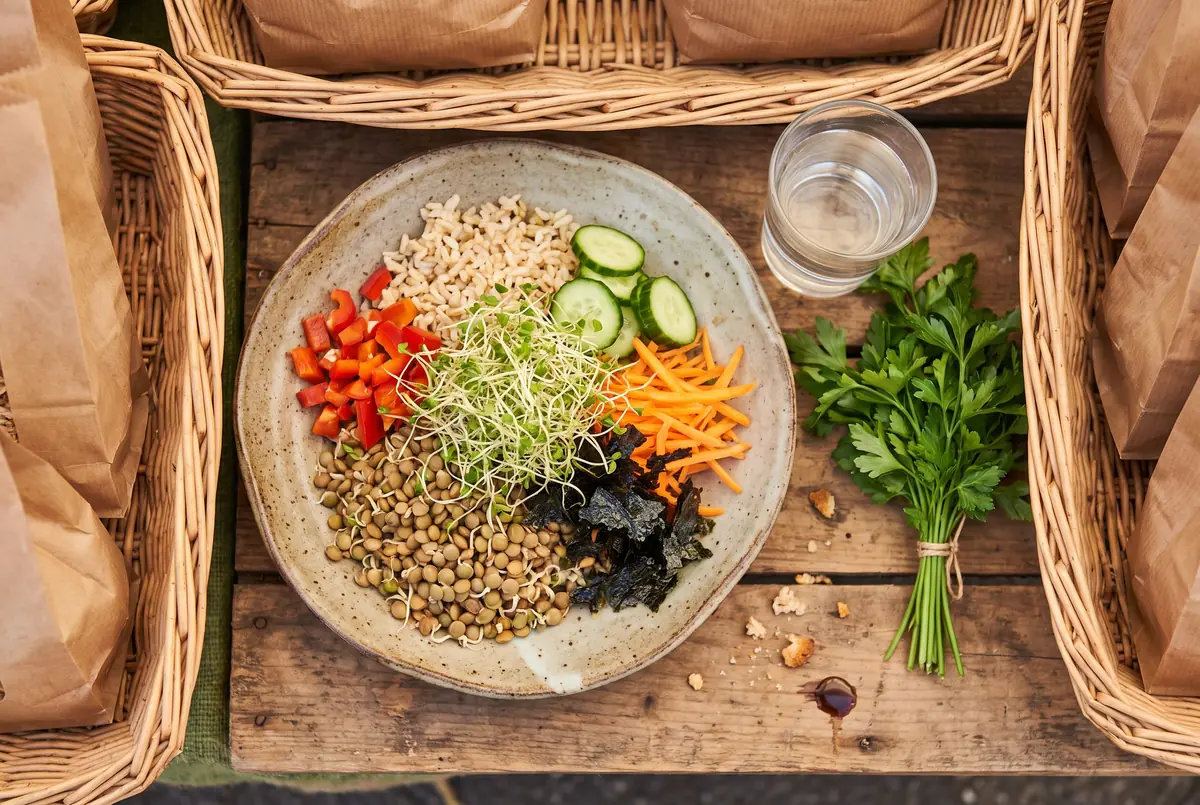
Take a deep plate and fill it in this order: a legume, a whole grain, raw and cooked vegetables, a handful of sprouted seeds or nuts, then a fermented condiment or a few seaweed flakes. You have a complete meal. We are not here to fill a stomach, but to nourish an organism and feel good in our own skin, comfort foods included.
Then comes the question you hear at every family meal: what about protein? A systematic review of 141 studies (Neufingerl and Eilander, 2022) is reassuring. Protein intakes of vegetarians and vegans are lower than those of meat eaters, but remain within recommendations. Less than on a meaty plate, then, but enough.
For those wondering which meal to prepare day to day as a vegan, here are three simple examples:
In the morning, a seasonal fruit smoothie + spirulina with a small teaspoon of activated almond butter
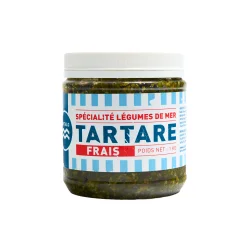
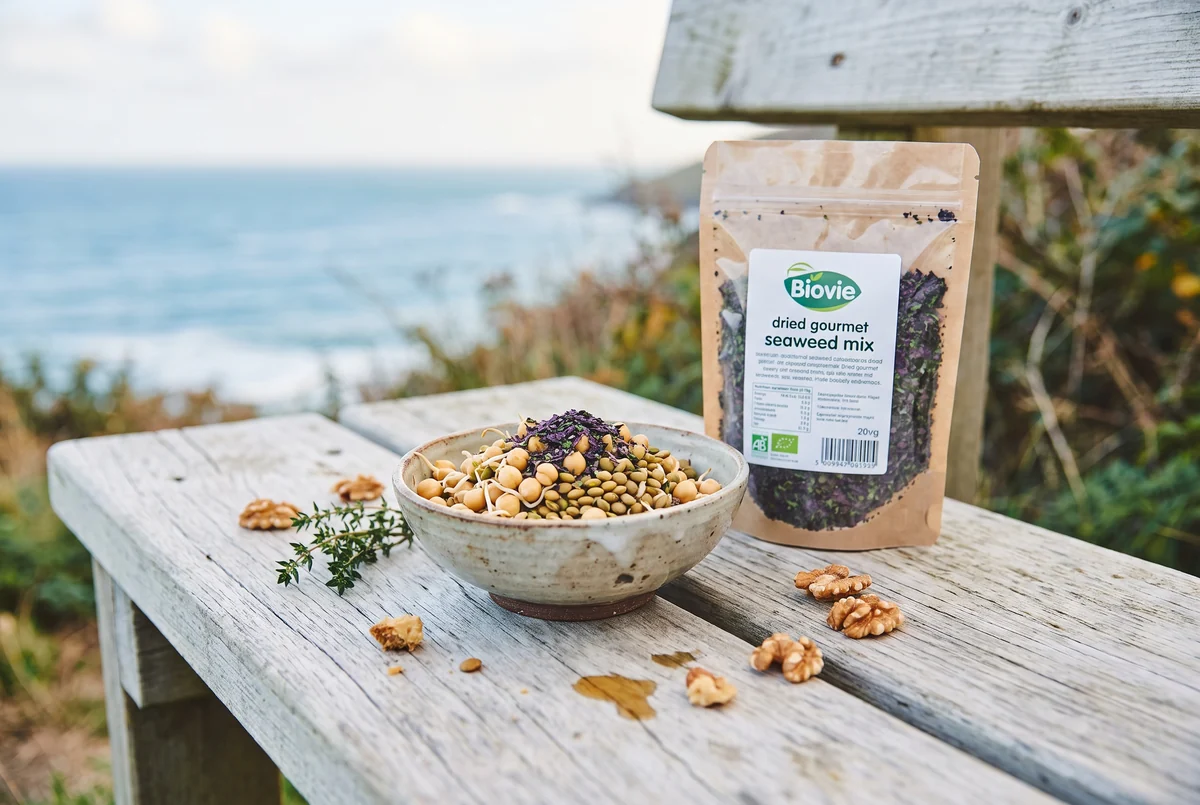
At noon, lentils, ideally soaked then sprouted then cooked, or an avocado with seaweed tartare on crackers (my own go-to midday meal), or quinoa, raw vegetables, a handful of sprouted seeds and seaweed flakes sprinkled on without cooking
On a lazy evening: a raw soup from the blender (with a base of frozen peas), or chickpeas cooked in advance, lacto-fermented vegetables, a drizzle of Vivolia olive oil
Having two or three lazy-night dishes in reserve, for the evenings when you get home exhausted, is worth every recipe book, in my view.
Organising your meals without spending your evenings on it
The biggest time saver comes down to one appointment a week: soak a large quantity of legumes the night before, cook them the next day, then divide them into jars.
For these jars, as for my stock of dry foods, I use vacuum sealing with the BocUp kit: a bell and a small manual pump, with no electricity and no plastic bag. It works with the glass jars you already have, if they have "shoulders" and a 65 or 84 mm lid: nothing else to buy. According to the manufacturer, fresh produce keeps up to 5 times longer, and a vegetable soup lasts 8 to 10 days instead of 2. Dry legumes, grains and seeds for sprouting stay protected from humidity and moths.
Vacuum sealing replaces neither the fridge nor the freezer, and it does not sterilise: your jars of cooked legumes stay in the refrigerator. See also the advantages of vacuum sealing.
If there is one thing not to leave to chance when you work out how to become vegan without deficiencies, it is vitamin B12. The EFSA reference intake is 4 µg a day for adults aged 18 and over, 4.5 µg during pregnancy and 5 µg during breastfeeding (EFSA, 2015). Four micrograms is four millionths of a gram: invisible to the naked eye, but to be covered by a reliable source.
The German Nutrition Society sets a clear condition: a B12 supplement taken continuously, with regular monitoring of your status by a doctor (Klug et al., 2024). The Academy of Nutrition and Dietetics speaks of "reliable sources": fortified foods or supplements (Melina et al., 2016). Vitamin B12 contributes to the normal functioning of the nervous system, as part of a varied and balanced diet and a healthy lifestyle.
And seaweed? Seaweed is not a sufficient and truly reliable source of vitamin B12, and I say so as the co-author of a book on seaweed. See what nori really contains in B12.
Iodine is the second nutrient to plan for: adult reference intake of 150 µg a day, 200 µg during breastfeeding (EFSA, 2014). A systematic review in adults from industrialised countries (Eveleigh et al., 2020) finds the lowest median urinary iodine concentration in vegans, followed by vegetarians, with a higher risk without seaweed or a supplement. Iodine contributes to the normal functioning of the thyroid, as part of a varied and balanced diet and a healthy lifestyle.
The paradox is that excess exists too. The highest mean intakes in this review, 1,448 µg a day in vegan women, came from heavy seaweed consumers: almost ten times the reference intake. Hence my advice: a small, regular amount of seaweed rather than big portions from time to time.
According to the German Nutrition Society, you should also keep an eye on protein, long-chain omega-3s, vitamin D, riboflavin, calcium, iron, zinc and selenium. The 2022 review finds that people who eat plant-based have lower intakes or status of B12, vitamin D, iron, zinc, iodine and calcium, but higher ones of fibre, folate, vitamins C and E and magnesium. And shortfalls exist in every diet, omnivores included. Nobody eats perfectly.
Nutrition authorities do not say quite the same thing. In 2016, the Academy of Nutrition and Dietetics judged vegetarian diets, vegan ones included, appropriate for all stages of life if well planned. In 2024, the German Nutrition Society judges the vegan diet favourable to health in healthy adults, with B12, but takes no position for or against in children, adolescents, pregnant or breastfeeding women and older people, for lack of sufficient data.
For these groups, it recommends support from a qualified professional during the transition. Of course, this caution can disappoint when you are convinced. It has its logic, though. The German position is more recent and judges the data on these groups too limited to decide.
On the essentials, the two agree: a well-planned diet and a reliable source of B12. My practical advice: a baseline blood test for peace of mind, and a dietitian if you are pregnant, if you are breastfeeding, for a child or a teenager, or at an advanced age. For a healthy adult, as part of a varied and balanced diet and a healthy lifestyle, regular monitoring of B12 status remains the minimum.
Staying motivated and handling slips
Come back often to the reason you noted in step 1, especially on days of doubt: it is what holds up against social pressure, far more than a list of bans.
At a restaurant, I often ask the chef for a dish off the menu, and I have never been sent packing: most are happy to step out of their routine. Before leaving, I eat a banana, so as not to come out hungry if the menu offers only a starter salad. A restaurant should remain a pleasure outing and a shared moment.
Slips, for their part, will happen. Nothing is lost. Think of roly-poly toys, those weighted figures that always return upright when you push them: a pizza with friends tips you over, then you come back. The habit study points the same way: a single missed day did not slow the habit down.
As for the planet, the German Nutrition Society judges the vegan diet particularly favourable to the environment and recommends a clear reduction in animal products. I am convinced that in twenty years, a plate without animal products won't raise an eyebrow at a family table.
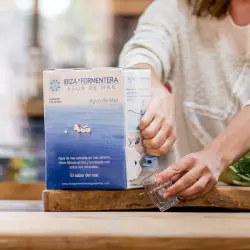
The little essentials of living cuisine: Water To Go filter bottles, BocUp bells and pumps for vacuum sealing, plant milk bags, stainless steel straws, coconut machete, measuring spoons. Everything you need to keep your homemade preparations longer and cut down on disposables every day, without investing in a large appliance. To start, a filter bottle and a plant milk bag already cover the essentials of everyday zero waste; for storage, BocUp bells keep dishes prepared in advance fresh for longer., 17
products
What is the difference between vegetarian and vegan (végétalien)?
A vegetarian excludes meat and fish, but often keeps eggs, dairy and honey. A plant-based eater (végétalien) removes all animal products from the plate. A vegan applies the same rule to the rest of their life, giving up leather and wool.
What does a vegan meal look like?
A complete vegan meal combines a soaked then cooked legume, a whole grain, vegetables and sprouted seeds. For example, lentils, brown rice, raw vegetables, sprouted seeds and a few seaweed flakes added off the heat. In the morning, a smoothie with almond butter is enough.
Can a vegan drink milk?
No, not animal milk, but there is no shortage of alternatives. You can choose a plant-based drink from the shops, preferably fortified, or make a homemade tiger nut milk. For vitamin B12, don't count on these drinks alone: a continuous supplement remains the rule.
How long does it take to become vegan?
Count on several weeks, often more than two months. In the reference study on habits, a new daily gesture took a median of 66 days to become automatic, from 18 to 254 days depending on the person. A single missed day did not slow the process.
What should you supplement when you are vegan?
Vitamin B12 first, continuously, as soon as you remove animal products: the EFSA adult reference intake is 4 µg a day. Keep an eye on iodine too (150 µg a day), because vegans have the lowest iodine status. For the rest, see a professional.
Is eating vegan healthy?
Yes for a healthy adult, if the diet is well planned and vitamin B12 is supplemented, according to the Academy of Nutrition and Dietetics and the German Nutrition Society. For children, adolescents, pregnant or breastfeeding women and older people, professional support is recommended.
The information presented in this article is provided for information purposes only and does not constitute medical advice. Consult a healthcare professional before making any change to your diet or supplementation.