




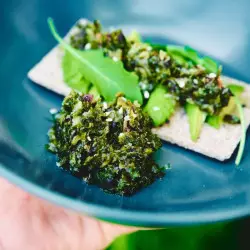

Here the carrot and the courgette are not diced but peeled into long ribbons: they soften on their own in the hot broth, without ever turning to mush. The miso goes in once the pan is off the heat, which is what stops it turning gritty and what preserves the round flavour of unpasteurised miso. A few minutes steeping under a lid is enough to soften the ribbons and the wakame, while the goji berries add little sweet notes against a salty broth. Serve it as a light broth for everyone at the table, or blend the whole pan for a baby starting on solids: either way, one small saucepan and a few minutes of active work.
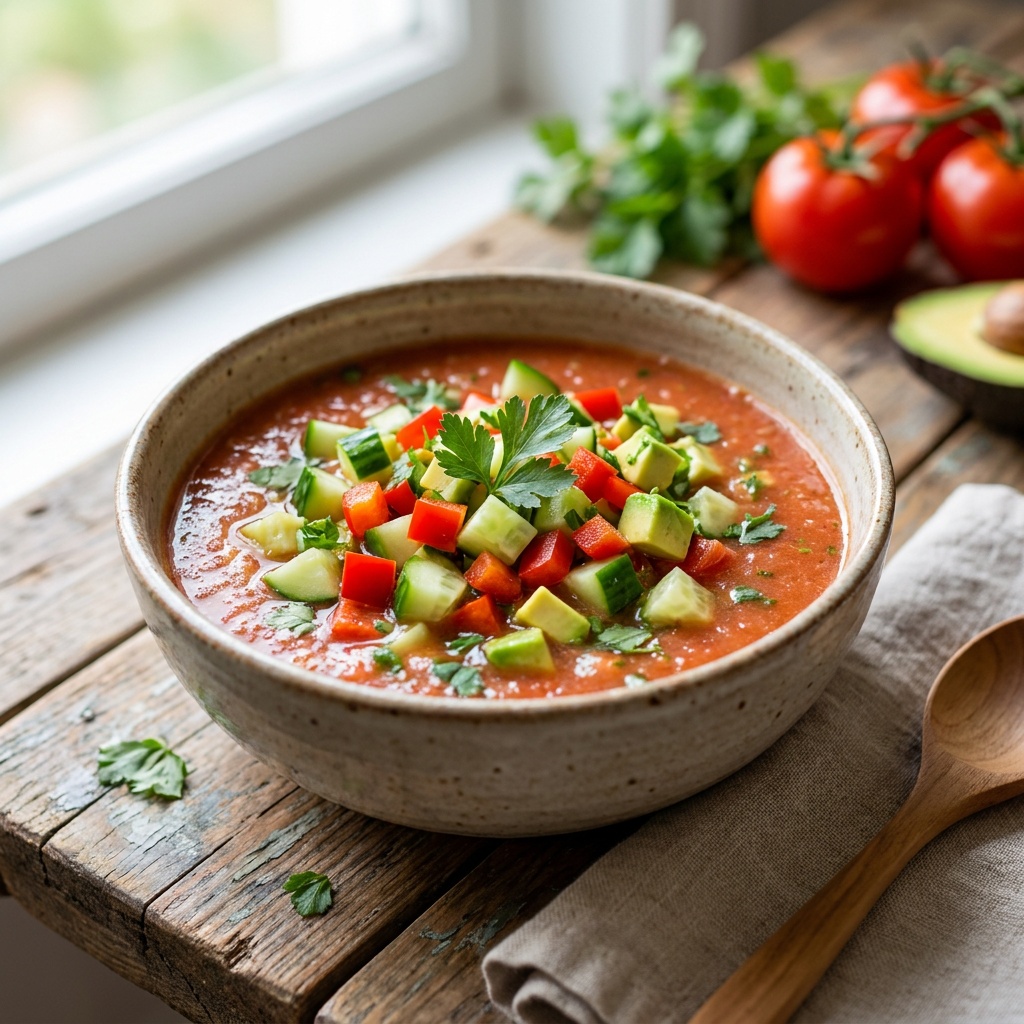
Gentle miso soup with vegetable ribbons

Share this article
Ingredients
- 1 tablespoon miso paste (organic and unpasteurised, for active cultures)
- 1 1/2 cups filtered water
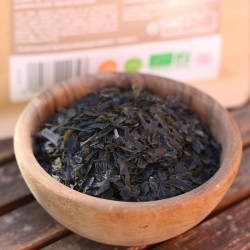
- 1 tablespoon wakame, crushed
- 1 small carrot, peeled into fine ribbons
- 1/2 medium courgette, peeled into fine ribbons
- 1 tablespoon goji berries
- A generous helping of cuddles, for serving
Preparation
- Bring the filtered water to a full boil in a saucepan, take it off the heat and put the lid on.
- Off the heat, whisk in the miso paste until it has fully dissolved.
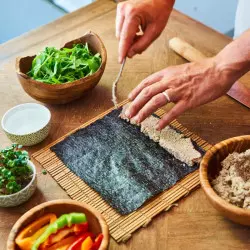
- Add the wakame, the carrot and courgette ribbons, then the goji berries. Cover again and let everything steep for five to ten minutes, until the vegetables have gently softened.
- Serve as it is in bowls, or, for a baby, blend everything until smooth and creamy.
Tip
For a baby just moving on from purees, set aside a few carrot ribbons before blending: they can pick them up by hand. The broth thickens slightly as it cools, so add a splash of warm water if you reheat it.
The full range Dry algae
10 products

FAQ: your questions about miso soup with vegetable ribbons
What are the benefits of miso soup?
Miso soup owes most of its value to the fermentation of the miso paste, which runs from several months to several years. It provides B vitamins, minerals, enzymes and, in unpasteurised versions, live lactic bacteria. Served very hot but never boiled, it makes a light, salty and satisfying broth that Japanese tradition places at breakfast as readily as at dinner. Add seaweed and vegetables, as here, and you have a complete dish in minutes.
How can I eat wakame?
Dried wakame rehydrates in five to ten minutes in a hot or cold liquid: exactly what happens in this soup. Crushed, it also slips into a cucumber salad, a dressing, a bowl of grains or a pan of vegetables. Allow a small tablespoon of dry seaweed per person, as it swells considerably. Its flavour stays mild and lightly briny, far more discreet than kombu or dulse.
What are the benefits of unpasteurised miso?
Pasteurisation stabilises the product but destroys the micro-organisms produced by fermentation. An unpasteurised miso, sold chilled and often in a tub that 'breathes', keeps its cultures and its enzymes. That is why the recipe insists on one point: take the pan off the heat before stirring in the miso. Above a certain temperature, what makes the product valuable disappears and all that is left is a salty condiment.
Is miso a probiotic?
Unpasteurised miso does contain live lactic bacteria, in the same way as a lacto-fermented vegetable or a kefir. That said, the quantity varies a great deal from one tub to another, and some of those micro-organisms do not survive the journey through the stomach. Miso is above all a flavourful fermented food, rich in enzymes and in compounds produced by fermentation, better worked into your meals regularly than expected to work wonders in a single serving.
Share this article