What if a seaweed eaten in Japan for centuries had caught the attention of researchers? Fucoxanthin, this brown pigment of marine seaweeds, intrigues researchers all over the world. Frankly, when you know that the Japanese eat between 4 and 7 grams of seaweed a day compared with less than one gram in France, it is fair to ask some questions.
The short answer: research is interested in its possible role in thermogenesis and lipid metabolism, but no effect has been demonstrated in humans to date. It is not a miracle pill. Here is what you need to know to form your own opinion, far from marketing promises and fashionable diets.
What is fucoxanthin?
A unique pigment of brown seaweeds
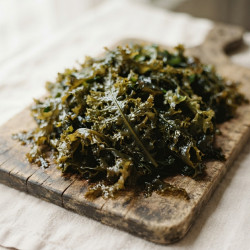
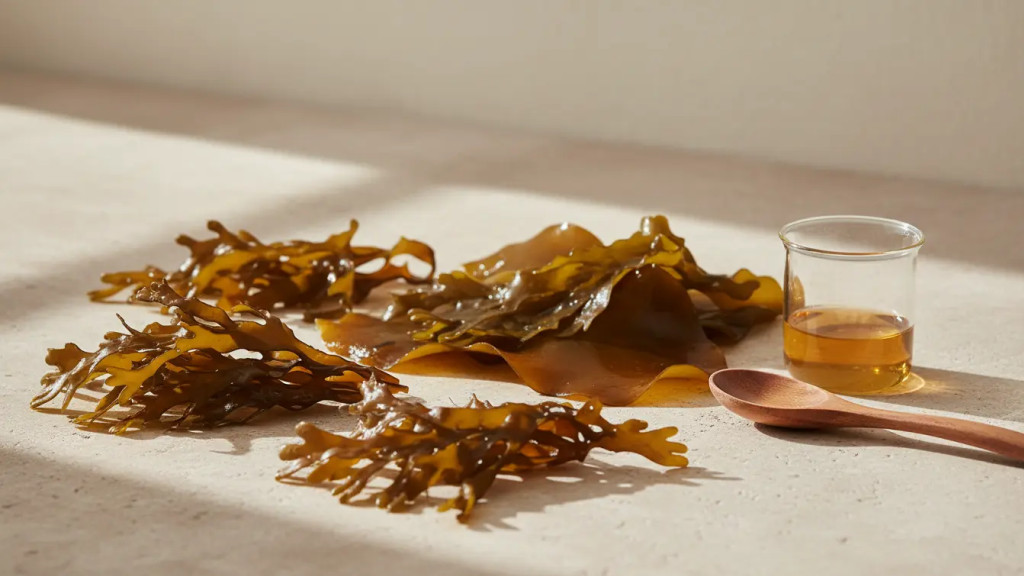
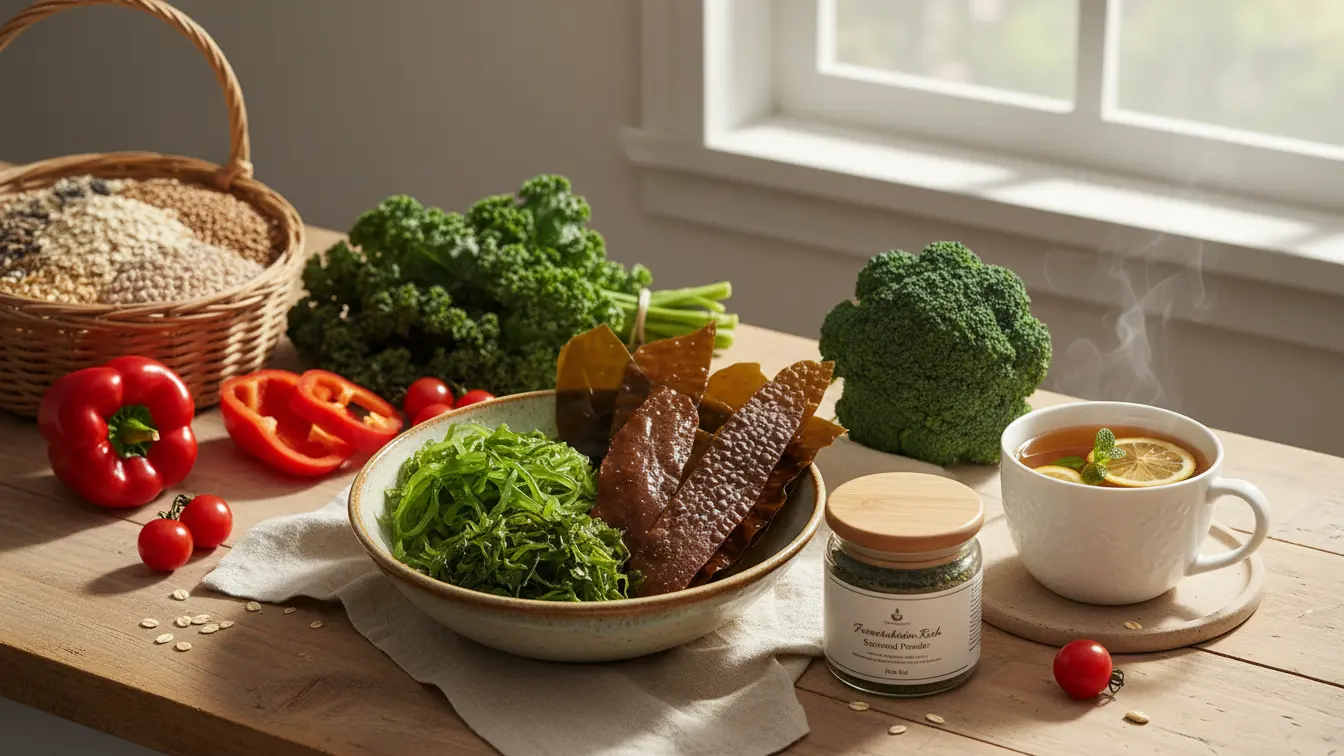
Fucoxanthin is a natural brownish-orange pigment, responsible for the characteristic colour of brown seaweeds such as wakame, kombu or kelps. From a scientific point of view, it is a carotenoid, the same family of molecules as the beta-carotene in carrots or the lycopene in tomatoes.
What makes fucoxanthin truly remarkable is its importance in the marine world. It accounts for more than 10% of all the carotenoids present in the oceans. In concrete terms, it is one of the most abundant pigments on our planet, and yet it remains little known to the Western public. To understand all the benefits of marine seaweeds, I invite you to read our complete guide to sea vegetables and microalgae.
With Aurélie, we have been working with seaweeds since our beginnings at Biovie in 2007. And I must admit that fucoxanthin is one of those discoveries that particularly fascinate us, because it perfectly illustrates everything seaweeds have to offer beyond their simple richness in minerals.
Where is it found naturally?
The main food sources of fucoxanthin are edible brown seaweeds. Here are the most accessible ones:
- Wakame (Undaria pinnatifida): the most practical and most studied source is wakame. Its mild taste and pleasant texture make it the easiest brown seaweed to include in your daily diet. To learn everything about this seaweed, read our complete guide to dulse, wakame, sea lettuce and sea spaghetti.
- Kombu (Laminaria japonica): this thick seaweed, traditionally used to make Japanese dashi, also contains interesting amounts of fucoxanthin. Discover all about it in our article on dried kombu.
- Hijiki and kelps: other brown seaweeds that complete the range of natural sources of this pigment.
In terms of quantities, wakame contains about 0.5 to 1 mg of fucoxanthin per 100 grams of fresh seaweed. That may seem little, and any effects of regular dietary consumption remain to be demonstrated.
It is important to understand that fucoxanthin is not an isolated nutrient to be extracted and put into capsules (even if some laboratories do so). In the whole seaweed, it works together with all the other compounds present: fibre, minerals, fucoidan, alginates. This is the overall approach we favour at Biovie.
Why is it the subject of so much research?
For about twenty years, fucoxanthin has attracted researchers' attention for several reasons. First, populations that traditionally eat brown seaweeds have markedly lower obesity rates than Western countries: only 4% in Japan compared with almost 17% in France. Correlation is not causation, of course, but it got scientists thinking.
Next, the first laboratory studies explored possible mechanisms of action. Researchers examined several metabolic pathways at once, which is rare for a natural compound.
Fucoidan, another major compound of brown seaweeds, is also the subject of much research, notably on immunity and inflammation. To go further on this topic, I recommend our detailed article on fucoidan, the brown seaweed compound studied in longevity research. This convergence of scientific interest in brown seaweeds is no coincidence: these marine plants are true nutritional treasures.
Fucoxanthin and metabolism: what studies show, and their limits
Thermogenesis: the brown fat lead
This is the most studied mechanism concerning fucoxanthin. To understand it properly, we first need to distinguish two types of adipose tissue in our body:
White fat is the one we usually worry about. It is a storage tissue that accumulates excess calories in the form of triglycerides. The more of it we have, the more weight we carry. It is located mainly around the abdomen, thighs and hips.
Brown fat, on the other hand, works completely differently. It is a thermogenic tissue, which means it uses energy to produce heat. Newborns have a lot of it to maintain their body temperature. It was long thought that adults had almost none left, but recent research has shown that this is not quite accurate.
And this is where fucoxanthin comes in. According to work by Professor Maeda and his team published in 2005, carried out on animals, this pigment was observed to stimulate the expression of a protein called UCP1 (uncoupling protein 1) in white adipose tissue, a mechanism linked to thermogenesis. These observations have not been confirmed in humans.
Research on lipid metabolism
Beyond thermogenesis, researchers have looked at the possible role of fucoxanthin in the way our body handles dietary fats. Laboratory work has studied its influence on lipid accumulation in fat cells and on their use as a source of energy.
This work does not allow any conclusion about an effect in humans: there is no question of melting fat away as some advertisements claim.
The available studies mainly involve people who are moderately overweight and remain to be confirmed over the long term.
Research on blood sugar and insulin
A lesser-known aspect of fucoxanthin research: some studies look at its possible link with blood sugar regulation and insulin sensitivity, insulin being the hormone that regulates blood sugar levels.
Why does this interest researchers? Because insulin plays a central role in fat storage. When our insulin sensitivity decreases (what is called insulin resistance), our body tends to store more fat, particularly around the abdomen.
These lines of research remain to be confirmed by clinical trials: no effect on blood sugar or on fat storage has been established to date.
What the scientific studies really say
The main published results
A frequently cited study on fucoxanthin and weight was carried out by Abidov and his team, published in 2010 in the journal Diabetes, Obesity and Metabolism. It is a double-blind, placebo-controlled clinical study, the most rigorous scientific standard.
The authors report that participants who received 2.4 mg of fucoxanthin a day for 16 weeks lost an average of 5 to 7 kg, with a reduction in waist circumference and body fat percentage. These results concern a small sample and are not a promise: they remain to be confirmed by other trials.
Other studies have looked at thermogenesis and lipid metabolism, but these are mainly laboratory studies. The mechanisms of action remain largely research hypotheses.
If the subject interests you, you can also read our article on spirulina and weight: what scientific studies reveal.
The limits to be aware of
Frankly, it would be dishonest not to mention the limits of this research. And it is important to know them in order to form an informed opinion:
- Samples are often small: most studies involve a few dozen participants, which limits the statistical scope of the conclusions.
- Durations are relatively short: 16 weeks at most in most cases. There is a lack of data on long-term effects.
- The populations studied are specific: most of the research concerns overweight women with fatty liver disease. The results cannot necessarily be applied to everyone.
- Bioavailability varies: fucoxanthin is better absorbed with dietary fats. Absorption therefore also depends on how it is consumed.
What these limits tell us is that we should not expect miracles. Fucoxanthin remains a research topic, not a miracle solution. Seaweeds that contain it fit into an overall approach of a balanced diet and a healthy lifestyle.
Where is fucoxanthin found? Food sources and content
Weight is only one way into the subject. What also interests researchers are two enzymes that this pigment might influence, and which control much more than fat storage.
AMPK, the energy sensor of your cells
AMPK (AMP-activated protein kinase) is present in almost all living beings, from yeast to humans. It is the cell's fuel gauge: when energy reserves drop, it activates, restarts energy production, puts unnecessary expenditure on standby and stimulates autophagy, the recycling of damaged cell components. Its activity declines with age, and this decline accompanies most metabolic disorders.
Laboratory work has observed that fucoxanthin activated AMPK in a dose-dependent manner (Woo et al., 2009). Let us be clear straight away about the level of evidence: this is work on cells and animal models, not clinical trials in humans. It is a documented mechanism, not an effect demonstrated on your plate.
SIRT1, the enzyme associated with calorie restriction
Sirtuins, led by SIRT1, regulate metabolism, stress resistance and DNA repair. They are at the heart of the effects observed during moderate calorie restriction, the only strategy that reproducibly extends lifespan in several species. Laboratory work has also observed SIRT1 activation by fucoxanthin (Jeon et al., 2010), and the two enzymes reinforce each other: AMPK raises the NAD+ that SIRT1 needs, and SIRT1 in turn stimulates certain AMPK pathways.
Should we conclude that a seaweed salad replaces fasting? No, and no serious person claims so. But it places fucoxanthin in a family of molecules that speak the metabolic language of longevity, which explains the attention it has received for fifteen years.
The Okinawa thread
It is impossible to discuss this subject without mentioning Okinawa, the Japanese island with one of the highest densities of centenarians in the world, and where brown seaweeds have been on the daily menu for centuries. Correlation is not causation, and the Okinawan lifestyle obviously cannot be reduced to seaweed. But the observation is worth noting: the populations that eat it most regularly are also those that age best.
Fucoxanthin and fucoidan: two molecules not to be confused
The names are similar, and the confusion is constant. Yet they are two very different compounds, found in the same brown seaweeds: fucoxanthin is a fat-soluble carotenoid pigment, the one this whole article is about. Fucoidan, on the other hand, is a water-soluble complex sugar (a sulphated polysaccharide), concentrated in the slimy part of the seaweed.
What fucoidan has shown in mice
It deserves a mention here because it is the subject of one of the most discussed publications in the field of longevity. A team from the University of Rochester reported in 2025 that giving fucoidan to elderly mice increased median lifespan by about 13% in males, reduced frailty markers in both sexes and lowered epigenetic biological age by about one year.
The proposed mechanism is the activation of SIRT6, an enzyme involved in DNA repair and genome stability (a cousin of the SIRT1 mentioned above).
What this means, and what it does not mean
Let us say it clearly, because this kind of result spreads quickly and badly: this is a study in mice, published as a preprint, with doses unrelated to ordinary dietary consumption. No human trial has demonstrated any effect on longevity, and it would be dishonest to suggest otherwise.
What we can take away without exaggerating: brown seaweeds contain at least two families of molecules that ageing research takes seriously, and populations that have eaten them daily for generations tend to age rather well. That is reason enough to put them on your plate regularly, not to expect a longer life from them.
How to consume fucoxanthin every day?
The food approach: our recommendation
At Biovie, we always favour the food approach over isolated supplements. And for fucoxanthin, this approach makes perfect sense.
Wakame is a good starting point for getting fucoxanthin from your diet. Here is how to include it easily:
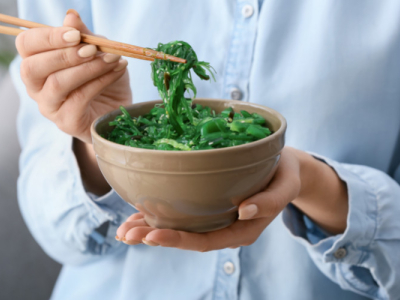
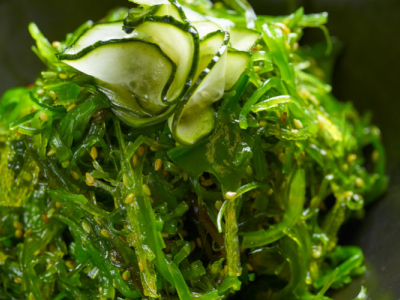
- In salads: rehydrate dried wakame in cold water for 5 to 10 minutes, season with soy sauce, rice vinegar and a little sesame oil. For a more elaborate recipe, discover our organic fresh seaweed tartare recipe.
- In soups: add it at the end of cooking to your miso soups or vegetable broths.
- As a side: sprinkle it over your rice, vegetable or fish dishes.
Five grams of dried wakame a day, i.e. 2 to 3 tablespoons, corresponds to a common serving of seaweed in the Japanese diet, easy to include in your meals.
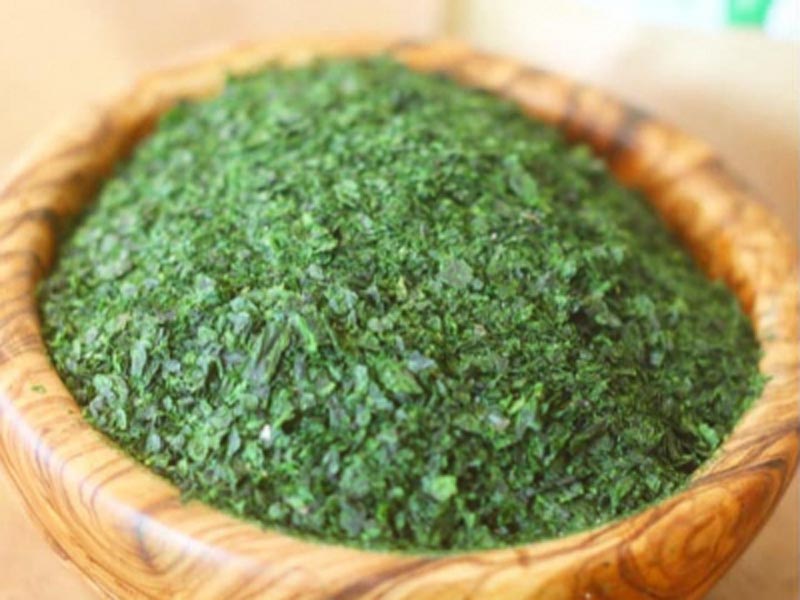
A tip I like to share: use seaweed salt to season your dishes. It is a simple and delicious way to increase your seaweed intake every day.
What about food supplements?
Fucoxanthin extracts in capsules are available on the market. Doses generally range from 1 to 3 mg per capsule. Scientific studies used 2.4 to 8 mg per day.
Our position is clear: if you opt for supplements, choose quality products, ideally from brands that are transparent about their extraction processes. But keep in mind that the whole seaweed provides much more than fucoxanthin alone: fibre, minerals, other bioactive compounds.
Personally, I prefer to eat wakame regularly rather than take capsules. It is tastier, cheaper, and you benefit from the natural synergy of all the seaweed's compounds.
Quick recipe: fresh wakame salad
Here is a simple recipe that Aurélie and I often make:
Ingredients:
- 10 g dried wakame