What Is Cherimoya? Origin, Taste, Safety and Where to Buy It
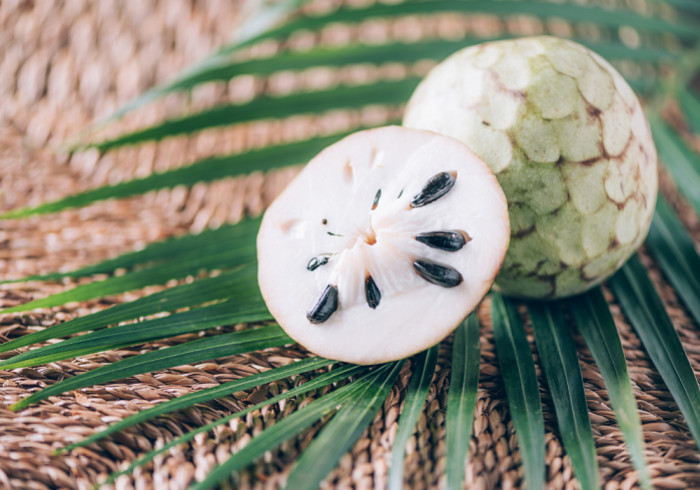
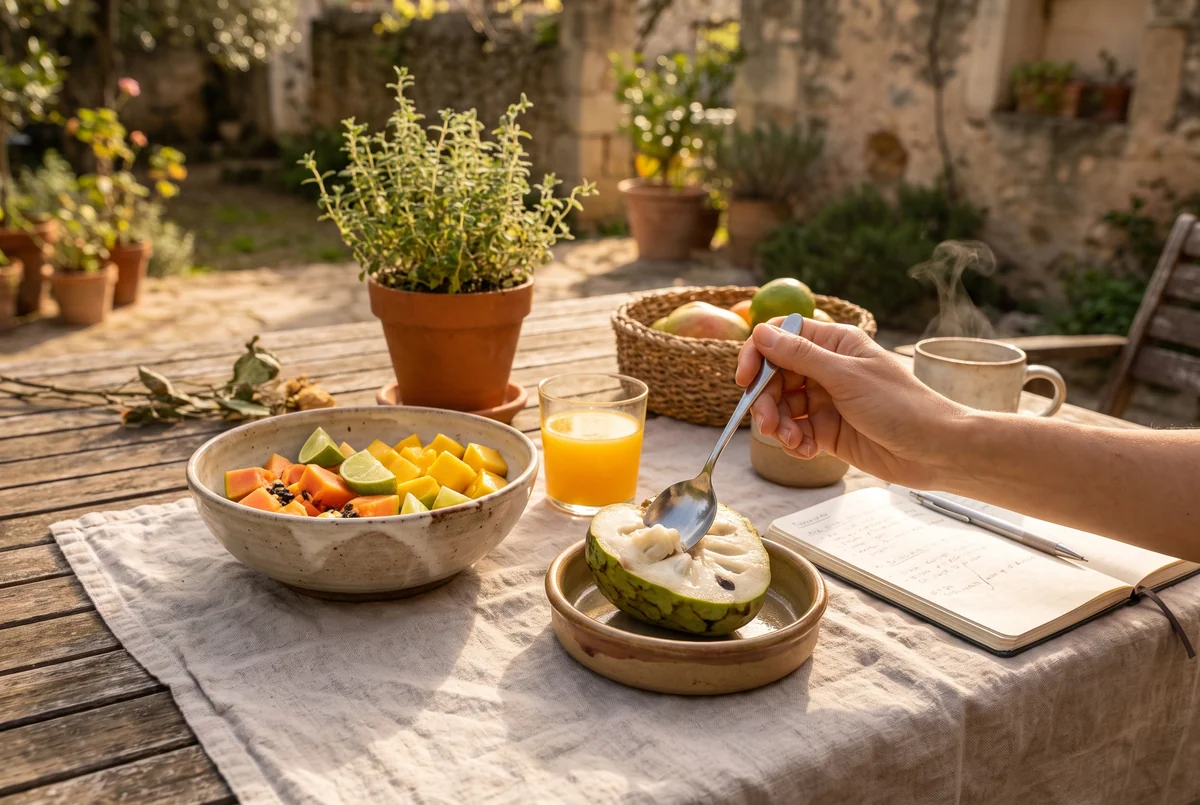
What is cherimoya? It is the fruit of the cherimoya tree (Annona cherimola), also called chérimole or chirimoya: a big green fruit with raised scales which, cut in half, reveals a white, creamy, very fragrant flesh dotted with big black seeds that you remove before eating it with a spoon. This Biovie page draws on the USDA composition table, a 2017 genetic study, the official texts of the Andalusian PDO and a 2023 post-harvest study.
Open most guides to this fruit and you will read that it was born in the Andes. We wrote it too, in the previous version of this page. But a genetic study published in 2017 tells a completely different story, and it deserves a moment of your attention.
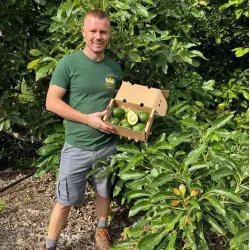
I look at cherimoya with two hats on: that of the ISTOM engineer who has always worked around organic farming, and that of the shopkeeper who founded Biovie in 2007 and brings in part of his fruit from Andalusia, from growers we go and visit on site. So there you go: what this fruit really is, where it comes from, why Spain became its leading producer, how to choose it, how to ripen it without hurting it with cold, and what it contains.
What is cherimoya? Cherimoya, chirimoya, chérimole: what exactly is it?
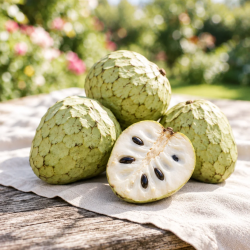
Cherimoya is the fruit of the cherimoya tree, Annona cherimola, a tree of the Annonaceae family. It is a compound fruit, green, with a skin marked by scales, whose white, creamy flesh holds big black seeds. You eat it raw, with a spoon, once it is fully ripe.
“Compound fruit”: when you wonder “what is a cherimoya?”, it is often this expression that catches the eye. The picture is simple, though. A single flower carries many pistils, each one forms its own little fruit, and all of them end up fused under one skin. Every scale you see on the surface keeps a trace of this, which gives it the look of a plump pine cone that you can spot from afar on a market stall.
One fruit, several names
Chérimole, cherimoya, chirimoya: three names for a single fruit. Chirimoya is the Spanish word, cherimoya is the form you will most often meet in other languages, and chérimole is the French form. In France it is also commonly called anone, a common name that in reality covers the whole Annona genus, and which creates quite a bit of confusion (more on that just below).
Not to be confused with soursop, sugar apple... or jackfruit
Soursop (Annona muricata) and sugar apple (Annona squamosa) are close cousins: same genus, same family, but not the same species. The difference between cherimoya and soursop is therefore a matter of species. And I owe you a small mea culpa here: the previous version of this article made sugar apple another name for cherimoya, as you still read almost everywhere. That is wrong. The confusion is stubborn, and we had not escaped it.
As for the jackfruit tree (Artocarpus heterophyllus), it is sometimes mentioned in the same breath, probably because both fruits have a bumpy skin and both end up on the “exotic” shelf. Botanically, the jackfruit has nothing to do with cherimoya. If it intrigues you, I presented it in detail in the article on the jackfruit.
Where does cherimoya come from? The Andes or Central America
Wait, cherimoya might not come from the Andes? The Andean hypothesis was long accepted, and every guide copied it from the previous one, a bit like that roast whose two ends were cut off from mother to daughter, without anyone knowing it was because grandmother's pot was too small. In 2017, however, a genetic study placed its probable origin in Mesoamerica, that is, roughly, from southern Mexico to Central America.
The researchers genotyped 1,765 cherimoya tree accessions from 6 countries in the Americas, using 9 microsatellite markers (Larranaga et al., 2017). An accession is a catalogued sample: a collection tree, or a plant spotted and described in the field. One thousand seven hundred and sixty-five samples is a long way from three trees compared at the corner of a table.
That leaves the question of what a microsatellite marker is. It is a small piece of DNA where the same motif repeats several times in a row, like a stutter, and whose length varies from one tree to another while being passed from parents to offspring. By comparing these “fingerprints” across hundreds of trees, family relationships emerge, a bit like an accent that gives away the region someone comes from. The researchers then tested several historical scenarios by statistical modelling, and the one that fits the data best puts the fruit's cradle in Mesoamerica.
Of course, those who spoke of the Andes were not entirely wrong. The study also describes exchanges of plants between Central and South America long before Columbus arrived. The fruit travelled, and it did not wait for the caravels to do so.
What the study does not say, on the other hand, is when people began to cultivate cherimoya. It reconstructs a kinship, not a calendar, and I will be careful not to invent one.
Why cherimoya from Spain: the Costa Tropical of Granada and Málaga
Today the world's leading producer of cherimoya is Spain, and the most widespread variety in the world is called Fino de Jete (Medina-Santamarina et al., 2023). The fruit born in Central America has thus found its great adopted land with our neighbours, on the Andalusian coast.
This Spanish cherimoya even has its own protected designation of origin, “Chirimoya de la Costa Tropical de Granada-Málaga”. It was first protected in Spain by the Orden APA/3120/2002 (Ministerio de Agricultura, Pesca y Alimentación), published in the Official State Gazette on 11 December 2002, and registered in the European register of PDOs and PGIs by Regulation (EU) No 260/2010 of 25 March 2010 (European Commission). While I am at it, let me correct the old version of this article, which spoke of a PGI: it is indeed a PDO.
Its specification comes down to a few precise criteria, summed up by the official PDO sheet published by ICEX, the Spanish public body for export promotion:
two local varieties, Fino de Jete and Campas
coastal valleys located between 25 and 250 m of altitude, sheltered from northern winds by the Penibaetic mountain range
loamy soils, with a pH of 7 to 8
at least 15 °Brix of soluble sugars
hand pollination when the pistil ripens before the stamens
harvest when the bright green starts to fade and the skin becomes smoother.
Those mountains that shelter the coast, you have to have seen them to understand. At our avocado grower's, not far from Málaga, a stream coming down from the snowy summits crosses the plot: snow up there, avocados down here. That is the whole paradox of this coastline, and it is what lets a fruit from Central America feel at home there.
The Brix degree, for its part, measures the share of sugars dissolved in the juice. You put a drop on a small optical instrument, the refractometer, which reads how the light is bent: the more sugar, the more it bends. Fifteen degrees Brix is roughly 15 g of dissolved sugars in 100 g of juice, enough to make cherimoya a distinctly sweet fruit.
Hand pollination is a detail that says a lot about the care this fruit demands. In the cherimoya tree, the flower's pistil is ready to receive pollen before the stamens of the same flower release it. In other words, the flower is ready to receive before it has anything to give. No matter: the grower plays the bee, flower after flower.
Outside Spain, cherimoya is also grown in Europe on Madeira, in Portugal, where a team analysed 4 cultivars (Albuquerque et al., 2016).
Where to buy cherimoya and how to choose it?
You find cherimoya at greengrocers, on the exotic fruit shelf of some shops, and for sale online, in parcels shipped from Spain. In front of the stall, look first, touch afterwards.
A bright green that is starting to fade and a skin that is becoming smoother: that is precisely the harvest sign set by the PDO specification (ICEX). If you do not plan to eat it right away, take it still firm, because it will keep ripening at your place (Medina-Santamarina et al., 2023). I am not giving you a precise season by month, and it is not out of laziness: I did not find an official source solid enough, and I would rather stay quiet than copy out an approximate calendar.
What you observe
What it tells you
What to do
Bright green, firm fruit
Not ripe yet
Leave it at room temperature
Green that is fading, smoother skin
Harvest stage set by the PDO; the fruit ripens in a few days
Feel it every day
The fruit yields under light pressure
Ready to eat
Enjoy it without delay
Skin turned black after a spell in the cold
Cold damage
Never refrigerate a still-firm fruit again
At Biovie, we offer organic Cherimoyas from Spain, in 4.5 kg parcels. For our tropical fruit from Andalusia, we chose a short supply chain: two days between picking and the customer, with no cold room and no successive warehouses. It is not the most comfortable route for organising deliveries, I grant you. But with a fruit that fears the cold this much, this choice really matters.
Cherimoya is a climacteric fruit: like the avocado, it keeps ripening after picking, and its qualities change fast (Medina-Santamarina et al., 2023). So it finishes ripening at your place, in the fruit bowl.
Its weak point is cold. Below the safe temperatures, the fruit ripens abnormally and turns brown; the researchers place safe prolonged storage between 8 and 15 °C depending on the variety, and observed this damage at 7 °C on Fino de Jete fruit from Motril, in the province of Granada. The vegetable drawer of a refrigerator is colder than that. A still-firm cherimoya waits there in vain, then turns black. We all have the fridge reflex; with this fruit, it is precisely the one to forget.
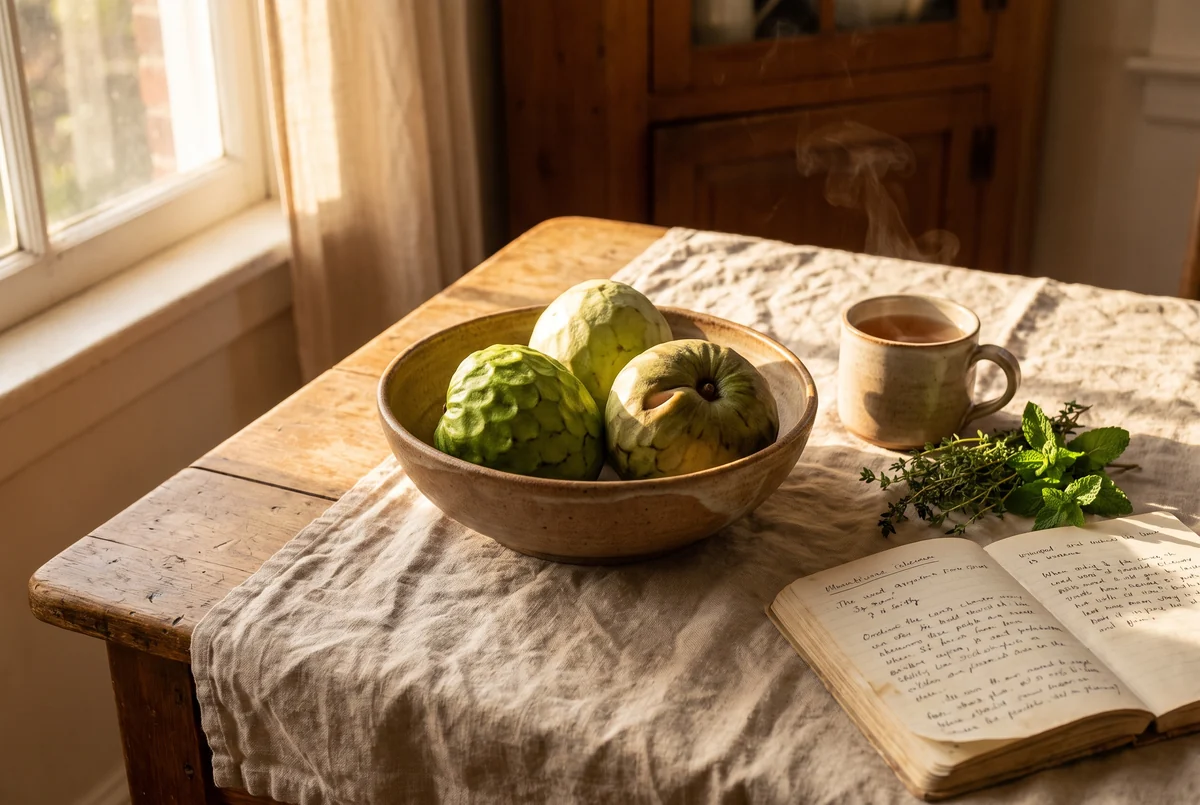
To know how to ripen a cherimoya, no need to look far: put it in a bowl, at room temperature, and feel it every day. As soon as it yields under light thumb pressure, it is ready, and you are better off eating it without waiting too long. No device and no calendar needed, the fruit warns you itself.
Storing the pulp
What do you do with the remaining half when a cherimoya is too big for one person? Remove the seeds, put the pulp in a glass jar and create a vacuum with the BocUp kit: a bell, a small manual pump, no electricity and no plastic bag. Why buy special containers when your jars do the job perfectly well? The kit works with the ones you already have at home, as long as they have “shoulders” and a 65 or 84 mm lid. According to the manufacturer, fresh produce keeps up to 5 times longer this way.
The jar then goes into the refrigerator. Keep in mind that the vacuum replaces neither the fridge nor the freezer, and that it does not sterilise. I explain the principle in more detail in the article on the benefits of vacuum sealing at home.
Enjoy a refreshing and nutritious coconut water thanks to these Thai organic green coconuts, proposed with its machete and STAINLESS STEEL straws, 16
products
Here is the average composition of 100 g of raw cherimoya pulp, according to the FoodData Central database of the US Department of Agriculture (USDA, 2019).
Nutrient
Per 100 g of raw pulp
How to read this figure
Water
79.4 g
Nearly four fifths of the pulp: a juicy fruit
Energy
75 kcal
Supplied mostly by carbohydrates
Carbohydrates
17.7 g, of which 12.9 g sugars
The part that gives its dessert-like taste
Fibre
3.0 g
Measured on the pulp alone
Protein
1.57 g
A little over a gram and a half
Fat
0.68 g
Less than a gram
Vitamin C
12.6 mg
Content that varies by cultivar
Potassium
287 mg
Reference average
Vitamin B6
0.257 mg
About a quarter of a milligram
With nearly 80 g of water per 100 g, cherimoya is first of all a juicy fruit, and its 17.7 g of carbohydrates, of which 12.9 g are sugars, explain why we eat it like a dessert. You will find other figures elsewhere, including in the old version of this article. Don't panic, that is normal. The composition varies by cultivar and by part of the fruit, as the analysis of the pulp, skin and seeds of 4 Madeira cultivars showed (Albuquerque et al., 2016).
The USDA values are a reference average; they do not come from an analysis of our cherimoyas. You read a lot of promises about this fruit here and there; I prefer to stick to what is measured, without crediting these figures with virtues that no human study has established. Cherimoya is a fruit to enjoy as part of a varied and balanced diet and a healthy lifestyle.
Is cherimoya dangerous? Seeds, skin and precautions
The flesh of cherimoya can be eaten without worry. It is the side parts that call for a little attention, and they boil down quickly.
The black seeds are toxic: do not crunch them, do not swallow them, and remove them all before eating.
The skin is not eaten either.
For a very first time, taste a small quantity, as with any fruit you are discovering.
It is a sweet fruit, with 12.9 g of sugars per 100 g of pulp on average (USDA): if you monitor your blood sugar, talk to your doctor.
The most common trap is the blender. You toss the cut-up fruit into the bowl to save time, and the seeds end up ground into the smoothie: always remove the seeds from the pulp with a spoon before blending. It takes a few more minutes, of course. They are well worth it.
How to eat cherimoya? Simple recipes
First rule, and not the easiest one: wait until it is ripe. A still-firm cherimoya has little to offer in the mouth, whereas at its peak it turns sweet, very aromatic, with a texture reminiscent of ice cream melting.
Plain is the simplest way, and often the best: cut it in half, remove the black seeds one by one, and enjoy the pulp with a spoon, straight from the skin. No cooking, no complicated utensil, nothing to get wrong. To vary things, here are a few simple ideas:
in a smoothie: the pulp of half a cherimoya, a banana, 150 ml of homemade tiger nut milk or store-bought plant milk and a few ice cubes, with no added sugar
as an express sorbet: blended pulp, the juice of a lemon, a drizzle of agave syrup, then two hours in the freezer, stirring every 30 minutes
as chirimoya alegre, as in Chile: seeded wedges topped with freshly squeezed orange juice
in an exotic fruit salad, with mango, papaya and lime.
These preparations find their place at dessert or at snack time, as part of a varied and balanced diet and a healthy lifestyle. The spoon version remains the one that lets the fruit speak best.
In short, if someone ever asks you “what is cherimoya?”, you will have an answer: a fruit born in Central America, adopted by Andalusia, that you choose by eye, that ripens in the fruit bowl and that you eat with a spoon. All that is left is to put one on the table and wait for it to give you a sign. And if you have your own way of enjoying it, write to me!
Frequently asked questions
How to eat cherimoya?
Fully ripe, cut in half and enjoyed with a spoon: that is the simplest way to eat cherimoya. Remove the black seeds one by one, they are not eaten, and leave the skin aside. The pulp also works in a smoothie, a homemade sorbet or an exotic fruit salad.
What does cherimoya (anone) taste like?
Cherimoya has a very aromatic taste, slightly tart when it is not yet ripe, then distinctly sweet at maturity. The specification of the Spanish PDO requires at least 15 °Brix, which is roughly 15 g of dissolved sugars per 100 g of juice. Its white flesh has a creamy texture.
Where does cherimoya grow?
Cherimoya grows today mostly in Spain, the world's leading producer, especially in the coastal valleys between Granada and Málaga. It is also grown on Madeira. According to a 2017 genetic study of 1,765 accessions, its probable origin lies in Central America, and not in the Andes.
What are the other names of cherimoya?
Cherimoya is also called chérimole in French, chirimoya in Spanish and, commonly in France, anone, a name that in fact covers the whole Annona genus. Its Latin name is Annona cherimola. Soursop and sugar apple are neighbouring species, not other names for the same fruit.
Are there several varieties of cherimoya?
Yes, there are several varieties of cherimoya. The most widespread in the world is Fino de Jete. The Chirimoya de la Costa Tropical de Granada-Málaga PDO retains two local varieties, Fino de Jete and Campas, grown between 25 and 250 m of altitude. The composition also varies from one cultivar to another.
Where to buy cherimoya?
You buy cherimoya at greengrocers, on the exotic fruit shelf and online, in parcels shipped from Spain. Choose a fruit whose bright green is starting to fade and whose skin is becoming smoother, still firm if you plan to eat it later, then let it ripen at room temperature.
What are the nutritional values of cherimoya?
Per 100 g of raw pulp, cherimoya provides on average 75 kcal, 17.7 g of carbohydrates of which 12.9 g sugars, 3.0 g of fibre and 12.6 mg of vitamin C, according to the USDA. These values vary by cultivar. It is enjoyed as part of a varied and balanced diet and a healthy lifestyle.
The information presented in this article is provided for information purposes only and does not constitute medical advice. Consult a healthcare professional before making any change to your diet or supplementation.