Fast delivery
.png)
 Fair prices



Summary
In recent years, it's been impossible to escape this beauty trend taking over social media: castor oil presented as THE miracle solution for hair growth. Influencers with mermaid-like hair promise spectacular results, impressive before-and-after photos circulate, and enthusiastic testimonials pile up. It was time to take stock of what is myth and what is scientifically proven.
Because at Biovie, our commitment since 2007 has been precisely that: transparency. We refuse to tell you stories to sell, even though it's tempting in an organic cosmetics market that today is worth 1.2 billion euros in France and is growing by 7% per year. In fact, did you know that 64% of French people say they prefer natural ingredients in their beauty products? This underlying trend is real, but unfortunately, it is accompanied by a flood of marketing misinformation.
So here it is, in this article, I will share with you what science REALLY says about castor oil for hair, far from exaggerated promises and the prevailing greenwashing. I will also explain how to use castor oil on your hair effectively if you decide to try it, and most importantly, I will help you adjust your expectations to avoid disappointment.

What science really says (and it's not what you're being told)
Let's start with the most important point, and I'll be direct: there is NO scientific study that proves castor oil makes hair grow faster. La Savonnerie La Brique summarized it very well in a reference article: "No study has shown a direct effect on hair growth."
I know, it's hard to hear when we've been sold a dream. But wait before closing this article, because that doesn't mean this oil is useless. In reality, it's much more nuanced than that, and the effectiveness of castor oil on hair is worth exploring.
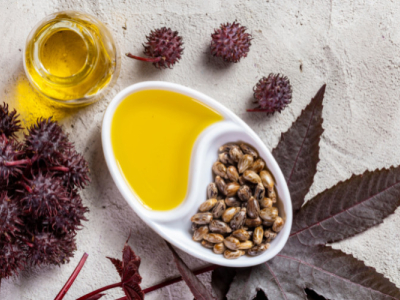
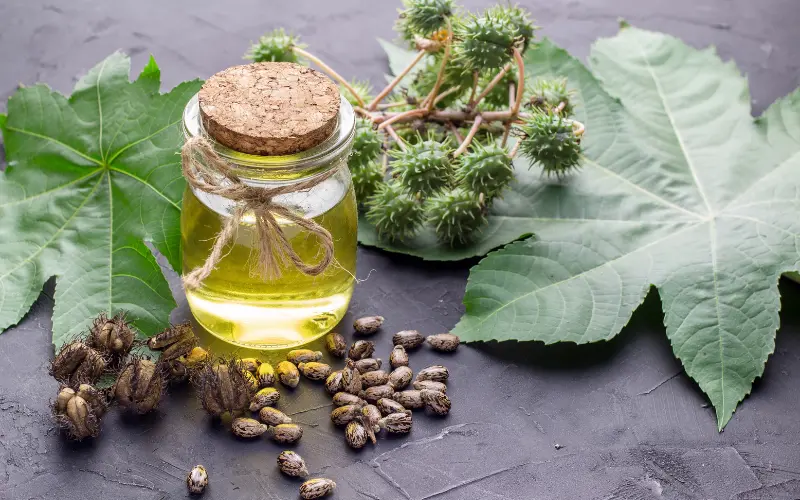
Castor oil is composed of 80-95% ricinoleic acid, a very unique fatty acid that is rarely found elsewhere in nature. It is precisely this acid that has caught the attention of researchers. There is an interesting scientific hypothesis: ricinoleic acid could block the production of Prostaglandin D2, known as PGD2. This molecule is present in quantities three times higher in bald areas of the scalp. Do you see where I'm going with this ?
If we block PGD2, in theory, we could limit hair loss. This is somewhat similar to the mechanism of Minoxidil, the medical treatment for baldness. However, here's the catch: this theory has never been validated by in vivo clinical trials on humans. No one has undertaken a study. It's a shame. We have laboratory hypotheses, but no real proof of effectiveness.
On the other hand - and this is where it gets interesting - the Journal of Cosmetic Science published results showing that "castor oil reduces protein loss and prevents damage" to the hair fiber. What does this mean in practical terms? It means that the oil creates a protective lipid film around the hair, which retains moisture and improves its mechanical strength. The result: less breakage, fewer split ends, and better length retention.
With Aurélie, we observed exactly that. After a few weeks of regular use, our hair was undeniably softer, shinier, and less brittle. Did it grow faster as a result? Honestly, it's impossible to say for sure. We would have needed "test" twins! The natural growth rate already varies greatly depending on ethnic origins: researchers at L'Oréal Research have established that African hair grows at 1.8 cm per month, European hair at 2.5 cm, and Asian hair at 2.8 cm per month. How can we accurately measure a hypothetical gain of a few millimeters in this context ?
If you wish to discover others Benefits of castor oil for your beauty, we have published a comprehensive practical guide with DIY recipes.
The Unknown Role of Massage (and Why It Changes Everything)
Here's something that no one tells you when they sell you castor oil: a good part of the benefits probably comes from the massage itself. A Japanese study from 2016 demonstrated that "regular massages help improve hair density." Scalp massage stimulates blood microcirculation, activates hair follicles, and reduces local stress.
When you apply castor oil, you inevitably massage your scalp for several minutes. So, is it the oil that works, or the massage? In reality, I think it's a synergy of both. The oil provides its protective and potentially anti-inflammatory properties (which are proven in the laboratory), and the massage stimulates the area. That's the whole point of combining the two approaches.
Real Testimonials: What Really Works (and What Doesn't)
We received feedback from Biovie customers who tested castor oil. And frankly, the most positive testimonials come from people who had damaged, dry, brittle hair. For them, the improvement in texture and reduction in breakage are real and measurable. On the other hand, those who were hoping for miraculous regrowth in areas of androgenetic alopecia (hereditary baldness) were disappointed, and that's normal: castor oil does not treat this type of problem.
On forums, I read testimonials like this one on Mariages.net in 2017: "After 1 month on eyebrows every night... they grew back!" Or on Feel-Oil: "Twice a week. Healthier scalp, boosted growth!" There are even testimonials from women who underwent chemotherapy reporting: "2 months of application. Eyelashes and eyebrows grew back."
These testimonials are encouraging, but they should be taken with caution. First, because the measurements are subjective. Then, because there is a psychological bias: when you diligently apply a product for weeks, you WANT to see results. And above all, there is this famous confusion between "impression of rapid growth" and "reduction of breakage that preserves length." If you break fewer hairs, you retain more length, which GIVES the impression of accelerated growth, even if the actual speed hasn't changed.
The gains reported in the testimonials range from +1 cm to +3 cm per month. Considering that natural growth is already 2.5 cm per month for a European, it raises questions. Can you really double your growth rate with an oil? I highly doubt it. However, going from 2 cm net (after breakage) to 3 cm net (less breakage)? That is believable.
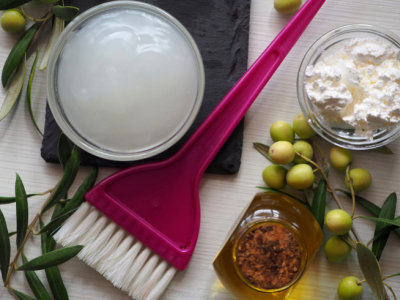
By the way, if you like homemade natural hair care, we have gathered our best homemade hair mask recipes to complete your beauty routine.
Realistic Protocol: How to Use Castor Oil Effectively
If you decide to try castor oil anyway - and frankly, it's worth trying if your hair is damaged - here is the protocol we recommend at Biovie after our own tests.
Application frequency: once a week
No need to apply it to your head every day, it's counterproductive and restrictive. Once a week is more than enough. The most dedicated users I've met do a maximum of 2 applications per week.
Duration of the treatment: minimum 6 to 12 weeks
It is the time needed to observe measurable changes. If you stop after 3 weeks saying "it's not working," it's normal; you haven't given your hair enough time to regenerate. A complete hair cycle takes several months. How long to see results with castor oil? Allow at least 6 weeks for texture, 12 weeks to assess the overall impact.
Texture tip: mix it up !
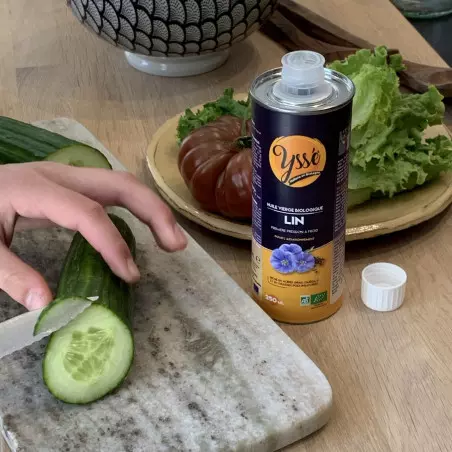
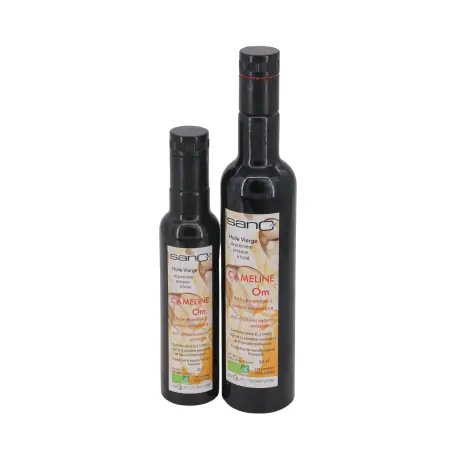
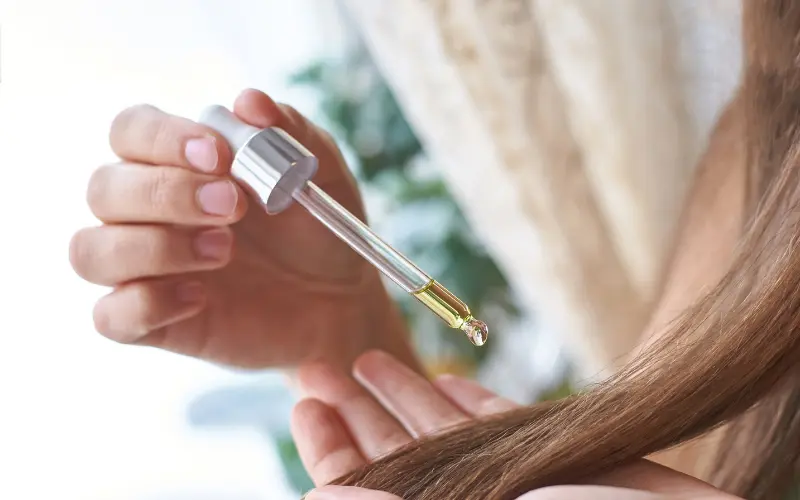
Ricin oil is viscous, thick, difficult to apply, and even harder to rinse. Aurélie found THE solution: mix 50% ricin oil with 50% of a more fluid oil (jojoba, argan, Line, , Camelina or Hemp). It greatly facilitates the application while retaining the benefits of castor oil. Moreover, if you are looking for quality vegetable oils, we offer several super organic oils first cold-pressed on Biovie.
Thehemp oil for beauty is particularly interesting when mixed with castor oil, as it penetrates quickly without weighing down. To learn more, also discover how to use theHemp oil for hair in our comprehensive guide.
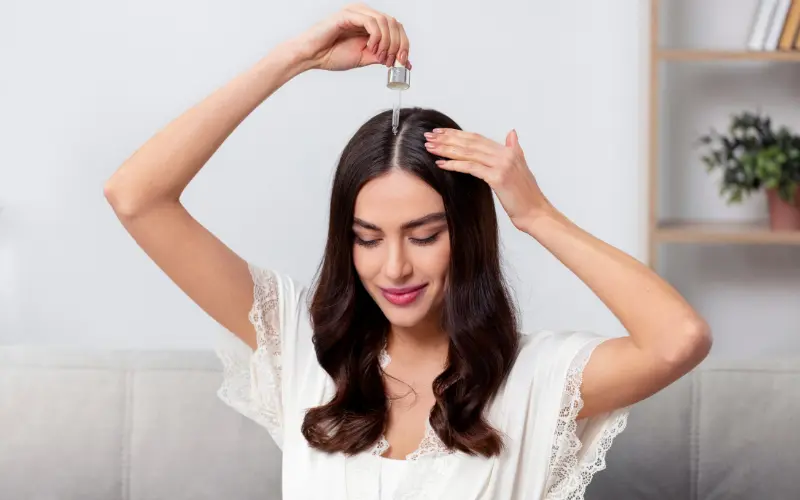
Application technique
- Dry or slightly damp hair
- Separate your hair into sections
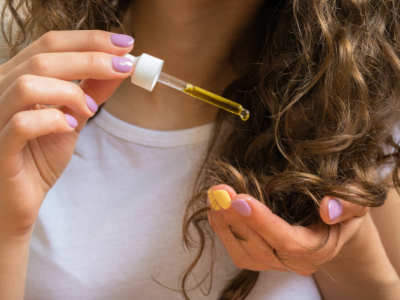
- Apply the oil directly to the scalp.
- Massage in circular motions for 5-10 minutes (this is THE key moment)
- Then distribute over the lengths if your hair is dry.
- Let it sit for at least 30 minutes (some leave it on all night with a shower cap to avoid ruining your pillow).
- Rinse with a mild shampoo or even better, ghassoul, "twice if necessary"
Double shampooing is often necessary with castor oil, it's normal, don't worry. That's precisely why mixing it with a lighter oil is recommended.
Realistic expectations: be honest with yourself
Here is what you can reasonably expect:
- ✅ Softer, shinier, more protected hair
- ✅ Significant reduction in breakage
- ✅ Fewer forks
- ✅ Potentially healthier scalp (fewer dandruff, irritations)
- ✅ Length conservation (less loss)
Here is what you CANNOT expect:
- ❌ Regrowth on areas of androgenetic alopecia
- ❌ Doubling of growth speed
- ❌ Transforming fine hair into thick hair
- ❌ Miracle results in 2 weeks
Objective Comparison: Castor Oil vs Other Solutions
Let's speak frankly. Castor oil is just one option among others for taking care of your hair. Here is an honest comparison with other natural and medical solutions.
Castor oil vs other vegetable oils
Comparison of the main hair oils:
Protection of hair fiber:
- Castor oil : ⭐⭐⭐⭐⭐ (excellent)
- Coconut oil: ⭐⭐⭐⭐ (very good)
- Argan oil: ⭐⭐⭐⭐ (very good)
- Hemp oil : ⭐⭐⭐ (good)
Hydration:
- Castor oil: ⭐⭐⭐ (good)
- Coconut oil: ⭐⭐⭐⭐⭐ (excellent)
- Argan oil: ⭐⭐⭐⭐ (very good)
- Hemp oil: ⭐⭐⭐⭐ (very good)
Ease of application:
- Castor oil : ⭐⭐ (difficult)
- Coconut oil: ⭐⭐⭐⭐ (very good)
- Argan oil: ⭐⭐⭐⭐⭐ (excellent)
- Hemp oil: ⭐⭐⭐⭐⭐ (excellent)
Price:
- Castor oil : ⭐⭐⭐⭐ (affordable)
- Coconut oil: ⭐⭐⭐⭐⭐ (very affordable)
- Argan oil: ⭐⭐⭐ (expensive)
- Hemp oil: ⭐⭐⭐ (expensive)
Stimulation of growth (theoretical):
- Castor oil : ⭐⭐ (unproven hypothesis)
- Coconut oil: ⭐ (no evidence)
- Argan oil: ⭐⭐ (unproven hypothesis)
- Hemp oil: ⭐⭐ (unproven hypothesis)
Verdict: Castor oil excels in protecting hair fibers, but its viscous texture makes it less practical. For daily use, opt for argan or hemp oil. For an intensive weekly treatment, castor oil remains relevant.
Another interesting oil to discover is thecamelina oil, particularly rich in omega-3 and perfect for sensitive skin.
Castor oil vs Minoxidil (medical treatment)
Minoxidil is a recognized medication for androgenetic alopecia. Objective comparison:
Minoxidil:
- ✅ Scientifically proven effectiveness (clinical studies)
- ✅ Measurable results on alopecia
- ❌ Possible side effects (irritations, hypertrichosis)
- ❌ Lifetime treatment (stopping = loss of benefits)
- ❌ By prescription
Castor oil:
- ❌ No direct evidence on growth
- ✅ Protection and quality of the fiber (proven)
- ✅ No notable side effects
- ✅ Natural and accessible
- ❌ Ineffective on androgenetic alopecia
Conclusion: For true baldness, consult a dermatologist and discuss Minoxidil. To improve the quality of existing hair and reduce breakage, castor oil is relevant.
To incorporate castor oil into a complete natural beauty routine, we share our best tips with you in this dedicated article.
The holistic Biovie approach: oil + living food
At Biovie, our deep conviction since 2007 is that hair beauty starts on the plate. You can apply all the treatments in the world to your scalp, but if you don't nourish your hair follicles from the inside, the results will remain limited.
Keratin: The Building Block of Hair
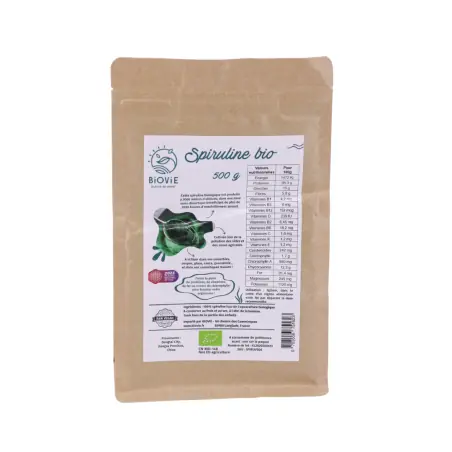
Your hair is made up of 95% keratin, a protein composed of amino acids. Where do these amino acids come from? From your diet, of course. This is where spirulina becomes interesting: it contains 60-70% complete proteins, with all the essential amino acids. Aurélie and I have been taking 3 to 5g of spirulina per day for years, and we have noticed a significant improvement in the quality of our hair, nails, and skin.
Essential minerals: iron, zinc, silica
Iron transports oxygen to hair follicles. Zinc is involved in the synthesis of keratin. Silica strengthens the hair structure. Where can these minerals be found in a bioavailable form? In the fresh seaweed, and in Sea water. Sea water contains 82 elements from the periodic table of elements that we all learn about in middle school. Also in sprouted seeds (alfalfa, broccoli, fenugreek) and fresh algae (sea beans, dulse)..webp)
With our Easygreen sprouter, we continuously produce our own sprouted seeds. This provides a daily supply of ultra-assimilable minerals that nourish our hair from the inside.
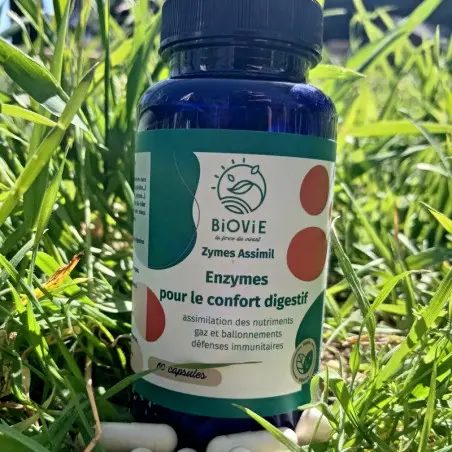
Enzymes : key to assimilation
We often hear "you are what you eat," but in reality, as I often explain, you are mostly what you ASSIMILATE. That's why, after two years of research, we developed our enzyme synergies. Digestive and metabolic. If your digestive system is not functioning well, no matter how many superfoods you eat, you will not reap all the benefits.
The complete Biovie protocol over 12 weeks
Here is what I recommend for a truly holistic approach:
Weeks 1-4: cleaning phase
- 1 application of castor oil per week
- Gradual integration of sprouted seeds (alfalfa, broccoli)
- Reduction of processed products
- Filtered water in abundance
Weeks 5-8: reconstruction phase
- Castor oil pursuit
- Sea water diluted in the morning to remineralize and provide trace elements
- Addition of spirulina orally (3-5g per day)
- Digestive enzymes if digestion is difficult
- Fresh seaweed for minerals and trace elements
- Daily scalp massage (5 minutes)
Weeks 9-12: stabilization phase
- Castor oil maintenance (can be done twice a month)
- Spirulina to continue
- Continue the seawater
- Sprouted seeds daily
- Fresh algae to pursue, introduce seaweed tartare for the other family members
- Personal assessment of the results
Aurélie and I followed this type of protocol for several months (which is actually just our "daily routine" improved), and the results on the quality of our hair (texture, shine, strength) were noticeable. The "growth"? Hard to quantify precisely, but our hair broke much less.
Beyond hair care, castor oil has many other therapeutic uses. In fact, we have published a comprehensive article on the Castor oil poultices according to Irène Grosjean for detox and overall well-being.
What the French organic market really reveals
Let's talk numbers a bit, because they say a lot about our times. The organic cosmetics market in France is currently worth 1.2 billion euros and is growing by 7% each year. 51% of French people use organic cosmetics, and 77% of current buyers started using organic products less than 5 years ago. It's a silent revolution.
What particularly interests me is that 11% of French people now make their own cosmetics. It's the famous DIY (Do It Yourself) movement that completely aligns with our values at Biovie. In fact, our YouTube channel is full of tutorials for making your own hair care products with simple and natural ingredients.
The distribution is also evolving: while large retailers still capture 53% of the market, organic pharmacies are booming with a growth of 20% between 2019 and 2023. Most notably, e-commerce is expected to grow by 44% in 2024. In fact, it has been our main channel since 2007, allowing us to offer niche products that cannot be found anywhere else in France.
What concerns me about this growth is the risk of marketing exploitation. Major brands have realized there is money to be made with "natural" and "organic" products, and we see greenwashed products popping up, with three drops of vegetable oil drowned in silicones and questionable preservatives. That's precisely why at Biovie we impose very strict standards: Ecocert certification, complete traceability, and above all, we are the first users of what we sell. If a product doesn't personally convince us, we don't even offer it. Move along !
If you want to know more about how to choose your organic cosmetics and avoid greenwashing, we have written a comprehensive guide to help you see clearly.
Frequently Asked Questions (because we get asked them all the time)
Does castor oil really make hair grow ?
No, there is no scientific study proving a direct effect on growth. However, castor oil reduces breakage and protects the hair fiber, which helps retain more length. It is this retention that gives the impression of accelerated growth. The scientific effectiveness of castor oil lies in protection, not in directly stimulating growth.
How long does it take to see results ?
At least 6 weeks for an improvement in texture, 12 weeks to assess a potential impact on "growth" (which is actually more about better length retention). How long should castor oil be used for hair? Allow at least 3 months for an honest assessment.
Can we leave castor oil on all night ?
Yes, absolutely. Many people do it. Just make sure to use a pillowcase that you don't mind staining. With Aurélie, we prefer to leave it on for 2-3 hours, it's already very effective and less restrictive.
Does castor oil work on all hair types ?
It is more suitable for thick, dry, frizzy, curly hair. On very fine hair, it can weigh it down. In this case, dilute it further (30% castor oil, 70% light oil). Opinions on castor oil for hair vary depending on the hair type.
Difference between castor oil and black castor oil ?
Black castor oil is roasted, which gives it a dark color and a stronger smell. Some attribute superior properties to it, but scientifically, nothing proves this. Classic castor oil (cold-pressed) contains more preserved nutrients.
Can castor oil be used on eyebrows and eyelashes ?
Yes, many do it with caution (avoiding contact with the eyes). The testimonials are rather positive about thickening and lengthening. Aurélie occasionally uses it on her eyebrows.
Can castor oil replace a medical treatment for baldness ?
No, absolutely not. If you suffer from androgenetic alopecia (hereditary baldness), consult a dermatologist. Castor oil will not treat this problem. However, it can improve the quality of existing hair. Castor oil and androgenetic alopecia are not compatible as a treatment.
How to effectively rinse castor oil from hair ?
Use a double shampoo with a gentle product. Tip: apply the shampoo directly to oiled hair (without wetting it first), lather, then rinse. Repeat if necessary. Mixing 50/50 with a more fluid oil greatly facilitates rinsing.
My personal conclusion
After several months of use and dozens of exchanges with our Biovie community, here is my honest verdict on castor oil.
This is NOT a miracle product. It will not regrow hair on bald areas, it will not double your hair growth speed, it will not transform fine hair into a lion's mane.
BUT it's an excellent hair treatment to improve the quality of your hair, reduce breakage, deeply nourish, and give a healthier and shinier appearance. If you are ready to use it regularly over several months, with realistic expectations, you will not be disappointed.
And above all, integrate it into a comprehensive approach. Caring for your hair from the outside while nourishing it from the inside with a living diet rich in superfoods (fresh algae, seawater, spirulina, sprouted seeds, enzymes) is THE winning combination. This is exactly what we have been practicing personally for years, and it makes all the difference.
If you want to test this approach, feel free to explore our products: organic cold-pressed vegetable oils, French spirulina, Easygreen sprouter, and our entire range of superfoods. We have been here since 2005 to support you in your transition to natural health, and unlike many companies in this sector, we have only one promise: transparency.
So, does castor oil really make hair grow? Science says no. But does it improve their quality and help maintain length? Most likely yes. It's up to you to see if this nuance meets your expectations.
And don't forget, perhaps the most important message: the beauty of your hair starts on your plate.