What is hidden in this amber honey-colored bottle that our grandmothers kept carefully in their bathroom cabinet? Castor oil, extracted from the seeds of Ricinus communis, is one of the most versatile vegetable oils ever cultivated. Used since ancient Egypt, it is now favored by dermatologists, naturopaths, and herbalists: its unique ricinoleic acid makes it a special oil, both cosmetic, soothing, and gentle.
In this 2026 guide updated with the latest scientific studies, you will discover: the 7 proven benefits of castor oil, how to use it practically on hair, eyelashes, eyebrows, skin, nails, and beard, what research really says about it, and especially the essential precautions to use it safely.
Castor oil is obtained by cold pressing the seeds of the castor plant (Ricinus communis), a shrub native to tropical Africa now cultivated in India, Brazil, and China. Only cold pressing, without solvents or heating, preserves the integrity of the fatty acids and vitamin E. The cakes (residues) are never used for food or cosmetic oil, as they contain ricin, a natural toxin eliminated during pressing.
Composition: ricinoleic acid, its signature
The uniqueness of castor oil lies in its exceptional lipid composition. According to the Ciqual tables of ANSES, a tablespoon contains:
85 to 90% ricinoleic acid (C18:1-OH), an almost unique hydroxylated fatty acid in nature
1. It Stimulates Hair Growth and Reduces Hair Loss
Ricinoleic acid promotes microcirculation of the scalp and supports the activity of hair follicles. With regular use (1 to 2 oil treatments per week), hair gains shine, thickness, and resistance to breakage. Many users report a significant reduction in seasonal hair loss after 4 to 6 weeks of application. For a structured protocol, consult our 4-week anti-hair loss protocol.
2. It Thickens Eyelashes and Eyebrows
Castor oil is the natural reference for thickening eyelashes and reshaping eyebrows. It extends the anagen (growth) phase of fine hairs and deeply nourishes them. Applied in the evening with a washed mascara wand, it shows visible results after 4 weeks of daily use.
3. It Moisturizes and Soothes Dry Skin
Thanks to its exceptional emollient profile, castor oil replenishes the hydrolipidic film of dry skin, rough areas (elbows, heels), and recent scars. It can also help soothe sensitive or reactive skin, especially when diluted to 1/3 in a neutral oil like jojoba or sweet almond oil.
4. It Strengthens Brittle Nails
A daily massage with a drop of castor oil at the base of the nail nourishes the cuticle and strengthens keratin. It is particularly recommended after repeated use of nail polish or gel, which weakens the nail matrix.
5. It Promotes a Full and Soft Beard
Castor oil has been making its way into men's grooming routines for a few years. Applied pure or diluted (50/50 with jojoba oil to lighten the texture), it nourishes the skin on the chin, softens the beard, and can help thicken it in sparse areas.
6. It Relieves Inflamed Joints (Poultices)
Long forgotten, castor oil poultices according to Irène Grosjean's method are making a comeback among naturopaths. A flannel compress soaked in the oil, placed for 30 to 60 minutes on the inflamed area (knee, shoulder, lower back), can help reduce discomfort related to local inflammation. See also our article dedicated to castor oil and joints.
7. Its Antibacterial and Anti-inflammatory Action is Validated
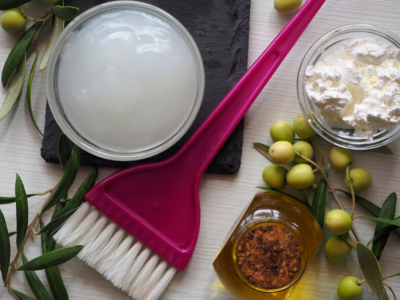
For an express oil bath: heat 2 tablespoons of castor oil in a warm water bath, massage onto dry scalp for 5 minutes, wrap with a warm towel, leave on for 1 to 2 hours, then do 2 gentle shampoos. For an overnight treatment, apply in the evening on dry hair, cover with a cotton cap, and rinse the next morning. Recommended frequency: once a week for 4 to 8 weeks.
Eyelashes and Eyebrows: Application with a Spoolie
Clean a mascara spoolie with warm water and soap, let it dry, then dip it into your bottle of castor oil. Gently apply in the evening on clean eyelashes and eyebrows, avoiding getting the oil in your eye. Remove the excess. Visible results in 4 to 8 weeks of daily application.
Skin and Massage: Dilute for a Pleasant Texture
Pure castor oil is very thick. For pleasant body use, dilute it with 1/3 castor oil + 2/3 neutral vegetable oil (jojoba, sweet almond, apricot). This mixture remains nourishing while becoming more fluid and better absorbed by the skin.
Poultice: The Traditional Method
Soak a cotton flannel square with castor oil (without dripping), place it on the area (liver, abdomen, joint), cover with a film and a warm hot water bottle. Leave on for 30 to 60 minutes. This technique is detailed step by step in our article on poultices according to Irène Grosjean.
What Does Science Say About Castor Oil?
The scientific literature on castor oil has significantly expanded in recent years. The Vieira study (2000) highlighted the anti-inflammatory and analgesic effect of ricinoleic acid, comparable to that of capsaicinoid. The MDPI review 2024 confirms its antimicrobial and healing properties. Regarding safety, the reference sheet StatPearls (2023) confirms the safety of topical application, while warning about the risks of ingestion and use during pregnancy. For more information, see our synthesis of scientific studies on castor oil and hair.
Precautions and Contraindications to Know
Pregnancy and Breastfeeding
Castor oil should be avoided during pregnancy, both internally and as an abdominal poultice. When ingested, it can trigger uterine contractions (effect documented by a Cochrane meta-analysis in 2009). For external application, it is better to limit it to hair, eyelashes, and nails, and avoid the abdomen.
Ingestion: To Be Avoided Without Medical Advice
Castor oil is a very powerful stimulant laxative. Its ingestion can cause severe diarrhea, cramps, and dehydration. Its purgative use, once widespread, should now be reserved for strict medical supervision. See our detailed article on the purgative use of castor oil and its precautions.
Children and Allergies
Topical use is not recommended before 3 years old. For any first use, an allergy test in the crook of the elbow 24 hours in advance is essential.
Storage
Once opened, castor oil can be stored for 12 months, in an amber glass bottle, away from light and heat.
How to Choose a Quality Castor Oil?
Not all castor oils are created equal. To fully benefit from its advantages, prioritize:
A organic certification (guarantees the absence of pesticides on the crop)
The mention virgin and cold-pressed (no solvent, no heating)
A amber glass bottle (protects against oxidation)
A clear traceability (origin India, Africa, Brazil)
A fluid texture when warm, golden, without a rancid smell
Discover on this page simple, effective and eco-friendly products to enrich your daily routine and hygiene with pure, natural ingredients. The castor oil and the Epsom salt we offer here are multi-purpose solutions and versatile products. All our oils come from organic farming., 3
products
What are the main benefits of castor oil for hair?
Castor oil restores shine, suppleness, and softness to hair. It supports the microcirculation of the scalp, nourishes hair follicles, and helps limit seasonal hair loss. A weekly oil bath for 4 to 8 weeks is usually enough to see visible results.
Is castor oil effective against dandruff?
Yes, thanks to its moisturizing and soothing properties, castor oil can help reduce dry dandruff. It nourishes the scalp, which decreases dryness and itching. For oily dandruff, it can be combined with a few drops of tea tree essential oil.
How to use castor oil on eyelashes and eyebrows?
Clean a mascara wand, dip it into your castor oil bottle, and apply it in the evening on clean eyelashes and eyebrows. Remove the excess. Daily application for 4 to 8 weeks results in denser and longer eyelashes and eyebrows.
Does castor oil promote beard growth?
Castor oil nourishes the skin on the chin and can help thicken a sparse beard. It does not grow hair where there is none, but it visibly improves the quality and texture of the existing beard. Apply 3 to 4 times a week, diluted 50/50 with jojoba oil for a lighter texture.
Can pure castor oil be used on the face?
Yes, but its thick texture is mainly suitable for very dry or mature skin. For other skin types, it is better to dilute it to 1/3 in a more fluid oil (jojoba, hazelnut, sweet almond). A patch test in the crook of the elbow 24 hours before the first application is recommended.
Is castor oil dangerous during pregnancy?
Yes, it is not recommended to use castor oil during pregnancy, especially orally or as an abdominal poultice. Its ricinoleic acid can trigger uterine contractions, as documented in several clinical studies. However, use on eyelashes, eyebrows, hair, and nails remains safe.
How many times a week should castor oil be applied?
For hair, one oil bath per week for 4 to 8 weeks, then a monthly maintenance treatment. For eyelashes, eyebrows, and nails, a daily application in the evening. For the skin, 2 to 3 times a week as a localized treatment. As a poultice, 2 to 3 times a week for 2 to 3 weeks, then as needed.
Castor oil or coconut oil: which one to choose for hair?
Both oils are complementary. Coconut oil penetrates the hair fiber better and is ideal for dry or colored hair. Castor oil is more viscous and acts more on the scalp, density, and growth. Many routines combine both: castor oil on the roots, coconut oil on the lengths.
The information in this article is provided for educational purposes and does not replace medical advice. In case of illness, pregnancy, breastfeeding, or medication, consult a qualified healthcare professional before any use.