Castor oil poultice: preparation, application and precautions (Irène Grosjean method)
Castor oil is one of those vegetable oils that has fascinated me since I began exploring raw food. At Biovie, we have been offering it since 2007, and frankly, few products generate as many questions from our customers. Castor oil poultices and wraps, in particular, are attracting growing curiosity, especially thanks to the popularization of these practices by Irène Grosjean, an iconic figure in naturopathy in France.
In this article, I share everything you need to know to practice these treatments with full understanding: the equipment, how to apply them, the duration and the precautions, and also the nuances to consider-because a credible article is also an honest article.
After reading this article, you will discover:
The composition of castor oil,
The different types of poultices and wraps,
How to prepare and apply these care routines step by step,
The application areas and the green clay recipe,
Precautions to take and actual contraindications.
Castor oil: an overview
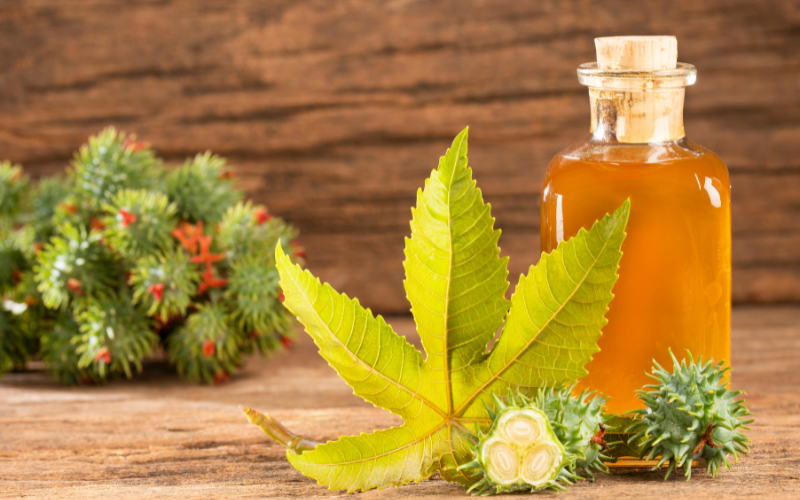
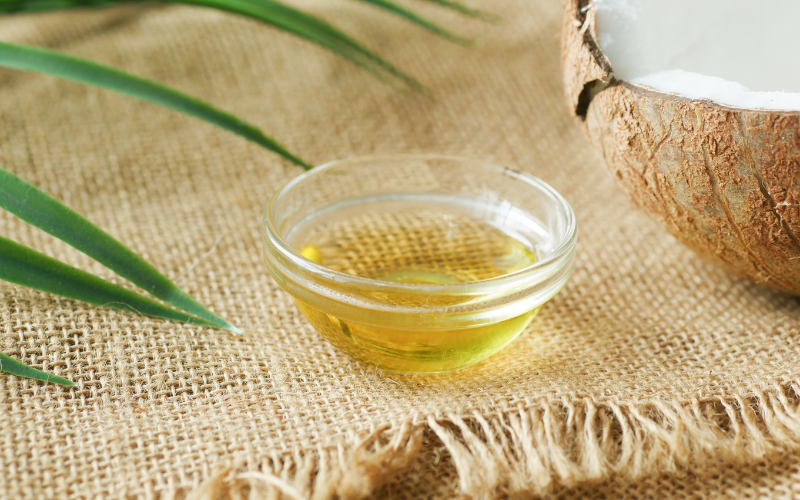
Thecastor oil, extracted from the seeds of the castor plant Ricinus communis, has been used for millennia in various traditions. It is distinguished by its composition of ricinoleic acid, a fatty acid that is hardly found anywhere else in nature. Castor oil is a thick, viscous oil, used as an external care to nourish the skin and hair.
Historically, castor oil was already valued in ancient Egypt for its traditional and cosmetic uses. Over the centuries, its use has spread across the world, from India to Europe, and through America. Today, it is experiencing a resurgence of interest in the field of naturopathy and natural care, particularly for skin and hair care.
Castor oil stands out for its thick texture, which makes it an interesting carrier for poultices and wraps.
Castor oil is distinguished by its unique chemical composition. At the heart of this remarkable oil is Ricinoleic acid, a rare fatty acid that makes up 89 to 92% of its composition according to Nitbani et al. (2022), published in the Journal of Oleo Science.
Ricinoleic acid has a unique molecular structure, with an additional hydroxyl group on the 12th carbon atom.
Besides ricinoleic acid, castor oil contains other components:
Unsaturated fatty acids: Castor oil contains small amounts of oleic acid and linoleic acid.
Minerals: traces of magnesium and zinc
The quality of castor oil can vary significantly depending on its production method. An organic castor oil, cold-pressed like the one we offer at Biovie, is a guarantee of quality. It is a criterion that is non-negotiable in our eyes.
Castor Oil Poultices: Principles and Preparation
The Poultices Castor oil is an ancient method of natural care, rediscovered and popularized by naturopaths such as Irène Grosjean. Used externally, this technique involves applying castor oil to a specific area of the body using a suitable support, often combined with heat.
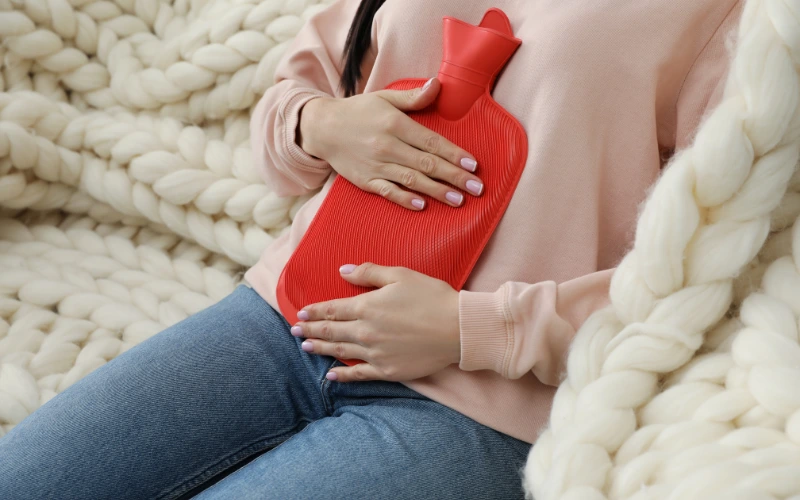
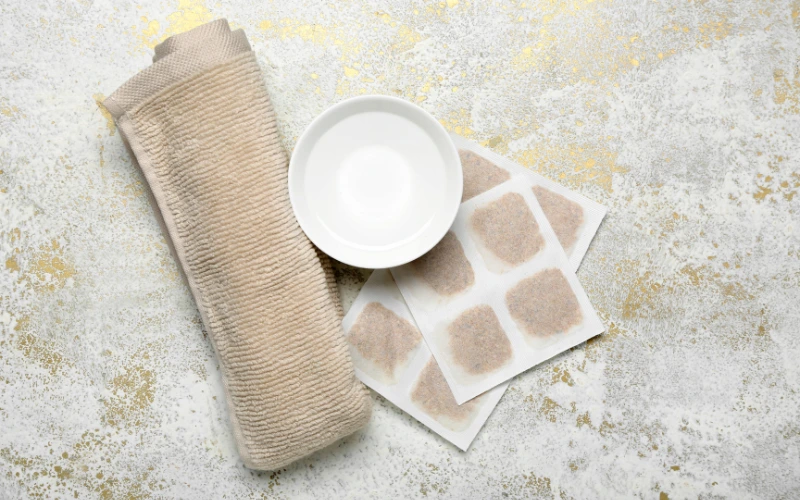
To make a poultice, you will need a few essential elements: high-quality castor oil (organic and cold-pressed), an absorbent piece of fabric such as cotton flannel or gauze, and a gentle heat source, hot water bottle, heating pad, or warm towel. Gentle heat makes the application more pleasant.
Steps for preparing a poultice
Here are the detailed steps to make your poultice:
Choice of support: opt for a natural and absorbent fabric such as flannel, gauze, or organic cotton. These materials allow for better oil retention and a comfortable application on the skin. Avoid synthetic fabrics that could cause irritation.
Application of oil: Pour the organic castor oil generously onto the chosen fabric. Make sure the fabric is well soaked without being dripping. The oil should be at room temperature for easier application.
Setting up the wrap and poultice
Setting up is an important step. Here's how to proceed:
Choice of materials:
Opt for a soft and absorbent organic cotton towel, which will serve as the basis for your application.
Use a high-quality food-grade plastic wrap, BPA-free, to keep the oil in place and preserve the heat.
Prepare an old towel or a sheet that you are not afraid to stain, to protect your bedding.
Step-by-step setup:
Start by carefully cleaning the area to be treated with warm water and a mild soap.
Generously pour the organic castor oil onto the cotton towel. It should be well soaked but not dripping.
Apply the soaked towel directly to the skin, positioning it on the targeted area.
Wrap with plastic wrap, making several turns to hold it in place. Be careful not to wrap too tightly to avoid restricting circulation.
Add a hot water bottle or a heating pad to the wrap.
Cover everything with the old towel to protect your bedding.
Make yourself comfortable. If the wrapping does not bother your sleep, you can keep it all night.
For a day wrap, plan for a duration of 1 to 3 hours, ensuring that you are in a comfortable position. After the wrap, gently remove the materials and gently massage the skin to help the excess oil absorb. You can lightly rinse with warm water if necessary.
It is recommended to consult a healthcare professional before starting, especially if you have pre-existing medical conditions.
Recommended duration and frequency
The duration and frequency of application are to be adapted to each person. For most applications, a duration of 30 to 60 minutes is generally recommended. Some more sensitive areas may require shorter durations.
Here are some recommendations according to the areas of the body:
Joints (knees, elbows, wrists): 30 to 45 minutes
Abdominal area and liver: 45 to 60 minutes, or all night
Back: 45 to 60 minutes
Scalp: 20 to 30 minutes
Regarding frequency, it depends on the individual reaction. It is often recommended to start with a daily application for a week, then gradually reduce to 3-4 times per week.
Listening to one's body is essential to adjust the duration and frequency of the poultices.
Castor oil wraps: technique
Castor oil wraps represent a natural care method, close to poultices. This technique involves applying castor oil to a larger area of the body and keeping it in place for a longer duration, often overnight.
Unlike poultices, which are generally applied to localized areas for a limited time, wraps cover a larger surface area.
With an overnight wrap, the body's natural heat during the night keeps the oil at a pleasant temperature.
Body areas suitable for wraps
Castor oil wraps can be applied to various parts of the body
1. Joints (knees, elbows, wrists)
Tip : for the knees, wrap the entire joint, covering the area above and below for a more complete wrap.
2. Abdominal area
Application : cover the entire abdominal area, from the bottom of the ribs to the lower abdomen.
3. Dorsal zone
Advice : cover the entire lumbar region, ensuring that the wrap extends on both sides of the spine.
6. Scalp
Scalp wrapping with castor oil is a traditional hair care.
Application : apply the oil directly to dry hair and wrap the head with a shower cap or a cotton towel.
Practical tips
For a successful wrap:
Keep them in place for at least 1 to 2 hours,
For certain areas (abdomen, back), leave them on overnight.
Precautions
Each person may react differently to wraps.
Start with short sessions and gradually increase the duration.
Always consult a healthcare professional before starting a regular treatment, especially if you have pre-existing medical conditions.
Castor oil poultice on the liver area: how to apply it
It is probably the application that raises the most questions in my inbox. Specifically, how do you position a castor oil poultice on the liver area?
The liver is located in the right side of the abdomen, under the ribs. It is precisely in this area, the right side of the abdomen, under the right costal margin: that you will apply the poultice. A towel well soaked in organic castor oil, held in place by plastic wrap, with a hot water bottle on top. The recommended duration is 45 to 60 minutes minimum, ideally in the evening. Some natural health practitioners even recommend keeping it on all night.
Practical protocol for castor oil poultice on the liver:
Generously soak a cotton flannel towel with organic castor oil.
Position on the right side of the abdomen, under the costal margin.
Maintain with BPA-free plastic wrap.
Place a hot water bottle on top.
Leave on for 45 to 60 minutes in the evening, lying down and relaxed.
Practice according to your comfort, without excess.
Here is a simple, inexpensive practice that you can easily integrate into your routine. To try it is to adopt it !
Castor oil and green clay poultice: the recipe
Combining castor oil and green clay in a single poultice is one of my favorite formulas.
The principle is simple: mix green clay powder and castor oil to obtain a paste that is easy to spread.
The recipe for the castor oil and green clay poultice:
2 tablespoons of green clay powder,
2 tablespoons of organic castor oil,
4 drops of true lavender essential oil (optional),
Mix in a glass or ceramic container until a smooth paste is obtained.
⚠️ Important precaution: Never use metal utensils or containers with green clay A simple glass bowl and a wooden spoon are sufficient.
Application: Spread the paste directly on the skin or on a cotton cloth, then apply it to the targeted area. Secure with plastic wrap or a cotton band. Let it work. 30 to 45 minutes, then rinse with lukewarm water.
Skin and hair care
Castor oil poultices and wraps are also used as a cosmetic care for the skin and hair.
For the skin, castor oil is used as a moisturizing care. Thanks to its thick texture and rich composition of fatty acids, it forms a protective barrier that helps retain moisture in the skin.
For an overnight wrap on the hair: generously apply castor oil to the scalp and lengths, cover with a shower cap, and leave it on overnight.
Irène Grosjean's Method: Features and Advice
Her approach, rooted in a holistic vision of health, emphasizes the importance of living food. Irène Grosjean, an iconic figure in naturopathy in France, popularized the use of poultices and castor oil wraps as a natural healing method.
Irène Grosjean, born in 1930, has dedicated her life to the study and practice of natural methods. Her approach is distinguished by attention to the interactions between the body, mind, and environment.
Irène Grosjean's method is characterized by its simplicity and coherence. It advocates for regular and targeted application, based on the specific needs of each individual. His technique emphasizes the quality of the oil used, always recommending organic, cold-pressed castor oil to ensure optimal quality.
One of the particularities of Irène Grosjean's method is the integration of poultices into a broader health approach. She associates them with dietary changes, notably the adoption of a living food and raw, rich in organic fruits and vegetables. This synergy between external care and internal nutrition is at the heart of its philosophy.
Irène Grosjean also emphasizes the importance of mindset when applying poultices. She encourages a meditative and mindful approach, inviting individuals to connect with their bodies during the treatment.
To delve deeper into Irène Grosjean's method, her book "Life in abundance" is a valuable resource. This book provides practical instructions and a broad perspective on natural health and living foods.
Specific techniques recommended by Irène Grosjean
Irène Grosjean has developed specific techniques for the use of poultices and castor oil wraps. Her holistic approach emphasizes natural methods.
Optimal timing
Irène Grosjean recommends applying poultices in the evening, before bedtime, allowing the oil to work during the night.
Complementary practices
a living diet rich in raw and organic foods,
deep breathing exercises during the application,
a meditative practice during the application,
sufficient hydration with pure water.
Frequency and duration
Recommended daily usage,
Periods of 3 to 6 weeks,
Followed by breaks.
It is always recommended to consult a healthcare professional before starting a new care regimen, especially in the case of pre-existing medical conditions.
Testimonials and feedback
The feedback from our customers on the use of castor oil as a poultice is numerous and positive. Here are some genuine reviews left on our pages:
Sheherazade De la Forêt ★★★★★ (Trustpilot) "I found the castor oil I was looking for... Excellent product with nice packaging protected from light."
The quality of oil preservation is indeed a crucial point, that is why we package our organic castor oil in opaque bottles, which preserve the integrity of the ricinoleic acid.
Precautions and contraindications
The use of castor oil poultices and wraps, although generally well tolerated, requires certain precautions. It is crucial to approach this practice in an informed manner to limit potential risks.
Castor oil may not be suitable for everyone. Some people may be more sensitive to its effects or have specific contraindications. Therefore, it is essential to be well-informed and, if possible, consult a healthcare professional before starting a regular treatment.
Particular attention must be paid to the quality of the oil used. Always opt for organic, cold-pressed castor oil to ensure the purity of the product and avoid any risks associated with additives or contaminants.
Discover on this page simple, effective and eco-friendly products to enrich your daily routine and hygiene with pure, natural ingredients. The castor oil and the Epsom salt we offer here are multi-purpose solutions and versatile products. All our oils come from organic farming., 3
products
Amrita ★★★★★ (Trustpilot) "The ordered product (5L castor oil) is of high quality with a very good value for money."
It is also important to note that castor oil poultices and wraps are an external comfort care and do not in any case replace medical advice or treatment.
It is recommended to perform a patch test on a small area of skin before applying the oil to a larger surface. In case of redness, itching, or irritation, discontinue use and consult a doctor.
People at risk
Although castor oil poultices and wraps are generally considered safe, some people should exercise particular caution or avoid this practice.
Pregnant and breastfeeding women: Pregnant women need to be particularly vigilant. Ricinoleic acid can stimulate the EP3 receptors of prostaglandins, potentially inducing uterine contractions. (Vieira et al., 2000), this mechanism is also documented in the context of labor induction. Therefore, application on the abdomen is strongly discouraged during pregnancy. For breastfeeding women, consult a healthcare professional before any use.
People suffering from certain skin conditions: Individuals with active skin conditions, such as eczema or psoriasis, should be cautious. It can exacerbate symptoms in some people. A preliminary test is recommended.
People suffering from severe liver or kidney problems should consult their doctor before regularly using poultices on large areas of the body.
Individuals with a history of allergies or skin sensitivities must be vigilant. Although allergic reactions to castor oil are rare, they can occur, a prior skin test is highly recommended.
People undergoing medical treatment should discuss it with their doctor before incorporating castor oil poultices into their routine, especially if this treatment is applied to the skin.
Castor oil poultice side effects: what science says
Let's be clear on this point, because honest information is better than excessive promises. Here is what science actually tells us about the possible side effects.
For external use, castor oil is generally very well tolerated. The CIR Expert Panel (2007, PMID: 18080873) concluded in its safety report that castor oil is safe under normal cosmetic and topical use conditions. Sensitization reactions are possible but rare.
Possible side effects include:
Mild skin reactions: Redness or mild itching at the application site, which usually disappears within 24 hours. Always perform a preliminary skin test.
Local dehydration: If the application is prolonged too long without rinsing, slight skin dehydration may occur. Be sure to hydrate the treated area well after each application.
Interactions: castor oil can potentially alter the transcutaneous absorption of other products applied to the same area. Consult your doctor if you are using a local treatment concurrently.
Contraindication pregnancy (scientifically confirmed): As mentioned above, ricinoleic acid stimulates the EP3 receptors of prostaglandins, which can induce uterine contractions (Vieira et al., 2000). Strongly advised against on the abdomen during pregnancy.
Severe allergic reactions: rare but possible, in case of swelling, widespread rash, or breathing difficulties, stop immediately and consult a doctor.
Important note: this oil is for external cosmetic use only; do not swallow it. Keep it out of reach of children and avoid any contact with the mouth or eyes during applications.
Conclusion
Castor oil poultices and wraps represent a traditional external care method. This ancient technique, revived by naturopaths like Irène Grosjean, is simply practiced at home.
Applied as a poultice or wrap, castor oil is above all an external care that nourishes and softens the skin.
For those who wish to try castor oil poultices, choosing a quality product is non-negotiable. Organic castor oil offered by Biovie meets these criteria of excellence. Cold-pressed and sourced from organic farming, it ensures optimal purity. We have been offering it since 2007, and the trust of our clients is, for Aurélie and me, the most beautiful validation. If you want to know more about how to choose your oil, check out our guide for buy organic quality castor oil in France.
Remember that each person is unique. Listen to your body, adapt these techniques to your specific needs, and don't hesitate to consult a healthcare professional for personalized advice.
Stay informed about the latest trends in natural health and discover more tips for incorporating organic products into your daily life, we encourage you to subscribe to our newsletter. You will regularly find advice, recipes, and valuable information for your daily life.
Take care of yourself naturally.
Your questions and our answers (FAQ)
What is the best way to apply a castor oil poultice ?
Pour generously theorganic castor oil on a cotton or flannel fabric. Place the soaked fabric on the area to be treated, cover with BPA-free plastic wrap, then apply a hot water bottle. Leave it on for 30 to 60 minutes (or overnight for the abdomen). Opt for a cold-pressed organic oil for better quality.
What are the disadvantages and side effects of a castor oil poultice ?
Castor oil is generally well tolerated for external use (CIR Expert Panel, 2007, PMID 18080873). Possible side effects include mild redness or local dehydration if the application is too prolonged. Rare allergic reactions may occur, a prior skin test is recommended. Its use is strictly discouraged on the abdomen of pregnant women (risk of uterine contractions via EP3 receptors). Consult a doctor if you are undergoing a local treatment.
What is the recipe for a castor oil and green clay poultice ?
Mix 2 tablespoons of green clay powder with 2 tablespoons of organic castor oil in a glass container (never metal). Optionally, add 4 drops of true lavender essential oil. Spread the paste on a cloth or directly on the skin, leave for 30 to 45 minutes, rinse with lukewarm water.
How often should castor oil poultices be used?
It is an external comfort care that everyone practices at their own pace.
Are there any contraindications to using castor oil poultices ?
Poultices are strongly discouraged for pregnant women on the abdomen, as ricinoleic acid can stimulate uterine contractions. People who are allergic, suffering from active skin diseases (eczema, psoriasis), severe liver or kidney conditions, or those under local treatment should consult a healthcare professional before use.