

You do not need a spiraliser to turn carrots into pasta: a simple peeler gives long, supple ribbons, far prettier than spirals. They are then coated in a creamy satay sauce with almond butter, curry and coconut cream, which gently softens the vegetable in a few minutes of resting. Spinach, dried mushrooms and the mint-coriander-chive trio complete the bowl. It is fresh, generous, and easily improvised with whatever you have.
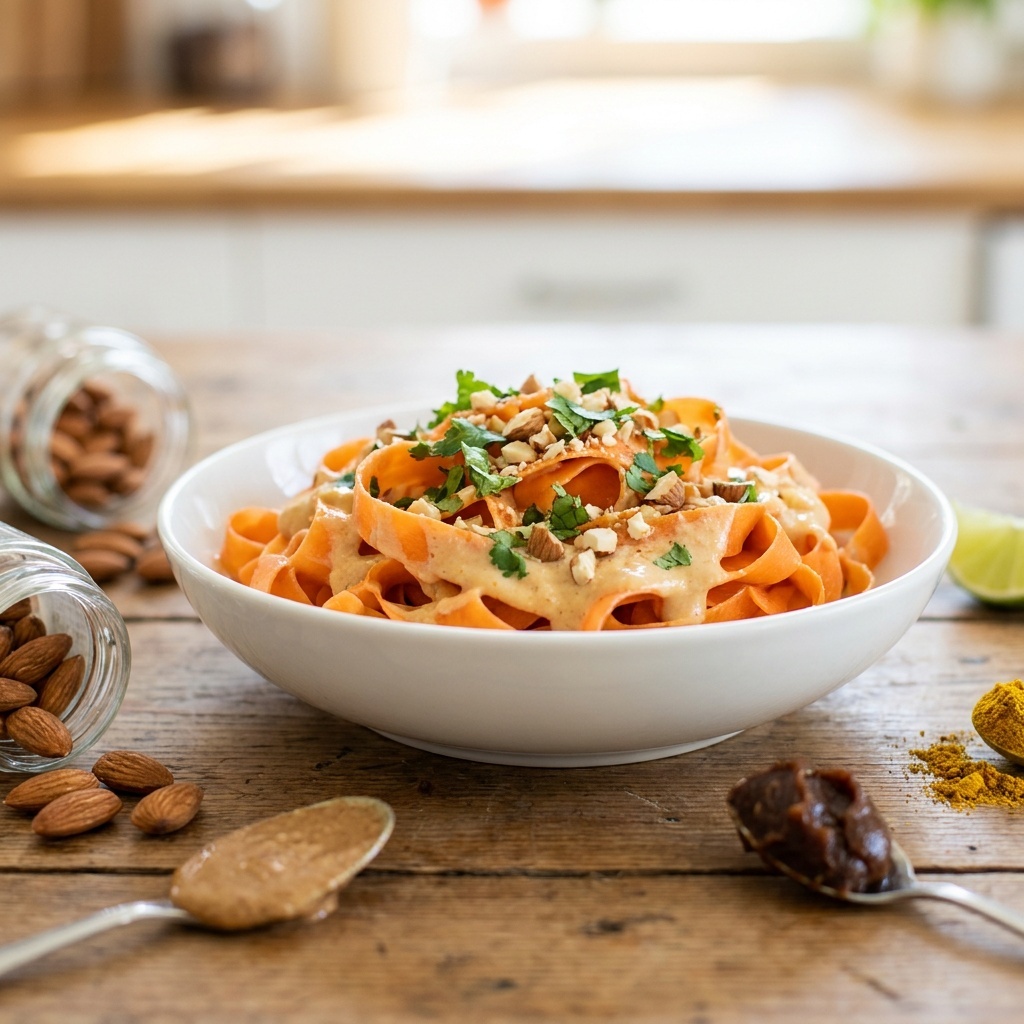
Carrot ribbon bowl with coconut almond satay sauce

Share this article
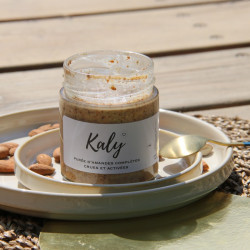
Activated almond puree
€15.70
Ingredients
For the carrot ribbons
- About 500 g carrot ribbons (4 to 5 large carrots)
For the coconut almond satay sauce (you will only use about half)
- 155 g almond butter
- 1 tbsp date paste
- 1 tbsp cider vinegar or lime juice
- 3 tbsp finely chopped spring onion or garlic, to taste
- 1 tsp curry powder
- 1/2 tsp pressed fresh ginger
- 1/4 tsp cayenne pepper
- 2 tbsp tamari (optional)
- 60 ml melted coconut cream
- 60 ml filtered water
- Salt, to taste (or the equivalent of 1 tablespoon - 15 ml - of seawater)
For building the bowl
- 30 g shredded spinach
- 15 g dried brown button mushrooms
- 6 g chopped mint (1 tbsp)
- 6 g chopped coriander (1 tbsp)
- 6 g chopped chives (1 tbsp)
Method
- Hold the carrot by the stem end, which makes a handy grip, and peel it lengthways with a peeler, turning it as you go.
- Carry on until you reach the core or until you can no longer get decent ribbons.
- Whisk together all the satay sauce ingredients until smooth.
- Transfer the sauce to a sealed container and let it rest for 20 to 30 minutes in the fridge: it thickens and develops all its aromas.
- In a large bowl, toss the carrot ribbons with the spinach, the dried mushrooms and the chopped herbs.
- Add 120 to 180 ml of satay sauce and mix thoroughly to coat every ribbon.
- Let it rest for about 5 minutes before serving: that is the time the carrots need to soften.
Tip
The longer the carrots marinate in the sauce, the closer their texture gets to real tender pasta: do not hesitate to extend the rest to half an hour if you have the time. Choose really large carrots, they are the ones that give the longest ribbons; small new carrots break before they are usable. The sauce keeps for five days in the fridge and thickens further: loosen it with a spoonful of water when you use it. Leftover sauce makes an excellent dip for vegetable sticks.
The full range Oilseeds, nuts, seeds
20 products
Discover the full range

FAQ: your questions about the carrot ribbon bowl
How do you make raw carrot ribbons?
The peeler remains the simplest and most effective tool: hold the carrot by its stem and peel it lengthways, turning it a quarter turn with each pass. A mandoline with a wide blade gives more regular but thinner ribbons, and a spiraliser produces spaghetti rather than ribbons. Whatever the tool, the bigger and straighter the carrot, the longer the ribbons. Keep the offcuts from the core for a juice.
Is it good to eat a raw carrot every day?
A medium carrot, around 100 g, fits very well into a daily diet and provides fibre, carotenoids and vitamin K. Nothing requires eating one every day, and variety of vegetables remains the best principle. At very high doses over a long period, carotenoids can slightly colour the skin, a harmless phenomenon that disappears when intake is reduced. As always, it is regularity and diversity that count, not the quantity of a single vegetable.
What can you put in a carrot salad?
Anything that brings crunch, acidity or fat. Sunflower and pumpkin seeds, nut pieces, raisins, julienned apple, fresh herbs in quantity. On the acidic side, lemon, cider vinegar or an orange peeled to the flesh work very well with carrot. And on the fat side, a nut-based sauce like the one in this recipe turns a simple grated salad into a complete dish.
What is the recipe for raw carrots?
Raw carrot lends itself to three main treatments: finely grated for a classic salad, cut into ribbons or spaghetti for a pasta-style dish, and cut into sticks for dipping. In all three cases the dressing benefits from containing a fat, because carotenoids dissolve in it and become more available. A resting time of a few minutes in the sauce always softens the carrot and concentrates the flavour.
Share this article