Here is an article that is particularly close to my heart, and I choose my words carefully. Since I began my journey with raw food in 2005, I have witnessed an incredible transformation: a niche food, once viewed with perplexity (and sometimes a certain disgust) by the vast majority of French people, is becoming one of the most strategic food issues of our century. Biovie has officially joined the Global Seaweed Coalition - a global coalition supported by the UN, FAO, CNRS, and France itself. This is a significant step in our Biovie adventure.
By joining the Global Seaweed Coalition, Biovie is not only distributing superfoods from the sea allies of your health - we are taking a stand in one of the most decisive food transitions of the 21st century. Global seaweed production has already tripled in 20 years to reach over 35 million tons. And this is just the beginning.
What is the Global Seaweed Coalition and why is it historic ?
A coalition born from a planetary emergency
A few years ago, talking about a "global coalition for algae" would have made people smile. Today, it is a leading institutional reality. The Global Seaweed Coalition (GSC) is an international partnership co-founded by three major players: the Lloyd's Register Foundation, the United Nations Global Compact, and - and this is where it becomes very interesting for us, the French - the CNRS, represented notably by Dr. Philippe Potin, research director at the Roscoff Biological Station in Brittany.
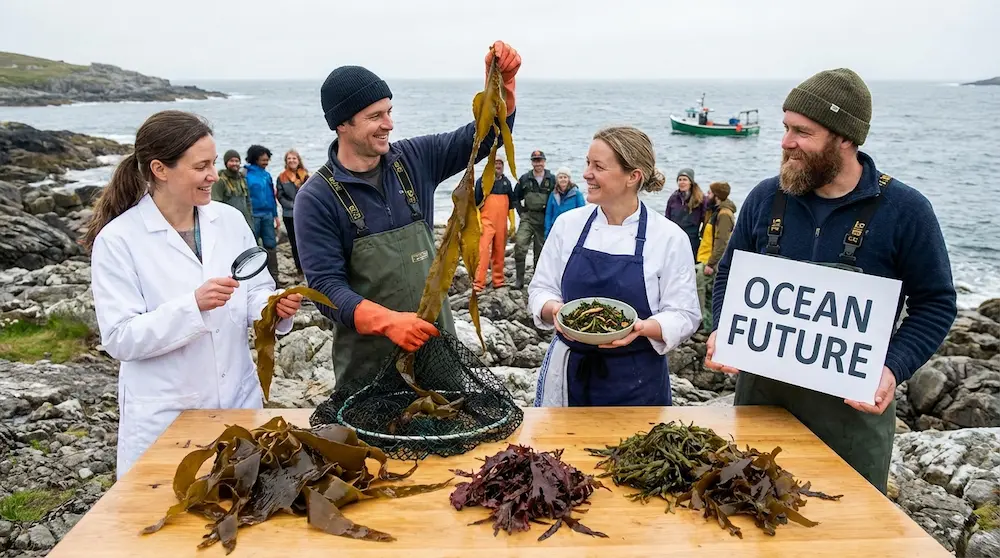
Roscoff. This name resonates particularly for Aurélie and me. We source some of our Breton seaweeds from these regions, where teams of researchers have been working for decades to understand what marine algae can offer humanity. Seeing the CNRS become a co-founder and scientific director of this global coalition is seeing French science take its place in a global conversation. It's truly exciting.
The mission of the GSC is clear: to develop theAlgae industry 2025 and beyond in a safe, sustainable manner, and in service of global food security. It is closely linked to the United Nations Global Seaweed Initiative (UNGSI), launched in 2025 during the Oceans Conference in Nice - with France as one of the three founding states, alongside Madagascar and Indonesia.
France co-chairs a global initiative on seaweed. Let me tell you that when I started importing kombu and dulse in 2007, absolutely no one would have predicted this.
Who are the members of this global coalition ?
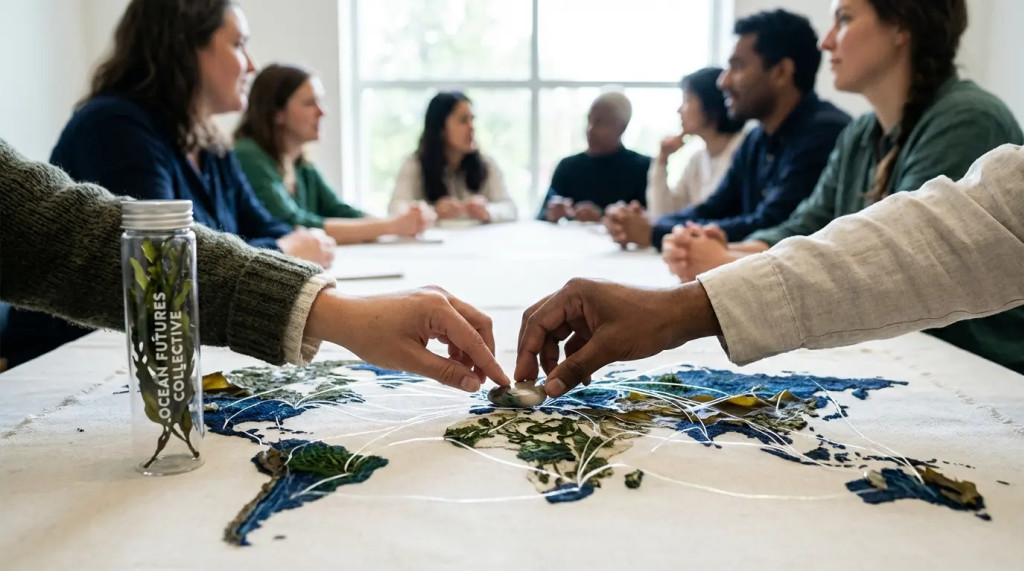
The International Coalition for Edible Algae gathers today more than 1,000 stakeholders around the world: artisanal producers from the Pacific, multinational agribusinesses, scientific institutions, environmental NGOs, government agencies. Its strength lies precisely in this complete value chain-from small Breton harvesters to international regulatory bodies.
Concretely, the GSC has already co-financed more than1.2 million euros on 24 projects in 26 countries. Projects focused on sustainable culture, food security, carbon impact reduction, and traceability. Projects that we, at Biovie, have always placed at the heart of our approach - without necessarily having the institutional label that goes with it. This is precisely why joining the GSC became an obvious choice for us.
Can algae really feed and save the planet ?
Dizzying numbers
I know that this question may seem ambitious, even exaggerated. Allow me to provide you with some figures that, I hope, will make you see your next order of spirulina or wakame in a different light.
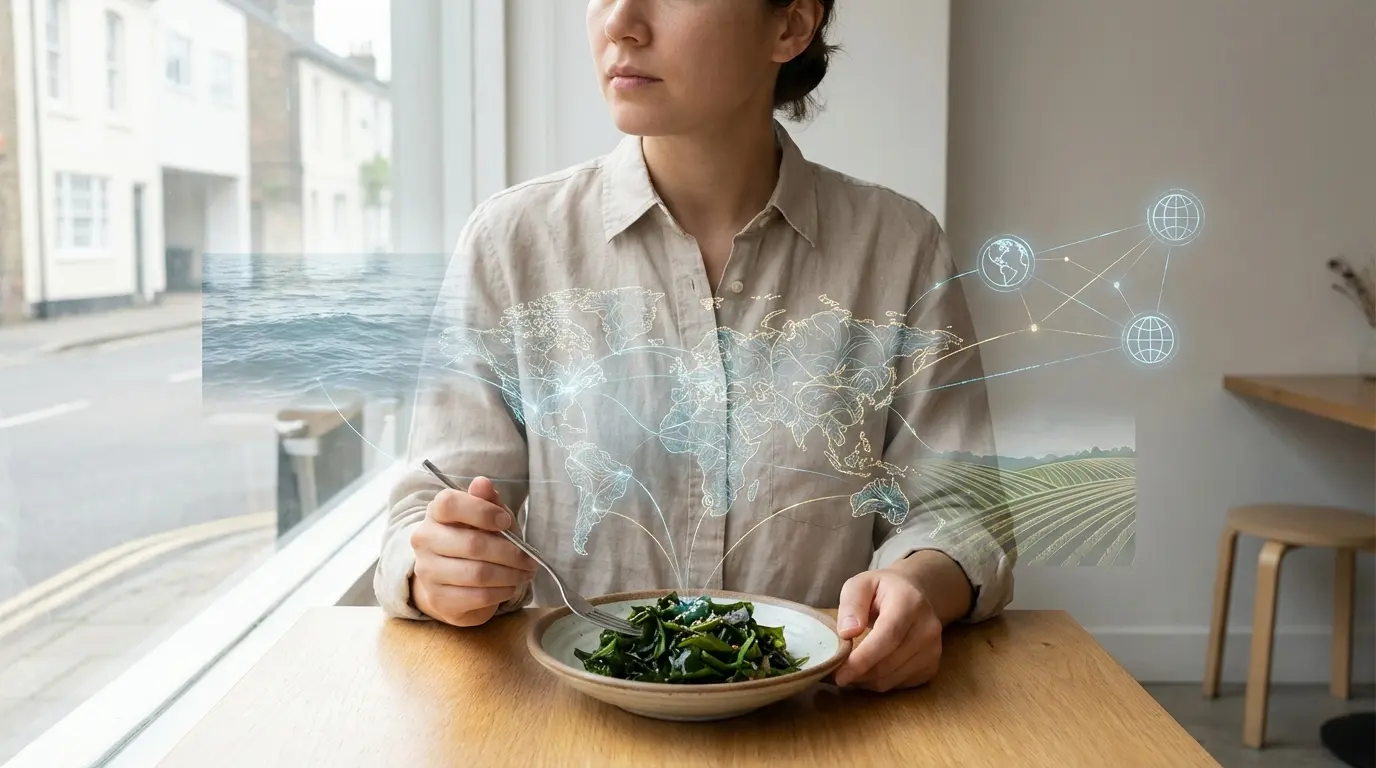
The global seaweed market is currently valued at 9 billion dollars per year. It doubled between 2005 and 2015, and continues to grow. Global production has exceeded 35 million tons in wet weight - a staggering figure when considering that it mainly pertains to Asian crops, and that Europe and Africa are only at the early stages.
But here is what is truly striking: according to estimates from the United Nations and the Global Seaweed Coalition, the oceans have the potential to produce 15 times more algae by 2050. Fifteen times. This growth could generate 150 million jobs in the world - which is more than the entire current oil industry. And reaching 500 million tons of production would allow for the assimilation of 10 million tons of nitrogen in the oceans, which is 30% of the estimated nitrogen entering marine waters due to intensive agriculture.
These figures do not come from activist organizations. They are from the FAO, UNCTAD, and the UN Global Compact. These are rigorous institutions that do not venture into projections without solid data.
The 5 global challenges that algae can solve
Here is what distinguishes algae from any other food or crop: they are the only food resource that is both nutritious and regenerative. No farmland. No freshwater. No fertilizers. No pesticides. And in addition, the Algae absorb carbon., reoxygenate the oceans and reduce their acidification.
Specifically, algae can help address five major challenges:
Global food security - the nutritional richness of seaweed is exceptional: rich in complete proteins, essential fatty acids, minerals, and vitamins, spirulina, dulse, or nori represent a protein alternative to animal resources in a context where feeding 10 billion human beings in 2050 will be a colossal logistical challenge.
Climate change - the seaweed and climate change constitute a major research topic: on a large scale, marine cultures can become true "blue sinks," complementing terrestrial forests.
The pressure on freshwater resources - unlike terrestrial crops, algae do not use a single drop of fresh water. In a world where groundwater is depleting, this is a valuable characteristic.
Marine biodiversity - Well-managed seaweed farms can create marine refuges, nurseries for fish, and recolonization areas for marine life.
The food sovereignty of coastal countries - Madagascar, Indonesia, the Pacific islands, and some West African countries can develop a sovereign food industry without relying on imports of land-based proteins.
I invite you to watch our YouTube episode on the environmental impact of living food, where I explain why algae place us at the very bottom of the food chain - and why that's precisely where the most powerful lever is to reduce our carbon footprint:
Why did Biovie join the Global Seaweed Coalition ?
Our commitment goes beyond the product.
I will share a personal anecdote with you. When I started consuming seaweed in the early 2000s, no one was talking about international coalitions or UN initiatives. I ordered my seaweed in minimum batches of 12 kilos (the founder of Bretalg, Michel Coz, only sold to individuals in that format). An entire shelf of the family fridge was dedicated to seaweed. People looked at me with eyes like saucers when I offered sea beans or dulse.
Today, France is co-chairing a global initiative with Madagascar and Indonesia to regulate and develop this sector. Joining the Global Seaweed Coalition was an obvious choice - we already had everything it promotes: traceability, certification, consumer education. What the coalition brings us is a global network of experts, researchers, and institutions to stay at the forefront of safety and sustainability standards.
Our vision of life that goes beyond mere commerce, We already expressed it in our environmental commitments long before the GSC existed. But being part of a UN coalition also means taking on a broader responsibility. That of demonstrating, from our position as a French e-commerce player, that the seaweed industry can be both economically viable, rigorously certified, and driven by values that go beyond immediate profit.
What this concretely changes for our algae
You may be wondering what this changes for you as a Biovie customer. That's a good question, and I want to answer it honestly.
In the short term, our membership in the GSC strengthens our certification requirements and traceability already existing. The organic spirulina you order from us, the chlorella, the certified organic wakame, the kombu, the culinary seaweed par excellence, nori, dulse, or klamath - all these products already meet the highest standards. Traceability and Algae bio certification are no longer optional in this sector, and they never have been with us.
In the medium term, our participation in the coalition allows us to access the latest scientific data on the industry, contribute to the development of sustainability standards, and stay connected with researchers who are advancing knowledge on the sustainability of edible seaweeds - some of whom work just a few kilometers from the areas where we source our supplies, in Brittany.
In reality, the issue is deeper than mere compliance. It is about our vision: the seaweeds you find on Biovie.fr embody exactly what the Global Seaweed Coalition promotes. Traceable, organically certified supply chains from producers who respect marine ecosystems.
How does your consumption of organic seaweed become a political and global act ?
From wakame on your plate to the IPCC - the path is shorter than you might think
I am going to tell you something that may seem provocative, but that I deeply believe: every time you order certified traceable bio algae, you vote with your wallet for a global food model.
It may seem exaggerated. Allow me to explain the concrete mechanism. The global seaweed market has tripled in 20 years. It is growing because consumers like you, in Europe, North America, and Oceania, are deciding to incorporate seaweed into their daily diet - eating seaweed every day has a very real impact on the planet. This demand directs global investments. It sends an economic signal to producers, distributors, and financial institutions: the seaweed sector is viable, traceable, certifiable.
The alternative, if no one buys seaweed or if everyone just buys the cheapest ones without considering their origin, is an industry that develops haphazardly - with the risks of pollution, overexploitation of marine ecosystems, and disastrous working conditions that it entails.
Your certified organic wakame what's on your plate tonight is directly connected to this global dynamic. It might be the most concrete path you can take to contribute to the algae and UN sustainable development goals - without radically changing your lifestyle, just by integrating these superfoods from the sea allies of your health in your daily diet.
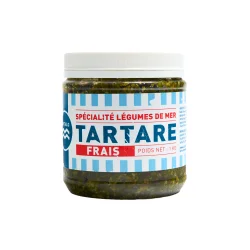
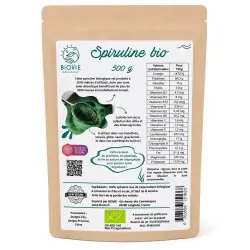
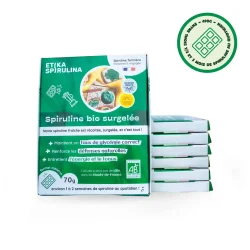
Biovie organic spirulina comes in 4 formats: fresh, grown in a greenhouse by Etika; frozen fresh, produced in northern France by Etika Spirulina; powder, from organic aquaculture; and phycocyanin, the concentrated extract of the blue pigment, almost tasteless but intensely colorful. To start a regular routine, powder is the most economical and the easiest to dose; for freshness, choose fresh or frozen spirulina of French origin, closer to the harvest. Phycocyanin suits anyone looking for a concentrated extract with a discreet taste, to add to a preparation without changing its flavor., 4
products
Why choosing traceable and certified organic seaweed makes a real difference
Here is what we are sometimes told: "Organic seaweed is more expensive." That's true. And here's why it's the price of something important.
Choose some certified organic seaweed - Ecocert in our case - means choosing a supply chain that cultivates without pesticides or synthetic fertilizers. It supports producers who adhere to harvest quotas and preserve marine biodiversity. It guarantees a nutritional density that few foods can match, because an algae cultivated or harvested under optimal conditions indeed contains the minerals, proteins, and micronutrients that studies attribute to it.
Concretely, here is what organic certification and traceability mean for seaweed:
An identified and controlled harvesting or cultivation area
Harvesting practices that allow marine populations to regenerate
No pesticides, no herbicides, no chemical bleaching agents in the treatment
Regular analyses on heavy metals, marine contaminants, and microbial load
Fair compensation for harvesters and producers
Our commitment, for 18 years, is that every algae that reaches you has a name, an origin, a producer that we know. Starting with spirulina is the simplest and most powerful commitment you can make in this regard.
This is not marketing. It is the founding conviction that led us to create Biovie, and it is precisely what the Global Seaweed Coalition promotes on a global scale. We are proud to be a part of it.
Here is what our customers say about their experience with our seaweed:
"I mainly order seaweed, but also spices, marine plasma, and small accessories. I am completely satisfied with the quality of the seaweed and always impressed by the speed of delivery. Excellent value for money that makes me order regularly." - Julie F. ⭐⭐⭐⭐⭐ (Trustpilot)
"As a loyal customer of Biovie for years, I only find certain products with them: fresh seaweed in large quantities at an affordable price, in particular." - Laure ⭐⭐⭐⭐⭐ (Trustpilot)
"Since I discovered Biovie, I have been impressed by the seriousness and commitment of this brand. Thanks to Éric Viard and his newsletter, I regularly receive high-quality information about the origin of the products and their traceability." - Fabien Sarna ⭐⭐⭐⭐⭐ (Trustpilot)
Would you like to learn more about the benefits of seaweed in daily life? Discover the book "Seaweed in Daily Life" by Éric Viard (Gallimard, 2024).
FAQ - Your questions about the Global Seaweed Coalition and sustainable seaweed
What is the Global Seaweed Coalition and who leads it ?
The Global Seaweed Coalition (GSC) is a global partnership co-founded by the Lloyd's Register Foundation, the United Nations Global Compact, and the French CNRS. By 2026, it brings together nearly 2,000 stakeholders in the seaweed sector worldwide-producers, researchers, companies, NGOs-with the mission to develop the global seaweed industry in a safe and sustainable manner. It is closely linked to the UN Global Seaweed Initiative (UNGSI), co-led by France, Madagascar, and Indonesia since 2025.
Why are algae presented as a global food solution ?
Seaweeds are unique among food resources: they require neither agricultural land, nor fresh water, nor chemical fertilizers. They capture CO₂, reoxygenate the oceans, and can contribute to global food security. The United Nations estimates that global seaweed production could be multiplied by 15 by 2050, generating 150 million jobs and providing protein to entire populations. This is why the FAO, UNCTAD, the World Bank, and the CNRS are actively committed to this.
Why did Biovie join the Global Seaweed Coalition ?
Biovie has joined the Global Seaweed Coalition in line with its more than 10 years of commitment to traceable and certified organic seaweed. For Éric Viard, founder of Biovie, a personal consumer of seaweed daily since 2001, and author of the book "Seaweed Daily" (Gallimard, 2024), this membership naturally extends a founding conviction: seaweed is not just a superfood, it is a tool for global food transformation. The coalition provides Biovie with a network of experts, researchers, and institutions to stay at the forefront of safety and sustainability standards.
Does eating organic seaweed really help the planet ?
Yes, on several levels. By choosing certified organic seaweed (Ecocert), you support an industry that cultivates without pesticides or synthetic fertilizers, preserves marine biodiversity, and fairly compensates producers. On a systemic scale, the demand from conscious consumers sends a clear economic signal: it directs global investments towards sustainable production methods rather than high-carbon-impact terrestrial crops. The global seaweed market has already tripled in 20 years - each purchase contributes to this dynamic.
Does France play an important role in the global development of algae ?
Yes, and it is not widely known. France is one of the three founding states of the United Nations Global Seaweed Initiative (UNGSI), launched in 2025, alongside Madagascar and Indonesia. The CNRS, notably through the Roscoff Biological Station in Brittany, is a co-founder of the Global Seaweed Coalition and oversees its scientific direction. France is thus both a production territory, a global scientific hub, and a key diplomatic player in the development of seaweed as a food solution.