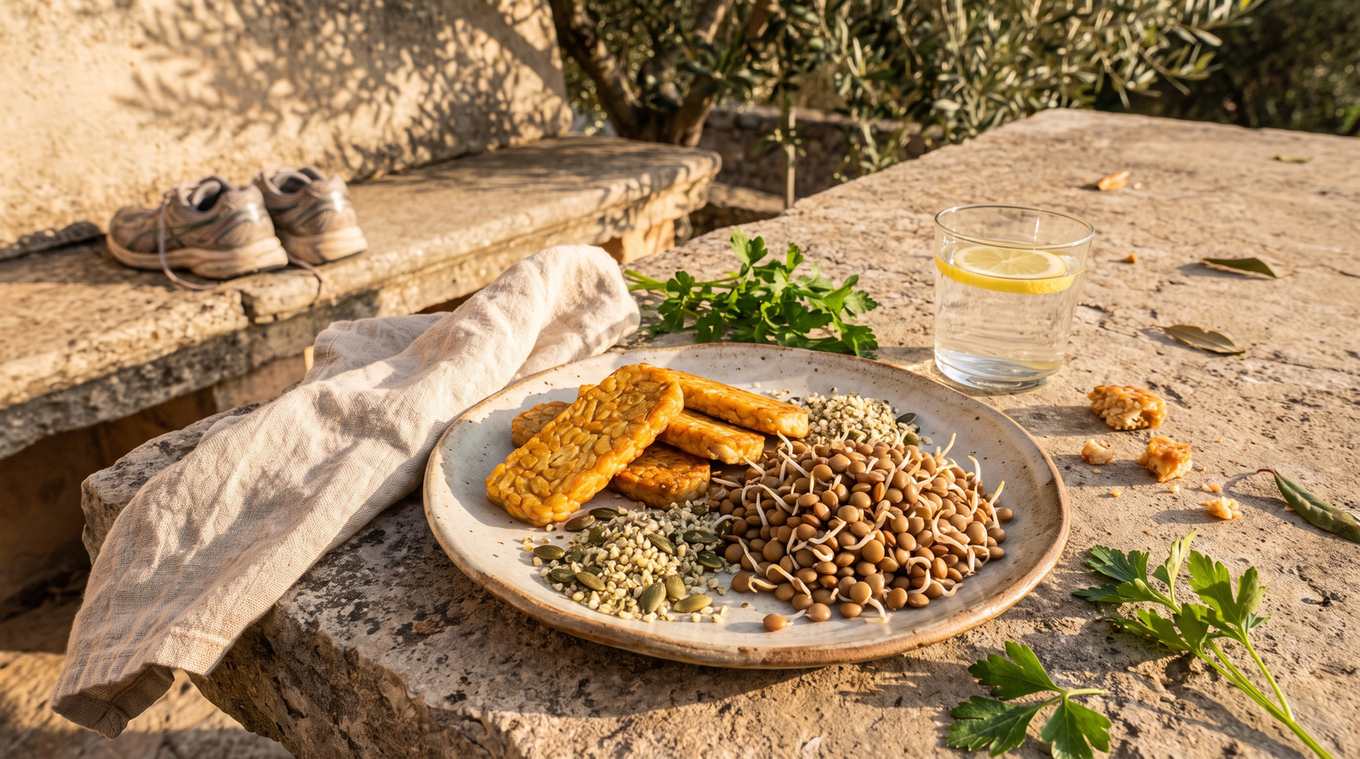
Yes, your plate is enough. If you aim for about 1.6 g of protein per kilo per day, spread over four meals, and rotate soy and legumes with seeds as backup, you cover your needs: when it comes to the best vegan protein for athletes, vegan or not, quantity and variety make up for a slightly lower leucine content. At Biovie, we built this page on the EFSA and ISSN references and on published human trials.
One hundred grams of hulled hemp seeds contain 31.6 g of protein, more than 100 g of tempeh (20.3 g), according to USDA FoodData Central. And yet, nobody has 100 g of hemp seeds for lunch.
Around the age of 20, I met someone who had eaten plant-based since birth, whereas I had always been led to believe that you needed animal products to be healthy.
I was lied to.
As an ISTOM engineer and a vegan since 1992, I prefer sourced figures to slogans.
How much protein do vegan athletes need per day?
Three figures are going around, and they don't measure the same thing.
First benchmark: the reference intake for adults is 0.83 g of protein per kilo per day (EFSA, 2012). For 70 kg, that is about 58 g, a little less than what you get from 150 g of firm tofu plus 400 g of cooked lentils. The EFSA considers intakes of up to twice that amount safe for active adults.
The ISSN recommends 1.4 to 2.0 g/kg/day for athletes who want to build or maintain muscle mass, and 2.3 to 3.1 g/kg/day for trained strength athletes in a calorie deficit (Jäger et al., 2017). For 70 kg, the usual range works out to 98 to 140 g of protein per day. Protein contributes to the growth and maintenance of muscle mass, as part of a varied and balanced diet and a healthy lifestyle.
Last benchmark, a ceiling: across 49 studies and 1,863 participants, the meta-analysis by Morton and colleagues no longer sees any average gain in lean mass beyond about 1.62 g/kg/day in adults doing resistance training (Morton et al., 2018). Picture a tap running into a glass that is already full: the extra water spills over. Beyond about 1.62 g per kilo, or 113 g for 70 kg, eating more protein no longer brings a measurable average gain in muscle.
Should a vegan aim higher?
The trials don't settle it. Pinckaers and colleagues suggest increasing the amount of plant protein to make up for a slightly lower quality, while noting that the question remains open (Pinckaers et al., 2021). My benchmark: aim for at least 1.6 g per kilo rather than the bottom of the range, that is 112 g per day for 70 kg.
And over the long term? What aging research says
That ceiling of 1.62 g per kilo concerns short-term muscle gain. Another question remains, the one about decades, and there recent research invites us not to push the dials out of habit.
In 2026, two researchers at the University of Wisconsin-Madison published a review of more than 350 references on protein restriction and aging (Knopf and Lamming, 2026). In yeast, flies and rodents, reducing protein goes with better metabolic health and a longer life, and restricting certain amino acids, methionine, isoleucine and valine, reproduces a good share of it. Human data, for their part, remain short and few, and the authors recall that requirements vary with age and physical activity. A training athlete is not the population concerned.
In people over 60, on the other hand, a high intake is no guarantee of muscle: among 3,302 British twins, an intake above 1.3 g per kilo per day was associated with twice as much sarcopenia (Ni Lochlainn et al., 2023). An observational study shows a link, never a cause, and the arrow can point the other way: someone losing muscle is often advised to eat more protein.
And the best-documented lever is already in your hands. A review published in Aging describes how exercise acts on the major mechanisms of cellular aging, and proposes AMPK, the cell's fuel gauge, as the conductor of these effects (Carapeto and Aguayo-Mazzucato, 2021). Training does a share of the work that no amount of protein will do in its place. Aim for your range, as part of a varied, balanced diet and a healthy lifestyle, and save your energy for the session rather than for the dose.
Best vegan protein for athletes: which foods to choose?
The best protein sources for vegan athletes are tempeh (20.3 g per 100 g), firm tofu (17.3 g), cooked lupin (15.6 g) and hemp seeds (31.6 g) or pumpkin seeds (30.2 g), then cooked lentils and chickpeas, at around 9 g.
| Food | Protein per 100 g | Typical serving | Protein per serving |
|---|---|---|---|
| Hulled hemp seeds | 31.6 g | 30 g | 9.5 g |
| Dried pumpkin seeds | 30.2 g | 30 g | 9.1 g |
| Tempeh | 20.3 g | 100 g | 20.3 g |
| Firm tofu (calcium sulfate) | 17.3 g | 150 g | 26 g |
| Chia seeds | 16.5 g | 20 g | 3.3 g |
| Cooked lupin | 15.6 g | 100 g | 15.6 g |
| Cooked lentils | 9.02 g | 200 g | 18 g |
| Cooked chickpeas | 8.86 g | 200 g | 17.7 g |
| Plain unfortified soy drink | 3.27 g | 250 ml | about 8 g |
These values come from the American USDA table, where legumes are weighed cooked; seeds, for their part, are eaten 20 to 30 g at a time. Per serving, soy and legumes do most of the work, with seeds as backup. In vegan strength training, the best protein for vegan athletes is still the one they actually eat.
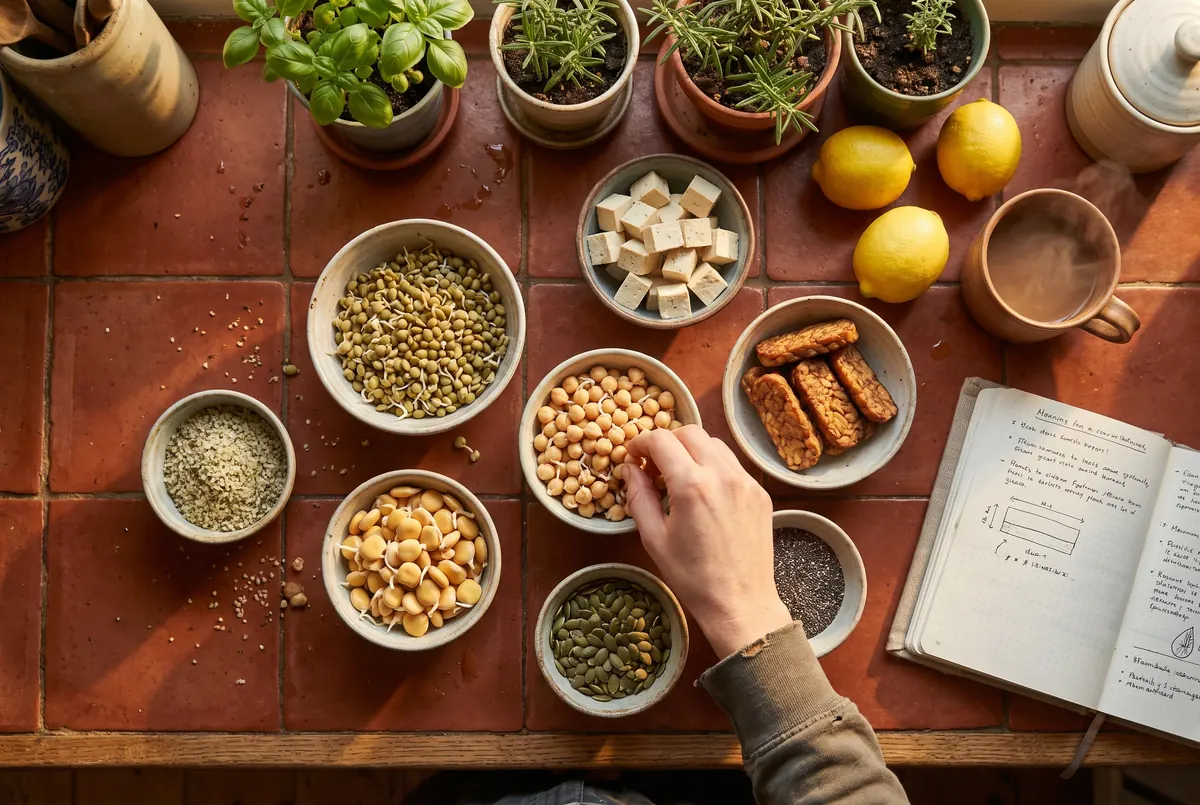
As part of a varied and balanced diet and a healthy lifestyle, rotate these foods from one meal to the next.
Firm tofu: read the label
The word "firm" is not enough. The USDA gives 17.3 g of protein per 100 g for a firm tofu made with calcium sulfate, and 9.04 g for another so-called firm tofu, made with calcium sulfate and nigari. Twice as much, or half as much: who really reads the name of the coagulant on a block of tofu? To know what your tofu provides, look at the "protein" line of the nutrition table rather than the adjective on the packaging.
Seaweed and spirulina: a complement
Seaweed and spirulina show a high share of protein once dried, but they are eaten in small amounts, as a condiment on a salad or in a smoothie. They complement a vegan athlete's plant protein intake without taking the place of soy or legumes. See also the protein content of nori.
"Incomplete" proteins: what science really says
So why is the myth of "incomplete" plant proteins so hard to kill, even in gyms? Because it starts from a real fact, measured in the lab. Gorissen and colleagues analyzed commercial protein powders: 21% essential amino acids for lupin and 22% for wheat, against 43% for whey (Gorissen et al., 2018).
The detail confirms it.
Leucine ranges from 5.1% (hemp) to 13.5% (corn) of the protein, against 9.0% for milk. On average, lysine is at 3.6% in these plant isolates against 7.0% in animal proteins, and methionine at 1.0% against 2.5%. Think of a bricklayer almost out of corner bricks: the wall stops at the first corner. The least abundant amino acid sets the limit, like those corner bricks, even when everything else is plentiful.
At equal amounts, soy or wheat trigger a lower muscle protein synthesis response than an animal protein, according to the measurements compiled by Pinckaers and colleagues. The authors first suggest eating a little more and combining several sources; completing the limiting amino acid is another possibility (Pinckaers et al., 2021). Eating a little more and varying your sources: two simple answers, within reach of any kitchen. You are not what you eat but what you absorb, and these lab figures remind us of that rather well.
That leaves leucine, a sort of switch for muscle protein synthesis. The ISSN places the useful dose between 700 and 3,000 mg of leucine per serving (Jäger et al., 2017). With 25 g of hemp protein, the poorest in leucine of the lot at 5.1%, you get about 1.3 g of leucine, already within the ISSN range.
So the lab describes, on powders, a protein a little less dense in certain amino acids, nothing more. To go further, two articles on the blog cover the absorption of plant proteins and the question of combining proteins and starches or separating them.
Vegan or omnivore: what the trials show
A protein-matched controlled trial is a match on equal terms: both groups eat the same amount of protein per kilo and follow the same training, only the source changes. If a gap appears, it therefore comes from the source.
Hevia-Larraín and colleagues followed 38 young untrained men, 19 vegans and 19 omnivores, through 12 weeks of resistance training at two sessions per week (Hevia-Larraín et al., 2021). Intakes were adjusted to 1.6 g/kg/day, with a soy supplement for the vegans and a whey supplement for the omnivores. After 12 weeks, the vegan participants had gained as much lean mass in the legs and as much leg press strength as the omnivores, with no difference in fiber size either.
The match is a draw. A meta-analysis of 9 studies and 266 participants was already pointing in that direction: soy and animal protein gave similar gains in strength and lean mass (Messina et al., 2018). At equal protein intake, the available trials show no difference in muscle gain between vegans and omnivores.
An honest caveat: these trials mostly involve young men and supplements, and studies of vegan athletes in real-life conditions remain rare (Rogerson, 2017). Still, the idea "no meat, no muscle" finds no support in these trials.
Spreading your protein: a sample day at 110 g
The ISSN advises spreading protein out: about 0.25 g per kilo at each serving, that is 20 to 40 g, every 3 to 4 hours (Jäger et al., 2017). For 70 kg, that is at least 18 g per meal, the equivalent of a 200 g bowl of cooked lentils. Four servings a day are then enough to reach the target without an oversized plate.
Here is a sample day, using USDA values.
| Time | Foods | Protein |
|---|---|---|
| Breakfast | 250 ml of soy drink + 30 g of hemp seeds | about 17.5 g |
| Lunch | 200 g of cooked lentils + 30 g of pumpkin seeds | about 27.1 g |
| Post-workout snack | 100 g of tempeh | 20.3 g |
| Dinner | 150 g of firm tofu + 200 g of cooked chickpeas | about 43.7 g |
| Total | excluding grains and vegetables | about 109 g |
That comes to about 109 g, 3 g short of the 112 g targeted for 70 kg, before even adding grains and vegetables.
First step, if all this feels like a lot: 30 g of hemp seeds on whatever you already eat in the morning. That is only 9.5 g. Okay, it won't sort everything out, but it is a quick move, with no equipment.
Homemade soy drink
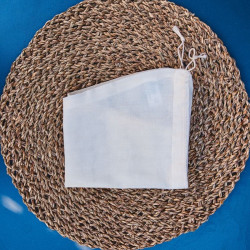
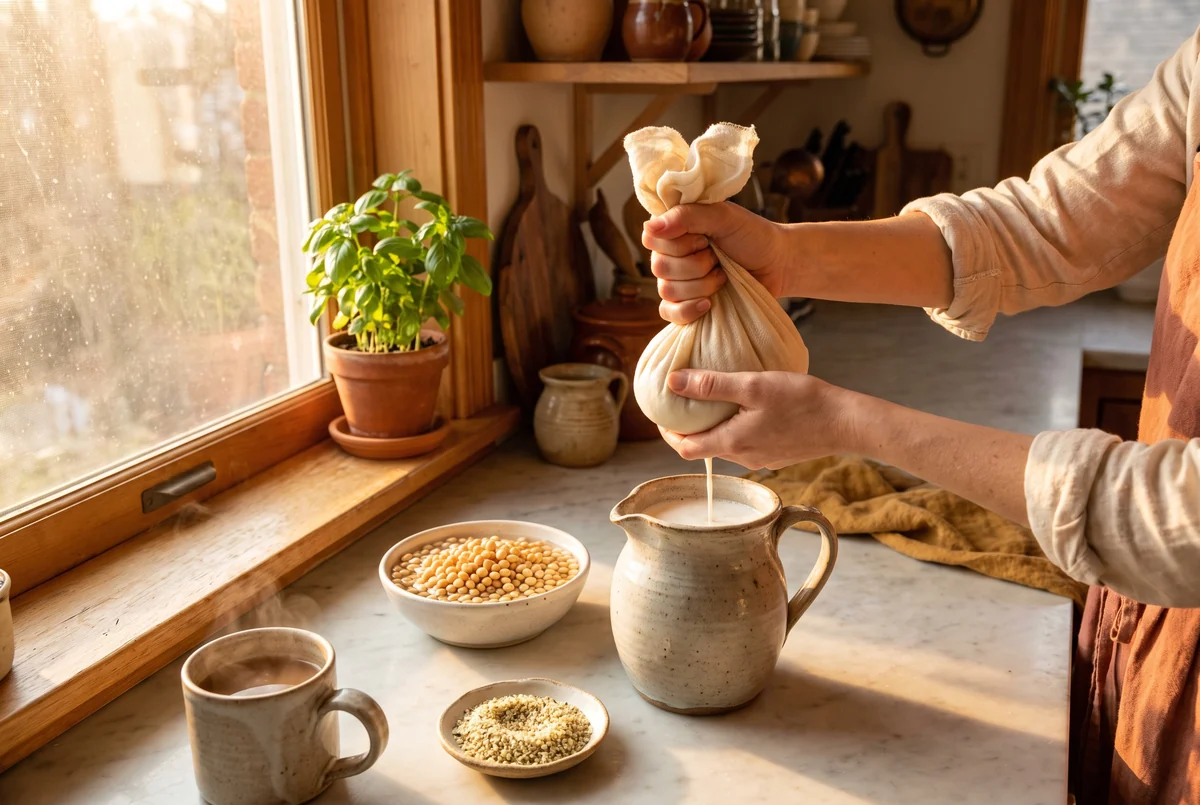
The USDA gives 3.27 g of protein per 100 g for store-bought soy drink, plain and unfortified. Homemade, its content depends on the amount of beans and water, and I prefer not to give you a figure I can't source. The principle: soaked soybeans, blended with water, strained through a plant milk bag, then heated before drinking. The how-to guide: how to use a plant milk bag well.