Marine plasma is seawater collected and cold-filtered, which naturally contains dissolved mineral salts. However, when it comes to choosing between isotonic marine plasma and hypertonic marine plasma, it is important to understand the differences and implications of each option. This article will explore the distinct characteristics of isotonic and hypertonic marine plasma and provide you with the necessary information to make an informed choice based on your needs.
Isotonic or Hypertonic Marine Plasma: What are the Differences?
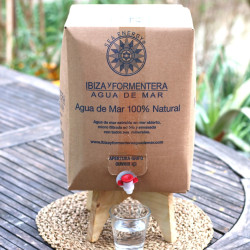
We only offer hypertonic marine plasma to allow you to save money by preparing isotonic marine plasma yourself, as it is essentially the same liquid, simply one is diluted, the other is pure.
What is called hypertonic marine plasma is simply pure seawater. The plasma has a higher concentration of salts and minerals than blood plasma. It is generally close to 33 g/L (grams per liter) but this figure can of course vary depending on many local parameters.
Isotonic marine plasma is a liquid that has been prepared as follows: 1 volume of hypertonic marine plasma is mixed with 2 to 3 volumes of fresh water.
The goal is to achieve a concentration of salts and minerals similar to that of human blood plasma. The dilution is generally done with distilled water or spring water to obtain a mineral salt concentration of about 9 g.
In the theoretical case where hypertonic plasma has a concentration of 33 g/L and you want to prepare isotonic plasma, here is the formula to use (Volume of hypertonic plasma = 1 L). In this case, Total Volume = (33 g/L * 1 L) / 9 g/L = 3.67 L.
To obtain 1 liter of isotonic solution, mix 1 liter of hypertonic marine plasma with 2.67 liters of distilled or spring water (3.67 L - 1 L = 2.67 L).
What is Hypertonic Marine Plasma?
Hypertonic marine plasma is a term used to refer to seawater that is filtered but not diluted. Hypertonic Quinton water is often used as a base to prepare isotonic marine plasma, and this is of course the most cost-effective solution. By purchasing isotonic marine plasma, you have essentially outsourced the dilution and also paid for the transport of the fresh water used to dilute the seawater. By doing this dilution at home, you do not pay for these two expenses.
€47.90
EXPECTED TO BE BACK IN STOCK AROUND OCTOBER 20
What is isotonic marine plasma?
This term is used to refer to marine plasma that has been prepared from hypertonic marine plasma simply by diluting it with ideally spring water, filtered water, or if not available, tap water, using a ratio of 1 part hypertonic seawater/seawater to 2.5 to 3 parts fresh water. For a more precise calculation, refer to the formula above. By making your isotonic marine plasma at home, you achieve significant savings.
What are the differences (usage, dosage…)?
The differences between the two types of marine plasma mainly lie in their concentration in salts and minerals.
We will differentiate two cases:
1. Internal use
It should be noted that in all cases, it is preferable to consume both upon waking on an empty stomach, ideally keeping them in the mouth for a minute.
Hypertonic marine plasma: it is recommended to consume about one tablespoon per day.
What is marine plasma ?
So-called hypertonic marine plasma is simply seawater harvested and filtered under very specific conditions.
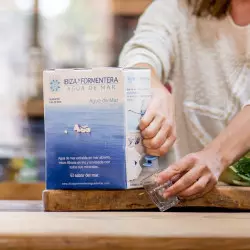
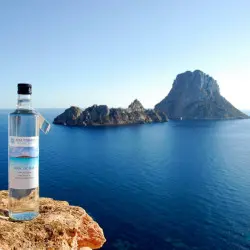
Our supplier Ibiza Agua de Mar collects sea water from a depth of 25 meters off the coast of Ibiza in a UNESCO listed area.
Concerning the harvest, here are the different physico-chemical parameters measured during the search for an optimal place for the harvest of hypertonic marine plasma, first on the radar with reading of the currents and according to the marine weather (wind, swell, rain. ..) and then by local measurement of these different parameters: taste of seawater, dissolved O2 level, PH level, redox level (ORP), salinity level (TDS), conductivity level ( PSU), alkalimetric title (TA), Pressure. It is the empirical practice of the harvesters and the reading of the various measuring instruments that makes it possible to decide on the best complex combination of these measures together to decide whether the harvest is triggered on the site or whether another location is sought.
Where does marine plasma come from ?
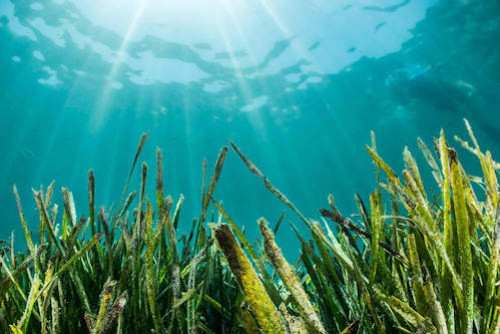
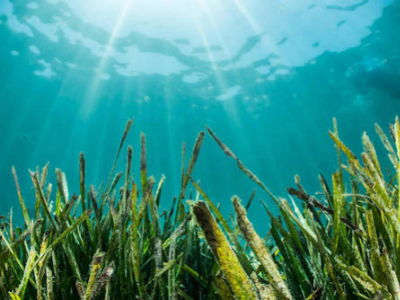
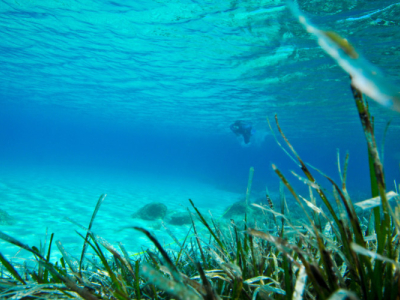
The marine plasma is collected in the high seas, off the coast of Ibiza, in a specific area classified as UNESCO with high planktonic activity and with a presence of tens of square kilometers of Posidonia. It is indeed in this specific area that lives the largest living organism listed on Earth, a posidonia herbarium of 80,000 to 200,000 years extending over 15 kilometers in length.
Source: Sophie Arnaud-Haond, Carlos M. Duarte, Elena Diaz-Almela, Núria Marbà, Tomas Sintes, Ester A. Serrão: Implications of Extreme Life Span in Clonal Organisms: Millenary Clones in Meadows of the Threatened Seagrass Posidonia oceanica
When is it best to take marine plasma ?
The ideal is to consume marine plasma, which contains, let's remember, all the elements that make up Mendeleev's periodic table, in the morning when you get up, on an empty stomach. take 1/4 of hypertonic marine plasma to mix 3/4 of spring water or filtered water.
What are the benefits of marine plasma ?
Minerals are the "fuel" used primarily by our body, which is necessary for our cells to perform their functions optimally. They are also essential for the absorption of vitamins and are responsible for enzymatic processes in cells. Cells perform all their functions with maximum vitality and the precise capacity for organic, bioavailable, alkaline cellular nutrition. Thus, sea water becomes the best mineral drink since it contains all the elements of Mendeleev's periodic table.
Another of the great benefits of seawater is its pH. As Otto Warbürg, father of cellular respiration and two-time Nobel laureate, said, “all diseases are acidic and where there is oxygen and alkalinity there can be no disease”. Due to the quality of our raw material, the hyper-oxygenated waters of Posidonia meadows (recognized by UNESCO as a World Heritage Site in 1999) and sea currents providing purity and clarity: Ibiza and Formentera Agua de Mar have an alkaline pH , between 8.1 and 8.4, which will help the body maintain a neutral pH through homeostasis. The ingestion of sea water is advised to control and maintain our PH, as well as an exceptional supplement for alkaline diets.
The antioxidant and anti-acidity power produced by seawater is due to the alkalinity provided by the minerals.
Drinking filtered seawater in a direct and controlled way is very beneficial for your health, because seawater is an excellent nutrient, containing most of the minerals of the periodic table and all of them dissolved in the best universal solvent available: l 'water.
Seawater contains all the minerals of the periodic table of elements in a bioavailable way. It is thanks to this that foods cooked in seawater are rehydrated and remineralized to make foods with high nutritional power. The problem today is that our intake of minerals through food has dropped dramatically and what is causing this? The answer is very simple: pollution, soil depletion due to intensive agricultural production and our stressful pace of life have considerably reduced the quality of food and its mineral intake, drastically reducing the minimum contribution necessary for the proper functioning of the body.
Seawater also helps us stay young, for a simple reason: the body regularly and cyclically regenerates all its cells, because their lifespan is limited in time. As we age, one of the first faculties the cell loses is the ability to hydrate. We know that the older we get, the less we drink, so drinking and ingesting seawater can help us "wake up" this ability to hydrate ourselves., 4
products
Hypotonic marine plasma: The usual recommended consumption is one-third to half a glass per day, but it can be adjusted according to individual needs.
In summary, the differences between the two types of marine plasma mainly lie in their concentration in salts and minerals. The hypertonic is more concentrated, while the hypotonic is less concentrated.
2. External use
Hypertonic marine plasma:
It is more concentrated in salt and minerals, which can have a greater osmotic effect, drawing water from tissues.
Hypotonic Marine Plasma:
Being less concentrated in salt and minerals, it has a lesser osmotic effect and is therefore gentler on the skin.
How much isotonic plasma depending on your profile?
The difference in concentration between the two forms translates directly into quantities. Isotonic plasma, at blood plasma's salinity, is taken in more generous volumes than hypertonic, and is much better tolerated over the long term.
Adult, maintenance: 20ml per day, in the morning on an empty stomach or a quarter of an hour before a meal.
Adult, over a more sustained period: 30 to 60 ml per day for three weeks, then back to maintenance.
Pregnant or breastfeeding women: a small daily dose at breakfast, on the advice of a midwife or doctor - this isn't a formality.
Children over 6 months: about half the adult dose, diluted in water or juice, and always with the paediatrician's approval.
Seniors or athletes: standard maintenance, timing the intake closer to exertion for athletes.
Five criteria for judging a marine plasma
The market has widened, and not everything is equal. Here's what we check, and what you can check too:
A precisely named harvesting area - Bay of Biscay, North Atlantic, Mediterranean. A vague origin is a red flag in itself.
Harvesting depth: beyond about thirty metres, away from surface waters and coastal pollution.
Cold filtration, without pasteurisation.
Opaque, airtight packaging, which protects it from light.
Analyses available on request - microbiological and chemical. A serious producer provides them without difficulty.
FAQ: Isotonic or Hypertonic Marine Plasma?
Q1: What is the difference between isotonic and hypertonic marine plasma?
A: The main difference lies in the concentration of salts and minerals. Hypertonic marine plasma is undiluted, meaning it is pure seawater with a high concentration of salts, close to 33g/L. Isotonic marine plasma, on the other hand, is prepared by diluting hypertonic marine plasma with fresh water, resulting in a concentration similar to that of human blood plasma, about 9g/L. Thus, isotonic is less concentrated and gentler on the body.
Q2: How to prepare isotonic marine plasma at home?
A: To prepare isotonic marine plasma, simply mix 1 liter of hypertonic marine plasma with about 2.67 liters of fresh water (distilled or spring water). This dilution results in a solution with a mineral concentration close to that of human blood plasma.
Q3: How to take hypertonic marine plasma?
A: Hypertonic seawater is the pure, undiluted form, at about 33 g/L of salts. It is taken in small quantity, generally a tablespoon per day, in the morning on an empty stomach.
Q4: How to take isotonic marine plasma?
A: Isotonic marine plasma, being more diluted, is easier to drink on a daily basis. The recommended consumption is generally one-third to half a glass per day.
Q5: Can marine plasma be used for external care?
A: Yes, both types of marine plasma can be used externally, for example as a compress or a skin mist. Hypertonic marine plasma, due to its high salt concentration, has a more pronounced osmotic effect, while isotonic is gentler. For a wound or a skin condition, ask a healthcare professional for advice.
Q6: Why choose to prepare your own isotonic marine plasma rather than buying it?
A: Preparing your own isotonic marine plasma can be more economical. When buying already diluted isotonic marine plasma, you pay not only for the liquid but also for the transport of the fresh water used for dilution. By preparing isotonic plasma at home, you only pay for the hypertonic marine plasma and the water, which allows for substantial savings.