Deciding to eat less meat takes a moment. Sticking with it for ten years is another story — and it's not decided where most people think. You'll often hear that plant proteins are "incomplete," and that you must pair legumes with grains at every meal or risk missing essential amino acids. You can set that worry aside: it isn't the real issue. The three points that genuinely deserve your attention lie elsewhere — vitamin B12, iron and omega-3 — and over time, they're what separates a thriving flexitarian from a tired one who can't work out why. Here's how to cover them, in five concrete steps, as part of a varied, balanced diet and a healthy lifestyle.
Why Protein Isn't What You Should Be Watching
The idea that plant proteins are "incomplete" comes from a book published in 1971, Diet for a Small Planet, which recommended combining legumes and grains at every meal to reconstruct a complete amino acid profile. The author herself, Frances Moore Lappé, walked the claim back as early as 1981: she acknowledged she had "reinforced a myth" and given the impression that careful food pairing was necessary, when — in her own words — it was "much simpler" than she'd thought. The research that settled the debate came from Young and Pellett, published in 1994 in the American Journal of Clinical Nutrition: it confirmed that plant proteins don't need to be combined within the same meal to cover essential amino acid needs. What the body actually draws on is a pool of amino acids replenished over the course of a day — not meal by meal. A varied plant-based diet, eaten in sufficient quantity, comfortably covers an adult's plant-protein needs. We'll come back to this in detail at step 4, because it's worth closing the topic for good before turning to the three points that actually matter.
Step 1 — Secure Your Vitamin B12 First
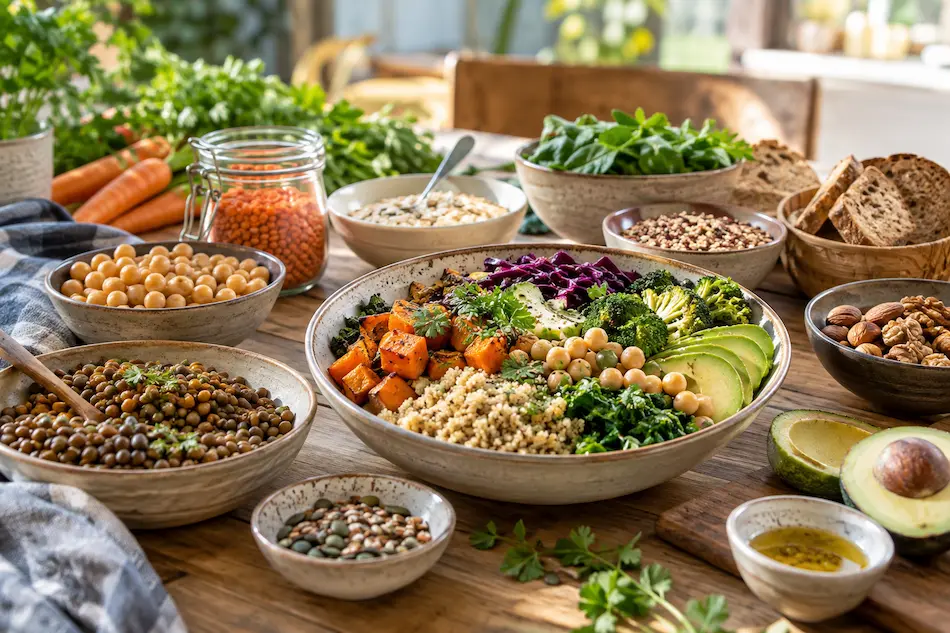
This is the simplest point to address, and yet the one surrounded by the most confusion. Vitamin B12 is made by bacteria, not plants: no land plant reliably contains it. For a flexitarian who still eats meat, fish, eggs or dairy several times a week, intake generally stays covered. The issue becomes real once animal product intake drops below two to three servings a week — that's when a blood test and, if needed, targeted supplementation genuinely make sense.
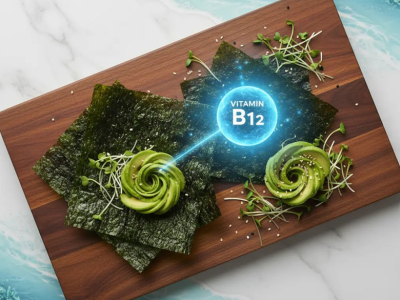
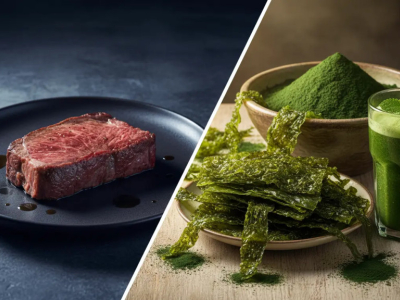
One interesting lead deserves a mention, with the caveat it requires. A study published in 2001 in the British Journal of Nutrition (Takenaka et al.) found that B12-deficient rats returned to normal status after being fed dried nori seaweed — a signal that the B12 in this red algae is, in rodents, biologically active. The authors themselves note that its bioavailability in humans still needs to be precisely determined: it's a documented lead, not a clinical certainty. Worth following, not worth banking on yet.
What's firmly established, on the other hand, is the opposite: spirulina doesn't cover B12 needs. What it mostly contains are inactive vitamin analogues (pseudo-cobalamins) the body can't use — and which, in excess, can even skew a blood test into showing a falsely normal result. A flexitarian who sharply cuts animal product intake should never rely on spirulina for this particular nutrient.
Step 2 — Don't Let Iron Slip
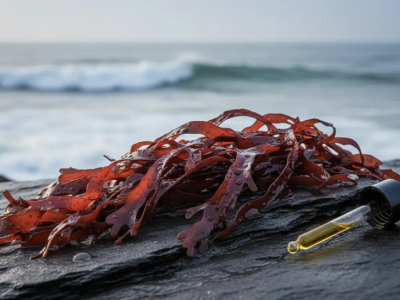
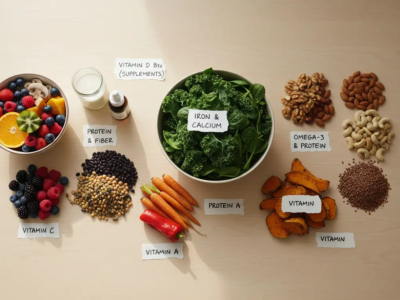
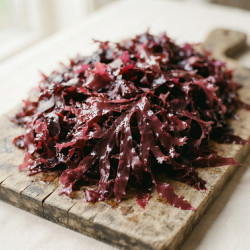
Plant iron (non-heme iron) is absorbed less easily than the iron in red meat. That's not a reason to worry — it's a reason to adjust two or three simple habits. Certain algae, such as spirulina or dulse, rank among the densest iron sources in any diet, plant or animal. Consistently pairing a vitamin C source (citrus, bell pepper, parsley) with the same meal markedly improves non-heme iron absorption — a simple habit worth locking in once and for all.

500 g
4,9
(50 reviews)
€27.90
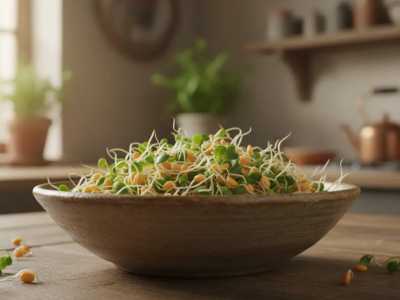
The other lever, often overlooked, is mechanical: sprouting or fermenting legumes and seeds reduces their phytate content, the compounds that naturally trap iron and zinc and limit their absorption. A 2013 study in the Journal of Food Science and Technology (Luo & Xie) measured this precisely in fava beans (Vicia faba): iron availability, measured in vitro, rose from around 30% in the raw seed to nearly 55–59% after soaking or sprouting — almost a doubling. It's one of the most concrete arguments for sprouting, well beyond its "wellness" image: it genuinely changes what your body can actually extract from the food.
Step 3 — Rethink Omega-3
Flax, chia and hemp seeds provide alpha-linolenic acid (ALA), a plant-based omega-3. The point to understand is that the human body converts only a small fraction of it into EPA and DHA, the two forms it uses most directly. Reference research on this conversion (Emken et al., 1994) puts it at around 4% for DHA and 12% for combined EPA + DHA — a modest yield that varies widely between individuals: some studies detect almost no DHA conversion in men, versus around 9% in women. That's not nothing, but it's not enough to rely on flaxseed alone if you eat little or no oily fish.
The good news is that a direct plant source of EPA and DHA exists: micro-algae, which are in fact the original source of the omega-3s later concentrated in oily fish. Dulse is one of the few algae that provides them naturally, without going through the conversion step. As part of a varied, balanced diet and a healthy lifestyle, it's the most direct route for a flexitarian who wants to secure this nutrient without overhauling their whole way of eating.
Step 4 — Legumes and Grains: The Real Protein Story
Back to the numbers, as promised. All legumes contain all nine essential amino acids — so they're not "incomplete" in the strict sense. What varies is their profile: legumes run lower in methionine, grains lower in lysine. Historically, this was taken to mean they had to be paired at the same meal. Young and Pellett showed that isn't the case: the body maintains a pool of available amino acids over several hours, more than enough to balance out from one meal to the next within the same day. Current nutrition authorities, including the American Dietetic Association, confirm this: a range of plant foods eaten over the course of a day covers essential amino acid needs, with no need to combine them on the same plate.
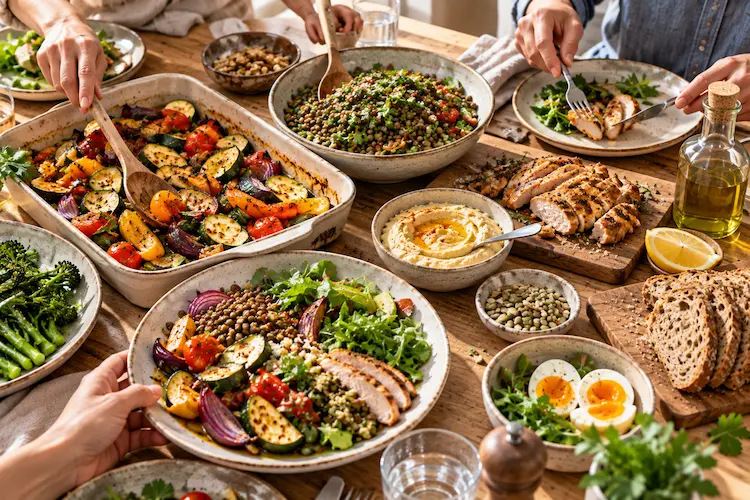
In practice, for a flexitarian: lentils at lunch, quinoa or wholegrain bread at dinner, a little crumbled nori in a salad during the week — that's plenty. Plant protein doesn't call for arithmetic, just variety. It's also one of the points covered in our overview of the 10 essential nutrients to watch on a plant-based diet, which walks through B12, iron, omega-3 and protein together.
Step 5 — Living Foods, Your Quiet Allies
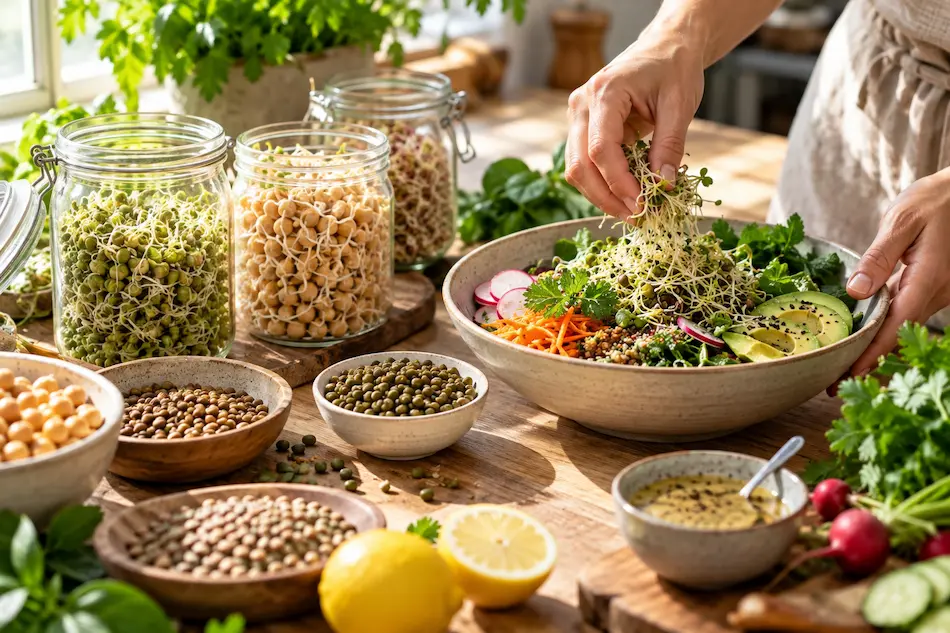
This is the least-known point, and yet the easiest one to put into practice at home. As we saw in step 2 for iron, sprouting and fermenting aren't just about freshness — they genuinely change the food's nutritional makeup. By breaking down some of the phytates and activating the seed's own enzymes, they improve iron and zinc availability and make certain nutrients easier for the body to use. Always eat them raw: that's the condition for keeping this benefit — cooking sprouted seeds loses much of what they gained by sprouting.
In practice, that means sprouting legumes at home yourself — lentils, chickpeas, green peas for sprouting — and adding them raw to a salad, a sandwich or a garnish, rather than always cooking them into soup. Our practical tips for choosing and starting your sprouted seeds cover the basic equipment and precautions (rinsing, hygiene, sprouting time by seed type). It's a simple habit to build at your own pace — not one more thing to add to your list, as part of a varied, balanced diet and a healthy lifestyle.
The Essentials, in Brief
A flexitarian who goes the distance without deficiencies isn't the one calculating protein combinations at every meal. It's the one who's settled three specific points once and for all: a checked B12 status, supplemented if needed; iron paired with vitamin C and boosted by sprouting; omega-3 considered beyond flaxseed, on the algae side. Everything else — legumes, grains, sprouted seeds — falls into place naturally, with no guilt and no performance, at everyone's own pace.
Frequently Asked Questions
Should a flexitarian take a vitamin B12 supplement?
It depends on how often you eat animal products. Above two to three servings a week, intake is generally covered; below that, a blood test lets you check and adjust, as part of a varied, balanced diet and a healthy lifestyle.
How do you know if you're low on iron when eating less meat?
Unusual fatigue or persistent paleness can be a warning sign, but only a blood test (ferritin) confirms a genuine deficiency. Pairing vitamin C with plant iron at the same meal, and favoring sprouted seeds, are two simple ways to improve absorption.
Are plant proteins really incomplete?
No. Every legume contains all nine essential amino acids; only their profile varies from one food to another. The body balances things out over the whole day, not meal by meal: there's no need to combine legumes and grains on the same plate.
Where can you find omega-3 when cutting back on meat and fish?
Flax, chia and hemp seeds provide ALA, but the body's conversion of it into EPA and DHA remains limited. Certain algae, such as dulse, provide both forms directly, without depending on that conversion.
Is spirulina enough to cover B12 needs?
No. Spirulina mainly contains inactive B12 analogues that the body can't use. It should never be treated as a reliable source of this nutrient.
Last updated: September 2026. Article written and reviewed by Eric Viard, founder of Biovie since 2007 and an ISTOM-trained agronomist engineer, co-author of "Algues au quotidien" (Gallimard, 2024) — Best Cookbook in the World, Gourmand Cookbook Awards 2025, and Best Cookbook in France, Académie Nationale de Cuisine 2025.
This article is for general information only and does not replace individual medical advice. Any supplementation, particularly with vitamin B12, should be considered as part of a varied, balanced diet and a healthy lifestyle, with the advice of a healthcare professional if needed.