


Almonds and pecans - or walnuts, as you prefer - grind down into a coarse, cookie-like meal that forms the backbone of these no-bake truffles, with dried ginger folded in early so its warmth runs through every bite rather than sitting on top. Dates and almond butter play a double role, both sweetener and binder, pulling the ground nuts into a dough that holds its shape the moment you roll it between your palms. The result lands somewhere between a spiced energy ball and an actual truffle: dense, a little chewy at the centre, with enough ginger bite to keep it from staying on a single sweet note. Rolling the finished balls in shredded coconut or sesame seeds adds a contrasting outer texture, a bit of crunch or chew against the tender inside, and gives them a finished, bakery-case look for very little extra work. They travel well, which makes them a natural choice for a lunchbox, an afternoon slump or a plate set out alongside coffee after a meal. Compared with a standard energy ball, the ginger makes them feel more like a spiced festive treat than a gym snack. Half a dozen rolled at once is usually enough to cover a week of small servings.
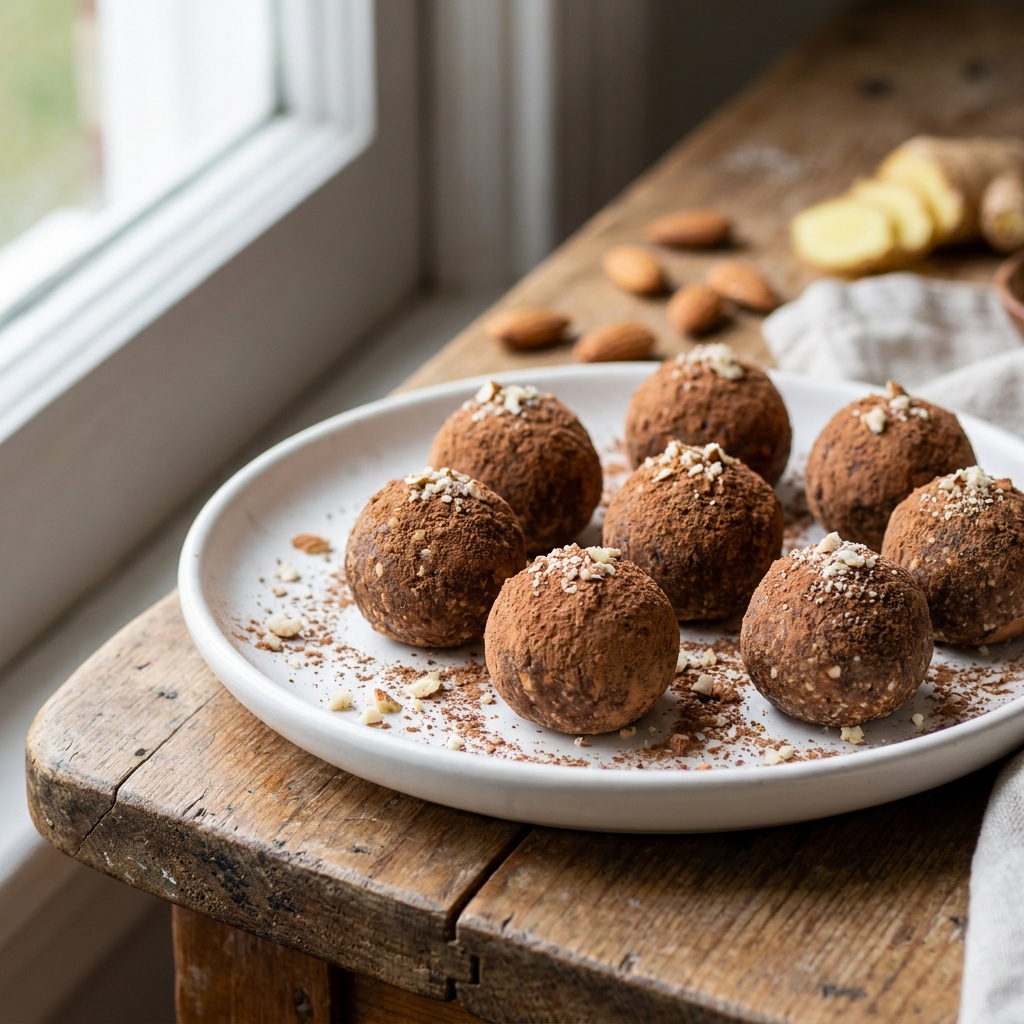
Raw almond and ginger truffles rolled in coconut

Share this article
Ingredients
- 1/2 cup almonds
- 1/4 cup almond butter
- 1/4 cup pecans or walnuts
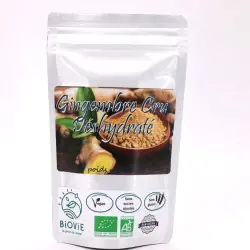
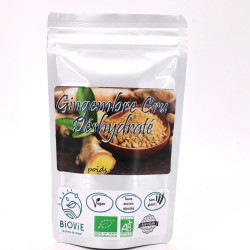
- 1/2 teaspoon dried ground ginger
- 1/2 cup pitted dates
- 1/4 cup unsweetened shredded coconut or sesame seeds
Preparation
- Pulse the nuts and the ground ginger together in a food processor until they form a fine meal.
- Add the almond butter and the dates, then pulse again until everything is well combined.
- Roll the mixture into balls about 2.5 cm across.
- Put the shredded coconut or sesame seeds in a small bowl.
- Roll each ball through it to coat the outside.
Tip
For a firmer, more truffle-like bite, chill the almond butter and the dates briefly before processing: a cold mixture holds its shape far better when rolled. If the dough feels too soft to shape, add a tablespoon more ground nuts rather than more dates. Store refrigerated in an airtight container for up to two weeks, or freeze for longer keeping.
The full range Plant-based oils and spices
11 products
FAQ: your questions about raw almond and ginger truffles
Can you make energy balls without peanuts?
Absolutely, and that is precisely the case here: the binder comes from almond butter, not peanut butter. All nut and seed butters work on this principle - almond, hazelnut, sunflower, sesame as tahini - and each brings its own colour of flavour. Sunflower seed butter is the safest solution if you also need to avoid tree nuts, since it comes from a seed rather than a nut.
Are there energy ball recipes without nuts?
Yes, and the substitution is simpler than it looks. Ground nuts mainly serve as the dry matter: sunflower, pumpkin or sesame seeds, or indeed oat flakes and shredded coconut, fill exactly the same role. You simply need to replace the nut butter too, with tahini or sunflower seed butter, and expect the dough to be a little less rich: adjust with one extra date.
How do you use ground ginger?
In raw baking it always goes into the dry matter rather than on the surface: mixed with the nuts before the wet ingredients arrive, it distributes evenly and its warmth runs through the whole preparation. It also works very well in a smoothie, a raw compote or a plant milk. A simple rule for dosing: start with half of what you think, taste the dough, then adjust - dried ginger builds in strength while the mixture rests.
Can you replace fresh ginger with ground ginger?
Yes, but they are not quite the same flavours, and the quantity needs adapting. Dried ginger is more concentrated and warmer, while fresh is sharper and more lemony. The usual count is 1/4 to 1/2 teaspoon of powder for one tablespoon of grated fresh ginger. In a raw, moist preparation the powder also has the advantage of adding no extra water, which matters when the dough has to be rolled.
Share this article