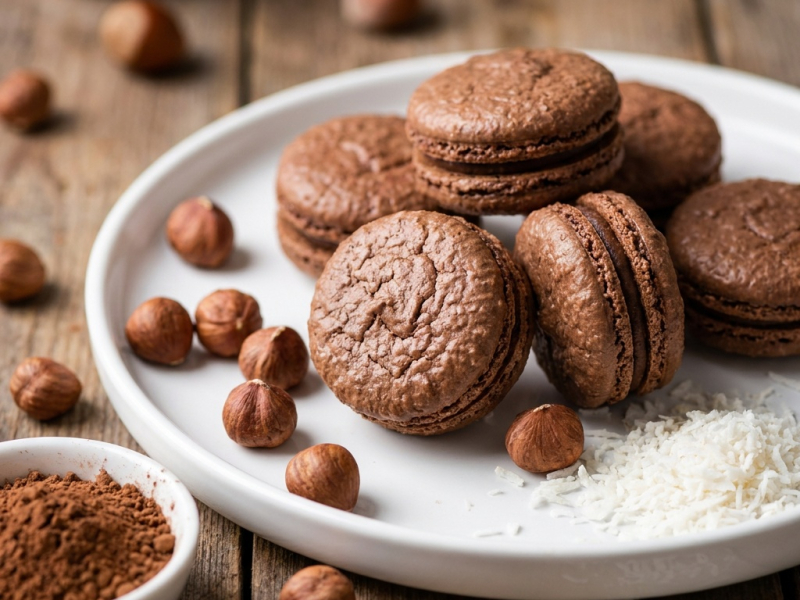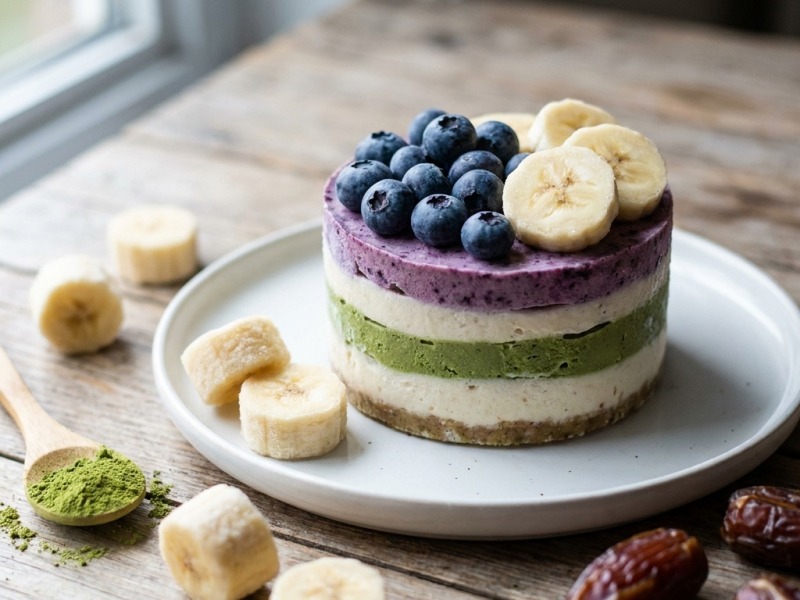

Refreshing and macaroon do not always go together, yet here they do: matcha tea brings a gently bitter green note that balances the sweetness of the coconut and the roundness of the tahini beautifully. A quick, no-bake recipe that adapts to whatever you fancy. Ten minutes of preparation are enough before a short stay in the freezer.
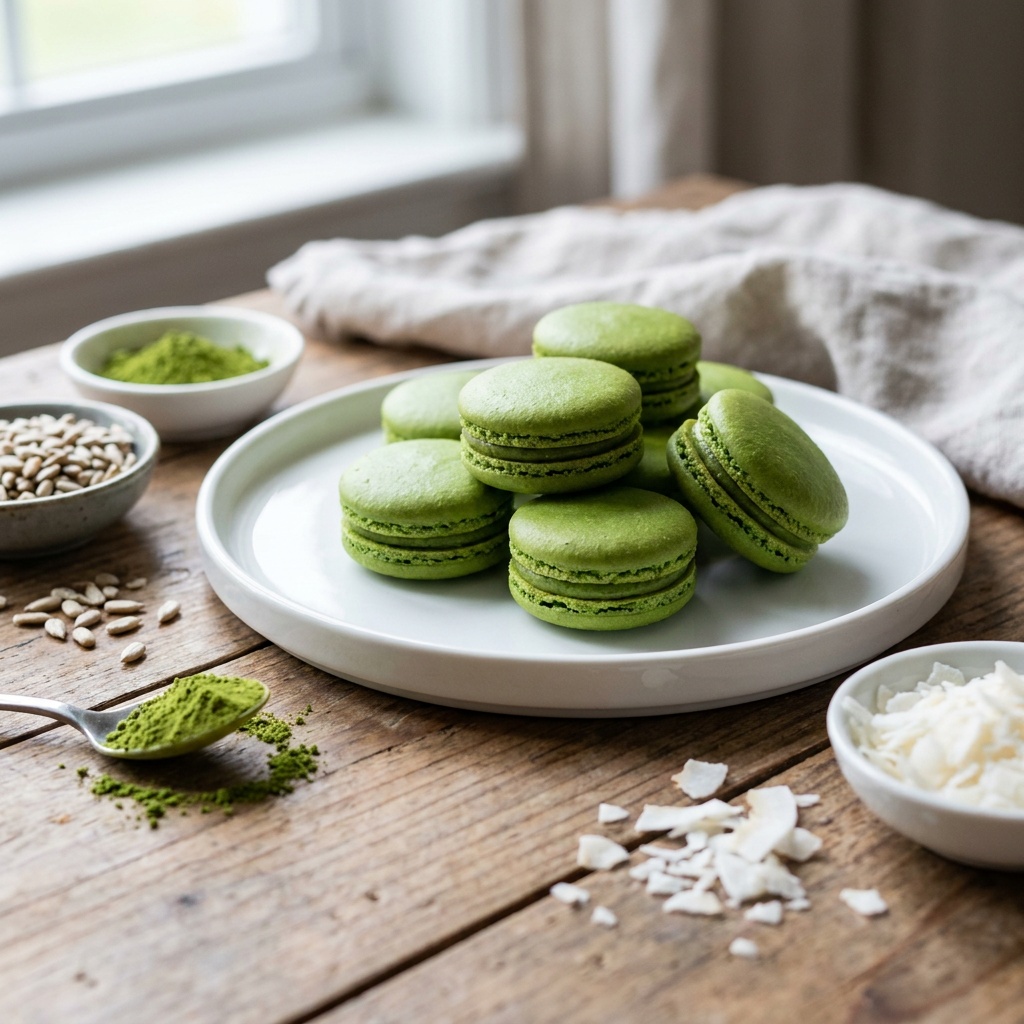
Raw matcha macaroons

Share this article
Organic unpeeled sunflower seeds
€1.33 €1.90
Ingredients
- 2 tbsp matcha tea powder
- 1 cup sprouted sunflower seeds
- 1 cup desiccated coconut
- 3 to 4 tbsp tahini (sesame paste)
- 3 to 4 tbsp agave syrup
- 1/4 tsp Himalayan pink salt
- 2 tsp vanilla extract
- A handful of raw cacao nibs
Preparation
- First blend the desiccated coconut and the sprouted sunflower seeds until you have a texture close to breadcrumbs.
- Add the rest of the ingredients and mix well, until the dough holds together between your fingers.
- Roll small balls by hand, macaroon style.
- Put them in the freezer for five minutes before serving.
Tip
This base lends itself to every variation: add citrus zest for a brighter result, or swap the tahini for almond butter for a milder flavour.
The full range Sprouted seeds
46 products
Discover the full range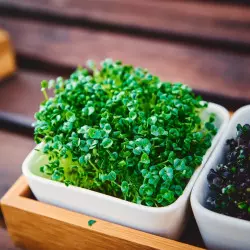
FAQ: your questions about raw matcha macaroons
What is the best way to drink matcha?
The traditional method stays truest to the product: one to two level spoons of sifted powder, a little water at 70-80 °C and certainly not boiling, then brisk whisking in a W motion until it foams. Water that is too hot burns the tea and brings out the bitterness. For everyday use, the latte version, with hot or cold plant milk poured over the base, suits those who find pure matcha off-putting. And in cooking, as in this recipe, it goes straight into the preparation without being brewed at all.
When should you not drink matcha?
Matcha contains caffeine, in an amount comparable to a light coffee, but released more slowly thanks to L-theanine. Late in the day it can therefore make falling asleep harder for sensitive people. On an empty stomach, its acidity and tannins sometimes trouble fragile stomachs: better to have it after a snack. Finally, its tannins limit the absorption of plant iron, so it is wiser to keep it one or two hours away from a meal rich in pulses or green vegetables if you are watching that intake.
What is the difference between sesame paste and tahini?
In practice these are two names for the same thing: a paste made by grinding sesame seeds. The nuance lies in the detail. Middle Eastern tahini is usually made from hulled seeds, which gives a pale, fluid, mild paste. Wholegrain sesame paste, more common in European health food shops, keeps the hull: it is darker, thicker and more bitter, and brings more calcium. Both work for these macaroons, but the hulled version lets the matcha come through better.
Share this article
Related articles