

A raw cheesecake with a silky texture, where the tartness of lemon and blackberries meets the floral sweetness of lavender on a crunchy hazelnut base. The result is as lovely to look at, with its purple marbling, as it is to eat. A dessert that calls for a little patience in the freezer but is very simple to make in a food processor, with no cooking at all.
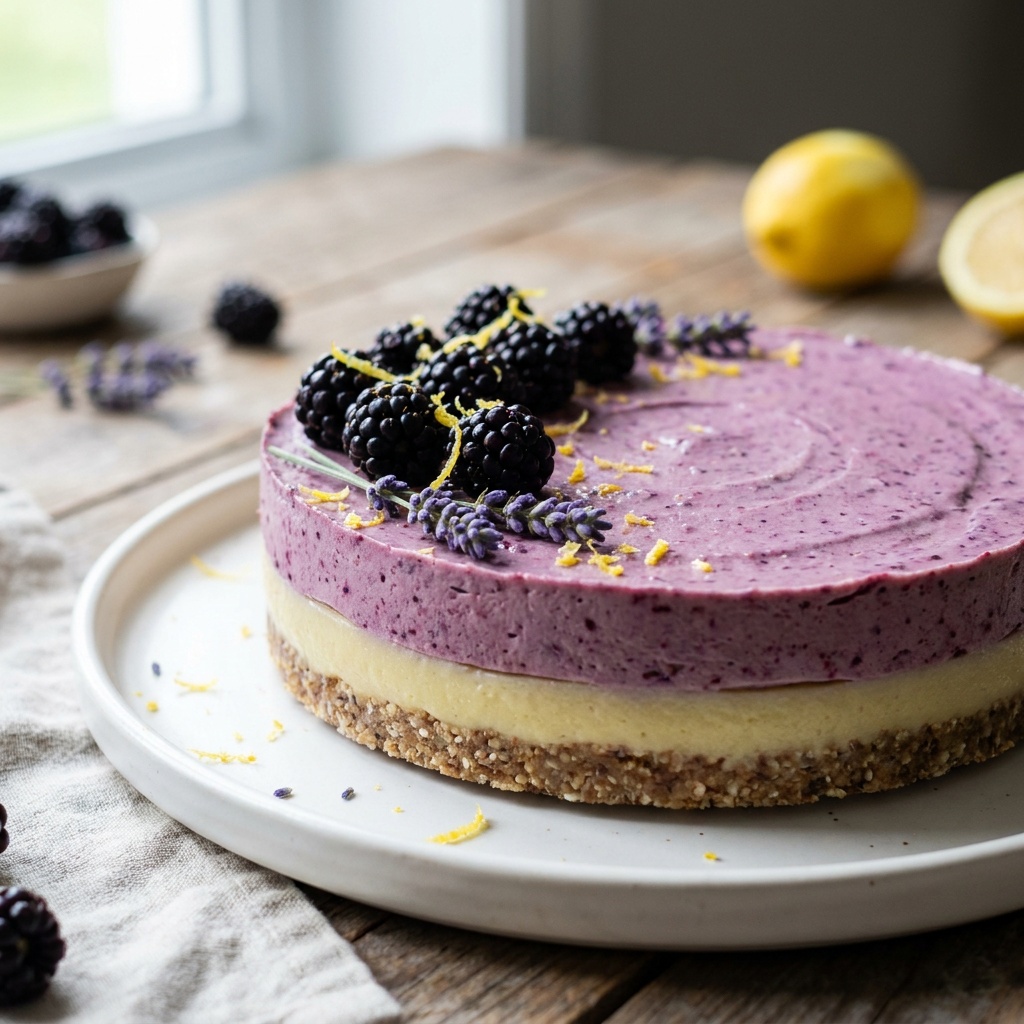
Raw Blackberry, Lemon and Lavender Cheesecake

Share this article
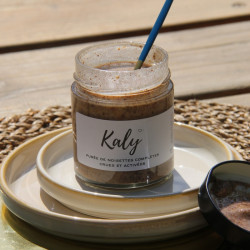
Activated hazelnut puree
€15.70
Ingredients
Base
- 2/3 cup hazelnuts
- 2/3 cup finely shredded coconut
- 1/3 cup sprouted, dehydrated buckwheat (or extra coconut)
- 1/8 tsp sea salt
- 3 soft medjool dates, pitted and chopped
Filling
- 2 1/2 cups raw cashews, soaked at least 4 hours
- 1 cup young coconut flesh (or extra soaked cashews)
- 1/2 cup lemon juice
- 2 tbsp lemon zest
- 1/3 cup + 3 tbsp raw coconut nectar or agave syrup
- 1/2 tsp sea salt
- 1 tbsp pure vanilla extract plus the seeds of half a pod
- 1/2 cup + 1 tbsp melted coconut oil
- 2 tbsp dried organic lavender flowers
- 1 cup fresh organic blackberries
Blackberry purée
- 1/4 cup organic blackberries
- 1 tbsp raw coconut nectar or agave syrup
Topping cream
- 3/4 cup raw cashew pieces, soaked at least 4 hours
- 1/4 cup coconut water
- 1 cup fresh young coconut flesh
- 3 tbsp raw coconut nectar or agave syrup
- 1 tsp vanilla plus the seeds of half a pod
- 1/4 cup melted raw coconut oil
Method
- Grease a 15 cm springform tin with a little coconut oil.
- Blend the hazelnuts, coconut, buckwheat and salt until finely crumbed, add the dates and blend until the mixture holds together when pressed between your fingers.
- Press this base firmly into the bottom of the tin and set aside.
- Drain the cashews and blend them with the lemon juice and zest, sweetener, salt and vanilla until smooth.
- With the motor running, drizzle in the coconut oil in a thin stream to emulsify.
- Remove from the processor, fold in the lavender, then divide the mixture into two equal portions.
- Blend one portion with the cup of blackberries until evenly coloured, then make the blackberry purée separately by blending its own ingredients.
- Spoon the filling into the tin in alternating vanilla and blackberry spoonfuls, checkerboard-style, then tap the tin to level it out.
- Dot a little purée over the top and marble it with a knife.
- Freeze for around 6 hours, then keep in the fridge until ready to decorate.
- Drain the cashews for the cream and blend all the ingredients until smooth, then place in the freezer for 30 minutes to reach a pipeable texture.
- Pipe the cream onto the cheesecake before serving.
Tip
If the coconut oil seizes into little lumps during emulsifying, it simply means it was too cold: gently warm a small portion of the mixture and fold it back in, and everything will smooth out.
The full range Oilseeds, nuts, seeds
20 products
Discover the full range
FAQ: your questions about culinary lavender
Is all lavender edible?
No, and that's the key point to remember before adding it to a dessert. The lavender to favour in cooking is true lavender, or fine lavender — Lavandula angustifolia — whose flowers are mild and slightly sweet. Lavandin, a hybrid grown mainly for perfumery, is much more camphorous and gives an unpleasant, soapy taste. So buy lavender explicitly sold as food-grade or culinary, and never the lavender from a decorative bouquet, which is often treated.
How do you use fresh lavender?
The fresh flowers are picked just before they fully open, when the scent is at its peak. They're used to infuse a liquid — plant milk, cream, syrup — which is then left to cool and strained, giving an even flavour with no bits to bite into. They can also be very finely chopped into a flavoured sugar or salt. Either way, go easy: fresh lavender is more powerful than dried.
How is fine lavender used in cooking?
It works first and foremost in sweet dishes, where it pairs remarkably well with lemon, red berries, apricot, peach and white chocolate — hence its presence in this cheesecake. The principle is always infusion: a few pinches in a hot or warm liquid, strained after five to ten minutes. It also has its place in savoury cooking, in a marinade or a herbes de Provence blend. The one absolute rule is the dose: one pinch too many, and the dessert turns soapy.
Share this article