


Ground walnuts form the base of these crackers, and they give a rich, slightly buttery flavour with a texture that stays firm without ever turning hard or brittle. Grated carrot and minced shallot scatter small pockets of sweetness and bite throughout the dough, while a mix of fresh rosemary, thyme and sage keeps the flavour on the savoury side rather than letting it drift into a one-note nuttiness. Ground flaxseed, folded in after the processing, binds everything into a dough firm enough to spread thin and hold its shape once dried. A long dehydration at low temperature keeps the crackers fully raw and gives them a slow, even crunch, very different from the fast crisping you get from an oven. They hold up well next to something creamy - a fermented nut cheese, a hummus, a raw pâté, or simply mashed avocado - and work on their own as a savoury snack too. Cut them before drying, never after: once dry, they shatter instead of slicing.
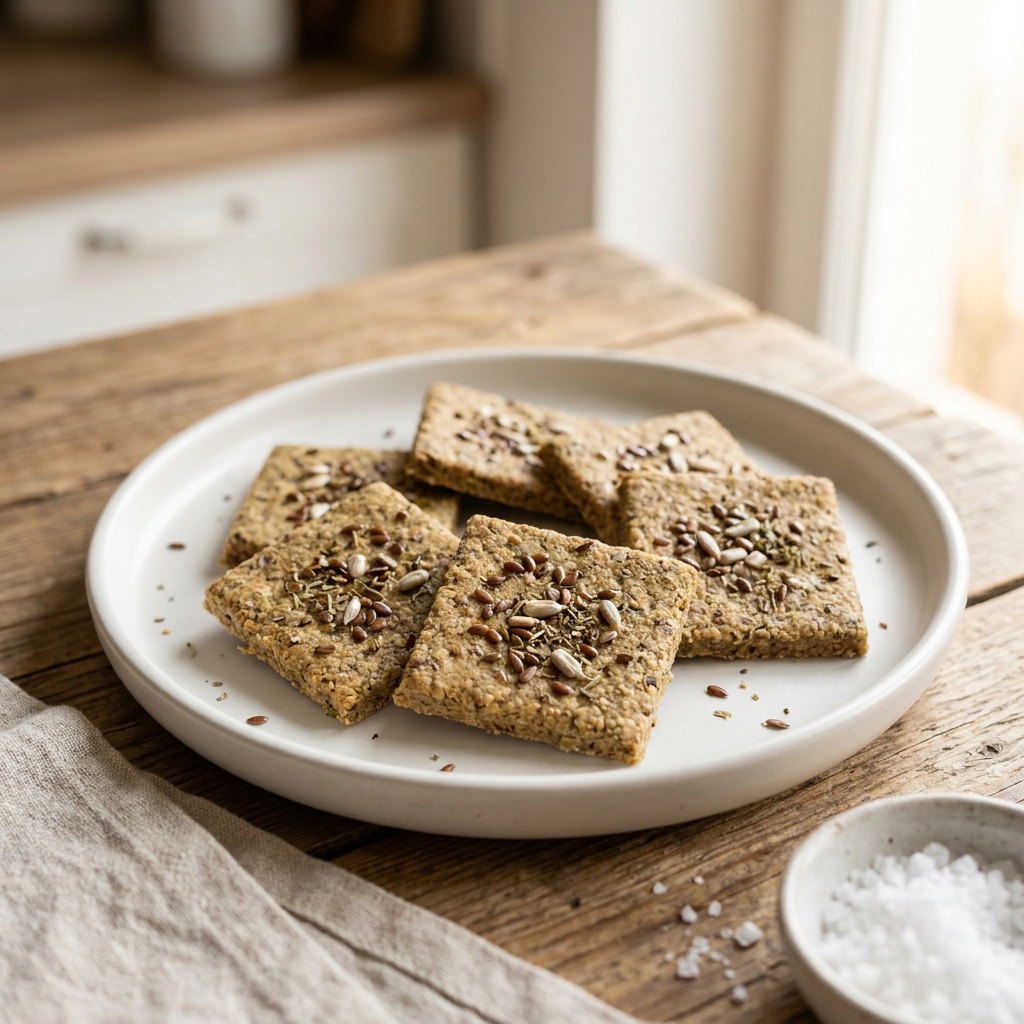
Savoury crackers with walnuts, hemp and fresh herbs

Share this article
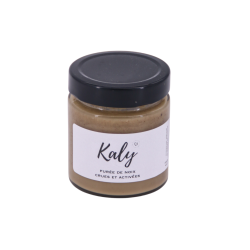
Activated whole nut puree
€15.90 AVAILABLE IN NOVEMBER
Ingredients
- 2 cups walnuts
- 1 cup hemp seeds
- 1 cup grated carrots
- 1 tablespoon fresh herbs (rosemary, thyme, sage)
- 1 tablespoon minced shallot
- 2 tablespoons extra-virgin olive oil
- 1/4 cup water (more if needed - aim for a firm consistency that still spreads easily onto dehydrator sheets)
- 1/4 cup ground flaxseed
Preparation
- Grind the walnuts in a food processor, then add the hemp seeds, carrots, herbs, shallot, olive oil and water.
- Process until you reach the texture you like.
- Transfer to a bowl and stir in the ground flaxseed.
- Let the mixture firm up for a few minutes, then spread it onto dehydrator sheets (or parchment paper, if using an oven) and cut into your desired shapes.
- Dehydrate at 46 °C for 10 hours, or until the crackers are crisp all the way through.
Tip
No dehydrator, no problem: spread the mixture just as thin and bake in an oven set to its lowest temperature, checking every 20 minutes until the crackers are golden and dry throughout. Cut the shapes before drying rather than after, since they become too firm to slice cleanly once finished.
The full range Oilseeds, nuts, seeds
20 products
Discover the full range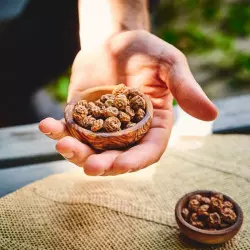
FAQ: your questions about savoury walnut and hemp crackers
Why should you not eat raw flaxseed?
In truth, the question is less about raw than about whole. A flaxseed swallowed whole travels through the digestive tract without being opened: its fibre and fatty acids stay locked inside a hull that chewing rarely breaks. That is why it is ground, as in this recipe. Once ground, however, it oxidises fairly quickly, so it is better to grind it at the last moment and keep the rest in the fridge rather than out in the open.
When is the best time to take flaxseed?
There is no magic time slot: flax simply slots into a meal or a snack, like any other seed. What matters more is regularity and the amount of water that goes with it, since its fibre works by swelling. In a preparation like these crackers, where the flax is ground and already hydrated at the mixing stage, the question no longer arises at all.
What are the benefits of hulled hemp?
Hulled hemp seed is mainly valued for its plant protein content and its fatty-acid profile, with a ratio between omega-6 and omega-3 often described as balanced. It also brings magnesium and iron. From a culinary point of view, its interest here is more down to earth: it has a mild, almost hazelnut-like flavour that pairs with walnut without competing, and a tender texture that breaks up the density of the dough.
How can I eat hulled hemp seeds?
They are eaten as they are, with no soaking or grinding, which makes them very convenient. Scatter them over a salad, a hummus, a porridge or a bowl of fruit; blend them into a smoothie or a plant milk; or fold them into a raw dough, as in these crackers. One precaution only: keep them in the fridge once the packet is open, since their fatty-acid content makes them prone to going rancid.
Share this article