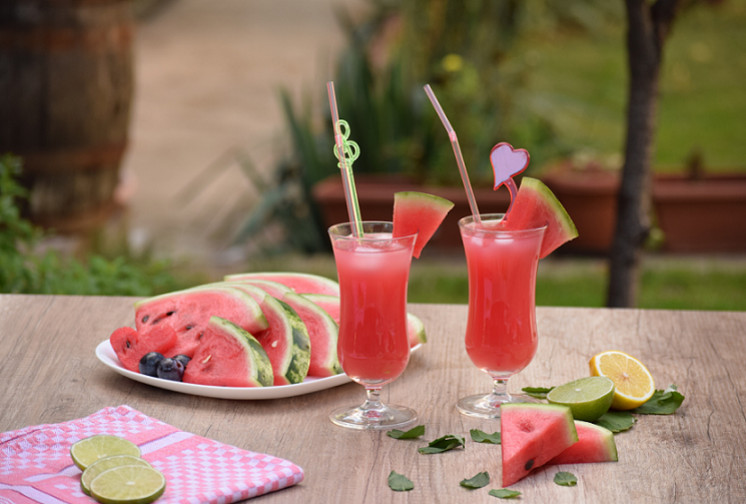
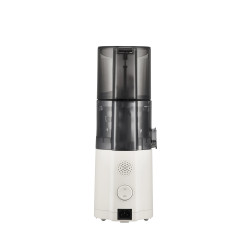
A homemade watermelon juice takes five minutes flat with a juicer, using just two or three ingredients you probably already have in the fridge. Watermelon juice made in a juicer ticks every box: simple, thirst-quenching, and built on a fruit that is over 91% water. Frankly, it is hard to do better against the July heat.
For this homemade watermelon juice, there is no complicated recipe and no long shopping list. Just watermelon, a few carrots, fresh basil and a twist of lemon zest. Pass it all through the juicer, and there you go.
Watermelon juice recipe
This homemade watermelon juice recipe is one we have treasured for years. It comes from Justine Lamboley, a naturopath who specialises in fasting, and it has proven itself in every heatwave.
Ingredients (for one large glass):
1/4 of a watermelon, with the rind if it is organic
3 carrots
3 fresh basil leaves
1 piece of lemon zest (just a small bit of the peel)
Preparation:
Wash the watermelon, the carrots and the basil thoroughly
Cut the watermelon into pieces that fit the feed chute of your machine
Pass everything through the juicer
Enjoy immediately, almost chewing your juice because it is so dense
And there you have it.
You do not need to be a master chef to make this juice (seriously, if you can peel a carrot, you have already won).
For this recipe, a juicer really makes the difference compared with a classic centrifugal juicer: it runs at low speed, preserves nutrients better and gives a denser juice with no foam. Ours has 56 customer reviews, which is not nothing for a machine we use every week at home.
What watermelon juice is made of, in concrete terms
So, what does this juice really bring? Here is what the nutritional composition of watermelon says, with the figures to back it up.
Watermelon is 91.5% water, for only 30 kcal per 100 g (USDA FoodData Central, 2019). That is few calories for a lot of hydration, exactly what you look for in the middle of a heatwave. It also provides 112 mg of potassium and 8.1 mg of vitamin C per 100 g (USDA FoodData Central, 2019), a mineral and a vitamin we lose more of when we sweat in summer.
But what makes watermelon truly distinctive is its citrulline content, an amino acid that is a precursor of arginine and is involved in vascular function (Rimando & Perkins-Veazie, 2005). It is one of the fruits that concentrates the most of it: the flesh and especially the rind contain notable amounts, which is also why Justine's original recipe keeps the rind when it is organic.
It also contains lycopene, the carotenoid pigment that gives it its red colour (Perkins-Veazie et al., 2006).
A little extra: a pinch of spirulina
Personally, I often add a pinch of spirulina to this juice in summer. Not to turn it into a magic potion, just because it pairs surprisingly well with the sweet freshness of watermelon, and the texture stays fluid.
Use 2 to 3 g (about half a teaspoon) of spirulina powder stirred straight into the freshly extracted juice.
That is all.
There is no need to add more for it to be worthwhile, and the deep green colour swirling into the pink of the watermelon is quite satisfying to look at (go on, we can treat our eyes too). This product currently has 48 reviews with us, if you would like to get an idea before trying it.
Looking for another idea for your summer mornings? Our avocado, blueberry and durian smoothie works very well alternating with this juice, to vary the textures.
This base is already very good as it is. But here are three ideas to make it evolve according to your mood of the moment.
Watermelon-mint: replace the basil with a few fresh mint leaves for a more minty freshness, almost digestive
Watermelon-cucumber: add half a cucumber for an even more hydrating juice with a slightly milder taste
Watermelon-ginger: slip in a small piece of fresh ginger for a touch of zing that wakes up everything else, without changing anything about the watermelon itself
Want more green juice ideas in the same spirit? Our kale, pineapple and mint juice recipe follows the same logic: few ingredients, a juicer, and a result you feel from the first glass.
Juicer or centrifugal juicer: which machine for this juice?
Good question, and it comes up often. For a juice like this one, the juicer remains the best choice: it runs at low speed (30 to 120 revolutions per minute versus 3,000 to 10,000 for a centrifugal juicer), which limits oxidation and better preserves the heat-sensitive vitamins and the enzymes of the resulting juice.
A centrifugal juicer will also do the job if you are in a hurry one summer morning: it is faster and cheaper to buy. But the juice oxidises almost immediately and should be drunk within 15 to 30 minutes. With a juicer, you can keep it up to 24 hours in the refrigerator if needed, ideally in an airtight container. We have detailed the whole comparison, with figures and tests, in our article centrifugal juicer or juice extractor.
If you are looking for yours, our juicers category brings together our selection, from the entry-level model to the most powerful.
Is it an investment worth making? For me, yes, clearly, as soon as you drink juice more than once a week. For more ideas, browse our selection of juicer juice recipes.
Precautions to know before drinking this juice
One important point, often forgotten: an extracted juice is not a whole fruit. Extraction removes a good part of the fibre, which changes the impact of the fruit's sugar on blood glucose. In practice, it is better to drink this juice as part of a meal or a snack rather than on its own on an empty stomach if you watch your glycaemic index.
Something else: drink it fresh, and if possible soon after extraction, even with a juicer. That is when the nutrients are most present.
Nothing could be simpler, in short.
And as with any drink, hydration should never replace plain water in daily life: this juice comes as a complement, not a substitute.
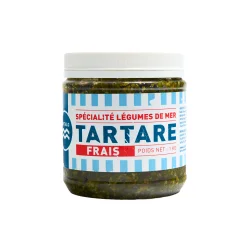
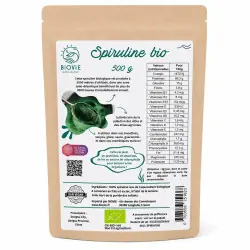
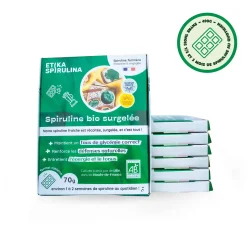
Biovie organic spirulina comes in 4 formats: fresh, grown in a greenhouse by Etika; frozen fresh, produced in northern France by Etika Spirulina; powder, from organic aquaculture; and phycocyanin, the concentrated extract of the blue pigment, almost tasteless but intensely colorful. To start a regular routine, powder is the most economical and the easiest to dose; for freshness, choose fresh or frozen spirulina of French origin, closer to the harvest. Phycocyanin suits anyone looking for a concentrated extract with a discreet taste, to add to a preparation without changing its flavor., 4
products
A homemade juice made from fruits and vegetables very rich in water, such as watermelon (91.5% water), remains one of the most effective options. Watermelon contains 91.5% water, which makes it a very thirst-quenching juice.
What should I drink during a heatwave to stay well hydrated?
Water first and foremost, complemented by juices or infusions rich in water like this one. Watermelon, cucumber and citrus fruits are particularly interesting in summer for their water content and natural electrolytes such as potassium.
What is the best homemade refreshing juice?
There is no ONE universal best juice, but recipes suited to your tastes. The watermelon-carrot-basil juice presented here is a good starting point: simple, quick, and already very hydrating.
Can you drink watermelon juice every day?
Yes, as part of a varied and balanced diet, avoiding drinking it on its own on an empty stomach if you pay attention to your blood glucose. Vary with other fruit and vegetable juices to diversify your intake.
Does watermelon juice make you gain weight?
Watermelon is low in calories (30 kcal/100g), but a juice concentrates the fruit's sugar without its fibre. Consumed in moderation and as part of a balanced meal, there is no reason for it to be a problem.
How do you make homemade watermelon juice?
As detailed above, you simply pass watermelon, carrots, basil and a twist of lemon zest through the juicer: no complicated equipment or ingredients, and it is all ready in a few minutes.
What does ginger change in watermelon juice?
Ginger mostly brings zing to the palate: it neither removes nor adds anything to what the watermelon itself provides, which remains the same source of hydration, vitamin C and citrulline as in the base recipe.
References
USDA FoodData Central (2019). "Watermelon, raw". FDC ID 167765.
Disclaimer: The information in this article is provided for information purposes only and does not constitute medical advice. Consult a qualified healthcare professional before making any change to your diet or supplementation. As part of a varied and balanced diet and a healthy lifestyle.
To make this juice at home, our choice at Biovie: the Hurom E30ST vertical juicer, recommended since 2024.