


Pad thai lends itself surprisingly well to a raw reading, provided you find a convincing substitute for the rice noodles. Sea spaghetti, a long, supple seaweed sold fresh and salted, does exactly that once desalted: the texture is firm, slightly springy, and the marine taste fades behind the sauce. That sauce brings together almond butter, coconut oil, lemon and jalapeño, in a balance that is both creamy and hot. The button mushrooms spend an hour or two in the dehydrator, just long enough to concentrate their aroma.
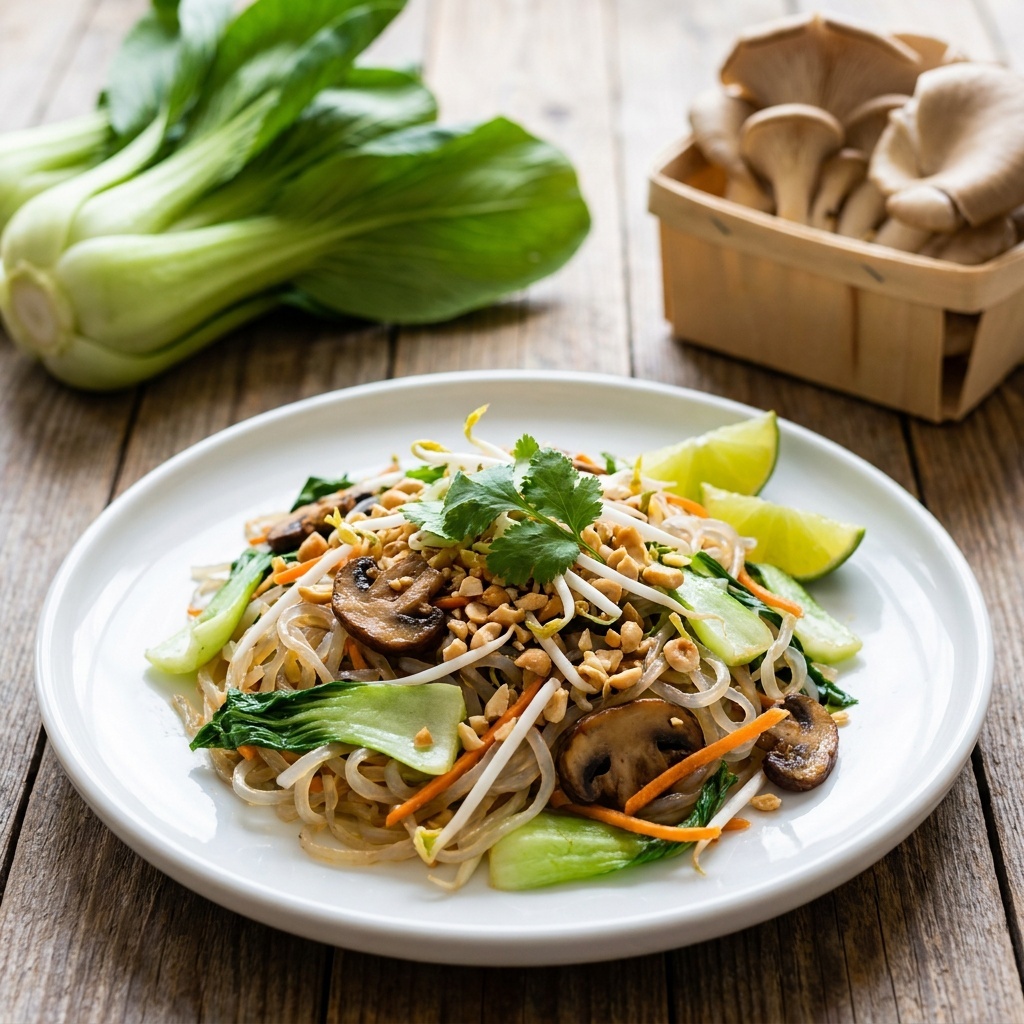
Raw pad thai with sea spaghetti and button mushrooms

Share this article
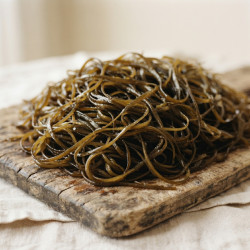
Organic Fresh Sea Bean Algae
€9.50 BACK IN STOCK MI SEPTEMBER
Ingredients
For the mushrooms
- 2 punnets of button mushrooms, sliced
- 1 tbsp olive oil
- Sea salt and freshly ground black pepper (or the equivalent of 1 tablespoon - 15 ml - of seawater)
For the pad thai sauce
- 2 tbsp raw almond butter
- 80 ml coconut oil
- 1 tbsp tamari
- 1 tsp ground coriander
- 1/2 jalapeño pepper, deseeded
- 2 tsp freshly squeezed lemon juice
- 80 ml filtered water
For the noodles
- 200 g fresh sea spaghetti, desalted
Method
- Rinse the sea spaghetti thoroughly under clear water, then desalt it following the instructions on its product page. Drain and cut into noodle lengths.
- Coat the button mushrooms with olive oil, salt and pepper.
- Spread them on a dehydrator tray and dehydrate for 1 to 2 hours at around 35 °C.
- Meanwhile, blend all the sauce ingredients until smooth and creamy.
- In a large bowl, toss the sea spaghetti with the dehydrated button mushrooms.
- Pour over the sauce, mix thoroughly to coat everything and serve at room temperature.
Tip
Desalting the sea spaghetti is the step not to rush: follow the time indicated on its product page, then taste a piece before mixing it with the sauce, it should be pleasant as it is. You can skip the dehydrator step if you are in a hurry: the button mushrooms will simply stay crunchier and less concentrated in flavour. Coconut oil sets in the cold: take the dish out of the fridge a quarter of an hour ahead, or the sauce will seize into plates on the seaweed.
The full range Fresh Seaweed
8 products
Discover the full range


FAQ: your questions about raw pad thai with sea spaghetti
What is the secret ingredient of pad thai?
In the classic Thai version it is tamarind: a tart fruit pulp that gives the dish its characteristic acidity, very different from that of lemon. Palm sugar and fish sauce are often added, for the sweet-salty balance. In a raw, plant-based version like this one, lemon juice takes the role of the acidity and tamari that of the salt. A little tamarind pulp, if you can find it, would bring the sauce closer still to the original.
What are the ingredients of pad thai sauce?
The traditional sauce rests on three pillars: tamarind for the sour, palm sugar for the sweet, fish sauce for the salt, sometimes with chilli added. The raw version in this recipe keeps the same logic while changing the ingredients: lemon, almond butter and a touch of sweetness, tamari, jalapeño. The coconut oil brings in addition the creaminess that, in the original dish, would come from wok cooking.
Is pad thai eaten hot or cold?
Traditional pad thai is eaten hot, straight out of the wok, with crushed peanuts and lime served alongside. This raw version, on the other hand, is served at room temperature: that matters, because the coconut oil it contains sets below 24 °C and would make the sauce grainy. So take the dish out of the fridge a good quarter of an hour before sitting down. Cold, it loses much of its perfume.
What are the common mistakes to avoid when making pad thai?
In the cooked version, the most frequent mistake is overcooking the noodles before they go into the wok, which gives mush. Then come overloading the pan, which boils instead of searing, and too much sauce. In this raw version, the equivalent of those mistakes is poorly desalting the seaweed and drowning the dish in sauce: start with half, mix, and add more only if needed.
Share this article