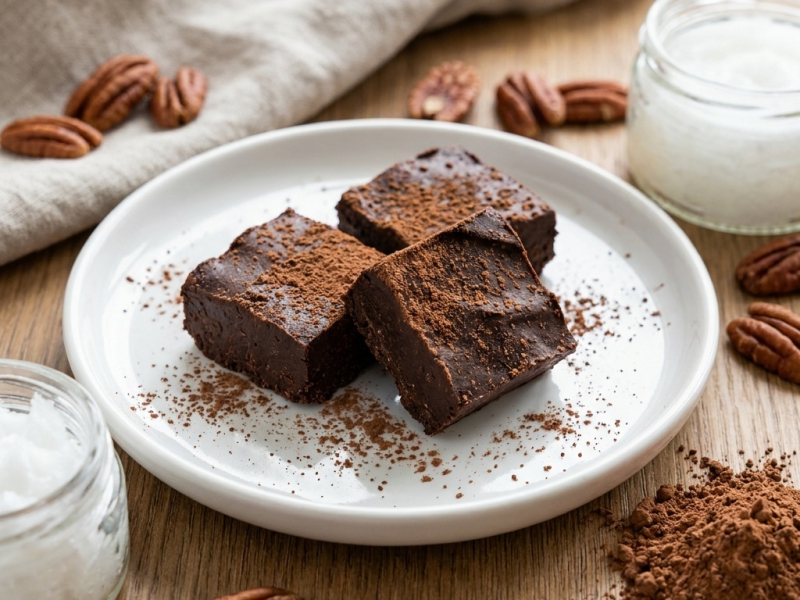


Decorating biscuits as a family is one of many people's favourite festive rituals, and this raw, gluten-free version lets you enjoy it differently. The dough, based on coconut, oat flour and coconut sugar, is dehydrated until firm, then coated with a vanilla or chocolate glaze before being dressed with citrus zest, dried fruit and edible flower petals. A real creative moment to share with children and grown-ups, for natural, indulgent celebrations.
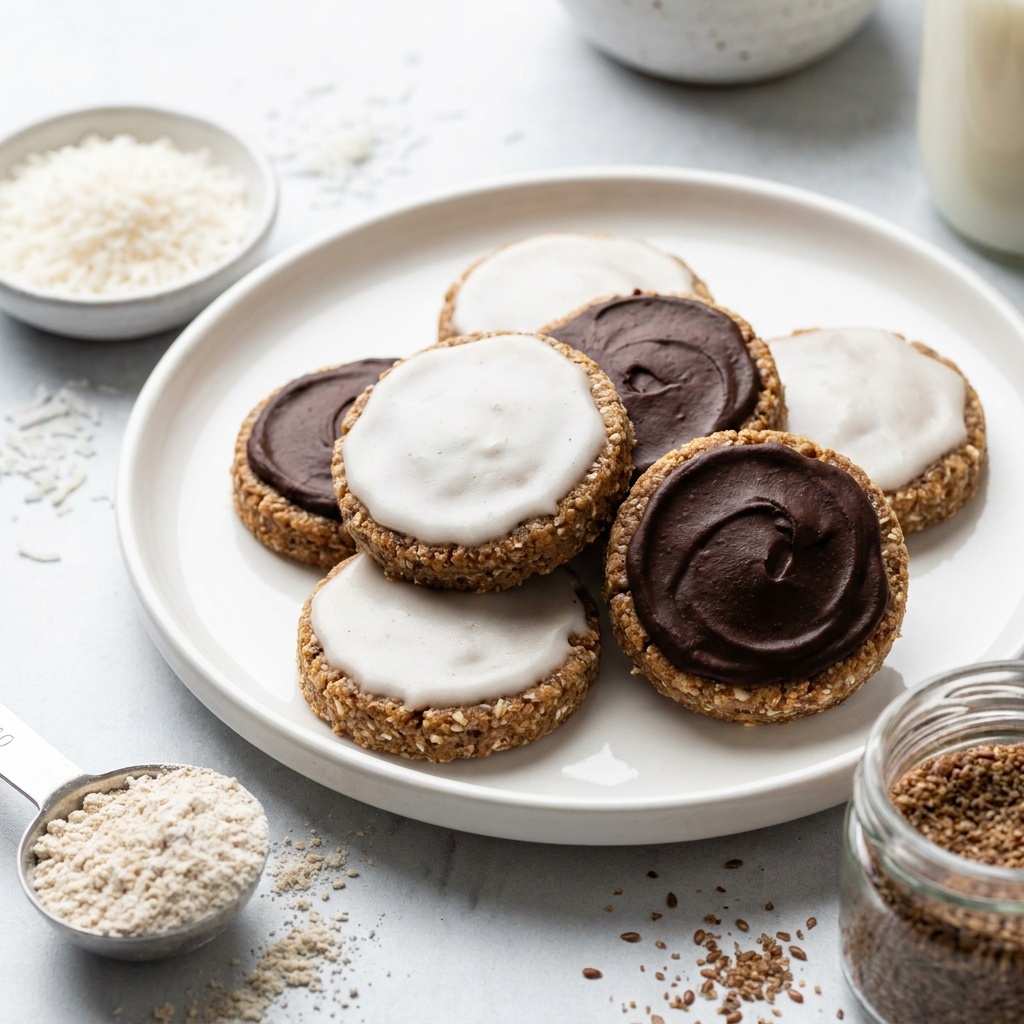
Raw glazed shortbread with vanilla and chocolate

Share this article
Ingredients
For the cookies (one dozen)
- 160 g finely grated desiccated coconut
- 95 g raw oat flour
- 25 g ground flaxseed
- 165 g raw coconut sugar
- 1/4 teaspoon sea salt
- 2 teaspoons vanilla powder
- 80 g coconut butter
- 60 ml filtered water
For the vanilla glaze
- 60 g coconut butter, warmed until liquid
- 2 teaspoons raw coconut nectar (or any other raw liquid sweetener)
- 1/2 teaspoon vanilla powder
- 60 ml filtered water, and a little more if needed
For the chocolate glaze
- 60 g coconut butter with raw chocolate, warmed until liquid
For decorating
- Dried or fresh orange zest, cut into fine julienne
- Crushed raw pistachios
- Chopped dried cranberries
- Dried flower petals (calendula, lavender, hibiscus...)
Method
- Grind the coconut into a fine flour in a powerful blender, without going too far or you will get coconut butter.
- Add it to a food processor with the oat flour, the flaxseed, the coconut sugar and the salt, and blend until even.
- Add the vanilla, the coconut butter and the water, then blend until you get a smooth, supple dough (add a little water if it seems too dry).
- Shape 12 balls of dough and place them on a dehydrator sheet.
- Flatten them to about 6 mm thick, then dehydrate for 12 hours, until firm but still supple.
- For each glaze, whisk the ingredients together until smooth and thick but pourable, adjusting the water as needed.
- Coat half the cookies with vanilla glaze and the other half with chocolate glaze, then scatter the chosen decorations on immediately.
- Let the glaze set (a few minutes in the freezer speeds things up), then keep the cookies in the fridge in an airtight box.
Tip
Make both glazes side by side to save time, and always keep a little filtered water within reach to adjust their texture along the way. A glaze that is too runny slides off the edges: let it thicken for 2 minutes off the water bath before coating. For neatly shaped cookies, flatten the balls between two sheets of baking paper with the bottom of a glass.
The full range Plant-based oils and spices
11 products
FAQ: your questions about the raw glazed shortbread
How do you apply glaze to a biscuit?
The glaze goes onto a perfectly cooled biscuit, otherwise it melts and runs over the edges. Put a spoonful in the centre, then spread it outwards with a small spatula, leaving a 2 mm margin. Here the glaze is coconut butter based: it sets quickly on contact with the cold biscuit, so work one cookie at a time. The decorations go on immediately, while the glaze is still soft.
What are some examples of no-bake biscuit recipes?
The best known are date and nut energy balls, pressed granola-style bars, coconut macaroons and dehydrated shortbread like these. The shared principle comes down to three elements: a ground dry ingredient that replaces flour, a fat that is solid when cold to give structure, and a natural sugar. The cold or the dehydrator then completely replace the oven.
Which no-bake dessert can I make the day before?
Any dessert that benefits from resting works: raw cheesecakes, tarts with a pressed base, avocado or cacao mousses, chia puddings. These shortbreads also fall into that category, since the dehydrating takes 12 hours: start it the day before and glaze the cookies on the day. The only rule is to keep fragile decorations, such as flower petals, for the very last moment.
Share this article
Related articles