



Here it is the carrots that serve as the base instead of chickpeas: they are processed down to a near-paste before sunflower seeds, ground flax, garlic and warm spices like cumin and curry powder are worked in to build both structure and flavour. Onion and parsley arrive last rather than at the start, so they stay distinct in the mixture instead of disappearing into the puree, and a hand-folded coating of sesame seeds gives the outside a bit of texture once the balls are shaped. Dehydrating rather than frying is what keeps this raw, and the time in the machine is flexible: a shorter stint leaves the centres soft, while pushing closer to twelve hours produces a firmer, crisper shell more like a traditional fried falafel. A simple aioli made from ground cashews, garlic, salt and lemon juice stands in for the usual dairy-based sauce, whisked together in minutes with no cooking involved. Because the falafel hold up well once dehydrated, they are a practical make-ahead option: a batch kept refrigerated lasts for weeks, ready to warm gently in the dehydrator or eat cold alongside the aioli.
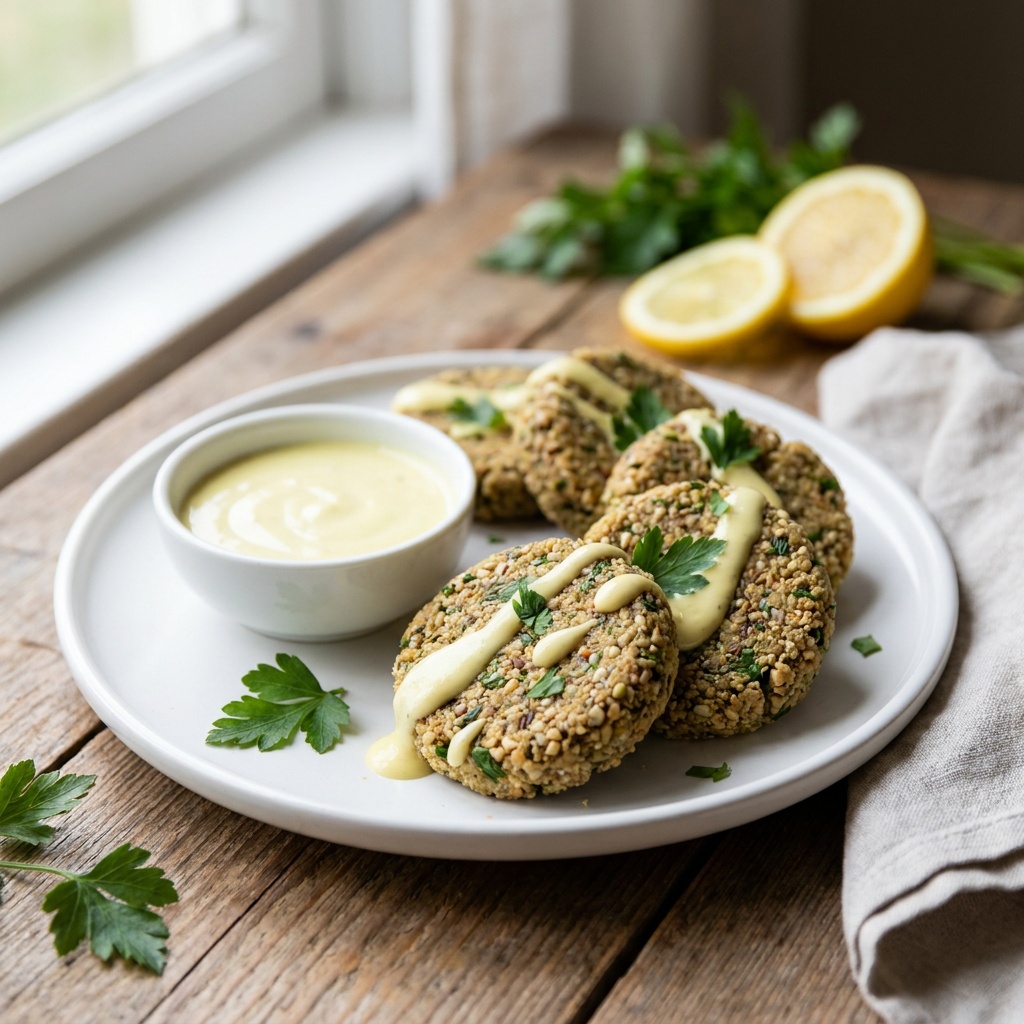
Raw carrot falafel with lemon garlic aioli

Share this article
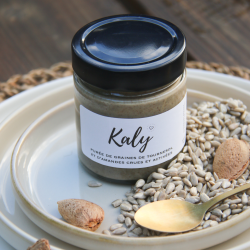
Sunflower seed and activated almond puree
€12.00 RESTOCKING BEGINNING OF DECEMBER
Ingredients
Falafel
- 2 cups roughly chopped carrots
- 1 cup dry sunflower seeds
- 1/4 cup flax seeds, ground (about 1/3 cup once ground)
- 1 cup fresh parsley, finely chopped
- 3 tablespoons diced onion
- 1 clove garlic, minced
- 1/4 teaspoon salt
- 1/2 teaspoon cumin
- 1/2 teaspoon curry powder
- 1/2 cup sesame seeds (stirred in by hand at the end)
Lemon garlic aioli
- 1/4 cup dry cashews
- 2 cloves garlic
- 1/8 teaspoon salt
- The juice of one lemon
Preparation
Falafel
- Process the carrots alone first, running the food processor until they break down into a near-paste.
- Add the sunflower seeds, the flax, the garlic and the spices, and process until evenly combined.
- Add the onion and the parsley last, scraping down the sides as needed so everything mixes thoroughly.
- Transfer to a large bowl and fold in the sesame seeds by hand.
- Shape into balls using about a tablespoon of mixture each, arrange on dehydrator sheets and dehydrate for 2 to 12 hours depending on how soft or crisp you want the finished falafel.
Lemon garlic aioli
- Grind the cashews, the garlic and the salt in a spice mill or small food processor until no chunks remain.
- Transfer to a bowl, add the lemon juice and whisk with a fork until smooth.
Tip
For a firmer, more traditional falafel texture, push the dehydrating time towards the twelve-hour end rather than the two-hour minimum: the shell dries out and firms up considerably over that range. The aioli keeps separately in the fridge for about a week and works equally well as a dip for raw vegetables.
The full range Oilseeds, nuts, seeds
20 products
Discover the full range
FAQ: your questions about raw carrot falafel
What are the ingredients for making falafel?
Traditional falafel is made from dried chickpeas soaked but not cooked, onion, garlic, parsley and coriander, cumin and ground coriander, all blended then fried. The raw version in this recipe keeps the same aromatic logic, garlic, parsley, cumin, but replaces the chickpea with carrot and sunflower seeds, and ground flax takes the binding role that frying would otherwise play. The result does not taste exactly like street falafel, but it keeps its structure and its spices.
Should you use raw or cooked chickpeas for falafel?
In the traditional recipe, strictly speaking neither: you use dried chickpeas soaked overnight, never cooked. Cooked or tinned chickpeas release too much water and give balls that fall apart in the fryer. This raw version sidesteps the question entirely since it uses no pulses at all: carrot, sunflower and flax provide the body and the hold.
How long do falafel keep?
Classic fried falafel keep three to four days in the fridge in an airtight box. These raw falafel, once properly dehydrated, last far longer: several weeks in the fridge, provided they are genuinely dry through to the centre, since residual moisture will otherwise turn them. The closer you push the dehydrating time to twelve hours, the longer they keep.
What do you eat with falafel?
Classically they go into pitta bread with raw vegetables, hummus and a sesame sauce. In a raw version, stay in the same spirit without the bread: a large salad of raw vegetables, cabbage or lettuce leaves as a wrap, ribbons of cucumber and tomato, with the cashew aioli as the sauce. They also make an excellent nibble, simply set out on a platter with a bowl of sauce.
Share this article